US Representative Ritchie Torres, a Democrat representing parts of New York City, announced today that he will introduce a new piece of legislation known as the "Power To The Players Act." The proposed bill aims to fundamentally reshape how video game ownership is defined and handled in the United States, targeting industry practices that leave consumers vulnerable when companies decide to alter or terminate access to digital entertainment.
According to statements released by Torres’ office, the bill, if signed into law, would direct the US Federal Trade Commission to establish and enforce robust regulations protecting the fundamental consumer ability to own and play the video games they purchase. For years, the gaming community has watched as the market shifted away from physical media toward digital distribution, a transition that has quietly replaced permanent ownership with restrictive, revocable software licenses.
"When you pay for a game, you should own it," Representative Torres said in a statement outlining the legislative initiative. "Consumers must have the right to own, the right to play, and the right to transfer the games they buy. A game that can be taken away the moment a company pulls the plug is not a purchase. It is a rental disguised as a sale."
The introduction of the Power To The Players Act brings a long-standing debate into the halls of American politics. While the issue of digital-only ownership has been a prominent discussion topic within the PC gaming community for decades—following the platform’s early migration to online storefronts and digital libraries—it has recently exploded into the broader public consciousness. This heightened awareness stems largely from the video game industry’s accelerated shift away from physical discs on home consoles. Major industry moves, such as reports and announcements indicating that hardware manufacturers like Sony are planning to phase out physical disc production by 2028, have accelerated consumer anxiety over the permanence of their digital libraries.
Compounding the ownership debate is the rising frequency of online-only games being decommissioned, or "killed," by their publishers long before players are finished enjoying them. These server shutdowns frequently render purchased software entirely unplayable, locking consumers out of products they spent hard-earned money on.

This growing frustration has catalyzed international consumer advocacy movements. Chief among them is the "Stop Killing Games" campaign, which has successfully raised the global profile of software preservation and digital consumer rights. Founded by Ross Scott and spearheaded alongside organizers like Moritz Katzner, the campaign has argued passionately that publishers should be legally required to provide basic offline functionality or transition tools when multiplayer or online-only games are permanently retired. The movement gained significant political traction earlier this year when its organizers secured an audience with the European Parliament to discuss legislative protections for digital consumers.
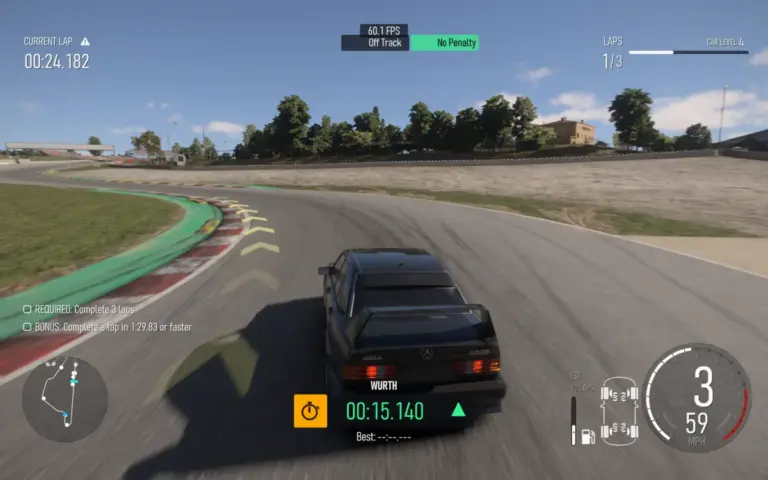
As a primary example of the problem, the Stop Killing Games campaign and various consumer advocates have repeatedly pointed to Ubisoft’s The Crew. The open-world racing game was taken offline by the publisher in early 2024, completely severing server connections and rendering the title entirely unplayable—even for players who only wished to experience the single-player campaign they had paid to access. Incidents like these have highlighted a legal and operational gray area where consumers possess little to no recourse after a publisher decides to shutter backend infrastructure.
The core objective of the Power To The Players Act is to bridge this gap, establishing genuine consumer ownership rights for digital purchases while cracking down on the practice of selling revocable licenses. Furthermore, the legislation seeks to mandate that offline modes or transitional functionality be made available before publishers pull the plug on online-dependent video games.
While the implications of the bill are sweeping, industry analysts note that its implementation could face distinct challenges depending on the nature of the software involved. For digital games distributed completely DRM-free, such as those available through platforms like GOG, ownership has never been a point of friction. Once a user downloads the standalone game files from a DRM-free storefront, they can back them up locally and run them indefinitely on any compatible hardware system without needing an active internet connection or authorization server.
However, modern gaming heavily relies on digital rights management, server-side authentication, and cloud-based features. Realistically, observers point out that the FTC is unlikely to mandate the complete eradication of software copy protection or anti-piracy measures. Should the bill successfully pass through Congress and be signed into law, it would presumably need to arrive at a nuanced, softer definition of ownership that balances intellectual property protections with enforceable consumer guarantees.
As the legislative text moves forward, industry stakeholders, consumer advocates, and legal experts are closely watching to see how the proposed framework will be structured. Questions remain regarding what specific enforcement mechanisms the FTC would utilize and how penalties for non-compliance would be levied against major publishers and platform holders. Representatives have reached out to Rep. Torres’ office to gather further details regarding the expected enforcement scope and timeline of the bill as it prepares to enter the legislative arena.