The enterprise approach to artificial intelligence adoption across many modern organizations is taking on an almost absurd quality. Senior executives, eager to capitalize on hype and promised efficiency gains, are approving sweeping rollouts of advanced tools, expecting immediate increases in organizational productivity. Yet, according to digital strategist and author Paul Boag, many of these efforts are falling victim to the exact same structural and cultural errors that plagued digital transformation initiatives a decade ago.
Revisiting the insights from his 2014 book Digital Adaptation, published by Smashing Magazine, Boag argues that corporate leaders are repeating historical mistakes by viewing AI integration purely through a technological lens. Rather than addressing how new systems impact workplace culture, daily routines, and employee psychology, organizations are treating AI as a simple software installation. The result is growing widespread friction, employee anxiety, and widespread institutional failure to realize the full potential of these emergent tools.
It’s About People, Not Technology
During the peak of the digital transformation era, enterprise IT departments routinely implemented large-scale Content Management Systems (CMS), Customer Relationship Management (CRM) platforms, and internal intranets. Simultaneously, consumer-facing units built complex websites, mobile applications, and personalization engines. However, management rarely invested equivalent effort into understanding how employees and customers would actually interact with these platforms. Internal systems proved unintuitive, and target audiences frequently ignored or rejected solutions that failed to meet their operational needs.
A identical pattern is unfolding with generative AI. Executive teams are purchasing broad licenses for platforms like Microsoft Copilot Studio, handing access over to IT departments, and considering the adoption process largely complete. Implementation strategies rarely extend beyond basic, generic organization-wide training sessions.
This technical-first methodology leaves employees uncertain about how to effectively incorporate AI into their specialized workflows, even as leadership demands immediate, measurable outputs. The situation is further complicated by widespread job insecurity. Unlike earlier digital transitions, current staff members read constant news reports regarding AI-driven automation and layoffs. Vague managerial assurances do little to dispel fears that the technology being deployed today will be used to render their jobs redundant tomorrow.
Why Would Staff Want To Adopt AI?
From the perspective of an individual employee, the personal benefits of adopting workplace AI are far from clear. While senior executives view AI as a engine for output density—enabling personnel to accomplish substantially more work within the standard working day—this operational gain rarely translates into personal value for workers. Standard working hours remain fixed from nine to five, compensation remains unchanged, and the net reward for increased efficiency is often simply a larger volume of tasks.
Without explicit incentives, employees have little intrinsic reason to champion AI integration within their day-to-day operations. To overcome this resistance, organizations must shift their messaging and approach, identifying how AI can directly eliminate tedious, frustrating components of daily job roles. Framing technology adoption as an opportunity to reduce workplace friction and improve day-to-day work life renders staff far more receptive to operational change.
Furthermore, leadership must consider structural incentives to encourage meaningful engagement. These might include clear pathways for career progression tied to modern skill acquisition, direct financial compensation, or formal agreements to reduce working hours in exchange for sustained operational gains.
Staff Need Time And Support To Adopt AI
Integrating AI into established workflows requires rebuilding procedural knowledge that workers may have developed over decades. Unlearning established routines and devising entirely new methods of completing tasks requires significant mental bandwidth and dedicated focus—resources that few overworked employees possess amid demanding workloads.
Sending personnel to brief, generic training courses is insufficient for mastering AI tools. Effective adoption demands role-specific guidance that directly addresses the unique requirements of individual functions, such as tailored AI applications for user experience (UX) and design teams. Beyond specialized instruction, companies need long-term support systems that grant employees the dedicated time and psychological breathing room required to experiment and iterate on workflows.
Formal training programs, however, represent only part of the solution. Historical evidence from early digital transformation efforts demonstrates that peer-led support is often far more effective than top-down directives. During the digital transformation era, internal corporate conferences—where employees presented tools and workflows they had personally built—drove adoption more effectively than executive memos.
Rather than attempting to persuade the most resistant employees first, management should focus on identifying early internal enthusiasts. Uniting workers who are already independently experimenting with AI, providing them space to share practical insights, and encouraging peer-to-peer knowledge sharing leverages social proof to build organic momentum across departments.
It Needs To Be Safe To Fail
A dominant barrier to AI integration is the prevalence of corporate cultures centered on risk aversion, where operational errors are viewed as evidence of personal incompetence. Because learning to navigate probabilistic AI tools inherently involves missteps and unexpected outputs, punitive organizational environments severely inhibit adoption.
This dynamic closely mirrors early digital transformation efforts, where executives demanded dramatic innovation while maintaining rigid Key Performance Indicators (KPIs) and penalizing failure during annual performance reviews. Sent mixed messages, staff defaulted to traditional, proven methods to protect their job security.
Today, similar mixed signals are causing severe friction. Employees in some organizations face reprimands for excessive API token consumption just weeks after receiving directives to integrate AI into their daily routines. In other instances, overly aggressive warnings regarding usage policies render workers hesitant to experiment altogether. To foster real adoption, management must establish psychological safety by adjusting traditional KPIs, altering performance review criteria, and temporarily relaxing administrative restrictions while teams build competency.
Handle Governance With Care
While formal governance is necessary when introducing AI to enterprise workflows, overly restrictive policies routinely stifle innovation. Historically, governance frameworks during digital shifts either failed to exist entirely or imposed suffocating regulatory hurdles that rendered progress nearly impossible.
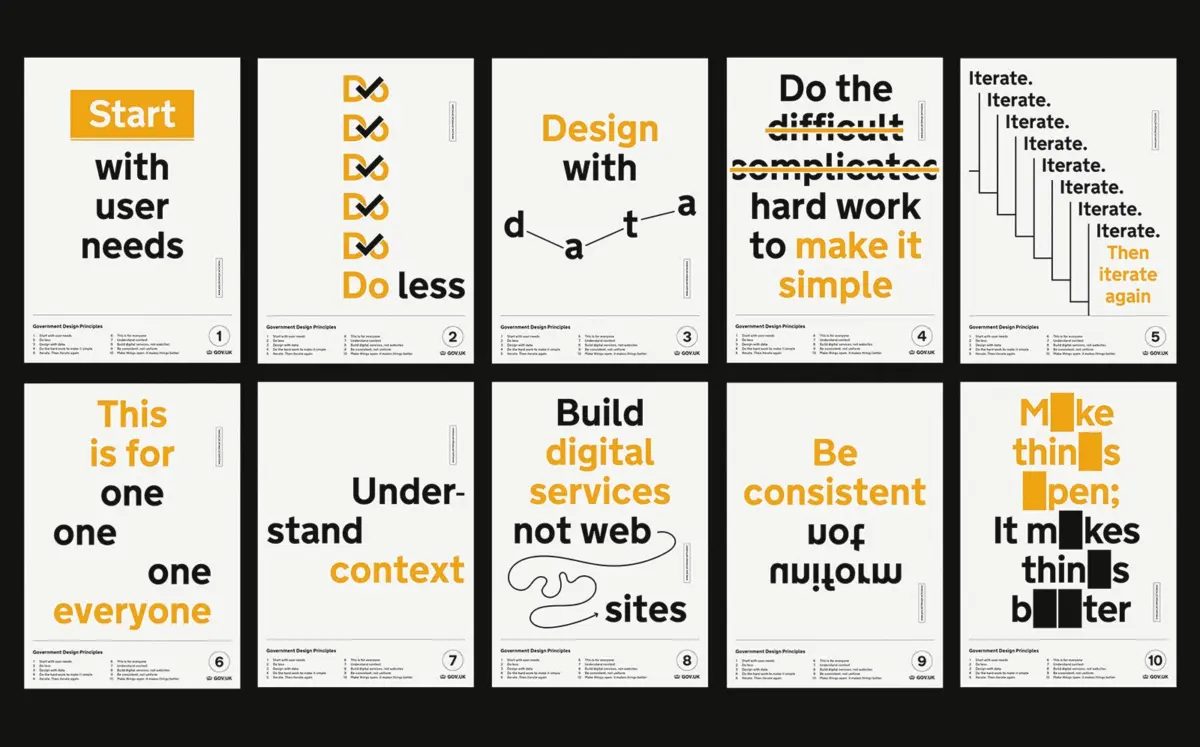
When employees are forced to navigate multi-page instruction manuals detailing restrictions on data input, the resulting fear of inadvertent non-compliance leads to total inaction. Effective governance should instead rely on a concise set of guiding principles—capable of fitting on a few visual posters, similar to the operational framework established by the UK government’s GOV.UK design principles. Establishing a short, accessible set of baseline guidelines allows organizations to maintain reasonable safety standards while trusting employees to apply common sense.
Management must accept that early mistakes are an inevitable cost of organizational evolution and focus efforts on risk mitigation rather than total risk elimination.

Adaptive Technological Rollout
From an IT perspective, rigid technology distribution models severely impede operational flexibility. During earlier digital transformation initiatives, overloaded IT departments frequently mandated single software stacks organization-wide without consulting frontline operational units. Alternative tools required navigating approval processes overseen by sluggish steering committees, creating severe delays that ultimately derailed projects.
This rigid dynamic is repeating itself with current AI infrastructure deployments. Many IT departments mandate enterprise tools like Microsoft Copilot as a single solution for all organizational needs. However, standardized enterprise tools frequently fail to meet specialized departmental requirements.
For instance, a UX design team seeking to build an AI-powered qualitative research repository and develop synthetic personas may find that standardized corporate AI offerings lack the technical capability to realize the vision. When forced to seek approval for specialized software through a slow-moving AI steering committee, the team’s initial enthusiasm degrades into bureaucratic fatigue.
This operational paralysis directly drives the rise of "shadow AI." When corporate tools prove inadequate for daily responsibilities, employees bypass IT policies by utilizing personal ChatGPT or Claude accounts on personal smartphones or home laptops. This unmonitored use creates significant security vulnerabilities, sending proprietary enterprise data into unmanaged external environments beyond corporate visibility.
Cracking down on shadow AI through blocked websites and threat of disciplinary action rarely remedies the underlying issue; instead, it simply forces risky practices further underground. Shadow AI serves as a direct indicator of where official tools fall short. Rather than penalizing workers, management should analyze shadow usage to understand operational needs and adjust official procurement strategies accordingly.
Early in the adoption cycle, organizations must tolerate a degree of technical variability while staff explore application limits across different roles. Formal software standardization and tighter operational parameters can be successfully introduced later, once clear usage patterns and genuine business needs have fully emerged.
A Dangerous Time
For risk-averse executives, relinquishing central control and permitting decentralized experimentation can feel hazardous. However, in periods of rapid technological development, the operational risks associated with moving too slowly far outweigh the manageable challenges of guided experimentation.
The most critical danger facing modern enterprises is not technical imperfection, but the tendency to approach AI adoption solely as a software implementation project while ignoring human factors. True AI integration is fundamentally an initiative centered on people, organizational culture, and systemic change management. The organizations that successfully navigate this transition will be those that learn the lessons of the past, prioritizing workforce enablement and psychological safety over rigid corporate control.