When the team from Monocle arrived in New Delhi for a landmark series of events hosted in partnership with Hitachi Energy, they stepped into a capital city that was charged with political energy and vibrant civic momentum. The timing of the visit coincided with an eventful week across the metropolitan landscape. Downtown streets were visibly swarmed by the "Cockroaches"—officially known as the Cockroach Janta Party—a self-deprecatingly named protest movement spearheaded by a restless, politically engaged cohort of Indian youth. Local authorities, eager to maintain order and manage the unfolding demonstrations, went to considerable lengths to deter and contain the movement.
The security measures surrounding the protests were sweeping. Over the weekend immediately preceding Monocle’s establishment of a temporary headquarters at the exclusive members’ club D’Monde, in association with title sponsors Hitachi Energy, much of the city’s metro system experienced targeted closures. Mobile internet access was temporarily suspended across several key zones, and major thoroughfares were heavily fortified with police and paramilitary checkpoints. Yet, despite the logistical hurdles and gridlocked traffic, resilient Delhiites successfully navigated the restrictions to attend Monocle’s curated schedule of morning coffee gatherings, evening cocktail receptions, and high-level panel discussions.
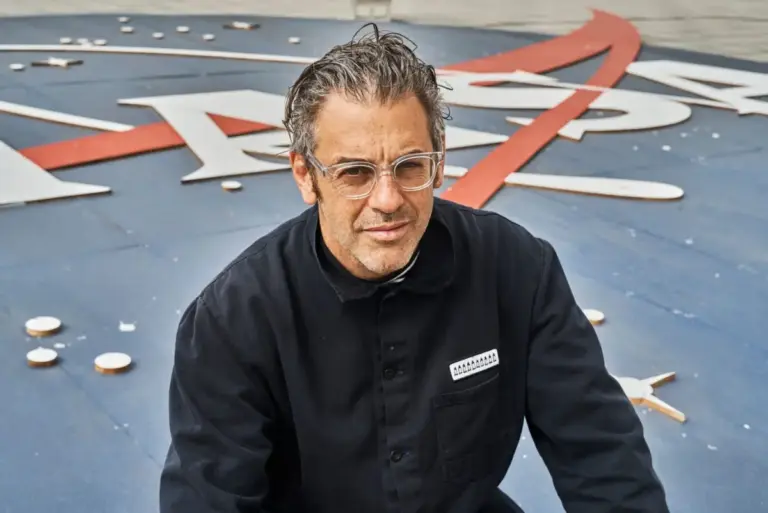
The week’s set-piece conversations brought together an extraordinary roster of international and domestic intellects, reflecting on how infrastructure, technology, and global shifts are shaping the trajectory of both India and the broader world. Among the notable contributors were Nobel physics laureate Didier Queloz, Hitachi Energy CEO Andreas Schierenbeck, American aerospace engineer Aisha Bowe, and renowned Indian aerospace engineers and entrepreneurs Srimathy Kesan and Susmita Mohanty. Across multiple sessions, these luminaries maintained a hearteningly bullish outlook on India’s immediate trajectory and the overarching future of global innovation.
To the casual observer, it might seem counterintuitive to view India as a primary laboratory for cutting-edge ideas and rapid transformation. Spanning an expansive 3.3 million square kilometres and housing an estimated population of 1.4 billion people, the country is unfathomably enormous in its geographic and demographic scope. It is an intricate, multifaceted society that obdurately maintains a long-standing tradition of barely penetrable bureaucracy. Indeed, one of the moments that elicited the greatest murmur of approval and shared understanding from the audience during the panel events came when Nobel laureate Didier Queloz casually suggested that India could unlock immense potential by ruthlessly streamlining its notoriously complex visa procedures. Yet, despite these bureaucratic friction points, the nation is visibly surging ahead of several global curves, positioning itself as a vital crucible for the future of infrastructure and technological advancement.
This sentiment of forward-looking momentum resonated beyond Monocle’s venue. Not far away, Bloomberg was hosting its annual New Economy Forum, serving as another focal point for global economic discussions in the capital. During the forum, discussions turned toward broader geopolitical realignments, including conversations with Erik Schatzker, the editorial director of Bloomberg New Economy. Schatzker offered a compelling perspective on India’s historical stance, suggesting that the time for the country’s long-standing policy of strategic non-alignment may have finally arrived for the rest of the world.
"Other countries," Schatzker observed, "are coming to the same conclusions that India came to long ago about the reliability of the superpowers." He noted that the institutional and economic benefits that nations like Canada, the UK, and broader Europe have long enjoyed "are fast disappearing because the US has unilaterally decided to stop underwriting that system." While India is certainly affected by these global economic tremors, Schatzker emphasized that it is "not to anywhere near the same degree as a country such as Canada, for example." India’s long-cultivated habit of diplomatic self-reliance has effectively insulated it against the sudden fractures appearing in traditional Western-led alliances.
Even among those political voices in India who actively dissent from the current administration’s domestic direction, there remains an unshakeable confidence in the nation’s intrinsic ability to chart its own course independently of external pressures. For a special episode of The Foreign Desk, the conversation shifted to the office of Shashi Tharoor, a veteran politician, seasoned diplomat, acclaimed author, and high-profile member of parliament representing the opposition Congress party.
Tharoor offered a grounded perspective on the nation’s enduring skepticism toward external validation and foreign blueprints for development. "We tend not to be terribly impressed by foreign examples," Tharoor remarked during the interview. Reflecting on nearly eight decades of post-independence history, he emphasized that "everything we’ve seen in India in these last 79 years has very much been of an Indian model."
Elaborating on the country’s turbulent yet resilient political evolution, Tharoor pointed out that the nation has successfully weathered every conceivable form of governance challenge. "And we’ve been through everything: one-party dominance, coalition governments, the rise and fall of governments in matters of months," he noted. Through all these structural tests, "India has found its own way of adjusting to new realities each time, and this will be no exception."
As Monocle’s engagement with Hitachi Energy demonstrated throughout the week, whether through discussions on clean energy transitions, aerospace frontiers, or geopolitical independence, India remains a nation deeply engaged in defining its own destiny. Amidst street-level protests, high-security checkpoints, and complex bureaucratic machinery, the dialogue in New Delhi underscored a collective recognition that the infrastructure and innovations of tomorrow are increasingly being forged right here on India’s own distinct terms.