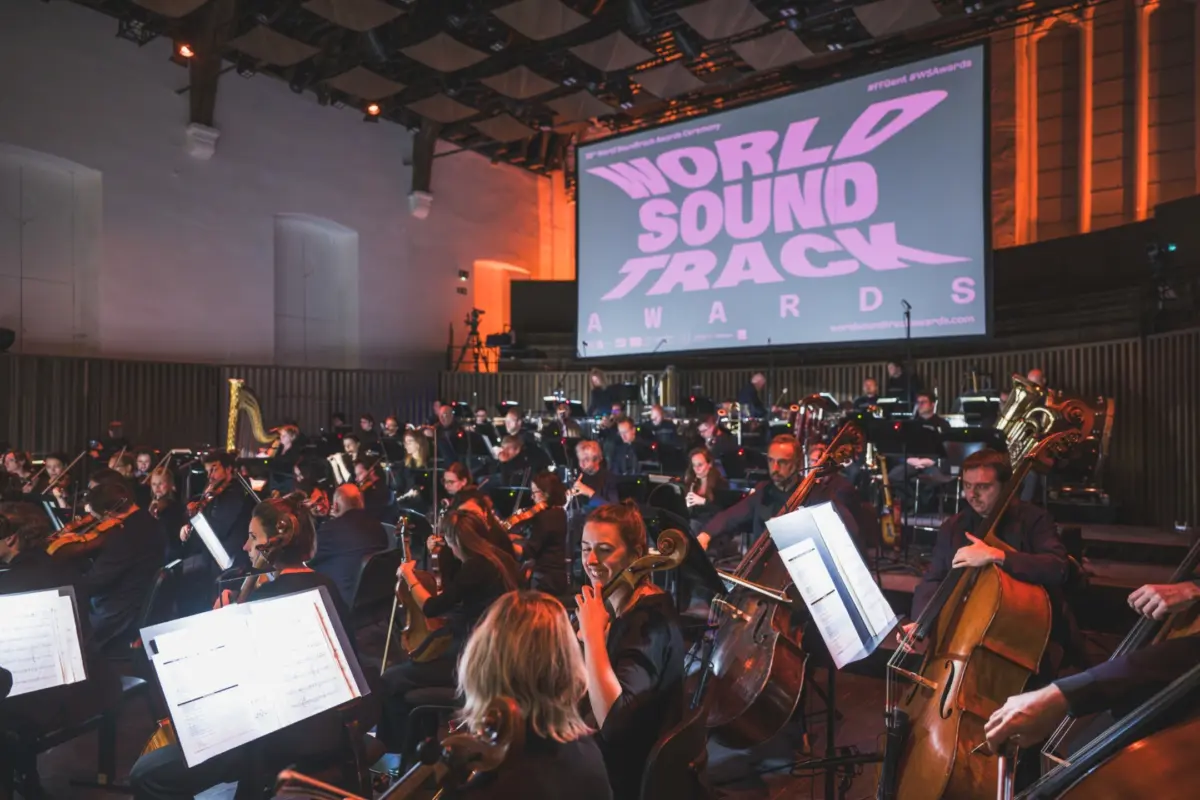
At a recent industry panel during the World Soundtrack Awards in Ghent, Belgium, composer Simon Franglen addressed a packed room of his peers and encapsulated the irreplaceable essence of human musical collaboration. Recalling his work on the upcoming blockbuster Avatar: Fire and Ash, Franglen described the palpable energy of recording sessions featuring hundreds of musicians performing simultaneously.
"We had hundreds of musicians in a room, pouring their emotion out in that precise second," he recalled. "How can that ever be replicated by AI?"
That vital question served as the central theme of this year’s WSA Film Music Days, held from October 8 to 10. The three-day event brought together international composers, agents, and industry advocates for a series of talks, roundtables, and networking mixers designed to tackle the most pressing challenges facing modern music creators.
Against a backdrop of rapid technological shifts and long-standing labor challenges, the gathering provided a platform for professionals to discuss how the industry must adapt. Through detailed panels and discussions, four major takeaways emerged, highlighting an industry that is actively organizing to protect its workforce, its creative pipelines, and the integrity of its art.
Strength in Numbers
For many composers, the path to fair compensation and stable employment is hindered by systemic labor hurdles. Unlike numerous other key creative department heads in the film and television industries, composers working in the United States and the United Kingdom frequently face legal barriers when attempting to unionize and engage in collective bargaining. These structural limitations leave individual artists vulnerable during contract negotiations and standard rate-setting processes.
To help bridge this gap, organizations such as the European Composer and Songwriter Alliance (ECSA) play a critical role. ECSA unites national associations across borders to lobby policymakers and offer essential guidance to emerging composers navigating complex contracts. Representing more than 30,000 composers and songwriters across 57 member organizations, ECSA maintained a robust presence in Ghent, hosting an intensive roundtable before accepting this year’s prestigious WSA Industry Award.
"There’s still a long way to go and a lot of work to do," ECSA president Helienne Lindvall said while accepting the award on behalf of the organization. "But one thing is clear: We have become a voice to be reckoned with, giving composers and songwriters a seat at the table. Because, as someone once said, if you’re not sitting at the table, chances are you’re on the menu."
Art vs. AI
The rapid emergence of generative artificial intelligence has escalated anxieties across the creative sector, prompting organizations like ECSA to push for robust regulatory safeguards. ECSA is actively working to shape the European Union’s evolving AI Act around three core demands: AI companies must secure explicit permission before using copyrighted music to train generative models; creators must receive fair compensation for that usage; and technology platforms must transparently disclose the specific catalogs and datasets utilized to train their systems.
"If we want to protect those at the heart of music creation, we must continue to defend the three fundamental principles of Authorization, Remuneration and Transparency," Lindvall emphasized. "In other words, our art."

The rise of commercial AI music generation platforms, such as Suno, has made these demands increasingly urgent. Lindvall offered a stark, straightforward warning to musicians and composers who might be tempted to experiment with these platforms out of curiosity or convenience.
"Read the terms of service," she implored the audience. "Anything you upload, even if you think, ‘I’ll just upload my music and see if they can come up with a guitar lick,’ you are giving them the right to use your music and exploit it commercially, without limitation, in perpetuity."
Star Track: The Next Generation
Beyond the immediate threat of copyright infringement and unauthorized training data, panelists expressed deep concern that short-term cost savings driven by AI could devastate the foundational stepping stones required for the next generation of composers. As automated music factories and generative tools begin to absorb entry-level scoring assignments, newcomers risk losing the vital professional foothold traditionally needed to launch a sustainable career in film and television.
"Hans Zimmer wouldn’t be who he is today without [getting a gig on the 1980s British game show] Going for Gold," Franglen noted, illustrating how early, modest opportunities often pave the way for legendary careers. "We all start somewhere, and we all have our various steps. It’s essential that those steps exist."
Darrell Alexander, who runs the prominent composer agency Cool Music, pointed to the traditional role of an additional composer as one of the most reliable and educational entry points for aspiring professionals.
"It’s still better to try to be an additional composer to a master," Alexander said. "We accept applications for jobs, and I think that’s really important, because you can study and learn and see."
Established creators are also taking deliberate steps to foster new talent within their own workflows. Adiescar Chase, whose acclaimed work on the Netflix hit series Heartstopper won widespread praise, made a conscious decision to bring on additional hands for subsequent seasons of the show.
"I told production before we started, ‘Just so you know, I’m going to have an assistant this time,’" Chase explained. "They had to trust me. I hope that in my community, the people I bring on to assist know I’m trustworthy."
Looking further ahead, Martin Phipps, composer for the historical drama The Crown, expressed confidence that human connection will remain paramount to storytelling, suggesting that AI is unlikely to eliminate every aspect of human creativity.

"It’s a skill in itself to prompt an AI," Phipps observed. "You need to employ someone to do that, and that somebody’s got to be there, for a while anyway. Though I do know a few directors who would quite like to write the music themselves, which is a worry!"
Take It to the Bank
Amid discussions of industry-wide challenges and technological threats, WSA panelists also focused on practical artistry, sharing best practices and innovative workflows. The deliberate creation of custom sound banks emerged as a favored technique among top-tier composers seeking to establish a distinct sonic identity for each project.
For Kristen Stewart’s upcoming film The Chronology of Water, composer Paris Hurley intentionally bypassed the conventional method of scoring directly to picture. Instead, Hurley spent time creating and collecting entirely bespoke sounds—frequently utilizing her own body as a physical instrument—before rearranging and remixing the recorded elements to fit specific sections of the film.
"This is a story that’s only told once, with a director who cares deeply about what’s being made, and it would almost be a disservice to just rock up with a collection of familiar sounds," Hurley explained.
Daniel Pemberton, composer for the hit espionage series Slow Horses, shares a similar creative instinct when approaching television and film scores.
"Creating your own sonic palette that’s unique to each project makes such a difference to a score," Pemberton said. "So I always try to build fresh palettes. It’s like getting a new instrument each time and working out how it works. There’s a naivety to that, but also a freshness, and the material is fresher because hopefully it’s stuff people haven’t heard before."
Beyond establishing a unique audio signature for a production, investing time in custom sound banks can significantly accelerate the creative process—a critical advantage when working under the unrelenting production schedules characteristic of modern television series like Slow Horses.
"The Slow Horses sound bank took a long, long time to get working," Pemberton admitted. "But now I’ve built all these sounds that are very distinctive to the show. It’s like having a synthesizer with presets that no one else has. And you can be very lazy, hold one thing down, and it still sounds cool!"