Mothers and coolness might traditionally sound like a clashing combination, but today, they are coalescing style-wise like never before. In contemporary culture, the ever fashion-conscious Rihanna, Gigi Hadid, and Hailey Bieber certainly qualify as style icons who have seamlessly blended motherhood with high fashion. However, author Terry Newman’s new book, “Cool Mothers: An Appreciation of Style,” looks beyond the current social media sphere to focus on a broader pantheon of historic and enduring fashion arbiters.
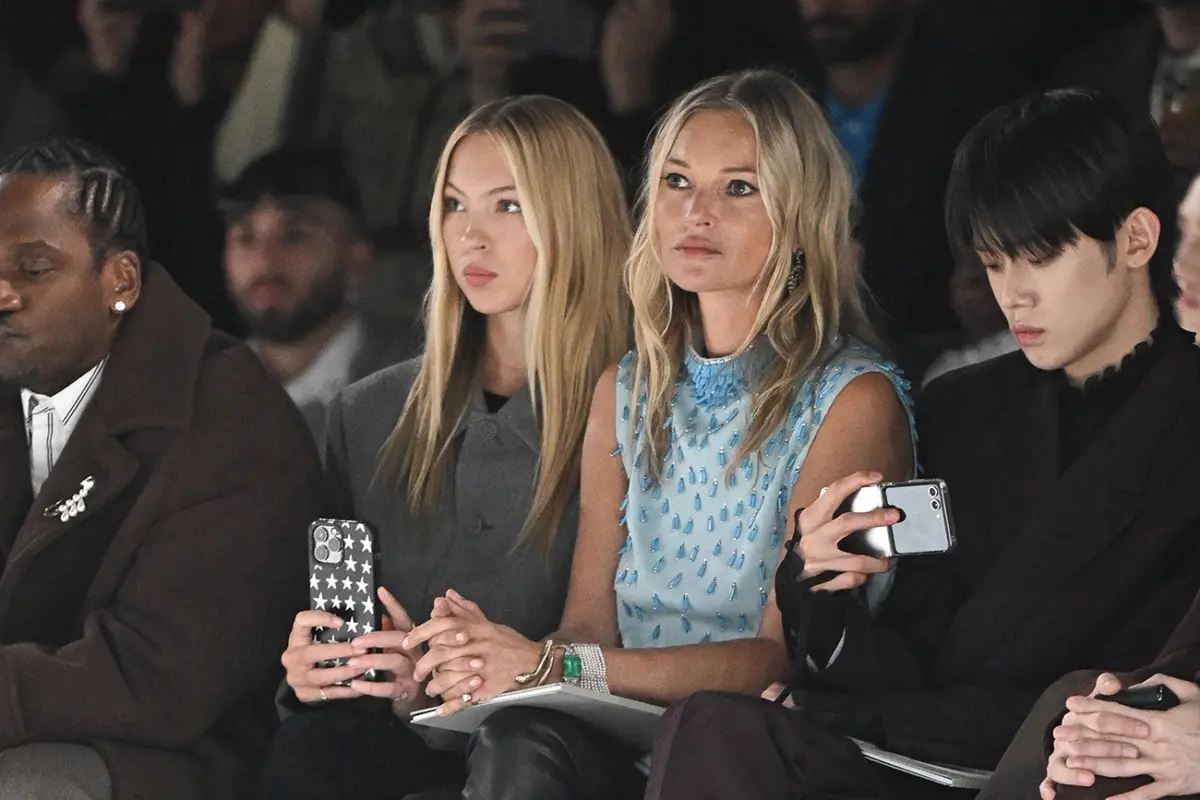
Newman’s illustrated page-turner features legendary figures such as Jane Birkin, Vivienne Westwood, Kate Moss, Charlotte Gainsbourg, Taylor Swift’s mother Andrea, and Rosita Missoni, along with her daughter Angela and granddaughter Margherita Missoni. While younger generations like Lila Moss speak casually of dipping into their supermodel mother’s wardrobe to steal old rock T-shirts—noting a favorite Rolling Stones top in particular—Newman’s book is far more of a celebration of mothers’ style as a whole than a how-to tutorial or a fashion guide.
The personal style choices of the featured mothers relay individualism, assuredness, and a deep confidence in their own kin, Newman explained in a recent interview discussing the project. While the unlikely fashion trend of wearing a false pregnancy bump called "The Pad" took hold as early as 1793, and Jeanne Lanvin famously introduced the mommy-and-me look in 1897, Newman’s exploration of maternal coolness is definitively more contemporary in its psychological depth.
Adroit at delving into what wardrobes reveal about a person’s identity, Newman has previously published acclaimed books examining the personal styles and cultural footprints of Harry Styles, BTS, and Marilyn Monroe. All of these projects ultimately come down to "writing mini biographies of people through their clothes," she noted, suggesting that readers might even examine their own closets as a different means for self-reflection.

Indubitably, mothers are having a significant cultural and political moment in the public eye. The "Tradwife" movement continues to gain substantial traction on digital platforms, propelled by prominent social media influencers like Ballerina Farm’s Hannah Neeleman, who commands a massive following of 10.3 million users on Instagram alone. But Newman’s distinct interest in stylish mothers lies in peering into the complex character of women through the multifaceted lens of their roles as mothers.
"It’s not necessarily a matter of thinking that cool mums are young or fashionable and effortlessly glamorous," Newman said.
This philosophy is reflected in her deliberate choice to include Hole frontwoman Courtney Love, a figure Newman felt had been given an unfair reputation as a young mother during the height of her 1990s fame. Recalling her early reporting days for style outlets like i-D and Self Service, Newman pointed out that Love was virtually the only woman she could find on the red carpet who was literally "accessorized with a baby"—her daughter Frances Bean Cobain—with both mother and child famously dressed in unique vintage finds.
The core impetus for “Cool Mothers” actually stemmed from a deeply personal place: Newman losing her own mother a few years ago. After sorting through personal effects, she discovered diaries and a photo album containing unexpected snapshots of her late mother at the age of 16. Those images made the author realize how vastly different her mother’s youth and inner life seemed to be from the familiar maternal figure she had always known.

Looking back across cultural history, Newman also examined figures like Princess Diana, whose life and legacy continue to resonate powerfully ahead of the 30th anniversary of her tragic death. Newman noted how the late royal served as a de facto mother figure for millions of people across the United Kingdom and around the world.
"She was very much told what to do, what to wear, how to behave and had to be subservient to her husband, who apparently, was having an affair before they were married," Newman said. "All of these things kind of pigeonholed her into this sort of trad-wife type of world."
However, as Diana matured, flourished, and began to forcefully assume her own independent identity, her public presentation transformed dramatically. She transitioned from the early days as a royal wallflower wearing frilled, conservative blouses that her mother might have worn, into a global icon confidently dancing into the night while wearing John Galliano. Another undeniable sign of her modern maternal coolness was how Princess Diana chose to dress her own children—most notably Prince William, who as the future heir to the throne was famously dressed by his mother in casual denim, a break from strict royal protocol that had never been seen before within the family.
Other fashion descendants shared similar insights for the book. Cora Corre opened up about her punk-leaning grandmother, the legendary Vivienne Westwood, while Serena Rees, the founder of Agent Provocateur, added her own perspective on the family legacy. Meanwhile, after discovering a historic photograph of Elizabeth Taylor and her daughter wearing matching Dior couture at a public fair, Newman tracked down one of Taylor’s granddaughters to learn more about the screen legend’s private reality.

Newman recalled the granddaughter sharing an illuminating anecdote: "Granny loved diamonds and everything. But if you gave her a ring from a Christmas cracker, she’d wear it just as proudly alongside all her diamonds."
While some daughters look at historical photographs to pick up direct fashion cues from their mothers, Taylor’s granddaughter, who shares a similar physical shape, did so by watching the Oscar winner’s classic films. Newman also highlighted an observation made by Judy Garland’s daughter, Lorna Luft, who once remarked on the unique surrealism of being the child of a global icon—noting how most women could never imagine walking into a public convention and seeing thousands of people dressed in identical replicas of their late mother.
Ultimately, Newman’s research suggests that cool mothers offer deeper psychological insights beyond mere aesthetics.
"In a way, maybe the coolest mothers were the ones who allowed their children to be who they wanted to be," Newman said. "They weren’t necessarily the perfect mother. In fact, I came to the conclusion that perfection is the opposite of cool. It’s more about women who have a strong sense of themselves. They allow their children to see them as complicated people with careers, making mistakes and having accumulated experiences."

Through their roles as creative directors, founders, designers, tastemakers, and prominent cultural figures, mothers continue to navigate the public sphere entirely on their own terms. Newman reflects on how the word "cool" is frequently used as a throwaway term, but asks what it actually signifies within the context of motherhood. Some of the most compelling women, she argues, have lived remarkable lives without ever losing their innate curiosity, personal style, or sense of self.
Noting how literature, including feminist critiques, frequently highlights how individuals can lose their distinct individuality upon entering motherhood, Newman emphasized how all the mothers profiled in her book successfully managed to retain their core identities. From the late Vivienne Westwood wearing radical punk t-shirts to Courtney Love championing vintage grunge, "they all kept their ambition and individuality," Newman said. She pointed to similar resilience in figures like the late singer and dancer Josephine Baker, who was in her late 40s when she adopted the first of her 12 children, as well as a surprising childhood snapshot of designer Lulu Guinness as a chubby, topless toddler playing on the beach alongside her mother in 1960.
Even professional powerhouses often subjected to strict public scrutiny found a place in Newman’s exploration. Discussing Condé Nast’s global chief content officer Anna Wintour, who is often stereotyped as an uncompromising career executive, Newman explained why her inclusion was essential.
"Women do get pigeonholed if they are suddenly influential or significant. Actually, that’s what makes up being a mother as well," Newman said, adding that maternal figures should never be confined to an unrealistic, perfect formula.