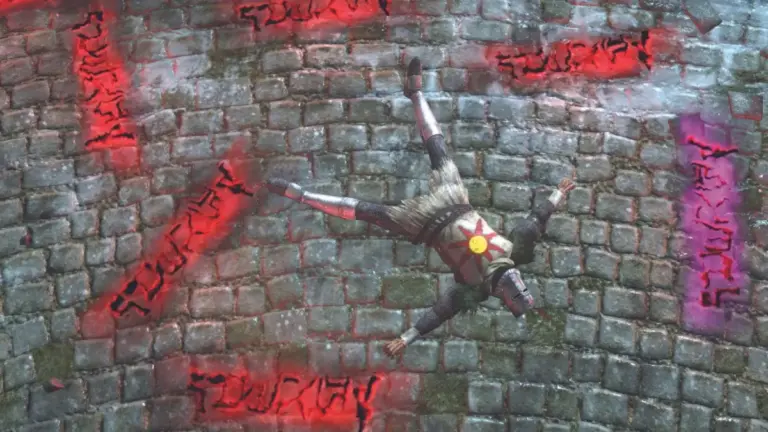
In recent years, the blockbuster triple-A gaming landscape has faced persistent criticism from players and critics alike for what many perceive as overly excessive handholding. Driven by an underlying fear that players might become stuck, lose momentum, or wander away from the intended path, major studios have increasingly adopted design philosophies that leave very little room for genuine discovery, trial, or error. This trend has manifested across numerous high-profile releases in various ways, ranging from Atreus’ notoriously heavy-handed puzzle hints in God of War: Ragnarok to the unmistakable splash of bright yellow paint plastered across every other climbable ledge in action games like Stellar Blade. More recently, titles such as Marvel’s Wolverine have even drawn commentary for effectively playing themselves during major gameplay sequences.
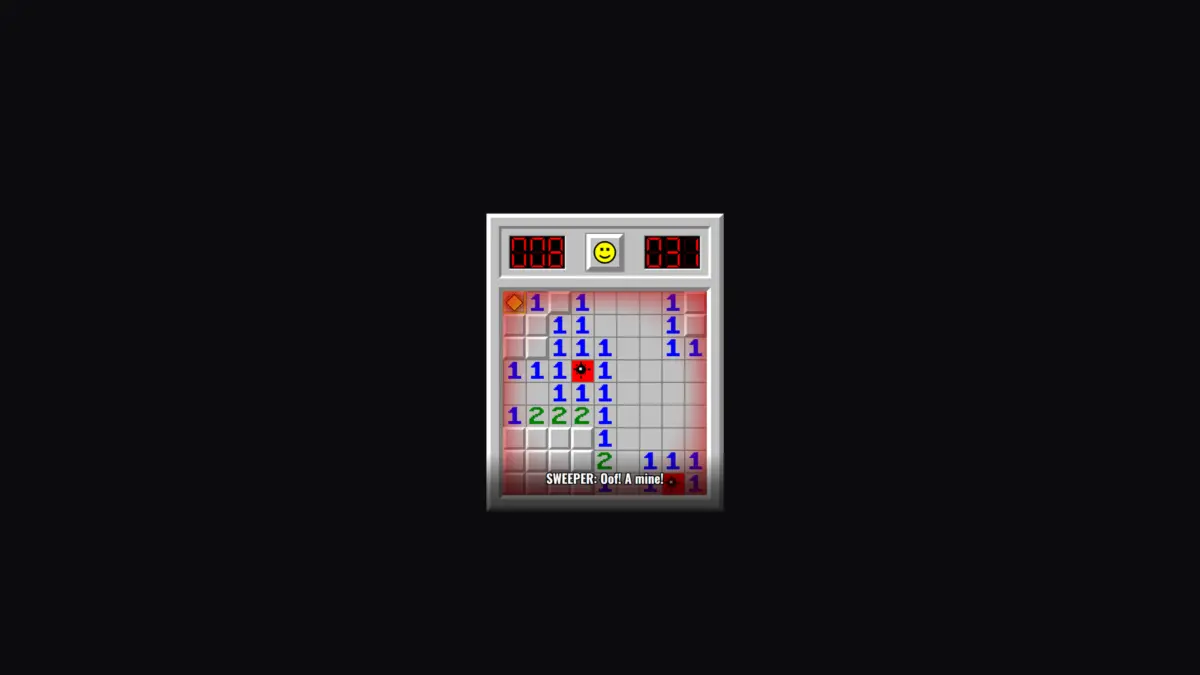
While the debate over modern game design accessibility versus player agency continues to rage across online forums and review roundups, developer Mike Lacher has decided to tackle the phenomenon from an entirely different angle. Enter Triple-A Minesweeper, a delightful and sharply observed spoof game that expertly skewers some of the most egregious, repetitive, and often irritating habits of modern blockbuster video game design.
Before diving too deeply into the mechanics and absurdity of the experience, the satirical browser-based creation is brief enough to be completed in just a few minutes. Because of its short runtime, explaining the premise inevitably reveals much of what the game has to offer, but experiencing it firsthand delivers a uniquely humorous punch that resonates with anyone who has ever rolled their eyes at an overly helpful video game companion.
Unlike the classic, straightforward version of Minesweeper that has occupied office computers and operating systems for decades—which traditionally begins by simply letting the player play the game—Triple-A Minesweeper opens with an authentic blockbuster preamble. Players are greeted by a lengthy sequence of unskippable title cards for third-party software licenses, middleware, and development studios before the dramatic, stylized title screen finally appears. From there, the main character—referred to simply as the Sweeper—slowly blinks open his eyes. A companion character named Nora immediately chimes in over the audio comms to fill the player in on the high-stakes narrative situation, urgently briefing them on the critical mission at hand: clearing a standard grid of hidden mines.
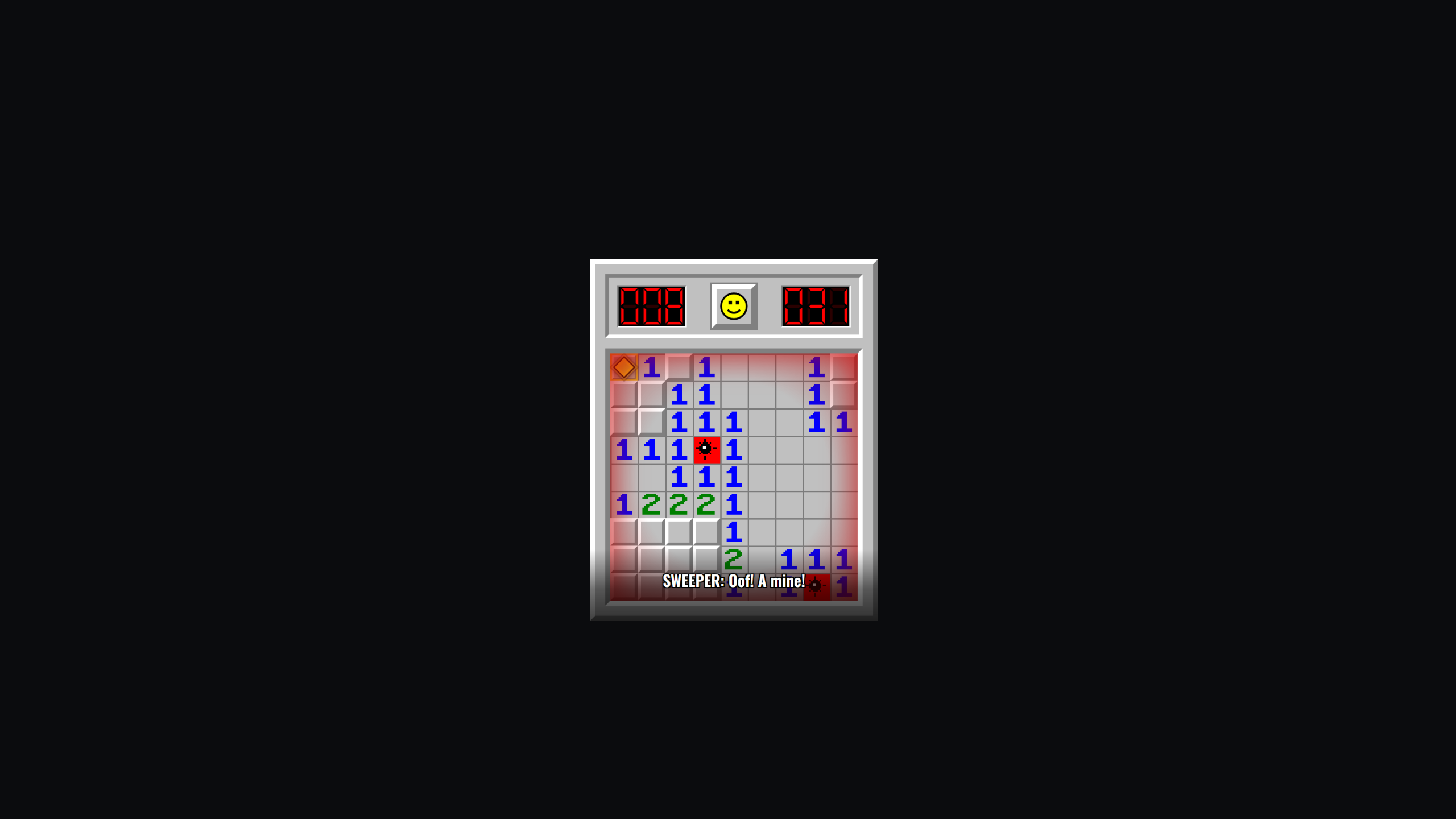
However, modern game design dictates that players can never simply be left to figure things out for themselves. Where should one begin sweeping on the terrifying grey grid? The player need not worry, because Nora has helpfully intervened by adding a prominent, diamond-shaped yellow marker pointing directly to the exact square where the player is expected to click. If visual handholding of that magnitude still leaves room for ambiguity, the Sweeper is programmed to constantly vocalize his internal thoughts out loud. Throughout the board, he regularly mutters predictable lines such as "Pretty sure there’s one mine nearby" and "I think there’s two mines around here," ensuring that no player is ever left wondering what the numbers actually mean.
Perhaps the most entertaining aspect of Triple-A Minesweeper, however, is how the game reacts when a player attempts to go off-piste and ignore the carefully laid rails. If a player deliberately chooses to disregard the yellow marker and clicks on a square containing a mine, the expected catastrophic game over screen never arrives. There are no heavy consequences, no loading screens, and no frustrating setbacks. Instead, the Sweeper simply shrugs off the danger with a nonchalant exclamation of "Oof, a mine!", and the game continues as if nothing happened, highlighting the toothless nature of failure in many modern narrative-driven titles.
The satire goes even deeper when the player decides to do absolutely nothing at all. If the game is left idle, Triple-A Minesweeper does not patiently wait for input. Instead, the Sweeper will continuously reiterate phrases like "I need to sweep those mines," while an increasingly eclectic and random assortment of characters chims in via voice comms to apply psychological pressure. These include a shadowy, malevolent figure known only as "The Don," as well as local radio disc jockeys broadcasting into the void. The background chatter and relentless reminders become genuinely overwhelming, serving as an effective testament to the satirical accuracy of the project. Leaving the browser window open in the background while attempting other tasks quickly becomes untenable due to the constant audio interruptions, perfectly mirroring the fatigue some players feel when modern games refuse to grant a moment of quiet reflection.
Ultimately, the project serves as an astute and humorous send-up of design decisions that, while occasionally frustrating, stem from a well-meaning place. The underlying challenge for major developers is rarely about malicious intent; rather, it is the struggle to make guidance subtle and inventive enough to assist struggling players without insulting the intelligence of those who prefer to solve problems independently. While some industry veterans have proposed alternative navigation solutions and design philosophies to help players find their way without resorting to neon-colored markers, spoof projects like Triple-A Minesweeper remind the gaming community that sometimes the best way to address industry trends is simply to laugh at them.