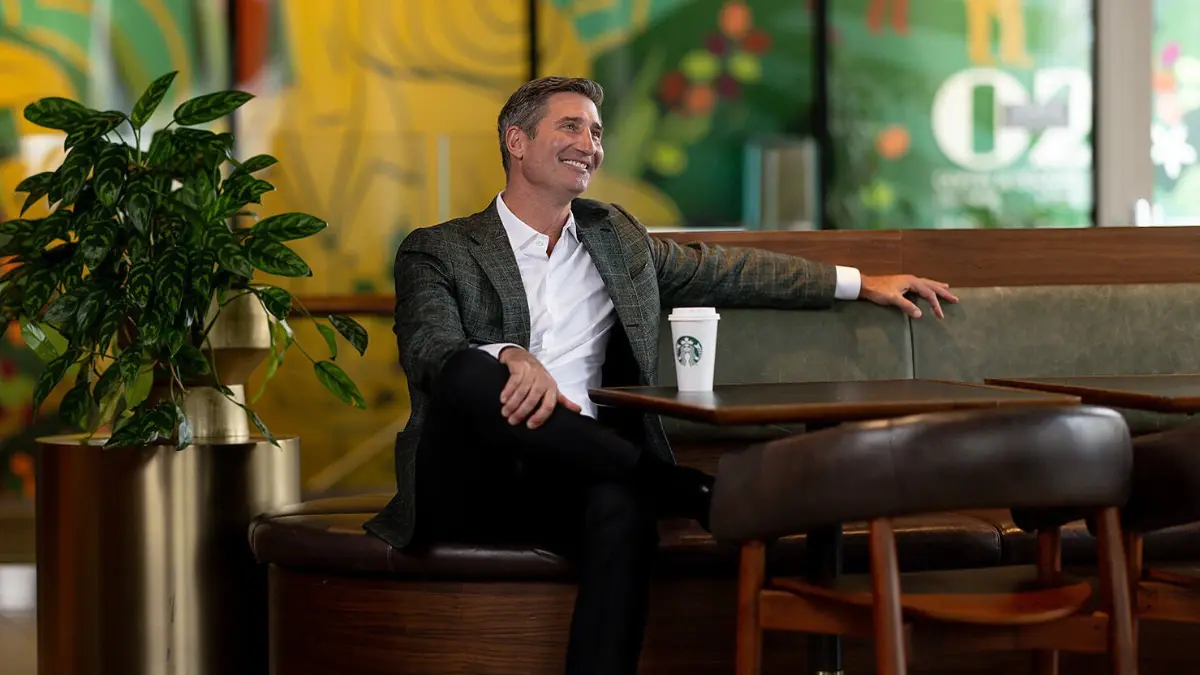
Before recent industry reports began to surface suggesting that Starbucks had explored a potential takeover of fast-casual giant Chipotle—a massive maneuver that analysts noted might be far more than the coffee chain can chew—newly appointed CEO Brian Niccol was already candidly addressing the brand’s fundamental operational gaps. In an extensive interview, the chief executive pointed directly to where the global coffee titan still has significant work to do: its afternoon food selection and midday customer engagement.
Speaking to ADWEEK on September 17 for the publication’s October cover story, Niccol did not discuss Chipotle or any prospective corporate acquisitions. Instead, the executive focused his attention inward, revealing that Starbucks was actively working on overhauling its entire food program to make it what he described as category-defining. For a company that built its colossal empire on morning routines, espresso drinks, and breakfast sandwiches, the afternoon represents both a glaring vulnerability and a massive untapped opportunity.
"We’re pretty darn good in the morning, but we have to be much better in the afternoon," Niccol told ADWEEK during the interview. The core strategy centers on an ambitious corporate goal: the chain is trying to build a robust, reliable second sales peak that consistently occurs after 2 p.m., transforming stores from morning-only commuter stops into all-day lifestyle destinations.
The challenge of capturing the afternoon consumer has long been a holy grail for coffeehouse chains and quick-service restaurants alike. While morning traffic is largely driven by caffeine-seeking professionals, students, and commuters starting their days, the afternoon hours present a completely different consumer mindset. Customers after 2 p.m. are often looking for a break, a pick-me-up, a light snack, or an alternative beverage that transitions away from traditional morning lattes.
For years, Starbucks has dominated the AM hours, with drive-thrus and mobile ordering lines packed from 6 a.m. to 10 a.m. However, maintaining that velocity through the afternoon, evening, and late-night hours requires a menu that goes beyond pastries and warmed breakfast sandwiches. Niccol’s focus on redefining the food category suggests that the leadership team recognizes that beverage innovations alone—such as cold foams, refreshers, and seasonal iced teas—may not be enough to sustain afternoon traffic growth on a global scale.
The timing of Niccol’s remarks underscores the transitional phase Starbucks is currently navigating under his leadership. Since taking the helm, the executive has initiated a comprehensive review of the company’s retail footprint, operational efficiency, and customer experience. By zeroing in on the afternoon daypart, Niccol is addressing a structural limitation that has persisted across the coffee industry: how to maximize labor, real estate, and equipment utilization during the slower hours between the morning rush and the evening commute.
As industry watchers analyze the broader implications of Starbucks’ corporate strategy—ranging from internal menu development to rumored external expansion talks—the primary directive from the top remains clear. To capture the next era of growth, Starbucks must prove it can conquer the afternoon slump, turning its current weakness into a second engine of daily revenue.