For decades, the story of modern Poland was defined by departure. Following the country’s accession to the European Union in 2004, a massive wave of mass emigration drained the nation of its brightest minds, most ambitious youth, and skilled professionals. In the first decade of EU membership alone, approximately five percent of Poland’s total population packed their bags and left, predominantly settling in Western European hubs such as Germany, Ireland, the Netherlands, and the United Kingdom.
The social fabric of the country felt the strain acutely. By 2013, a comprehensive survey revealed the staggering depth of the diaspora, showing that as many as 69 percent of Polish citizens had either an immediate family member or a close friend living and working permanently abroad. It was a disheartening trend that threatened the long-term vitality of the nation’s economy and its institutional leadership.
Today, however, those days are rapidly passing into history. Fueled by robust economic policies, EU integration, and a surge in domestic innovation, Poland’s economy has expanded by an impressive average of four percent every year since 2004. Over the same period, salaries have roughly tripled, disposable income has skyrocketed, and the capital city of Warsaw has cemented its reputation as one of the fastest-growing and most dynamic urban economies in Europe.
Poland has transformed into the continent’s definitive land of opportunity, prompting a dramatic reversal of its historic brain drain. Demographic and economic data shows that between 2017 and 2024, at least 300,000 Polish citizens who were previously residing abroad chose to pack up once more—this time to move back home. To understand the human dimensions of this profound national shift, a close look at the lives of four young Poles reveals why they decided to return or deliberately turned down lucrative opportunities to build their futures elsewhere.
1. Agnieszka Homanska: The Political Adviser
Agnieszka Homanska is rarely seen without her signature wheeled suitcase. As a 27-year-old running the political cabinet of Poland’s foreign minister, Radosław Sikorski, her professional life demands constant international travel and high-stakes diplomacy. Yet, taking up this prestigious position three years ago meant making a difficult personal sacrifice: turning down a master’s degree in political science at McGill University in Montréal, Canada.

"I had already booked the flights," Homanska recalls, standing outside the imposing Ministry of Foreign Affairs building in central Warsaw. A dedicated alumna of the University of Warsaw, where she studied applied linguistics and international relations, Homanska first made a significant name for herself during the fiercely contested 2023 parliamentary election. She successfully managed the campaign of Aleksandra Uznanska-Wisniewska, who went on to become one of Poland’s youngest members of parliament. On the demanding campaign trail, she formed a strong professional bond with Sikorski, who subsequently recognized her talent and offered her a role in his ministry.
"I always wanted to be a diplomat," she says, reflecting on her motivations. "I wanted to stay and strengthen Poland’s position in Europe." Driven by a desire to foster civic engagement among her peers, Homanska co-founded Zryw in 2023, a nonpartisan initiative designed to convince university students and recent graduates to build careers in public life and state service.
"Poland is recognized as a key European geopolitical player and our economic success story is well-known," she notes. "Yet we are having trouble telling that story internationally. My generation wants to change that." Over the past year, Zryw has organized multiple events specifically targeted at persuading graduates to lend their expertise to the state apparatus. As for those abandoned flights to North America? "I went skiing there for two weeks," Homanska laughs.
2. Michal Tarnowski: The Civil Servant
Michal Tarnowski views his career through the lens of a social entrepreneur. The 30-year-old returned to his homeland from the United Kingdom seven years ago, initially focusing on social enterprise projects and developing an innovative civil service fast-track scheme aimed at attracting young, dynamic candidates. In 2025, his career took another pivotal turn when he joined the Ministry of Digital Affairs to work on the complex implementation of Poland’s digital services tax.
"I always saw myself in a career with high public impact," Tarnowski explains. "In Poland, which has stunning macroeconomic indicators but very low civic activity, that is a readily achievable goal."
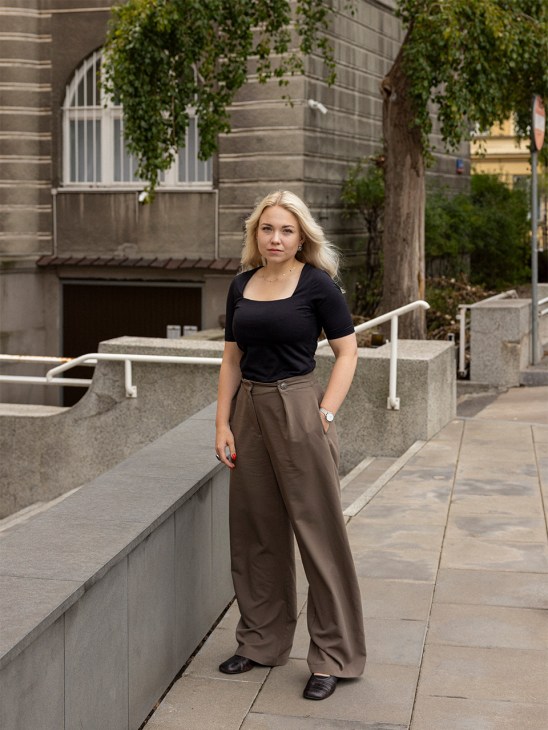
Tarnowski describes Poland as a "partially mature country" when it comes to public involvement and institutional structures. "With the civil service, the system often does not know how to make good use of your talent, especially if you studied abroad," says Tarnowski, who holds a prestigious Philosophy, Politics, and Economics (PPE) degree from the University of Oxford. "So you need to create space for yourself, which is not easy."
Despite the bureaucratic hurdles, Tarnowski insists he would never dream of leaving Warsaw. "Over the past five years, this place has changed beyond recognition," he says. "You can find employment, education, and public service, but also a great lifestyle."
3. Marcin Szala: The Educator
For years, the conventional wisdom among ambitious students and anxious parents in Poland was that a foreign education was the only viable ticket to success. "We would often hear from students and parents that any foreign education was better than staying in Poland," says Marcin Szala. "That is no longer the case."
In 2022, Szala co-founded Liceum Artes Liberales (LAL), a forward-thinking private high school designed to prepare students for the complexities of 21st-century life. Occupying two expansive floors of a modern office building in Warsaw’s bustling Wola district, the school deliberately features very few doors or walls, an architectural choice meant to instill a deep sense of freedom and openness among the student body. In a departure from traditional educational models, the teachers’ room is fully accessible to all students, and the curriculum is intentionally broad and multidisciplinary.
"Nowadays, students and their parents think differently about education," says the 46-year-old educator, leaning against a whiteboard cluttered with ancient Greek and Latin vocabulary. Szala’s core mission is to cultivate multidisciplinary curiosity, steering the educational conversation away from narrow vocational training and toward independent, critical free thinking.
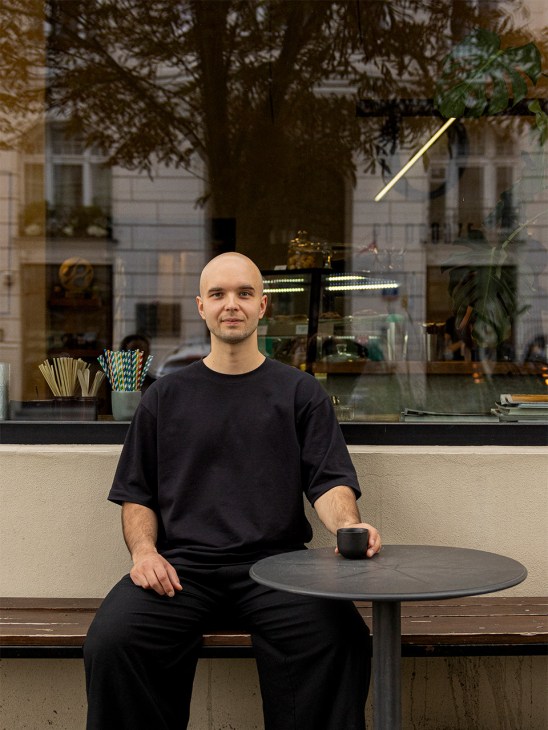
Students at LAL are given the unique responsibility of organizing their own educational trips to local businesses, museums, and major cultural institutions. They also run an ongoing program called Current Affairs, inviting guest speakers to the school weekly to debate pressing global issues, ranging from the intricacies of the gig economy to shifts in international trade policy.
"It is an entirely reactive project," Szala says proudly. "Even with that in their schedule, our students still find time for extracurricular societies." These include specialized clubs for Latin, chess, and philosophy, which are treated as fundamental complements to traditional subjects like chemistry and economics. Szala believes the broader Polish education system now teaches STEM subjects at a level that easily matches its Western European peers. "This summer we had cases where students turned down offers from prestigious UK universities to enrol at the University of Warsaw," he notes. However, he laments a lingering gap in business studies, the humanities, and the social sciences, sectors he argues remain underfunded and underappreciated in Poland. Through LAL, he hopes to bridge that divide.
4. Aleksandra Pedraszewska: The Fund Manager
The economic gravity of Poland has also begun to draw back financial professionals who previously sought their fortunes abroad. "Every major investor in Europe wants to be up to date with news from Poland," says 32-year-old Aleksandra Pedraszewska, who walked away from a promising career in the London tech sector to establish Vastpoint, a venture-capital fund dedicated entirely to backing Polish start-ups.
Meeting at the Google Campus nestled within Warsaw’s post-industrial Praga District, Pedraszewska explains her mission while attending a conference hosted by a tech firm in which her fund has invested. "We have three decades of experience spanning London, Berlin, and New York," she says. Her phone rings constantly with inquiries from curious overseas fund managers eager to tap into the local market. "We aim to bring international investors here and show them the inside story of our economic miracle."
Stories of local success fuel this international interest. ElevenLabs, a global market leader in AI-powered voice-to-text technology currently valued at $11 billion, is a prime example. Founded in Warsaw in 2022 by Mati Staniszewski and Piotr Dabkowski, the company was initially overlooked by traditional venture capitals in Silicon Valley but has since become a global powerhouse and a symbol of Poland’s economic renaissance. Pedraszewska and her partners help foreign investors navigate the local landscape to avoid missing similar opportunities. "We have grown big enough as a market to attract international investors and give people opportunities to make a lot of money," she says. "It’s hard to think of a situation more apt for an emerging manager like me."
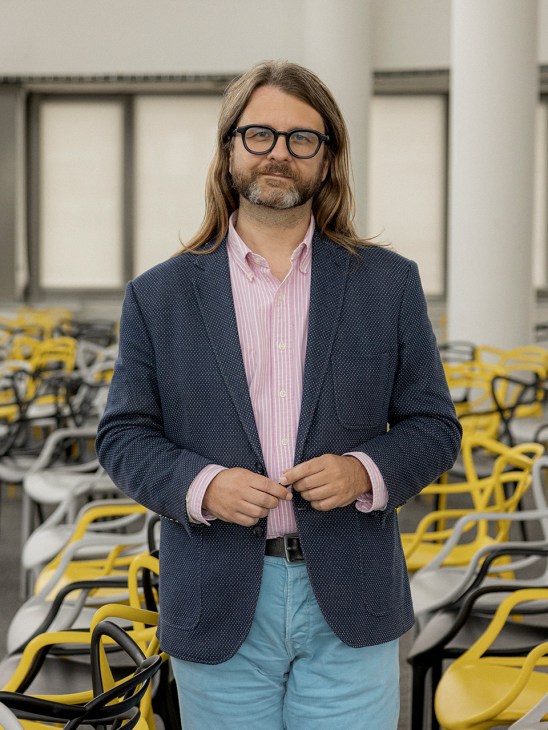
Yet, structural challenges persist as the ecosystem matures. "We have very good schools, but we lack opportunities and capital for the very best ones to scale their talent up globally," Pedraszewska cautions. "There is still not enough private capital for young companies to grow, so we keep losing people who move overseas, mostly to Silicon Valley. But that is a pan-European problem—Poland will not solve it alone."