This year has unfolded as an unremitting sequence of environmental catastrophes, starkly illustrating the accelerating impact of global climate change across continents. From the Himalayas to the heart of Europe and the agricultural fields of the American Midwest, extreme weather events have shattered historical records and claimed thousands of lives. In South Asia, collapsing glaciers triggered a devastating flood in Nepal, displacing communities and destroying vital infrastructure. Meanwhile, back-to-back heat waves in Europe caused more than 35,000 excess deaths, overwhelming healthcare systems and exposing the deadly vulnerability of urban centers to prolonged high temperatures.
Agricultural sectors have not been spared. Extreme temperature swings and severe droughts in the American Midwest severely disrupted planting and harvesting cycles, destroying crops and placing immense financial pressure on wheat farmers and rural economies. These mounting disasters have transformed abstract climate projections into immediate, lived realities for millions of people worldwide. As Simon Stiell, the executive secretary of UN Climate Change, starkly warned earlier this year, the climate alarm is blaring in every direction.
Compounding these immediate disasters are sobering long-term projections from international scientific bodies. According to a recent report from the United Nations Environment Programme (UNEP), the world is rapidly running out of time to avert catastrophic warming. The planet is currently on course to cross the average warming threshold of 1.5 degrees Celsius, or 2.7 degrees Fahrenheit, above pre-industrial levels within the next few years. Exceeding this benchmark is widely considered a critical tipping point by the international community under the 2016 Paris Agreement, which called for aggressive reductions to achieve net-zero global carbon emissions by 2050. Crossing this line significantly increases the likelihood of triggering irreversible feedback loops, destabilizing polar ice sheets, and intensifying extreme weather events to levels that human societies will find increasingly difficult to adapt to.
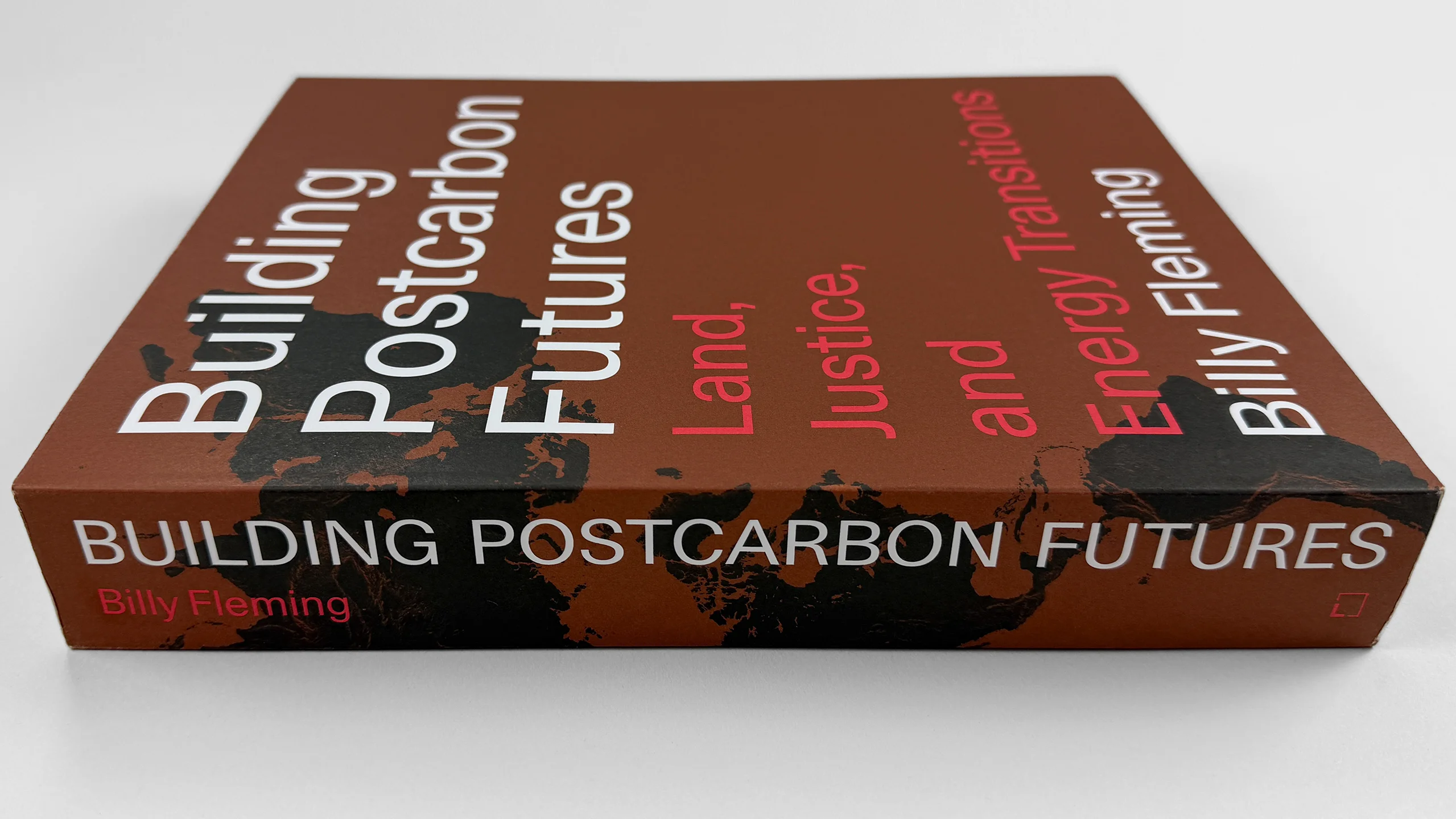
Yet, even as the global headlines remain grim and the political willpower to enact systemic change frequently stutters, there are profound reasons to find optimism in how communities are already responding to the challenge. Dozens of these localized triumphs, community-led initiatives, and structural innovations are cataloged in Building Postcarbon Futures: Land, Justice, and Energy Transitions, a comprehensive new book by landscape architect and scholar Billy Fleming. The core premise of Fleming’s work is both hopeful and grounding: humanity does not have to invent entirely new technologies or wait for distant technological breakthroughs to address the climate crisis. Instead, equitable, just, and environmentally sensitive solutions to decarbonization already exist, quietly operating in various corners of the globe.
Fleming brings significant expertise to this analytical undertaking. As an associate professor of landscape architecture at Temple University, an advisory board member of the Climate and Community Institute, and a former policy advisor to the Obama administration, his career has bridged the gap between academic research and actionable public policy. In Building Postcarbon Futures, Fleming distills years of observation and research into 26 detailed case studies spanning 43 countries across six continents. Rather than treating climate action as a purely technical engineering puzzle, his book walks readers through proven, ground-level ways that diverse communities are confronting the crisis while simultaneously tackling systemic inequities in land use, economics, and social justice.
A central theme of the atlas is that true decarbonization requires much more than simply swapping conventional, fossil-fuel-based energy systems for green options like wind and solar power. While renewable energy generation is a necessary component of the transition, Fleming argues that true sustainability demands a fundamental challenge to conventional ownership structures and an expansion of what types of knowledge and innovation are prized by modern society. The book demonstrates that a race toward the newest, most high-tech technique is not always what matters most when confronting ecological collapse.
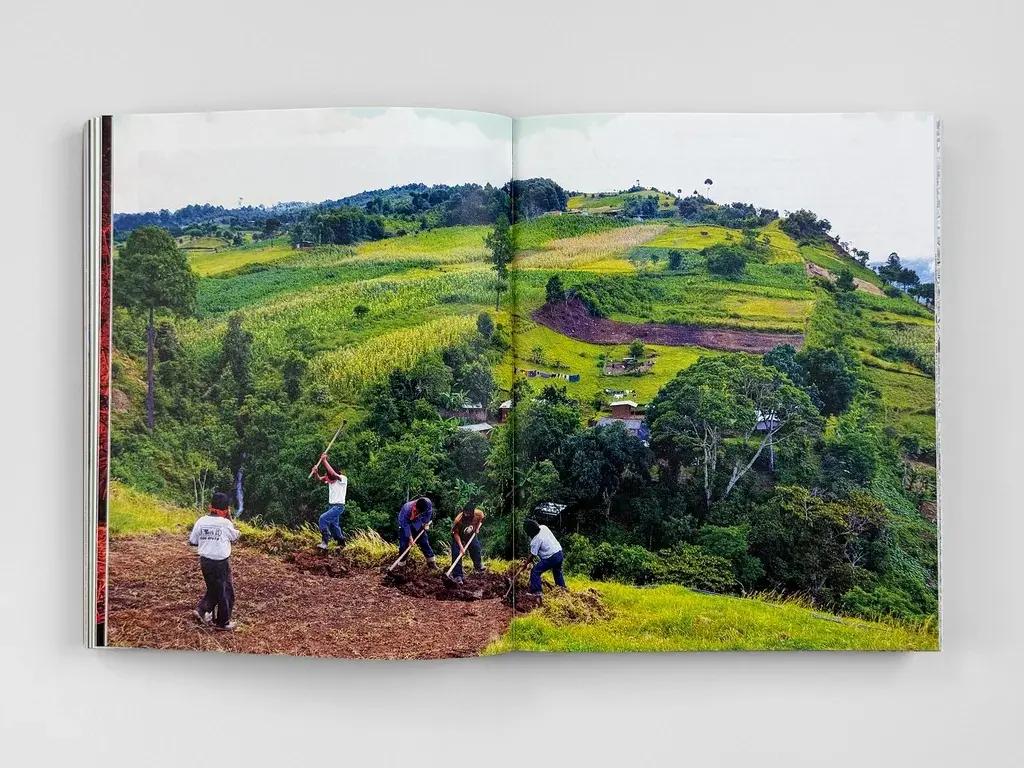
This philosophy is vividly illustrated in one of the book’s case studies focusing on the Zapatista movement’s traditional milpa farming system in Chiapas, Mexico. By relying on agricultural techniques and polyculture practices that date back 2,000 years, the community demonstrates how ancient, indigenous knowledge systems can offer resilient, biodiverse, and ecologically harmonious alternatives to industrial monoculture, proving that innovation is not the exclusive domain of modern laboratories.
Similarly, the book examines how architectural and urban design interventions must prioritize social equity alongside environmental metrics. This is powerfully demonstrated by the acclaimed architectural firm Lacaton & Vassal and their innovative renovation of public housing in Bordeaux, France. In tackling the complex challenge of modernizing aging housing stock, the architects deliberately avoided the common urban renewal trap of displacement. Instead, they found creative, cost-effective, and socially responsible ways to complete comprehensive building retrofits—such as adding expansive new balconies and upgrading energy-efficient systems—while allowing residents to remain securely in their homes throughout the construction process.
Through these diverse case studies, Fleming’s work moves beyond theoretical critique to offer a tangible blueprint for systemic transformation. By highlighting how communities from the Global South to European urban centers are redefining land stewardship, energy access, and social justice, the book challenges both professionals and the public to rethink the standard paradigms of development. Fleming hopes the book will serve as a vital, practical reference for landscape architects, urban designers, policymakers, and everyday readers who are eager to move past climate despair and engage deeply with real-world solutions to the climate emergency.