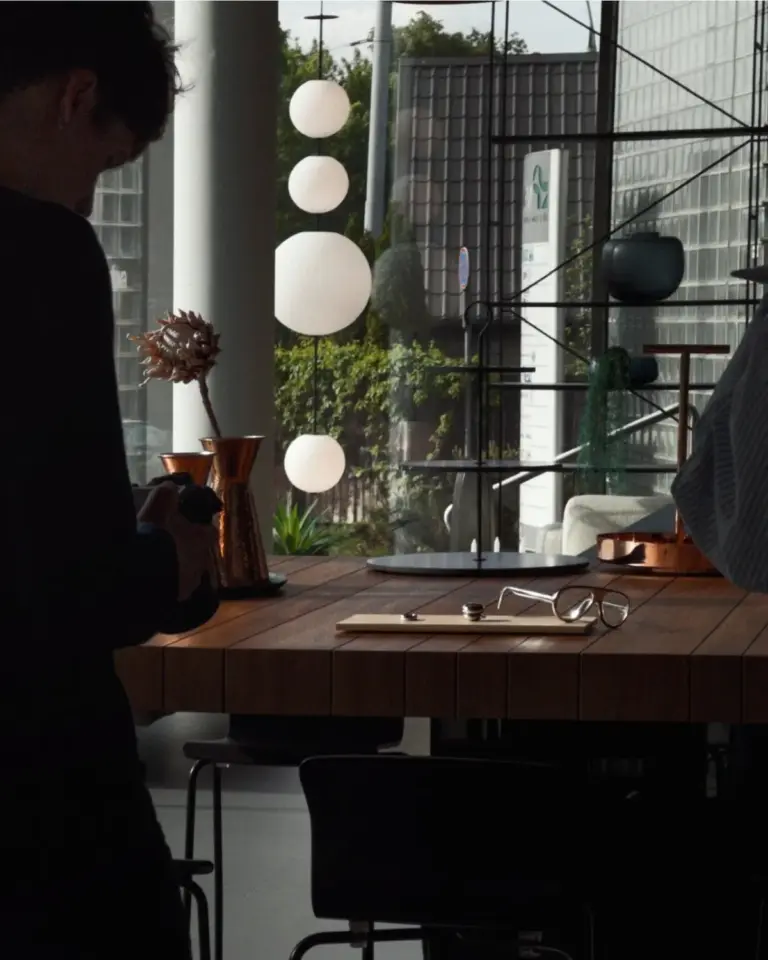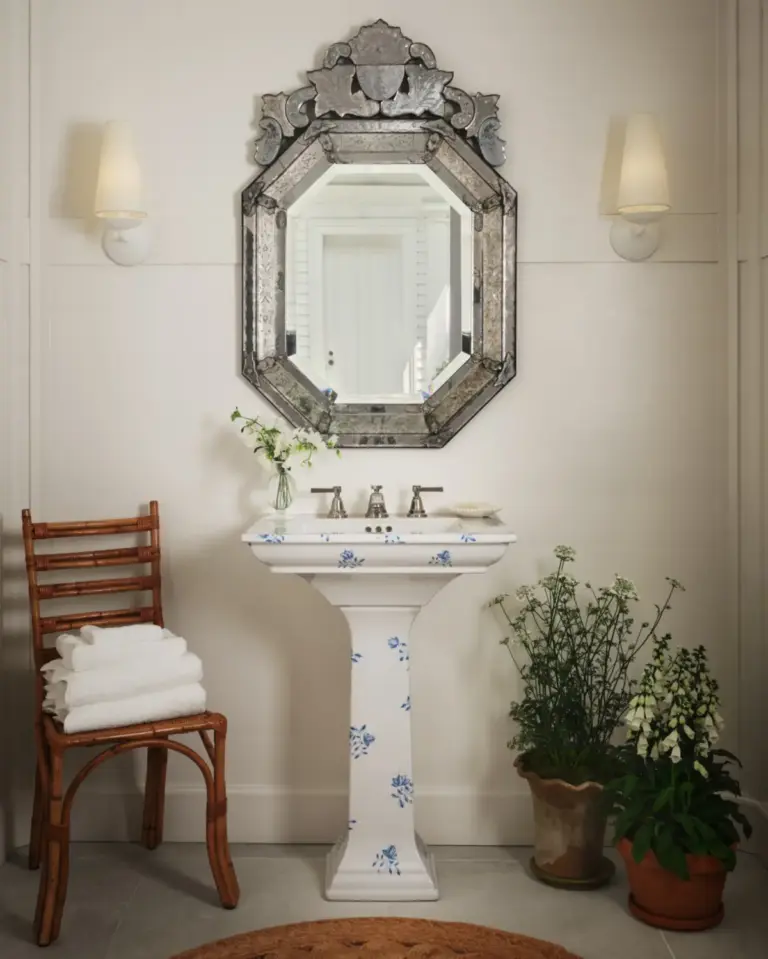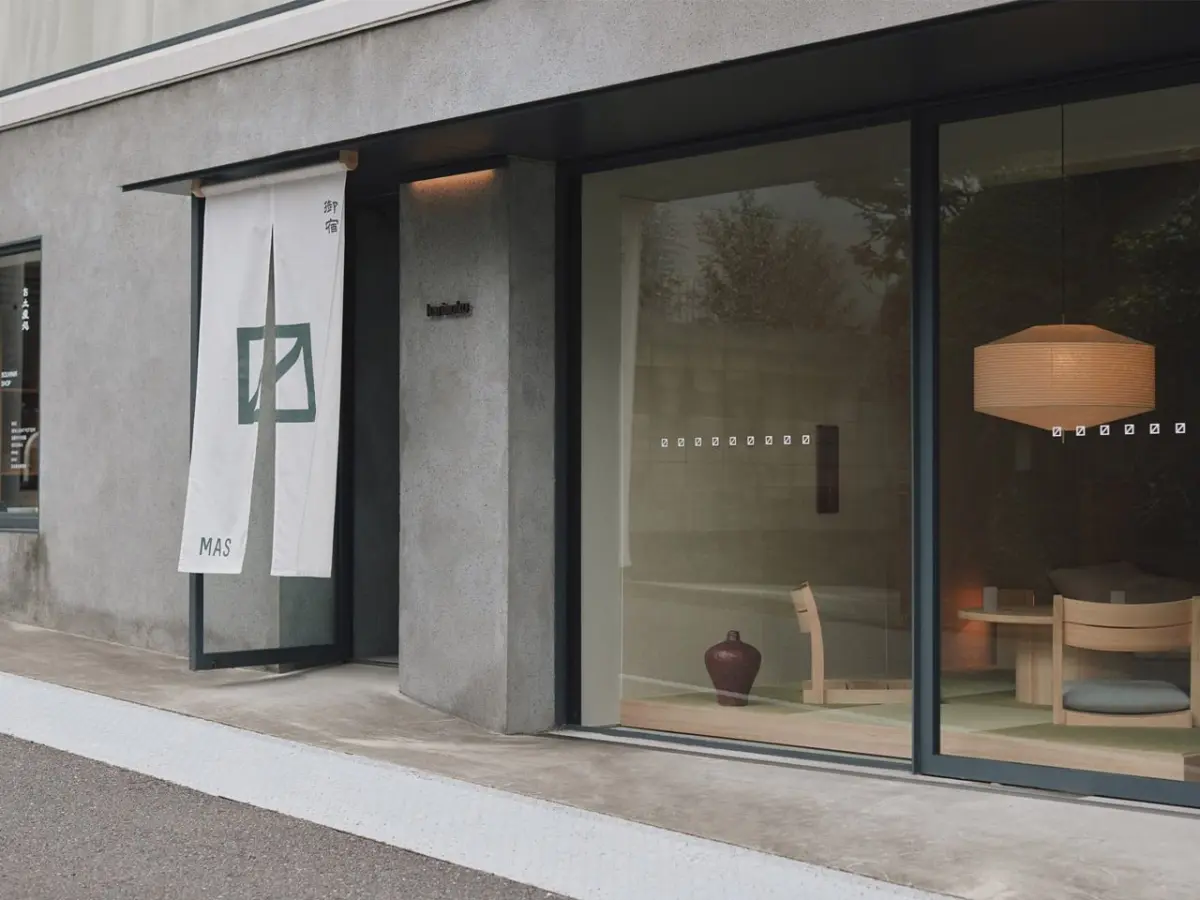
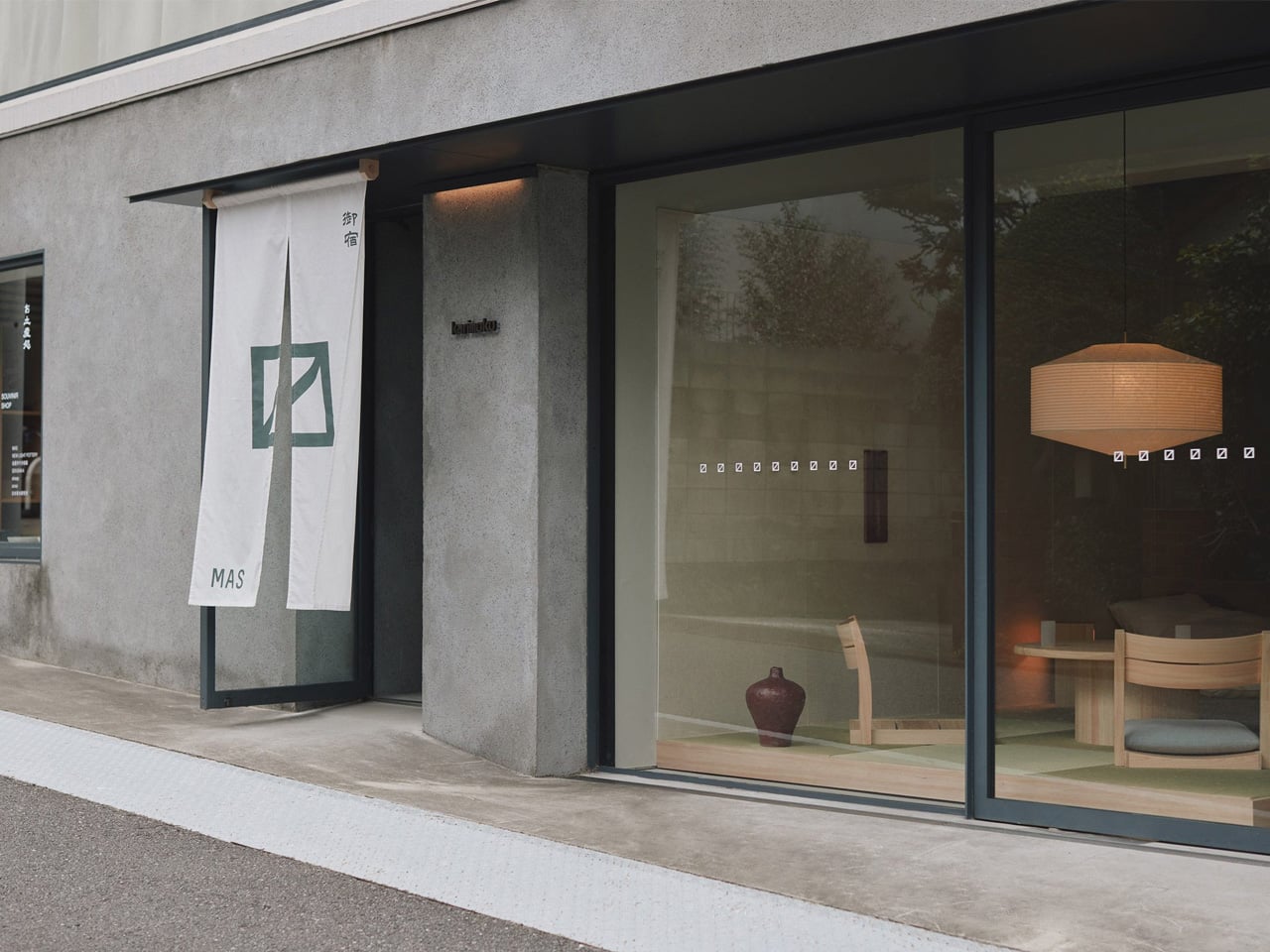
A traditional fabric noren hangs quietly at the entrance of Karimoku Commons Tokyo, signaling an immediate and deliberate departure from the bustling streets of Aoyama. Stepping past the threshold, the standard white-box aesthetic of a contemporary design showroom dissolves entirely, replaced by something much closer to collective memory: the hushed hallways, weathered timber, and distinct, understated warmth of a traditional Japanese inn. This sensory transformation forms the foundational premise of Oyado MAS, a thoughtfully curated exhibition conceived by MAS, the prominent design label by Karimoku, and staged in close collaboration with spatial director Wataru Kumano. Running from September 19 through October 20 at the Tokyo venue, the multi-sensory installation invites visitors to move through a carefully orchestrated sequence of inn-like spaces, transitioning fluidly from a welcoming reception area into a communal lounge and, ultimately, a tranquil sleeping quarters. Throughout the journey, the furniture is not merely placed on a pedestal for passive admiration; rather, each piece is integrated into the architecture of the rooms, built directly around the foundational concept of human habitation.
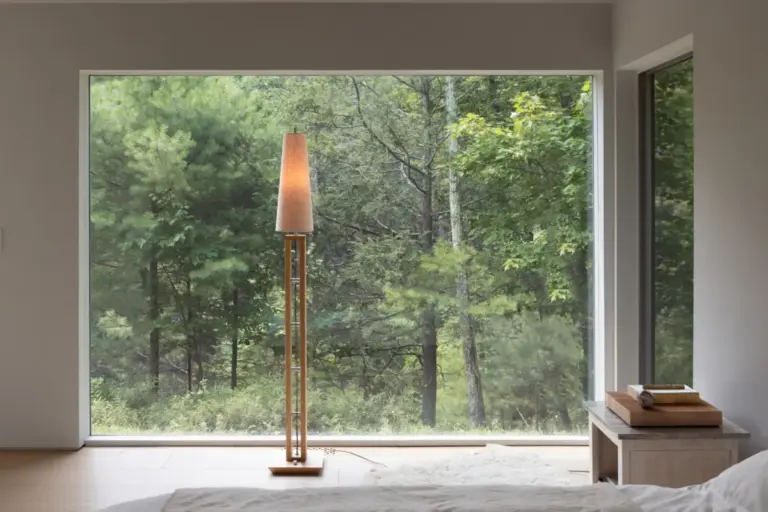
Kumano’s decision to base the exhibition on an oyado—a traditional Japanese lodging—rather than a standardized international hotel format is deeply deliberate. Unlike corporate hotels designed for rapid turnover and generalized luxury, oyados carry a distinct cultural intimacy, an intrinsic sense of slowness and attentiveness that modern hospitality formats rarely manage to capture. Within the exhibition’s sleeping area, the design does not attempt to create a literal or theatrical mimicry of an inn. Instead, it distills the very feeling and atmosphere of one, utilizing MAS furniture to quietly frame how a human body might move through shifting morning light, settle comfortably into a book, or reach naturally across a low table. In this environment, furniture earns its place through utility, tactile interaction, and lived experience rather than clinical visual display.
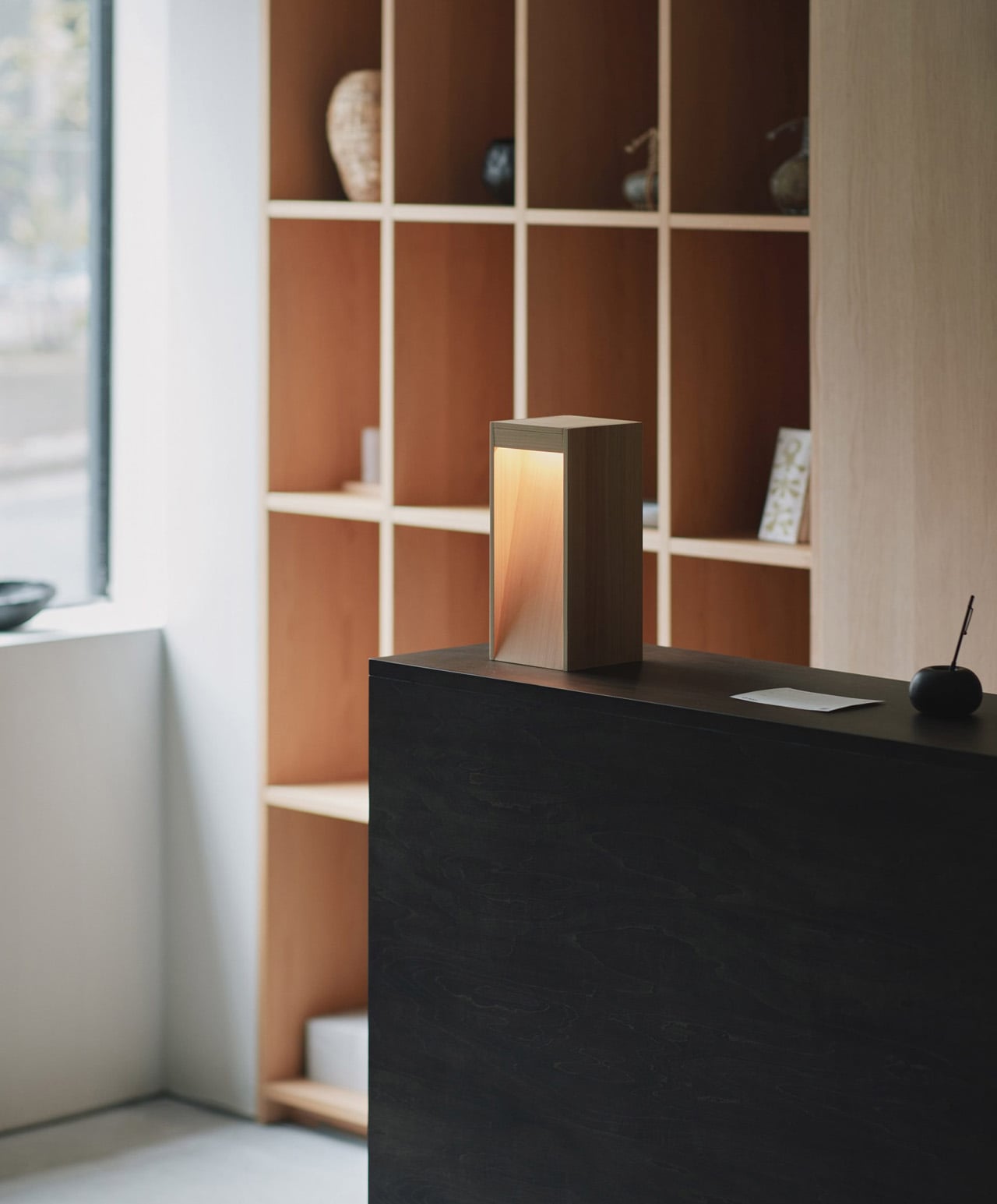
The material palette chosen for the exhibition follows this exact philosophical logic. MAS works primarily with locally sourced, Japanese-grown woods, and the installation makes no attempt to conceal the natural grain, organic irregularities, or historical life of the material. Visible knots, subtle color shifts, and deep tonal variations across the wooden surfaces are left entirely intact rather than being sanded down to a uniform, artificial perfection. Where a conventional commercial showroom typically presents furniture as finished industrial objects defined by flawless, sterile surfaces, Oyado MAS treats the raw, natural character of the wood as an essential part of the visitor’s overall experience, serving as a quiet, grounding reminder of origin, provenance, and the passage of time.
To deepen the narrative and evoke a genuine sense of place, the organizers invited a collective of craftspeople and designers to contribute elements that extend the atmospheric quality far beyond the wooden furniture alone. New Light Pottery contributes bespoke lighting fixtures that cast soft, diffused glows reminiscent of paper lanterns and twilight interiors, while Nao Tesuki Washi introduces delicate handmade Japanese paper to the spatial composition. Furthermore, an ambient fragrance developed in partnership with Sheep carries subtle, earthy notes drawn directly from native Japanese forests, successfully connecting the olfactory layer of the exhibition with its material foundation. To complete the immersive walkthrough, traditional tea brewed from local forest plants is served to visitors, seamlessly folding the senses of touch, scent, and ritual into a singular, cohesive spatial experience.
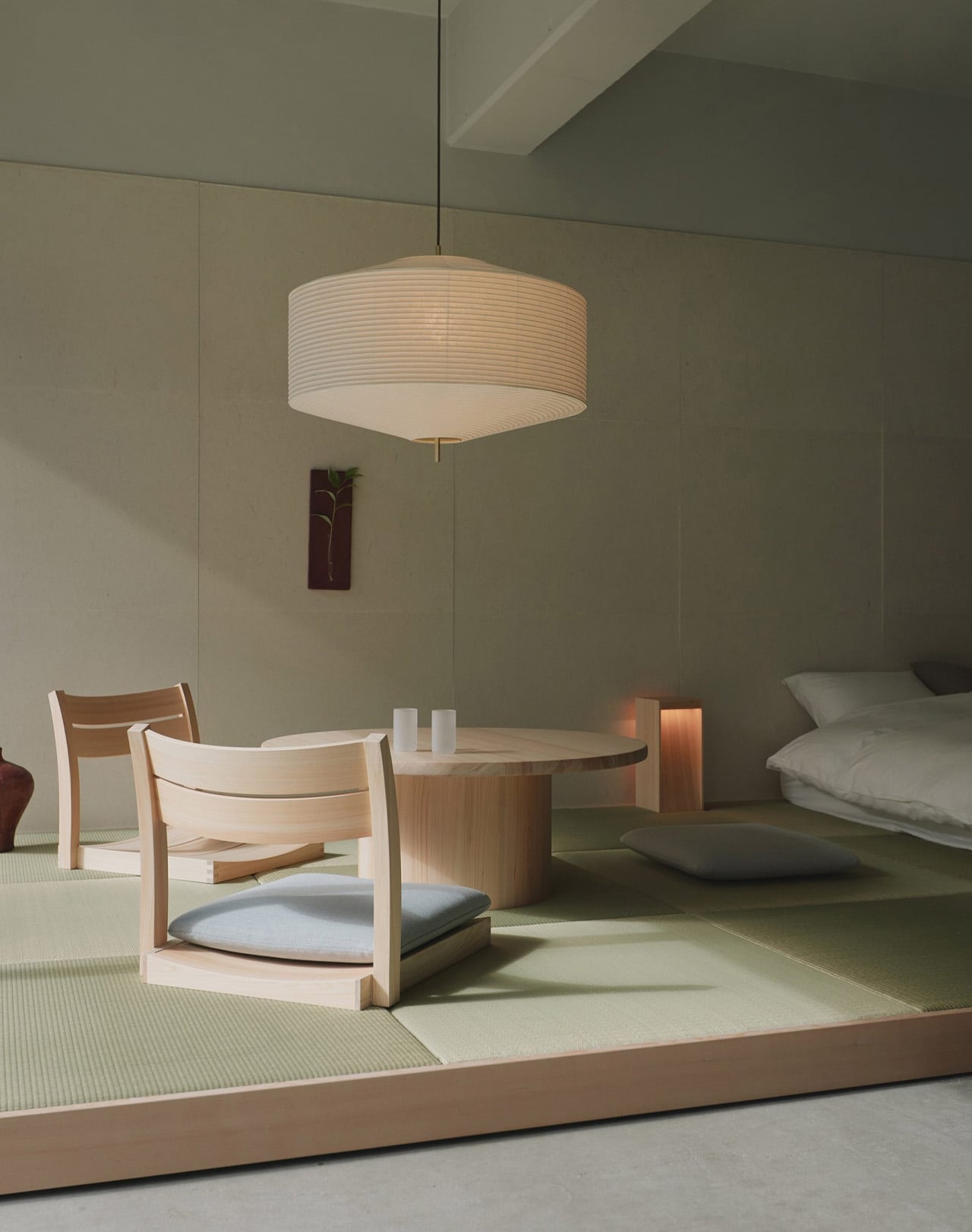
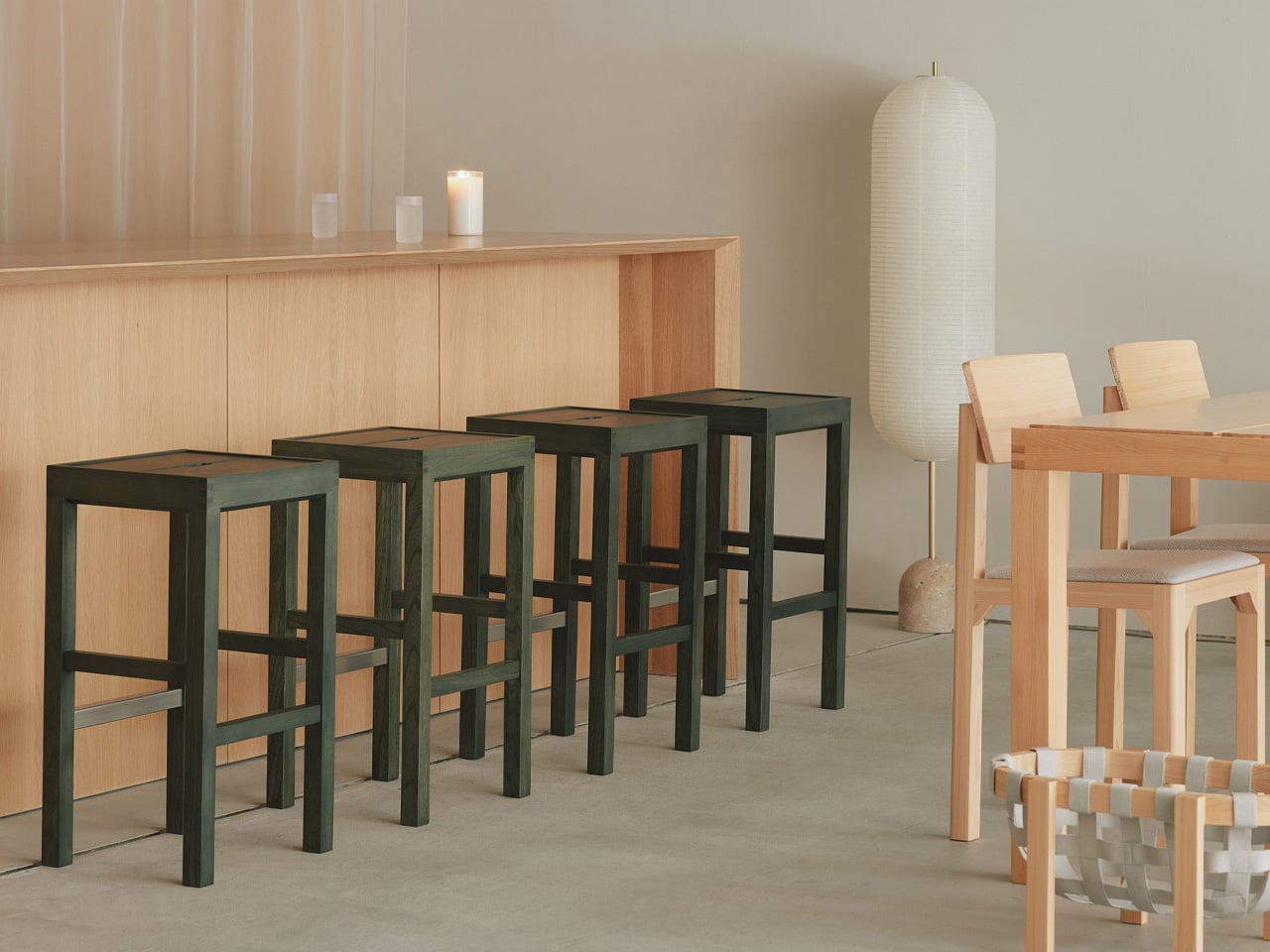
Among the various items available for acquisition by visitors are functional pieces such as the WK Stool by MAS and a meticulously crafted spoon by Sekisaka, alongside the exclusive new fragrance developed collaboratively by MAS and Sheep. However, despite the availability of these select items for purchase, the exhibition is fundamentally not a commercial shopping proposition. Instead, it serves as a sophisticated sequencing argument—a spatial thesis suggesting that furniture reveals its true character and value differently when it is placed inside the rhythm of a lived-in stay, experienced through context, atmosphere, and time rather than pulled from the neutral, decontextualized floor of a standard retail showroom.
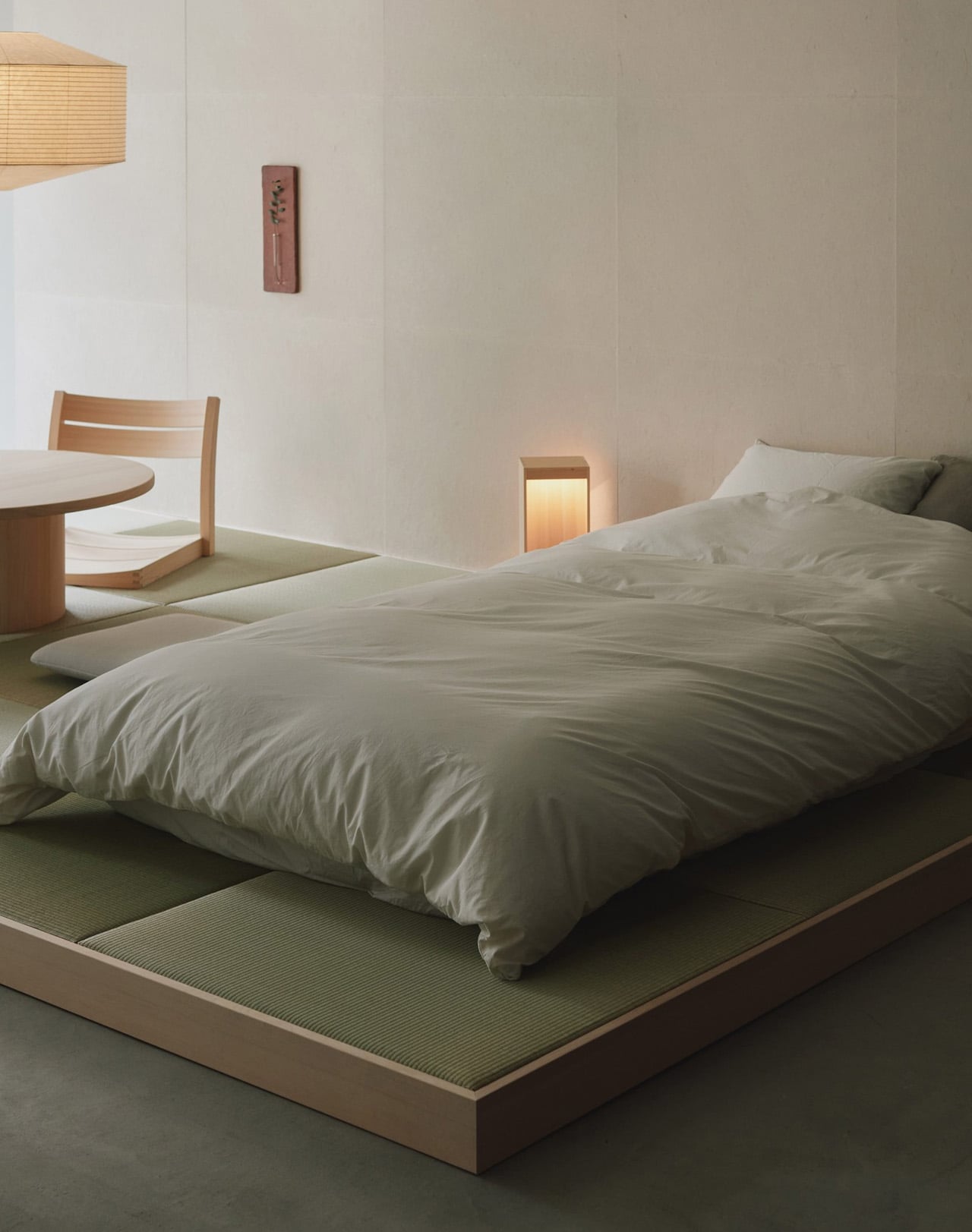
The noren hanging at the entrance effectively marks the psychological shift from retail consumer logic to something considerably slower and more considered, where spatial scale, storage relationships, and the subtle textures of contemporary Japanese craftsmanship become truly readable only through the physical movement of a body through a room. It is a nuanced design lesson that most contemporary showrooms never quite figure out how to impart. Oyado MAS is open to the public Tuesday through Saturday from 13:00 to 18:00, concluding its run on October 20, 2026, at Karimoku Commons Tokyo in Aoyama.