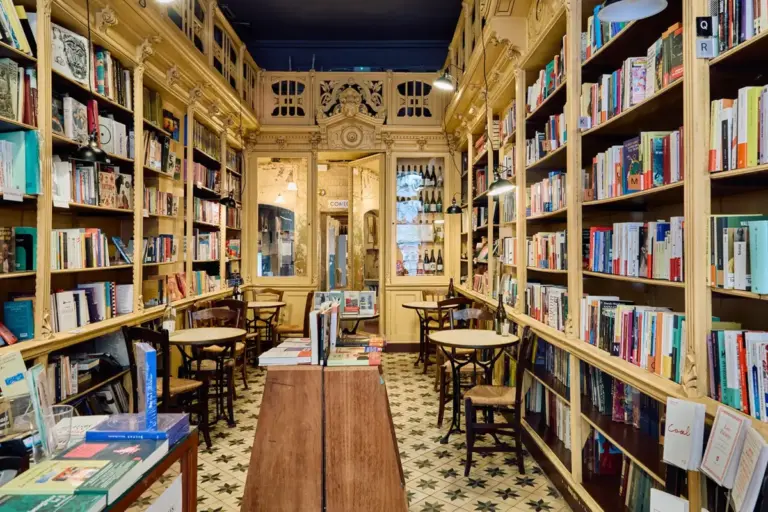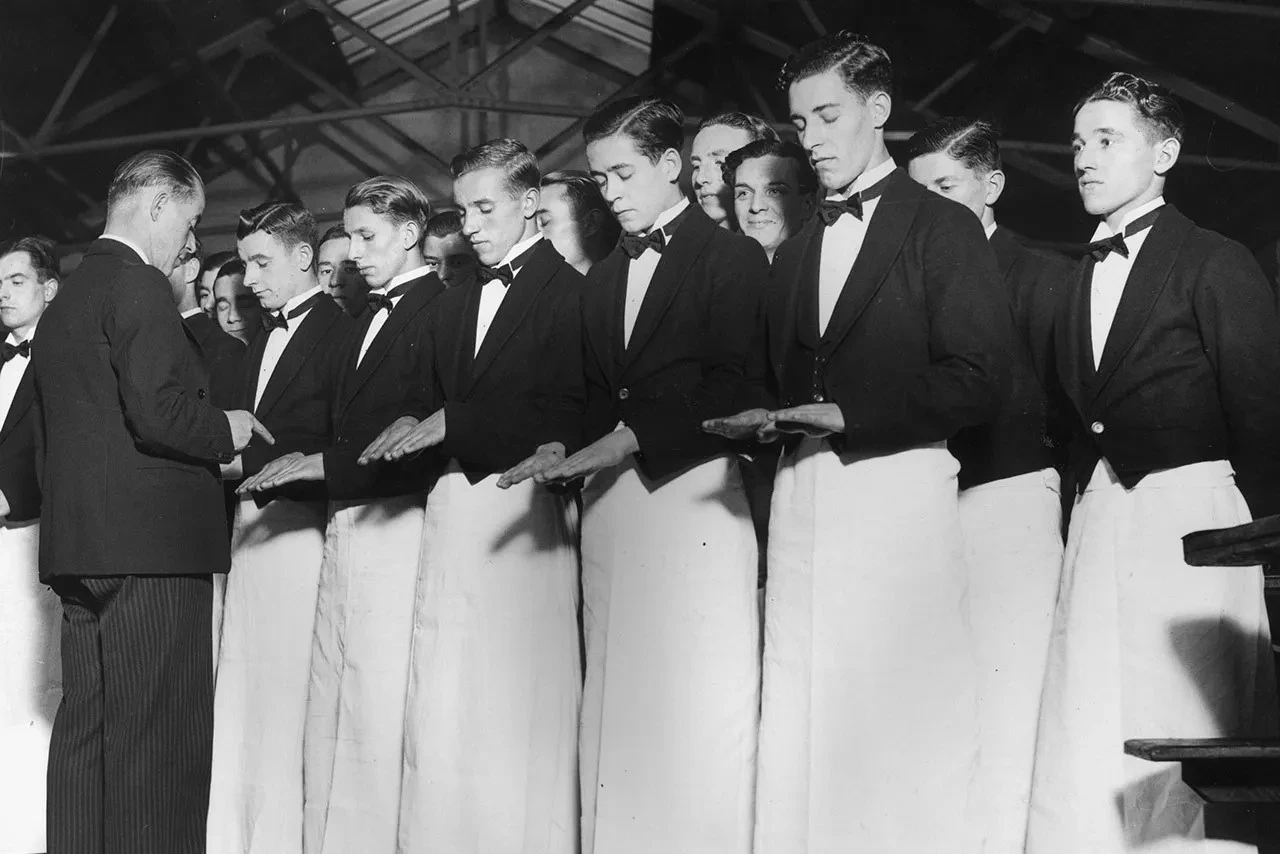
The army of waiters descending on our table makes me choke on my very dry, very dirty vodka martini. Hundreds of them are marching in arm-tucked formation just to fillet a Dover sole. One splinters off to portion the carrots and peas. Another tilts a napkin-draped silver boat until its dill-flecked contents forms a little puddle on my plate.
I’m at Oslo Court, a St John’s Wood institution and flag bearer for a bygone age of silver-service, where lunch feels less like a casual bite and more like a state visit—and crucially, nobody asks you to scan a QR code. By contemporary standards, its hospitality ought to have atrophied; it is antiquated at best and reminiscent of the Last Night of the Proms at worst. But as another spotless waiter refills a glass I had barely noticed finishing, I can’t lie: I’m having a fabulous time.
Not that Oslo Court gives a toss about how anyone thinks a modern dining room should operate. When Tony and José Sánchez took over the cream-drenched dining room of an art deco tower block in 1982, they dug their heels into the plush pink carpet and declined every invitation into “the future”. Even as London’s restaurants cycled through competing ideas of modernity, Oslo Court’s dessert trolley trundled on, rolling past the chic River Café of the 1990s, the communal-table Ottolenghi-ism of the noughties, and the post-recession Jamie Oliverfication of the waiter-diner relationship. Eventually, it was the city that made a U-turn, returning to Oslo Court in dinner jackets to be greeted with the timeless query: “Would sir like another martini?”
Now, the hallmarks of what you might call “formal” service are so ubiquitous across the capital that diners and critics alike keep having to check the dress code before a night out. White tablecloths are back in fashion. So too are sommeliers, whom the job search website Reed recently listed among the country’s “roles on the rise”. At 45 Jermyn St, caviar and beef Wellington arrive on wheels; at Maison François, diners went so feral for the dessert trolley that it now has a steak-tartare sibling. And then, inevitably, there’s Simpson’s in the Strand, where the return of its much-vaunted master carvers has been met with widespread critical fanfare.
The chatterati’s precipitous embrace of yesteryear’s service is more than a little about-face. Just a decade ago, in 2014, the culinary consensus declared the era of “haughty waiters, hushed rooms and starched tablecloths” firmly over, viewing them as relics of a time that restaurants would be wise to forget. Noted food critic Jay Rayner even questioned why anyone would waste money on “battalions of waiters”, before signing off his critique with a definitive, “It’s called progress.”
And who is not for progress? Especially when the core tenets of formal British hospitality are inexorably linked to a shameful past of empire and class exclusion. Simpson’s, lest we forget, barred women from its famous Grand Divan until as recently as 1984. Yet it is difficult not to look sideways at the critics who once loudly championed “modernity” only to return to the past in their droves, swooning over the “properness and regalness” of a passing beef chariot.
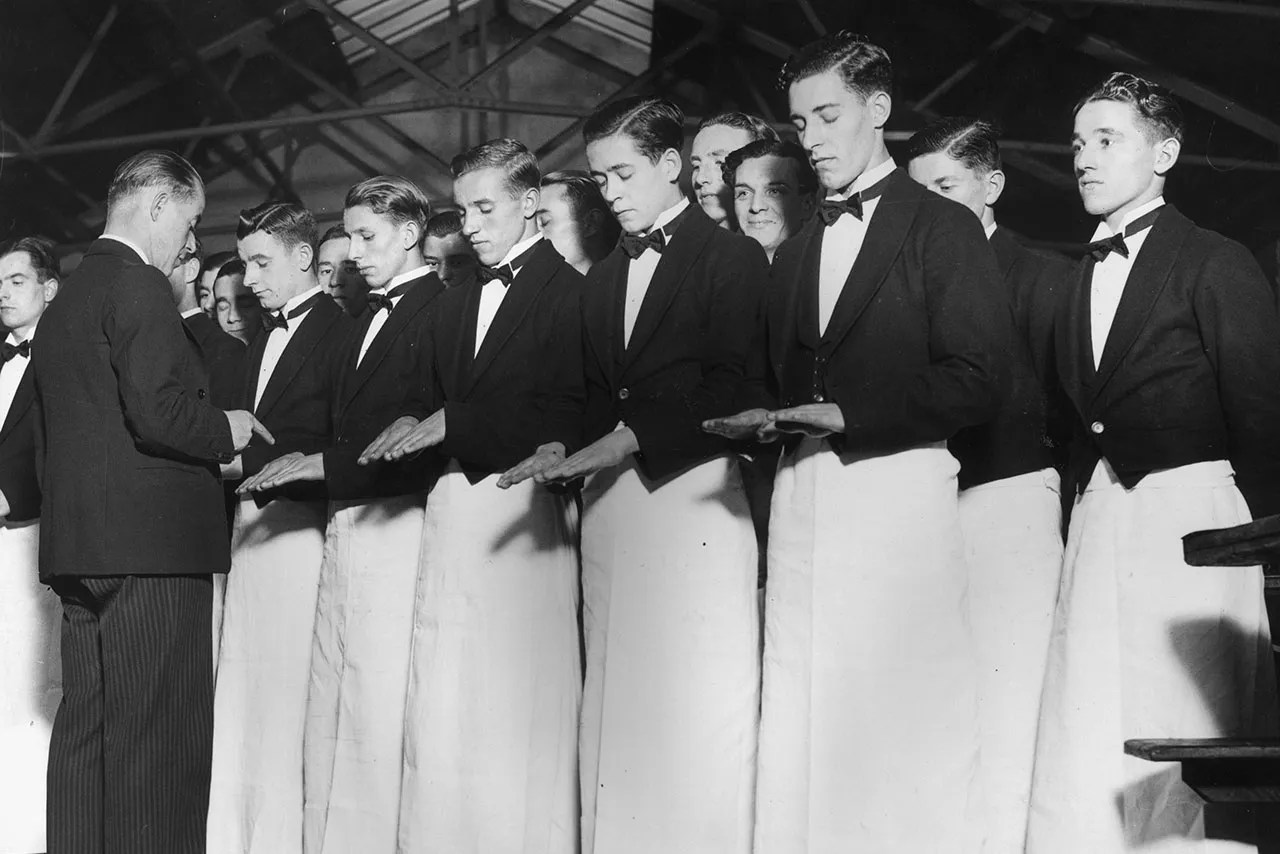
Their sudden oscillation is, however, highly reflective of British culture’s deeply dysfunctional relationship with nostalgia, as well as a much broader failure to reconcile the simple pleasure of service with the societal structures that originally created it. Instead of undertaking a genuine, mature reckoning with this history, we tend to lurch between the simpler—and ultimately impermanent—moral positions of total repudiation and nostalgic restoration. We strip off the tablecloths to atone for the sins of everything that happened above them, only to lay them back out a few years later with a cheeky wink to a bygone world.
It occurred to me, squeezed into a cozy booth on East 60th Street in New York, that there may actually be a third way through this cultural impasse. Le Veau d’Or reopened in 2024 after Lee Hanson and Riad Nasr—the masterminds behind Frenchette and Le Rock—took over the nearly century-old French bistro. Much like the Sánchez brothers at Oslo Court, they talk about ownership as a form of stewardship. As such, they have steadfastly resisted the typical restaurateur’s urge to transform everything within reach, preserving everything from the lipstick-red banquettes and offal-led menu to the gleaming, traditional Upper East Side service.
It feels almost preposterously present—the kind of unabashed, unironic hospitality that could only truly belong to a culture in which the question of service has been thoroughly settled. Which is not to say that the American restaurant industry has a spotless past; quite the opposite. It has grown out of a labor system long riven by inequality, traces of which remain visibly embedded in who serves whom.
Yet because the United States at its best has always believed that the circumstances of one’s birth ought not to strictly define one’s place in the world, its restaurants have proven far more adept at prising apart the art of service from the rigid class hierarchy it once reinforced. There is noticeably less guilt and far more genuine enjoyment, which is why tremendous care will be lavished upon you—whether you are dining in Bucksnort, Tennessee, or on Park Avenue—without any pretentious social theater pretending that it makes you superior to those serving you. Because, as one seasoned waiter succinctly put it to me, “the pursuit of hospitality is a commendable one.”
It is a remarkably simple statement, but in the context of London’s often neurotic, cyclical relationship with service, it feels rather prescient. Instead of treating each new aesthetic fashion as an absolute moral correction of everything that came before it, New York’s approach suggests that the exhausting cycle can finally be broken. It proves that you can fully reckon with a complicated history, and then decide once and for all what is actually worth carrying forward into the future. To me, that feels a great deal closer to actual progress.
Ben Drinkwater is a culture, food and travel writer and editor based in London.