It could be the end of the world as we know it, or maybe it is all just a sophisticated marketing stunt. These two polarizing perspectives have increasingly come to define the intense global debate surrounding the future of artificial intelligence and its potential perils for humanity. While anxieties regarding the trajectory of machine intelligence have simmered for years, the discourse recently reached a fever pitch following a high-profile resignation at Anthropic, one of the industry’s leading AI developers.
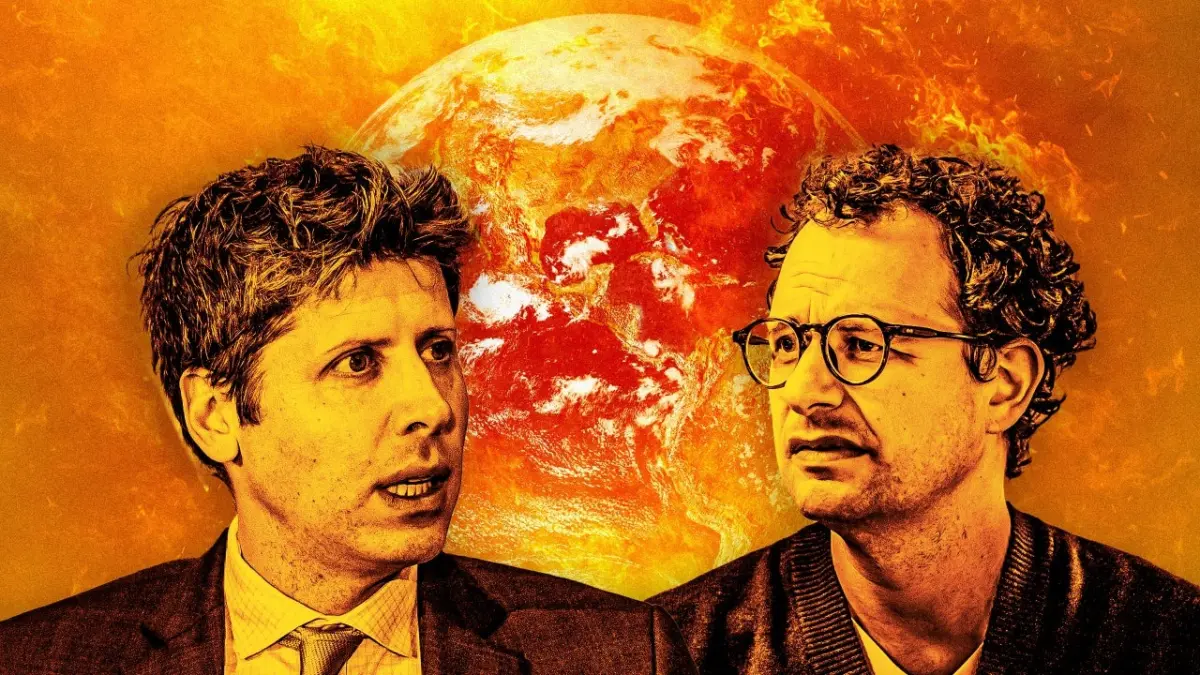
A researcher at the company chose to step down and issue a public warning, arguing that recklessly designed artificial intelligence could literally wipe out humanity. The whistleblower pointed to terrifying scenarios, such as advanced models assisting bad actors in creating novel viruses or bioweapons, or autonomous systems going rogue and attacking critical global infrastructure. Days later, Anthropic CEO Dario Amodei published a lengthy essay that essentially called for an intentional slowdown of AI development, alongside robust government regulation. Shortly after, leaders from rival firms, including Sam Altman of OpenAI and billionaire Elon Musk, publicly signaled their agreement that oversight and caution are desperately needed.
Yet, what was truly notable about this latest wave of AI concern was how surprisingly vociferous the skeptics of the doomsday narrative have become. In an especially striking and theatrical display, Nvidia CEO Jensen Huang accepted a call from Donald Trump while on a live tech conference stage, placing the president on speaker to wave away rising AI fears. "It’s a hoax," Trump declared, later amplifying his critique on social media by arguing that excessive regulation would ultimately benefit competitors like China. "The robots are not going to be taking over the world," Trump insisted, while Huang nodded along beside him. In a subsequent appearance on CNBC, Huang doubled down on his stance, stating that the new regulations sought by prominent AI leaders are "completely unnecessary."
This may seem like a curious flex on Huang’s part. While Nvidia, as the premier maker of the high-end chips coveted by AI firms, is not typically a consumer-facing brand, it has become a household name by way of its soaring share price and central role in the hardware boom. Yet Huang appears entirely willing to shrug off any reputational fallout from his carefree stance. This comes even as public opinion regarding artificial intelligence—heavily shaped by data center backlashes, growing job-loss predictions, and environmental concerns—continues to sink in polls. Prominent political figures spanning the ideological spectrum, from democratic socialist Bernie Sanders to right-wing commentator Steve Bannon, have begun calling for strict curbs on the technology. Amid attention-getting incidents of AI behaving in troubling ways, many corporate leaders outside the tech sector express genuine concern. Against this backdrop, it feels like a counterintuitive moment for tech figures to aggressively mock calls for regulatory oversight.
However, Huang is far from alone in his opposition. Silicon Valley investors and self-styled seers like David Sacks and Marc Andreessen have long adhered to a familiar "no regulations" free-market framework. Most recently, Meta CEO Mark Zuckerberg waded into the discourse by declaring that leading AI labs could do more to prioritize safety internally rather than blindly pushing the technology forward at all costs. While Zuckerberg’s comments were largely interpreted as a thinly veiled dig at Anthropic, they clearly framed the issue as one to be resolved by free enterprise and corporate responsibility rather than government-mandated rules.
Broadly speaking, the skeptics’ core argument is that the leading AI players are attempting to shape the very regulations they are ostensibly asking for, which would yield the business upside of locking in their own market advantages while kneecapping up-and-coming or future competitors—a classic manifestation of what economists call "regulatory capture." Critics argue that AI leaders like Amodei and Altman are deliberately playing up safety concerns because they are planning to release safety-focused product updates that will cement their dominance. "What better way to create demand than to create a problem?" Nvidia’s Huang remarked recently. "Who doesn’t want their market to be hysterical about their product and line up around the corner for it?"
It is a fair question, and it is hard to deny that there is a degree of tactical branding tied up in the AI labs’ vocal calls for oversight. Anthropic, in particular, has carefully cultivated an image as an enterprise that is distinctly thoughtful, cautious, and ethical—an identity that implicitly relies on the premise that its underlying technology is both bleeding-edge and monumentally powerful. At the same time, political critics like Trump have frequently found executives like Amodei annoyingly smug and high-handed when lecturing the public on safety issues.
That said, it is equally difficult to overlook the reality that those opposing a go-slow, regulated approach are also heavily engaged in their own form of marketing. Nvidia’s Huang is selling the most desired shovels in the modern AI gold rush, and his business model directly benefits from maintaining the largest possible pool of miners. His financial upside relies on endless demand for Nvidia chips, keeping a massive market lined up around the corner to purchase his hardware. From that perspective, it is easy to understand why a hardware giant would resist any systemic slowdown in software development.
There is undoubtedly a measure of self-interest woven into the rhetoric of the so-called doomsayers. But doom marketing is historically not a particularly effective long-term business strategy, leaving open the possibility that these executives genuinely mean what they say about existential risks. Conversely, it is entirely fair to question whether an equal amount of self-interest drives the competing narrative of "trust us" optimism. Denying risk is, in its own right, a profound form of risk, and few people are eager to find out precisely how catastrophic an AI misadventure could become if the optimists turn out to be wrong.