Walk into the opening gallery of the group exhibition Thresholds at the Haggerty Museum of Art, and you are immediately met with a striking installation: dozens of hand-crafted brooms arranged in meticulous, long rows. These small, utilitarian tools are bound together by an array of scraps, including ribbons, cords, and braids in a vast spectrum of colors and textures. Protruding from the top of each sweeper are raw, gnarled branches sourced from a fallen tree. Created earlier this year during a participatory community workshop in July at the Lynden Sculpture Garden, these collective sweepers embody what Portland, Maine-based artist Daniel Minter describes as a "talisman, tool, and object of remembrance."
Minter has long explored the profound spiritual dimensions embedded within the ordinary items we utilize in our daily lives. The broom, in particular, has served as a recurring subject of inquiry for the artist, prompting him to examine the deeper meanings behind cleansing and caring for one’s physical space and personal self. Through his artistic lens, these acts of physical and domestic devotion double as powerful gestures of empowerment and communal care. It is a philosophy that drives Minter to view his expansive creative practice—encompassing sculpture, drawing, illustration, and large-scale community projects—not merely as aesthetic production, but as a dedicated public service and offering to the community.
Minter’s deeply rooted perspective on systemic power, resilience, and creativity is informed by his formative years. Having lived in Portland, Maine, for more than two decades, Minter was originally raised in Georgia during the height of the Jim Crow era. As a child, he and his family lived directly across the street from a designated white-only swimming pool, and educational institutions remained heavily segregated until he reached the fourth grade. Reflecting on those foundational years during a video interview, Minter notes how confronting systemic oppression simultaneously opens one’s eyes to the structures that offer empowerment and a fortified sense of self.
Among the most enduring of those empowering forces in his youth was his mother’s near-constant singing, paired with the young Minter’s innate drive to create. As an adolescent, he spent his time carving small wooden sticks and painting custom signs for neighbors in need. This early passion eventually led him to formally study illustration in college. Today, Minter maintains a diverse career that includes illustrating acclaimed children’s books, such as his notable work on Going Down Home with Daddy, which earned him the prestigious Caldecott Medal.
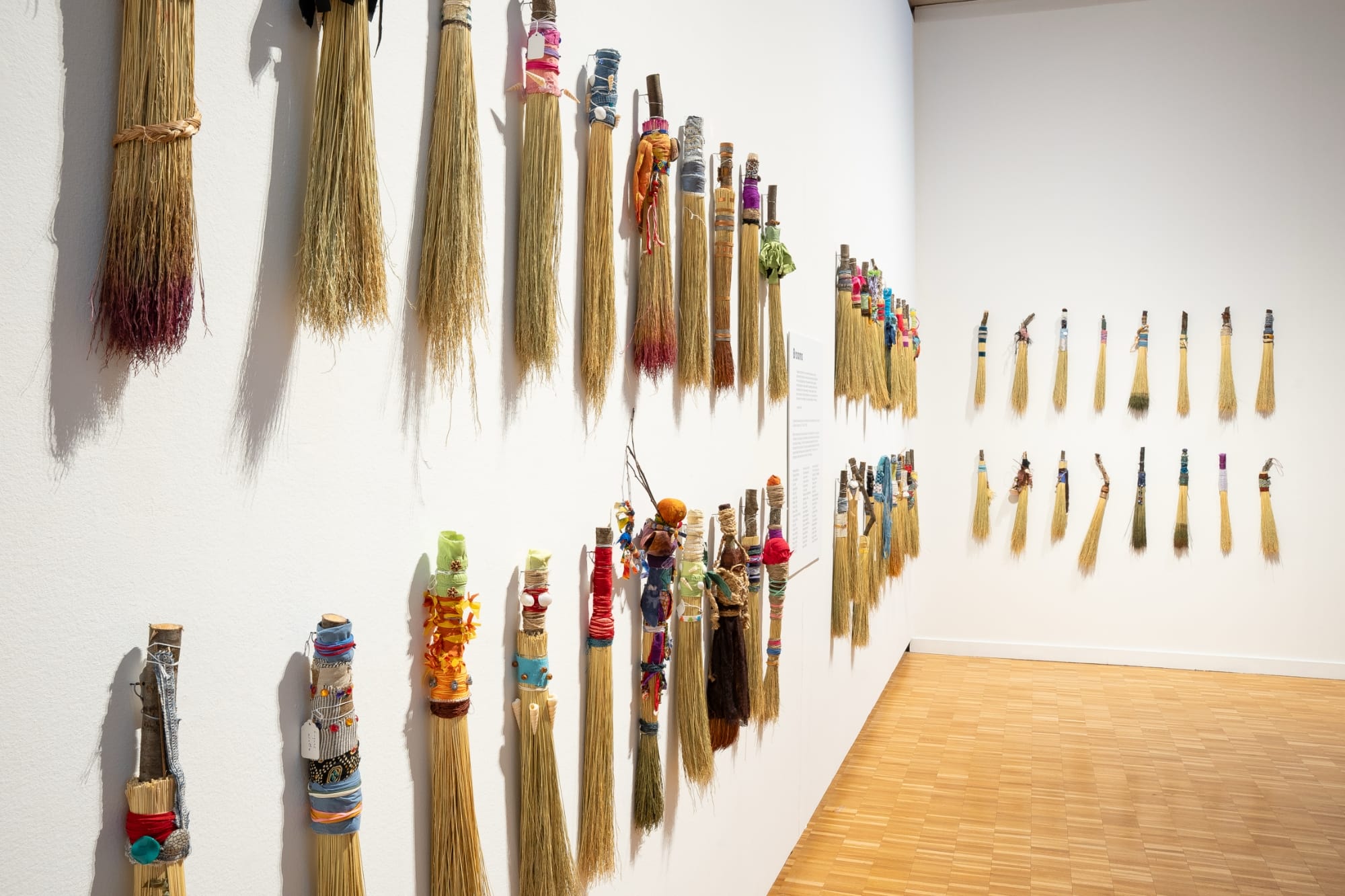
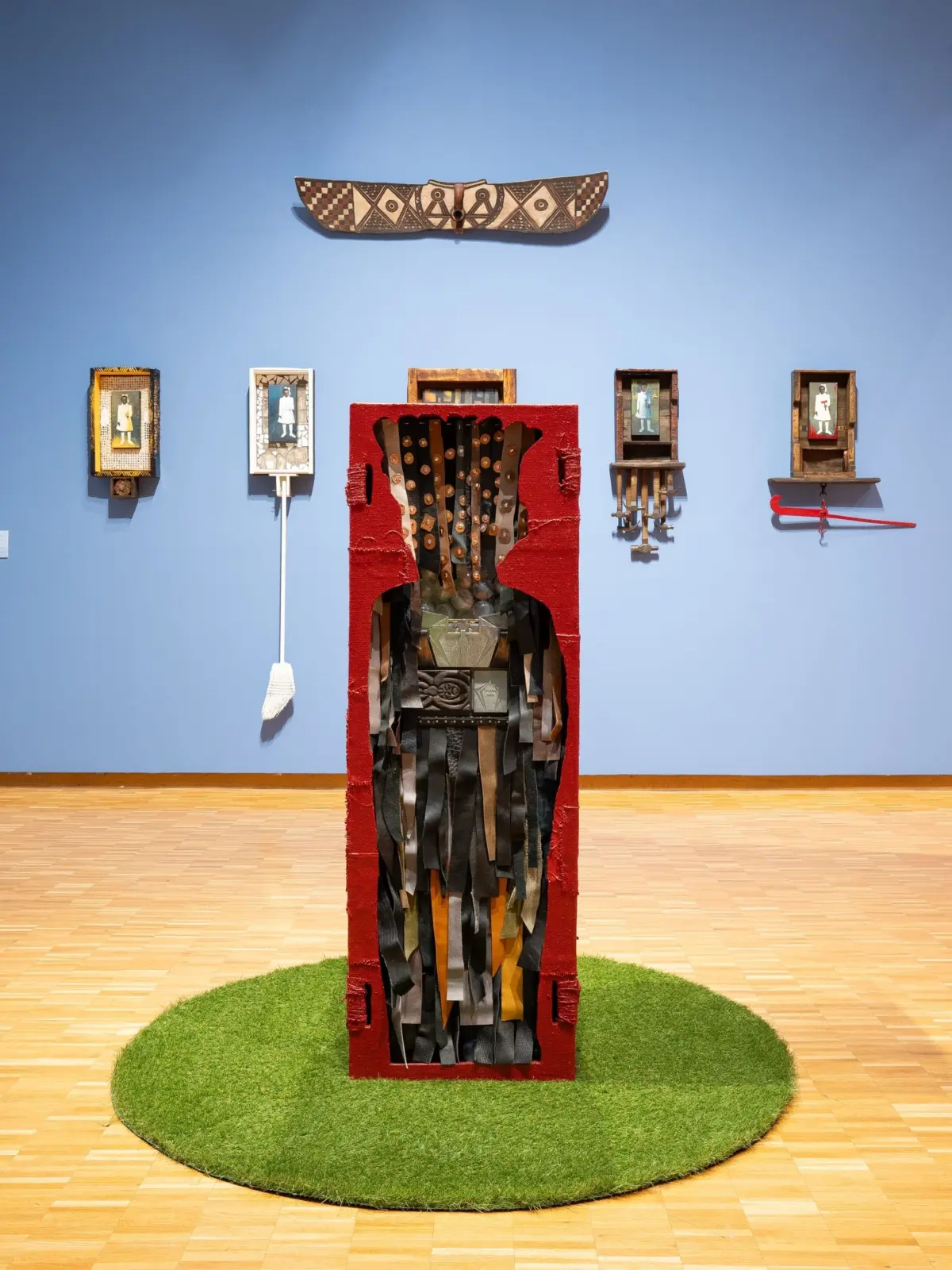
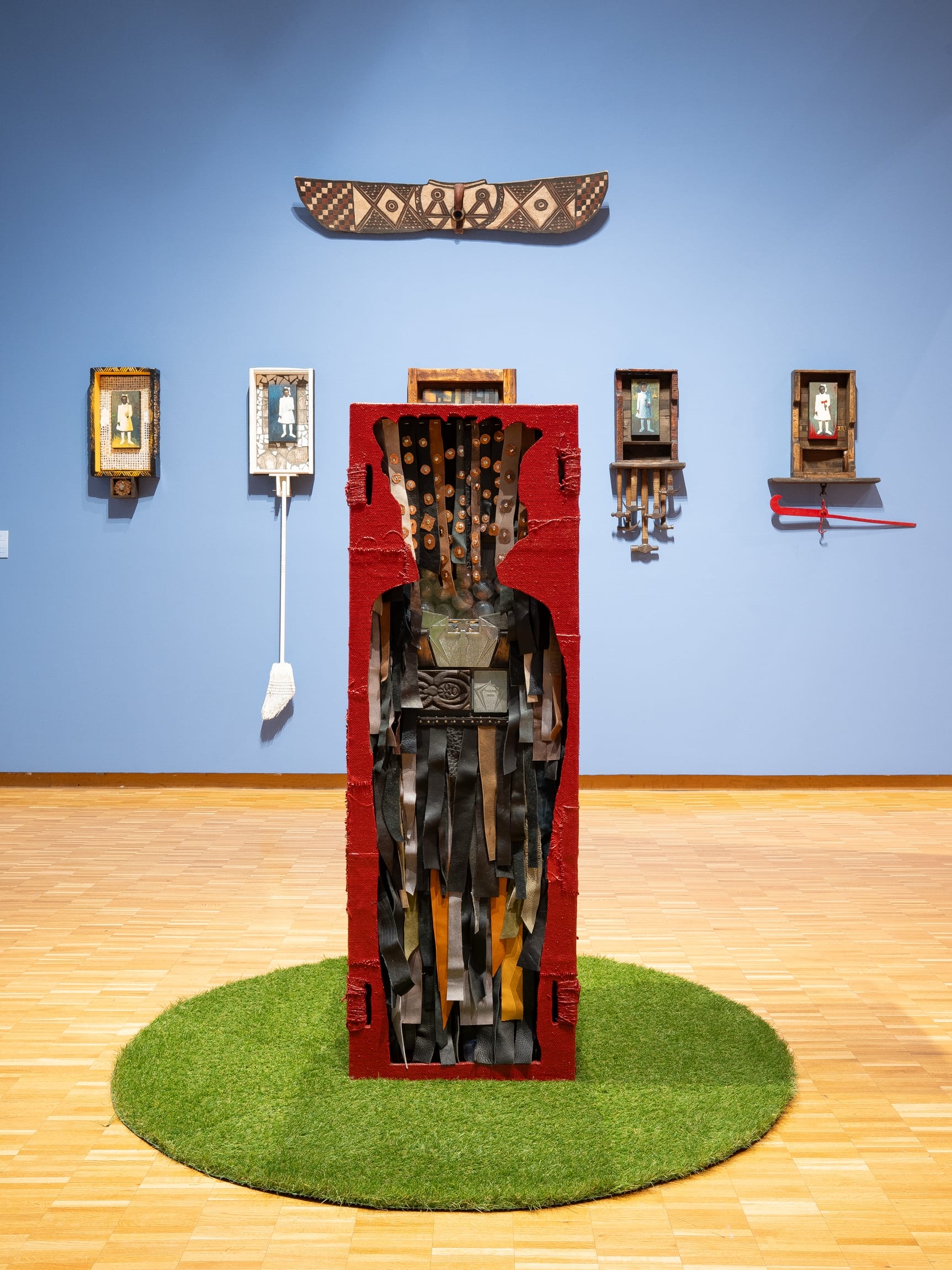
At the Haggerty Museum of Art, visitors are invited to experience the full scope of Minter’s multifaceted artistic practice. Alongside the community-generated display of brooms, the exhibition features a series of vibrant, carved wooden sculptures adorned with stylized portraits and superimposed motifs. These figurative assemblages merge everyday found objects with carefully curated materials, functioning, in the artist’s view, as contemporary vessels designed to hold ancestral and spiritual knowledge.
Elaborating on this connection in a catalog essay accompanying Thresholds—an exhibition that thoughtfully pairs the museum’s permanent holdings with Minter’s contemporary sculptures—the artist writes about the continuity of his cultural lineage. He notes that he descends from a people with a long, intricate tradition of fashioning precisely these kinds of transformative tools and objects of communication. By placing his own sculptural works in direct dialogue with the artifacts and masks from the Haggerty Museum collection, Minter bridges the gap between historical craft and modern expression, viewing his carving practice as a vital conduit for reconnecting with a living system of communication that bridges spirits, ancestors, and the unseen world.
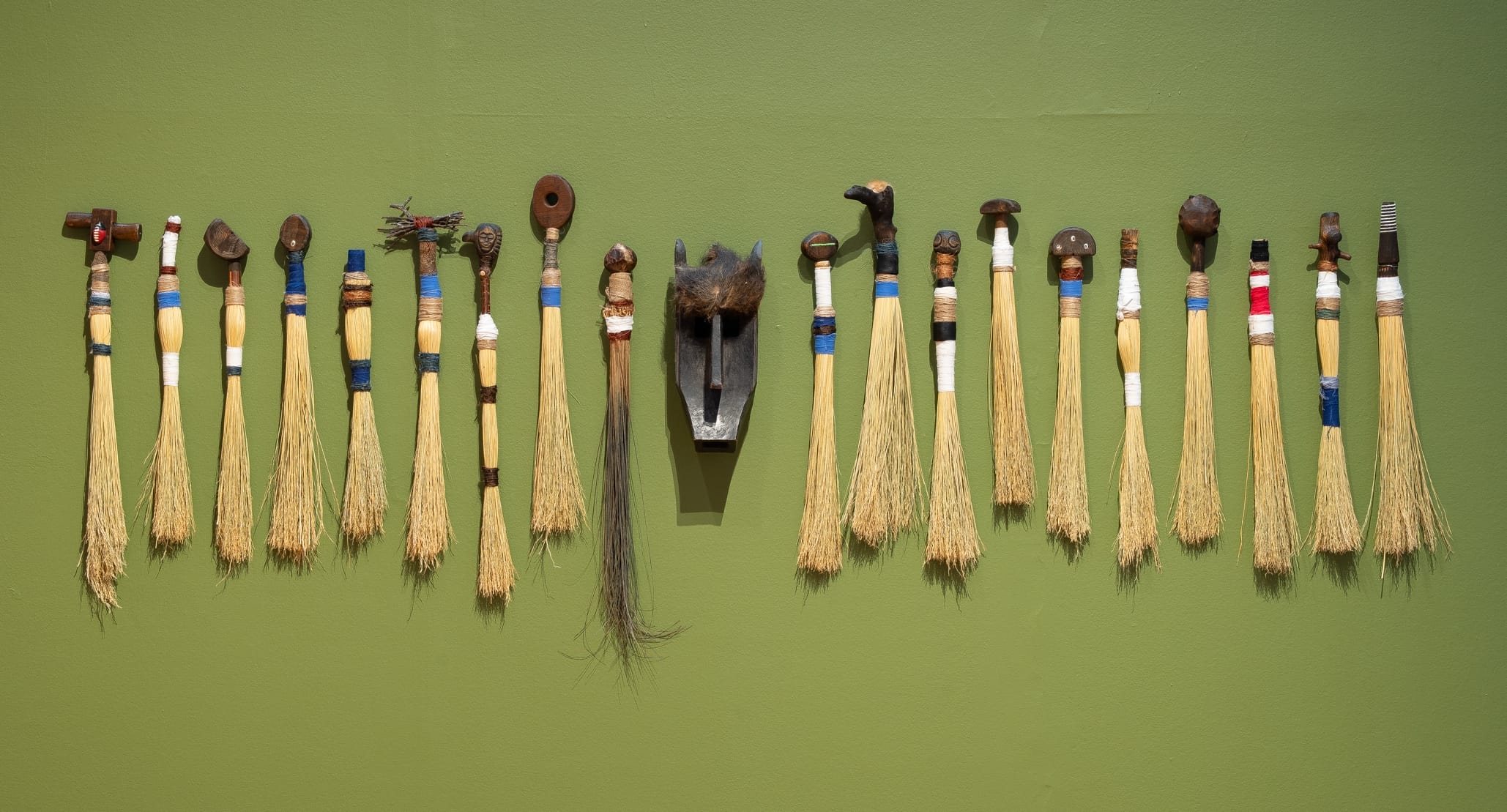
To foster an environment where such deep spiritual communion can take place, Minter is deliberate in his use of color and environmental design. Nature serves as the foundational anchor for his portion of the exhibition, with each gallery wall painted a distinct hue representing a specific facet of the natural world: blue for the ocean, red for fire and thunder, and green for the forest. These verdant themes are further extended into a central, freestanding sculpture that places an abstract, totemic figure atop a patch of artificial turf.
While forms of this nature are typically presented outdoors or nestled within a forest canopy, this two-sided sculpture serves as a deliberate mechanism for instilling hope within an indoor gallery setting. Confronting the heavy realities of the contemporary world, Minter poses a vital question: How does one locate the necessary vision for a future when the physical objects immediately before you suggest otherwise? This central sculpture acts as the artist’s tangible answer, offering a quiet space of peace and contemplation for anyone willing to engage with its layered message.
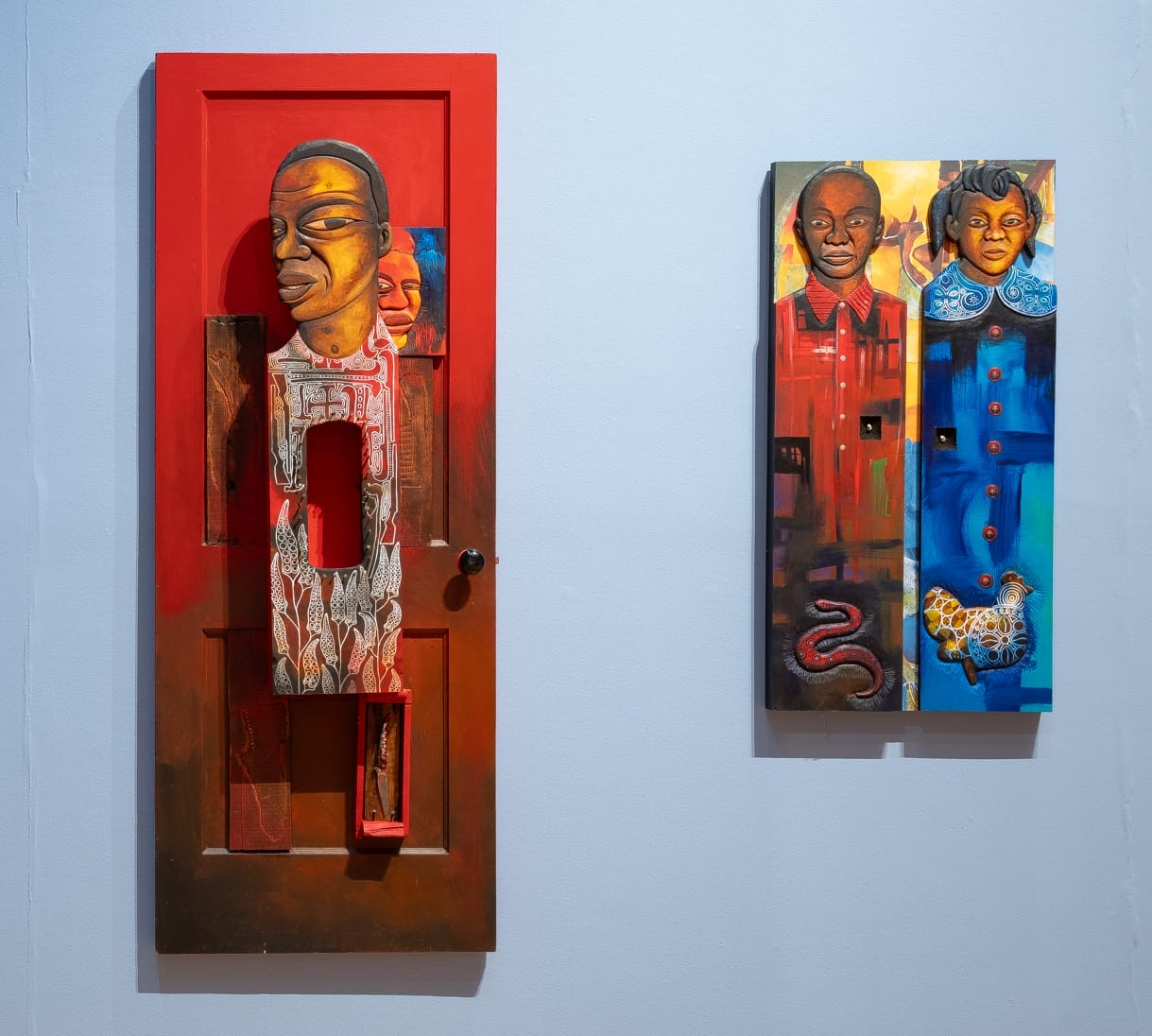
Minter remains thoughtful about the relationship between material culture and human consciousness, clarifying that art objects do not inherently transmit spirituality on their own. Instead, he suggests, they act as catalysts that remind us of the spirituality we already possess, functioning as tools for translation and deep reflection. An individual object can serve as a poignant reminder that one is capable of profound thought and possesses the inner strength to overcome obstacles. For Minter, providing that reminder is the ultimate form of artistic service.
Thresholds remains on view through December 19 at the Haggerty Museum of Art, located on the campus of Marquette University in Milwaukee. Those wishing to learn more about Daniel Minter’s ongoing artistic practice can explore his official website or follow his work through his social media channels.