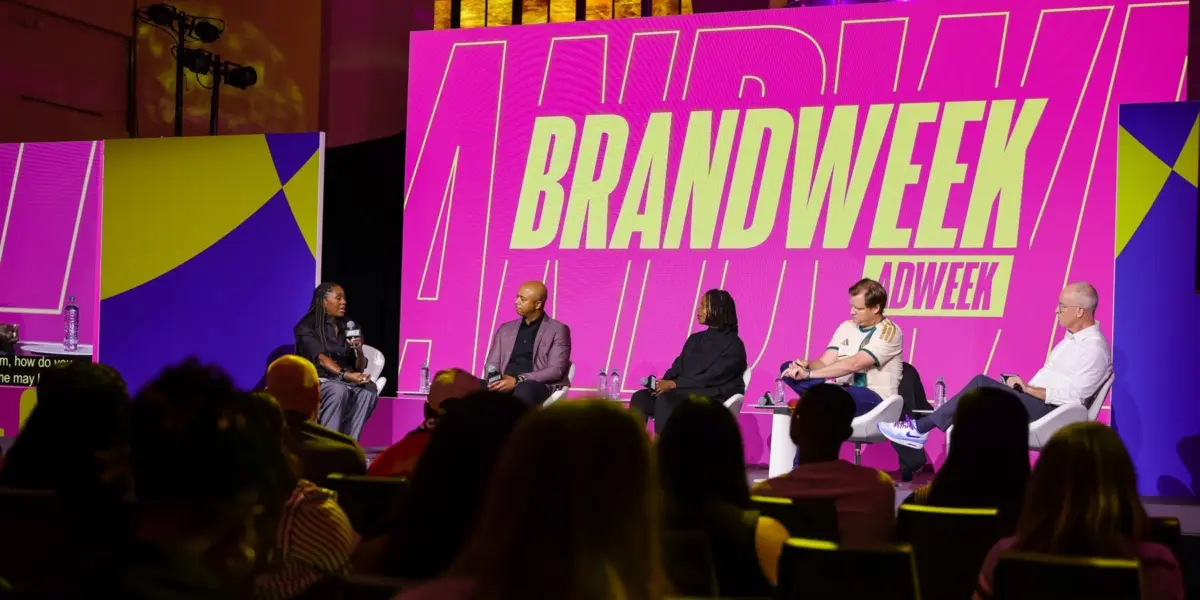
In Atlanta, sports move differently, and according to Shannon Watkins, founder of Watkins Brand Advisors, they do not operate in a different lane than music or history or community. It is culture.
Watkins made the comments while moderating the "Home Field Advantage" session during the final day of Brandweek. And culture was top of mind as the executive was joined by a powerhouse panel of sports marketing leaders representing the city’s major professional franchises: Shannon Joyner, chief marketing officer with the Atlanta Falcons; Melissa Proctor, executive vice president and chief marketing officer with the Atlanta Hawks; Adam Zimmerman, senior vice president of marketing and content for the Atlanta Braves; and Mike Ridley, vice president of marketing for Atlanta United FC.
The gathering of top executives at Brandweek provided a unique platform to examine how sports branding in a major metropolitan market intersects with deeply rooted social fabrics, local identities, and community engagement. Rather than viewing athletics strictly through the traditional lens of ticket sales, television ratings, and merchandise revenue, the panel explored how franchises in Atlanta function as active participants in the cultural evolution of the city itself.
Shannon Watkins, guiding the conversation as moderator, established the foundational premise early in the session. By asserting that sports in Atlanta are inextricably linked to music, history, and community rather than existing in a separate commercial sphere, she framed the discussion around a holistic view of fandom and civic pride. In a city globally recognized as a cradle of musical innovation, civil rights history, and vibrant community movements, local sports teams must align their brand identities with the authentic rhythm of the city to resonate meaningfully with residents.
This philosophy was echoed and expanded upon by the marketing leaders representing Atlanta’s prominent sports properties. Shannon Joyner of the Atlanta Falcons brought the perspective of the National Football League franchise, highlighting how professional football engages with a passionate fanbase that stretches across the American Southeast. For the Falcons, connecting with the community means recognizing the heavy cultural influence that Atlanta holds globally, ensuring that the brand reflects the energy, diversity, and ambition of its home base.
Similarly, Melissa Proctor shared insights from the Atlanta Hawks organization, emphasizing the National Basketball Association team’s deep integration into the urban core of the city. Under Proctor’s marketing leadership, the Hawks have consistently leaned into Atlanta’s music, fashion, and local art scenes, bridging the gap between basketball and contemporary youth culture. By treating the game night experience as a cultural event rather than just a sporting contest, the organization has cultivated a distinct identity that speaks directly to the modern sports consumer.
The conversation also highlighted the unique perspective of the Atlanta Braves, represented by Adam Zimmerman. As a Major League Baseball institution with a rich history and a wide regional following, the Braves balance the traditional aspects of America’s pastime with the dynamic, fast-moving cultural landscape of modern Atlanta. Zimmerman discussed how marketing and content strategies must adapt to changing consumer habits while honoring the heritage of the franchise and its deep connection to generations of fans throughout the region.
Rounding out the major league representation on the panel, Mike Ridley of Atlanta United FC offered insights from the world of Major League Soccer. Since its inception, Atlanta United has captured the imagination of the city’s sports fans, setting attendance records and building an intensely loyal supporters’ culture. Ridley detailed how the soccer club built its brand from the ground up by tapping into the progressive, inclusive, and energetic spirit of Atlanta, proving that a relatively new franchise could rapidly embed itself into the cultural fabric of the city.
Throughout the session, the panelists returned to the core theme that successful sports marketing in Atlanta requires authenticity, community trust, and a genuine understanding of local identity. As Brandweek drew to its conclusion, the discussion served as a compelling case study for marketing professionals across industries, demonstrating that brands achieve the greatest resonance when they reflect and enrich the culture of the communities they serve.