
The traditional digital single-lens reflex (DSLR) camera market may be in a long-term, irreversible decline as manufacturers prioritize cutting-edge mirrorless technology, but Canon continues to serve as the primary life support for the legacy format. While major imaging brands have almost entirely transitioned their development pipelines toward mirrorless systems, newly published industry figures reveal that Canon is still manufacturing DSLRs in surprisingly large quantities, dominating a rapidly shrinking sector that its competitors have largely abandoned.
According to data compiled by market research firm Techno System Research (TSR) and published in Toyo Keizai’s Company Shikiho Industry Map 2027, Canon produced approximately 580,000 DSLR cameras in 2025. That manufacturing output completely dwarfs the figures recorded by the only other two active DSLR producers remaining in the industry. Nikon produced just 60,000 DSLRs during the same period, while Pentax manufactured a mere 10,000 units.
Combined, the three remaining manufacturers accounted for 650,000 DSLR units produced in 2025, with Canon alone responsible for nearly 90 percent of that total. This massive market share comes even though Canon made the strategic decision back in 2021 to halt the development of any brand-new DSLR models. Since that announcement, the company’s remaining active DSLR lineup has shrunk drastically, consisting primarily of the flagship professional Canon EOS-1D X Mark III, the mid-range full-frame EOS 5D Mark IV, and the entry-level Canon EOS Rebel T7, which is marketed internationally as the EOS 2000D.
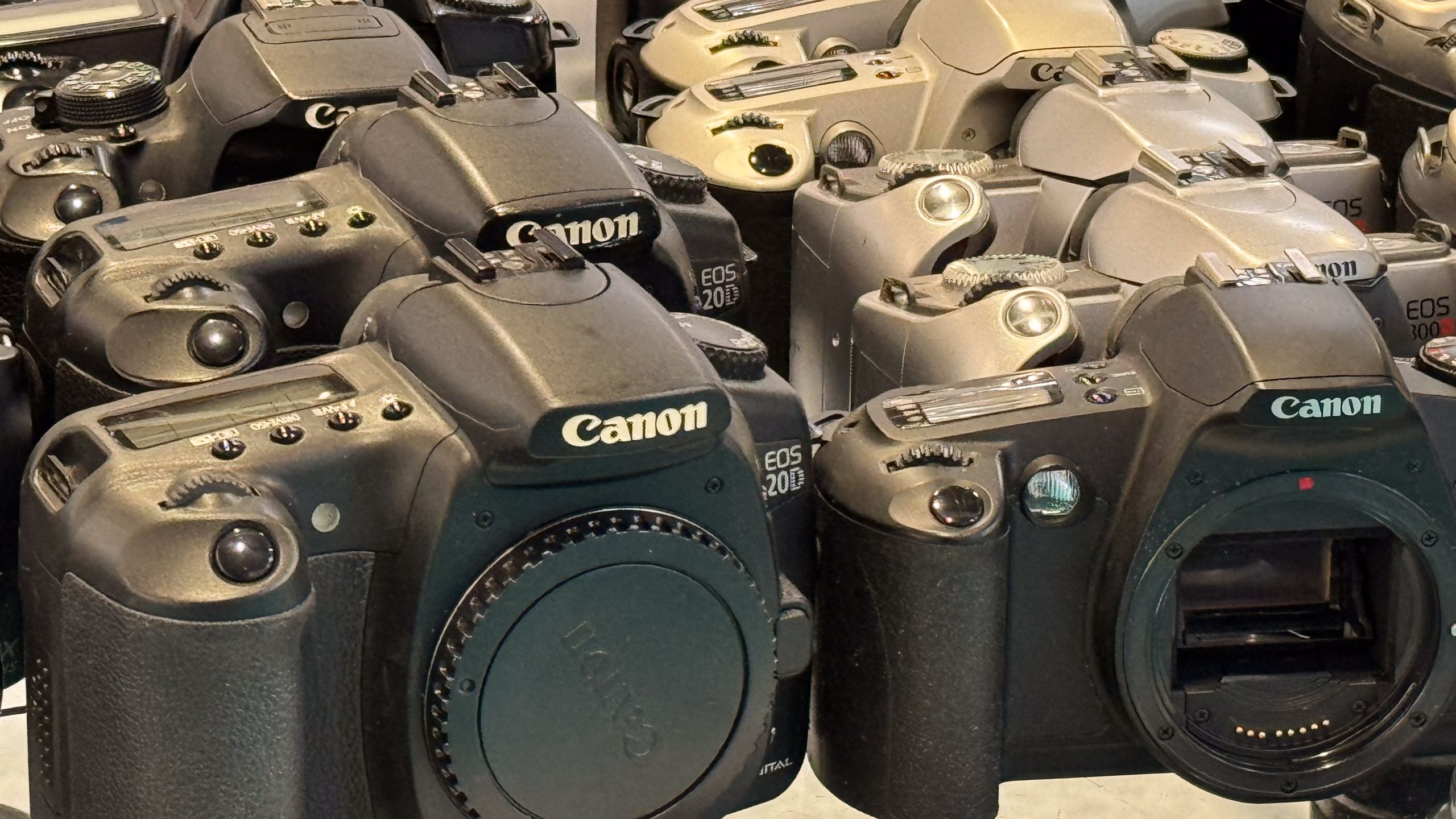
The enduring production numbers highlight a fascinating paradox in the modern photography industry. While the technological momentum has decisively shifted toward mirrorless bodies—which offer faster continuous shooting speeds, more advanced autofocus systems powered by deep-learning artificial intelligence, and significantly lighter and more compact form factors—a persistent global demand for traditional mirror-based cameras still exists.
However, Canon’s 2025 production output also represents a significant drop compared to previous years, underscoring the undeniable downward trajectory of the format. TSR data indicates that Canon manufactured approximately 790,000 DSLRs in 2024, meaning the 2025 figure represents a substantial year-on-year decline of roughly 27 percent. Nikon and Pentax have experienced similarly steep contractions as consumer preferences, retail availability, and professional upgrades skew heavily toward mirrorless alternatives.
The future of these remaining production lines remains a subject of intense discussion within the photographic community. Canon recently confirmed the official discontinuation of the beloved EOS 5D Mark IV—a decision made shortly after the TSR data for 2025 was collated. At this stage, it remains unclear whether the company will soon pull the plug on the remaining active lines, such as the EOS-1D X Mark III and the entry-level EOS Rebel T7 / 2000D, or if assembly lines will continue to hum for as long as raw component supplies and consumer orders hold out.
Executive leadership at Canon has previously signaled that they are willing to keep manufacturing legacy equipment as long as the economics make sense. Go Tokura, Canon’s executive vice president, addressed the ongoing production strategy during an interview earlier this year, confirming that the company is prepared to maintain mass production of DSLRs while global sales figures remain robust enough to justify the operational costs. For Canon, supporting the massive installed base of existing DSLR users with affordable entry-level bodies and professional workhorses remains both a business opportunity and a commitment to its loyal customer base.
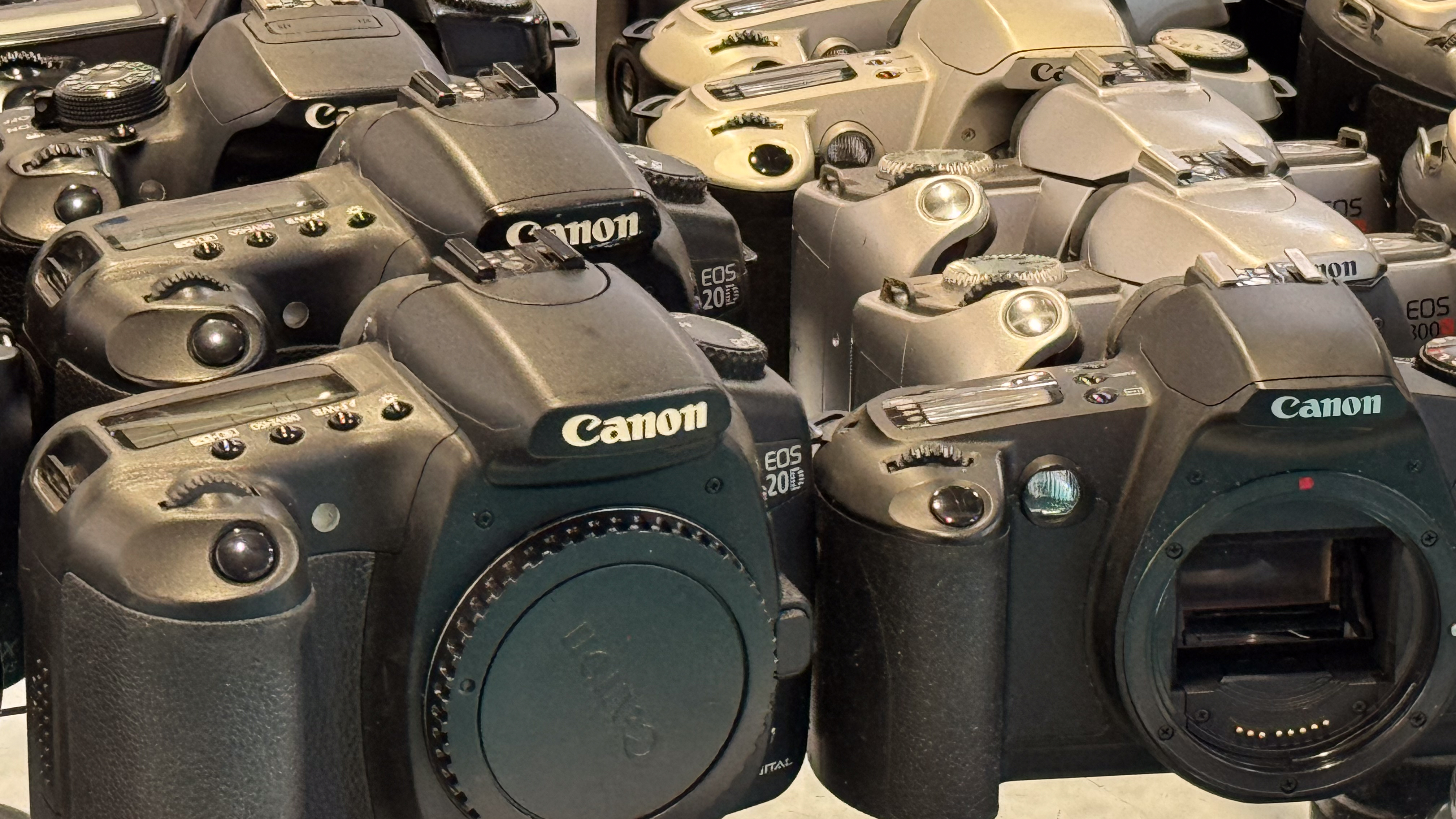
The data published by Techno System Research represents specialized production estimates rather than final retail sales figures or direct distributor shipments. TSR’s comprehensive Digital Still Camera Production Statistics research is released on a quarterly basis, meticulously tracking manufacturing volumes across global camera makers broken down by specific camera categories. These reports serve as one of the most reliable barometers for the health and manufacturing output of the traditional photographic hardware sector.
Despite the steady retreat from traditional mirror-based technology across the wider industry, Canon’s continued output demonstrates that the DSLR market has not yet vanished entirely. Even as manufacturers focus their engineering talent, marketing budgets, and research and development resources on mirrorless ecosystems, there remains enough active global demand to keep legacy assembly lines running and supply traditional photographers with the reliable tools they have trusted for decades.