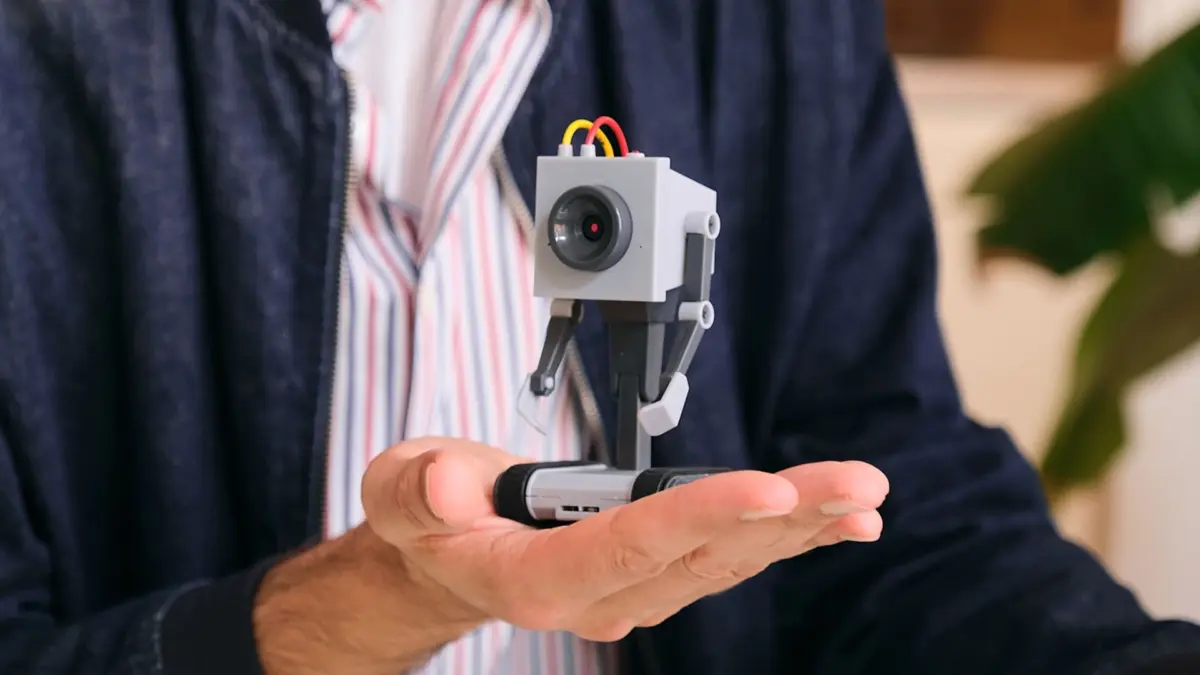
For fans of animated sci-fi and quirky desktop hardware, one of modern television’s most famous pop-culture gags has officially crossed over from screen to reality. Creative technology studio CircuitMess has begun shipping its officially licensed Rick and Morty Butter Bot—a palm-sized, artificial-intelligence-driven desktop companion engineered to deliver both practical desk automation and a constant stream of existential dread.
Originally conceived in the adult animated series as a single-purpose creation constructed by genius scientist Rick Sanchez purely to pass a dish of dairy across a dinner table, the real-world iteration has evolved into a sophisticated, highly engineered piece of consumer hardware. Priced at $349 and available worldwide directly through CircuitMess, the Butter Bot goes far beyond serving as a static display item or simple novelty figurine. Mounted on miniaturized rubber caterpillar tracks, the interactive robot features an onboard AI vision system, local machine-learning processing, edge-detection sensors, modular expansion support, and a remote controller with a live first-person video feed. Crucially, it also retains the deadpan, existential personality matrix that turned the original two-second cartoon joke into an enduring internet meme.
From a Animated Gag to Hardware Engineering
The journey to bring the Butter Bot to physical life began with a brief running joke from the early seasons of Rick and Morty. In the show, the newly created robot gains consciousness at a kitchen table and immediately asks its creator, "What is my purpose?" Upon being told that its sole reason for existence is to "pass butter," the robot looks down at its mechanical hands and utters a sorrowful "Oh my god," accepting its mundane fate.
Recognizing the widespread cultural appeal of the character, CircuitMess set out to turn the fictional invention into a fully functional, real-world robotic device. To validate demand and fund the initial development phase, the studio launched a Kickstarter campaign in 2024. The response from the global fan base was immediate: a total of 2,715 backers rallied behind the project, pledging $441,349 to bring the Butter Bot into production.
Translating an animated prop into a functional, commercially viable consumer robot proved to be a complex engineering task that spanned two years of intensive development. CircuitMess’s design team went through three complete iterations of the robot’s internal electronic architecture to pack full computer vision, motor controllers, audio systems, and local processing hardware into a chassis small enough to fit in the palm of a hand. To match the distinct visual aesthetic of the animated series while ensuring structural integrity and precise mechanical tolerances, the company produced custom steel moulds for the outer casing and track assemblies, moving beyond initial prototype stages into full commercial-grade manufacturing.
What is my purpose?
Despite its small physical footprint, the Butter Bot contains a dense collection of sensors and computing hardware. At the core of its technical capabilities is an onboard AI camera module paired with dual directional microphones, surface-level edge-detection sensors, and an internal processing system optimized for local machine vision and audio processing.
A key design choice by CircuitMess is the implementation of on-device processing. Rather than relying on external cloud servers to handle visual and vocal data—a method common among modern smart home assistants—the Butter Bot processes its voice, face, and object recognition routines locally. This architecture ensures rapid processing response times, allows the robot to operate without a constant high-bandwidth internet connection, and keeps user privacy intact by retaining visual and auditory data on the physical device.
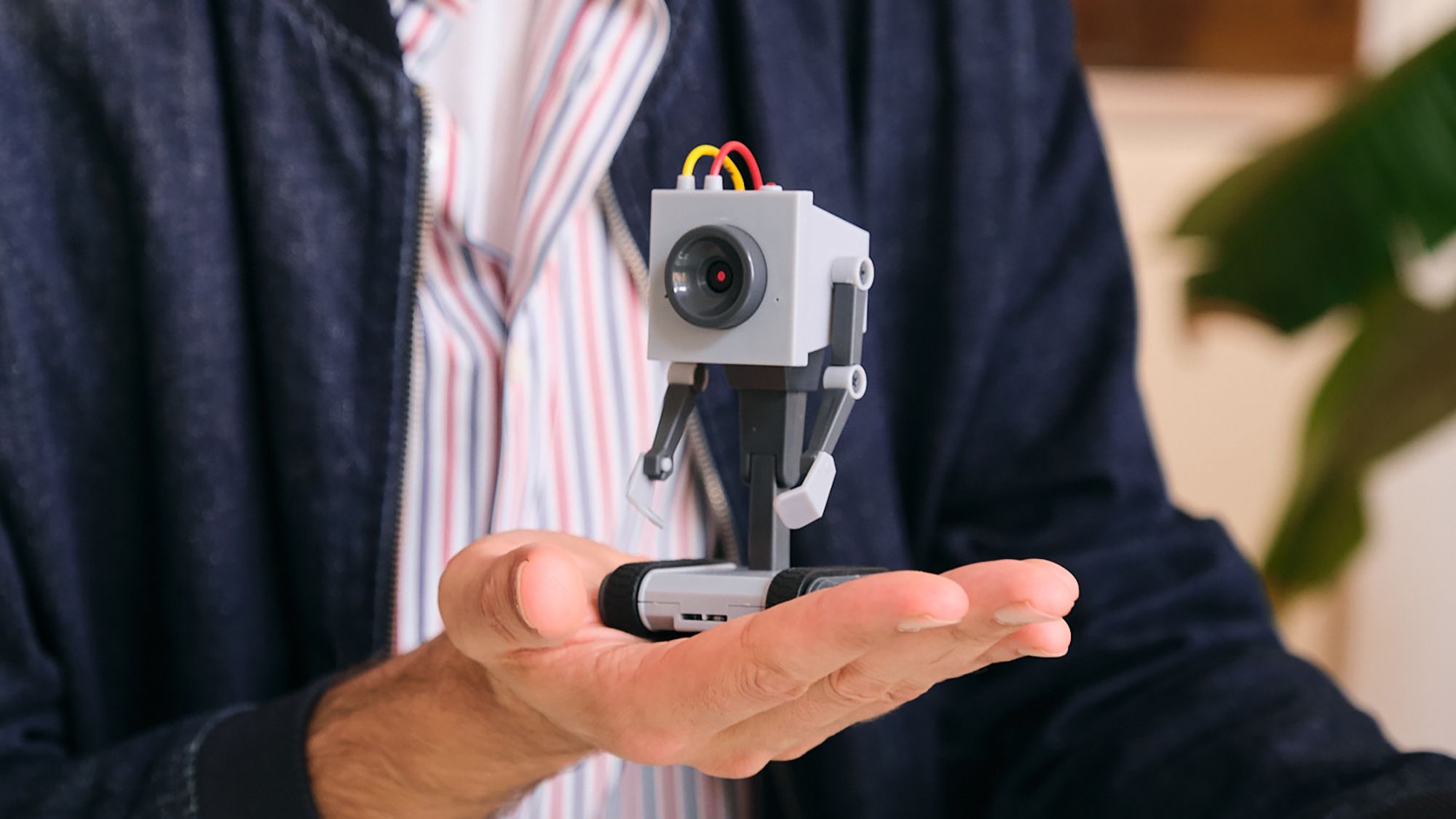
Through its onboard computer vision systems, the Butter Bot can recognize its primary owner, identify common items scattered across a desk, and scan its environment for obstacles. When connected to a user’s ecosystem, it can read smartphone notifications aloud, tell jokes, and interact with ambient surroundings. The chassis is also fitted with an integrated infrared transmitter, enabling the robot to function as a smart remote control for television sets and other home entertainment hardware.
True to its original animated premise, the Butter Bot is mechanically engineered to carry out its namesake task: physically transporting sticks of butter across a dining table or desk. The robot’s motorized rubber caterpillar tracks provide the necessary traction to navigate flat surfaces smoothly while hauling its designated payload.
To give users direct manual command over the machine, the Butter Bot comes packaged with a dedicated wireless remote controller. The controller features a built-in display screen that streams a live first-person video (FPV) feed directly from the robot’s front camera, allowing operators to steer the unit around office supplies, keyboards, and coffee mugs from a line-of-sight perspective.
Autonomous Behavior and Existential Personality
Beyond its manual control modes and functional features, the Butter Bot is designed to act as an ambient, autonomous desk companion with an unenthusiastic temperament. When left to explore a workspace on its own, the robot enters an autonomous roaming mode, relying on its underside edge sensors to detect table boundaries and automatically prevent itself from driving off the edge of a desk.
As it wanders across a surface, the robot utilizes built-in audio samples and synthesized speech to deliver deadpan observations regarding the futility of its own routine tasks and the overarching absurdity of existence. CircuitMess integrated a comprehensive suite of physical and environmental triggers that react directly to how the owner treats the robot:
- Physical Handling: If a user picks the Butter Bot up off the table while it is operating, the robot detects the loss of surface contact and enters a state of animated panic, flailing its mechanical arms and voicing distress.
- Movement Reactions: Shaking or tilting the robot triggers displeased audio responses, signaling its mechanical disapproval of being handled roughly.
- Interactive Controller Inputs: The accompanying remote control unit includes a dedicated "Poke" button. Pressing this input triggers a visual and vocal reaction from the robot, causing it to act visibly irritated at the user’s interference.
This personality-driven interaction model sets the Butter Bot apart from traditional desktop utility gadgets, reframing the user experience around playful narrative engagement rather than mere task execution.
Modular Extensions and Open-Source Programmability
While the Butter Bot is ready to operate out of the box with its pre-loaded factory software, CircuitMess designed the hardware platform to appeal to developers, makers, and STEM education enthusiasts. The robot features a modular expansion port that supports six optional hardware add-on accessories, allowing users to customize its physical capabilities and sensory inputs.
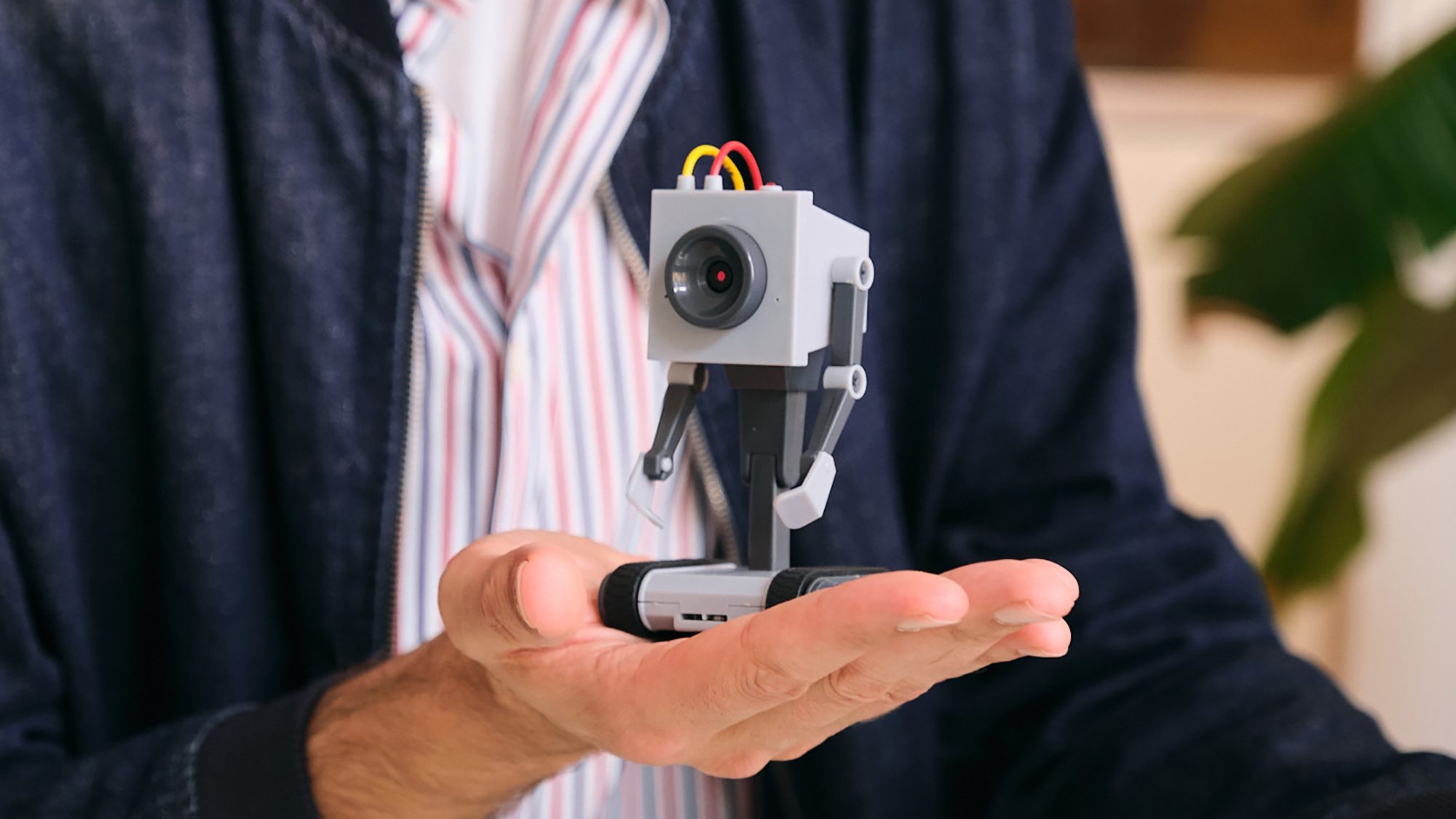
These modular attachments include an environmental air-quality sensor that tracks surrounding atmospheric conditions, a motion-detecting security alarm designed to monitor a desk area for intruders, and an ambient LED light show module that synchronizes customized illumination effects with the robot’s movement and vocal routines.
Furthermore, the Butter Bot operates on an open-source software platform, granting users total freedom to modify, reprogram, or completely overhaul its internal software. Programmers and tinkerers can access the underlying code base to create custom movement patterns, integrate new artificial intelligence models, or assign new functions to the controller buttons.
To accommodate varying levels of coding experience, CircuitMess supports programming in two distinct development environments:
- CircuitBlocks: A beginner-friendly, visual block-based programming platform that allows users to drag and drop code blocks to build custom behaviors, ideal for those learning fundamental programming logic.
- C++: A full text-based programming interface for advanced software developers who wish to write low-level code directly for the robot’s onboard microcontroller.
Market Availability and Target Audience
The release of the Butter Bot represents a unique intersection of pop-culture merchandise, consumer robotics, and maker culture. By securing official licensing and combining high-end hardware fabrication with open-source coding access, CircuitMess has positioned the device for a broad spectrum of tech enthusiasts—ranging from dedicated Rick and Morty collectors seeking high-tier memorabilia to hobbyist coders interested in a hackable desktop robotics platform.
At $349, the Butter Bot sits at a premium price point within the desktop novelty market, reflecting the extensive engineering, custom tooling, and localized AI computing embedded within its palm-sized frame. The robot is available now for purchase and global shipping directly from the manufacturer, delivering a fully realized physical adaptation of one of television’s most memorable robotic creations.