Raises Full-Year Guidance Under CEO Björn Gulden
BERLIN — Buoyed by robust third-quarter financial results, German sportswear giant Adidas is rapidly closing in on the ambitious turnaround goals laid out by Chief Executive Officer Björn Gulden when he took the helm in 2023.
Back then, following the difficult fallout from the 2022 termination of the highly lucrative Yeezy partnership and the subsequent inventory pileups, Gulden set a clear trajectory: by 2026, Adidas would transform into a healthy, thriving enterprise capable of consistent, sustainable growth. Recent financial indicators suggest that the company is well on its way to fulfilling that promise ahead of schedule.
Addressing journalists during an online press conference from Germany on Thursday morning, Gulden reflected on the arduous journey of the past several years. "The last four years have been a process, and in this environment, we are actually very proud of what we have delivered," Gulden said, presenting the company’s latest quarterly figures. Looking ahead to the next phase spanning through 2027 and 2028, he expressed confidence that the brand will maintain its upward momentum from a vastly superior operational foundation than the one he inherited in 2023.
Between July and September, Adidas shattered previous company records, posting all-time highs for quarterly revenue and operating profit while simultaneously raising its full-year guidance. During the three-month period, net revenues grew by 9 percent to reach 7.25 billion euros, marking a historic milestone for quarterly top-line expansion. On a currency-neutral basis, revenues advanced by a healthy 7 percent.
The financial performance on the earnings side was even more striking. Operating profit for the third quarter surged 37 percent to hit 1.01 billion euros. According to company statements, this represents the highest quarterly profit level in Adidas history, translating to a robust operating margin of 13.9 percent.
These stellar figures soundly outperformed expectations across Wall Street and European financial markets. Consensus estimates compiled prior to the announcement had projected an operating profit of approximately 742 million euros, making the actual result a significant positive surprise for investors and market watchers.
A portion of this profit windfall was aided by external factors, notably the receipt of refunds stemming from U.S. tariff claims. Adidas had previously indicated that it anticipated recovering between 200 million and 300 million euros in duties, and the company successfully collected 200 million euros of that sum during the third quarter. Outgoing Chief Financial Officer Harm Ohlmeyer, who will step down from his post at the conclusion of the year, noted that the company still expects additional refunds, though future disbursements will likely be limited to the double-digit millions.
Even discounting the tariff refunds, the bottom-line performance represents a major validation for Gulden and Ohlmeyer. The executive duo has repeatedly emphasized their commitment to driving the company’s operating margin toward a steady 10 percent benchmark.
Navigating the Next Phase and Mitigating the Fashion Cycle
With the immediate crisis of the post-Yeezy era firmly in the rearview mirror, Gulden acknowledged that the brand has reached a strategic juncture. "After four years of success, we are again at a crossroads, and I am sure you know there are many ways this can go," he explained to reporters.
Looking forward, Adidas faces choices regarding whether to prioritize aggressive top-line sales growth or margin preservation. Crucially, Gulden wants to steer the brand away from the historical pitfalls of the apparel and footwear sectors, where companies frequently experience explosive growth driven by a single trendy product line, only to see sales plummet when consumer tastes inevitably shift. To prevent this cyclical volatility, the CEO is banking on a diversified product portfolio and carefully balanced category management.
"When you look at the growth that we created in ’24 and ’25, it was really lifestyle footwear, and that allowed us then to fund the launches of more innovation in performance products," Gulden pointed out.
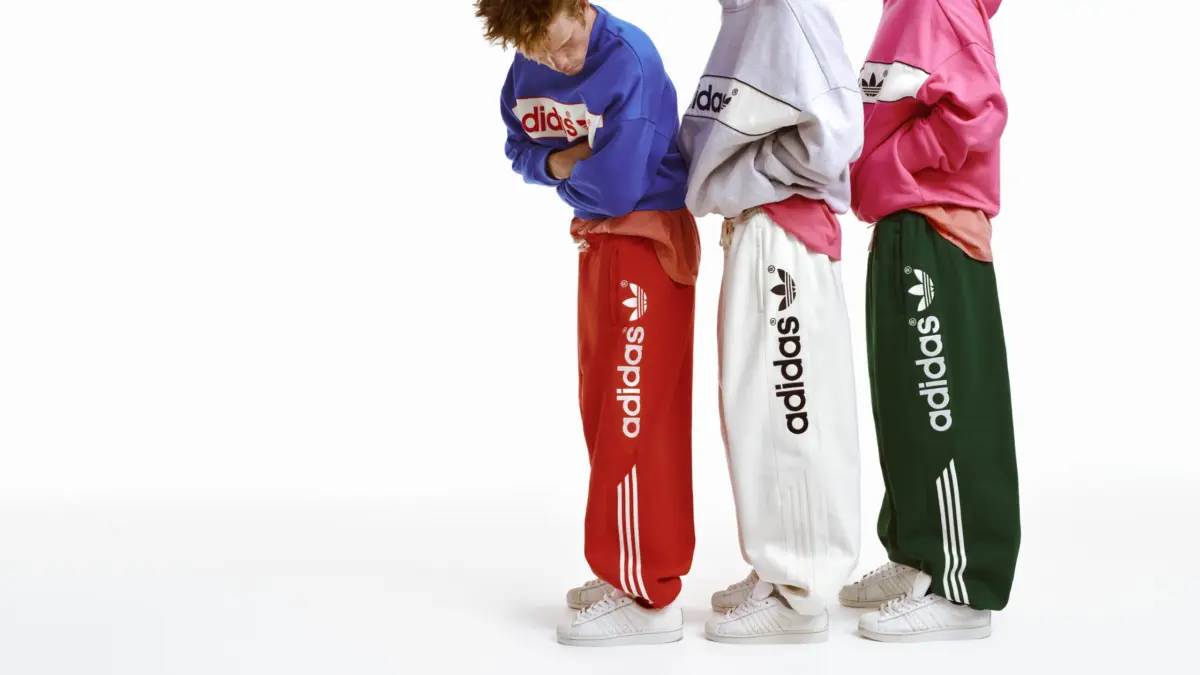
Over the past two years, Adidas capitalized heavily on the meteoric rise of the "terrace" look—a wave of retro-inspired sneakers pulled straight from the brand’s deep historical archives. However, recognizing that lifestyle trends eventually cool, Gulden has structured the business so that consumers moving away from fashion sneakers can seamlessly transition into Adidas performance gear for running and training, or pivot toward the brand’s lifestyle apparel offerings.
"So as you see that the footwear lifestyle market is not very good for growth, we are then ready to utilize brand heat by giving our designers more freedom to be more trendy on apparel," Gulden elaborated. By balancing demand across multiple product vectors, the company aims to smooth out the traditional industry rollercoaster of sharp booms and busts.
Category Performance and Regional Resilience
Current sales data indicates that Adidas apparel is successfully riding this balancing wave. Revenue within the apparel category climbed 22 percent during the third quarter to reach 2.9 billion euros, a division that now accounts for approximately 40 percent of total company sales. Meanwhile, accessories—a historically sluggish category that saw little to no organic growth for extended periods—managed a 6 percent increase, bringing in 527 million euros.
Conversely, the footwear category, which traditionally represents about 53 percent of overall revenues, remained flat at 3.83 billion euros. Gulden conceded that the broader lifestyle footwear market is currently navigating a "difficult phase" characterized by oversupply and heavy promotional discounting in several major territories. To protect the integrity and long-term equity of its brand, Adidas has intentionally maintained a conservative approach to wholesale distribution, safeguarding its full-price product offerings.
"But we shouldn’t panic," Gulden advised. "We shouldn’t see this as a long-term catastrophe; these things happen, we’ve all been there, and if we can all be more disciplined—and we will—then it will normalize."
Geographic diversification is playing an equally vital role in maintaining equilibrium. While parts of Europe experience sluggish retail momentum and discounting pressures, stronger markets elsewhere help pick up the slack. Gulden noted that if European markets are experiencing a slowdown, resources can be dynamically reallocated toward high-growth regions such as China.
Europe remains a tough operating environment, with regional sales dipping 4 percent to 2.24 billion euros amid notable retail slowdowns in key countries like the United Kingdom and Germany. Nevertheless, executives remain optimistic, pointing to a robust order book from European retail partners that points toward a much stronger fourth quarter in the brand’s home continent, with projected high-single-digit sales improvements by year-end.
Furthermore, executives confirmed that recent localized protests and temporary store closures in France and select urban centers have not inflicted any material financial damage on the business, despite brief dips in local foot traffic.
Outside of Europe, double-digit revenue gains were widespread. In North America, the company’s second-largest market, sales rose 14 percent to total 1.47 billion euros. Greater China recorded an impressive 20 percent surge, while Japan and South Korea posted a 15 percent increase. Latin America continued its sustained streak of explosive growth, jumping 29 percent. Even within the emerging territories category—which includes markets in the Middle East operating amid active regional conflicts—sales advanced by 15 percent.
Fine-Tuning Operations and Looking to the Future
Outlining the roadmap for the immediate future, Gulden stated that the primary objective is to stabilize the operating model and secure strategic breathing room. Over the course of 2027 and 2028, Adidas plans to fine-tune its global infrastructure and internal systems while keeping operating margins around the 10 percent threshold and layering approximately 2 billion euros in net sales onto the business.
To facilitate this infrastructural optimization, the company intends to reinvest roughly 100 million euros of its current quarter’s profits into structural housekeeping.
In a preliminary earnings release issued earlier in the month, Adidas projected full-year operating profits to reach approximately 2.6 billion euros. However, that figure has been slightly adjusted down to around 2.5 billion euros as management deliberately carves out funds for year-end strategic realignments.
"We want to make some space to see what we could write off in Q4," Gulden explained, citing underperforming retail stores, legacy software and digital systems slated for retirement, and potential global structural changes such as headcount adjustments and severance costs aimed at lowering future fixed expenses. While executives declined to provide granular specifics, they emphasized that planning for these structural refinements is currently underway.
Despite consistently breaking sales records over consecutive reporting periods, Gulden has maintained a reputation for exercising prudent conservatism when issuing forward-looking financial guidance. Market analysts previously noted that a temporary dip in Adidas share prices following positive second-quarter results may have stemmed from this characteristic caution.
This time around, however, the financial markets enthusiastically endorsed the revised guidance and record earnings. By midday trading in Germany, Adidas shares had surged in value by nearly 5 percent.
Prominent analysts from major financial institutions—including JPMorgan, UBS, Bernstein Research, the Royal Bank of Canada, and Jefferies—welcomed the financial report. Experts remarked that the strong numbers validate the momentum established earlier in the year and suggest the positive trajectory will endure, with only localized European softness and the broader lifestyle footwear cooling period cited as minor areas for ongoing investor watchfulness.