The world’s largest ocean carriers are continuing to spend heavily on new container ships, driving the global pace of vessel ordering to heights not seen in more than a decade. According to data published by Linerlytica, global container ship orders have climbed to a staggering 16.2 million 20-foot equivalent units (TEUs). This figure equates to 46.5 percent of the existing global fleet, marking the highest share recorded since 2009 and signaling an aggressive wave of capital investment across the maritime logistics sector.
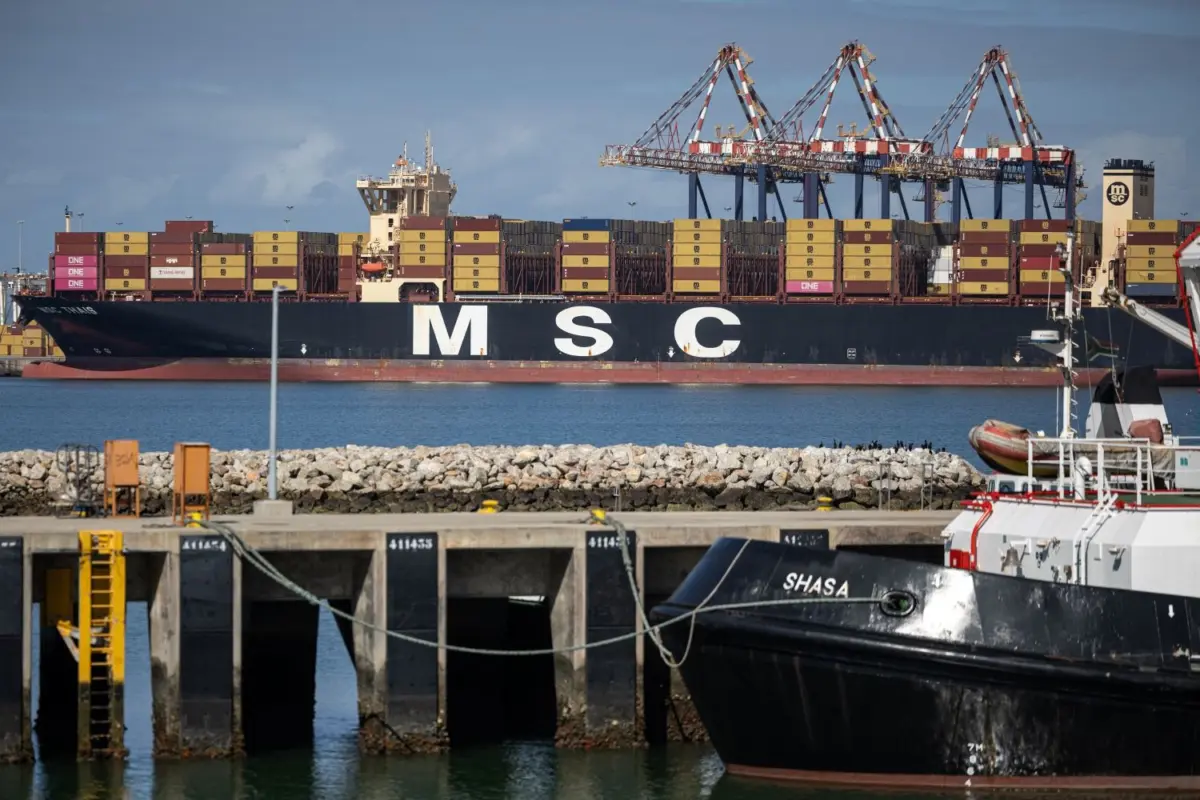
This soaring ratio moved upward once again following reports that Mediterranean Shipping Co. (MSC), the biggest container shipping company in the world by tonnage, has placed an order for another 20 ships designed to carry 24,000 TEUs of capacity each. These ultra-large container vessels are reportedly slated for construction by Hengli Heavy Industries in China, injecting an additional 480,000 TEUs into the company’s expanding arsenal. This latest batch pushes MSC’s total orders of vessels exceeding 20,000 TEUs at the Hengli shipyards alone to 62 vessels. Neither a total financial valuation nor a specific delivery schedule has been publicly disclosed for this massive acquisition.
Around the time Linerlytica highlighted MSC’s extensive fleet expansion, South Korea-based HMM separately announced that it had signed a contract for eight 13,000-TEU ships. These consecutive announcements underscore a broader industry-wide rush to lock in shipyard capacity well into the latter half of the decade.
According to container shipping research firm Alphaliner, roughly 1,000 newbuildings accounting for 8.5 million TEUs are scheduled to enter the active market across 2027 and 2028. Meanwhile, the heavy volume of vessel orders placed during the fall seasons is expected to see delivery primarily in 2029 and 2030.
Market forecasts from maritime association BIMCO’s September outlook project that the global container fleet will grow by 9 percent in 2027. During that same period, effective supply is anticipated to rise between 5 percent and 6 percent. This supply growth contrasts with projected ship demand growth ranging from a modest 0.5 percent to 4.5 percent, with the exact figures heavily dependent on whether geopolitical conditions and transit situations at critical checkpoints such as the Strait of Hormuz eventually normalize.
Maersk, the Danish shipping giant, provided the clearest break with recent industry-wide restraint when it confirmed that it had ordered 26 dual-fuel ships with a capacity of 18,600 TEUs each, slated for delivery in 2029 and 2030. These new vessels will rank among the largest within the Maersk fleet. Prior to this purchase, the carrier had notably refrained from following its primary competitors in the aggressive leap toward ultra-large container vessels boasting capacities of 24,000 TEUs. Maersk officially described the multi-vessel order as a fundamental component of its ongoing, long-term fleet renewal program.
Analyzing the transaction shortly after its confirmation, container shipping expert Lars Jensen, CEO of Vespucci Maritime, noted in a LinkedIn post that the newest order significantly expanded Maersk’s orderbook from 25 percent of its existing fleet up to 35 percent. Jensen emphasized that the specific sizing of Maersk’s chosen vessels is strategically important because these ships offer greater versatility for deployment across multiple diverse trade lanes going forward compared to rigid, ultra-large 24,000-TEU vessels.
Weeks prior to the Maersk announcement, during an August earnings call, a JPMorgan analyst questioned Maersk CEO Vincent Clerc about whether an industry-wide orderbook nearing 40 percent might eventually climb back toward the historic highs of 60 percent recorded back in 2009. In response, Clerc stressed the underlying market mechanics that continue to necessitate substantial capacity additions.
“I still think that the orderbook reflects a very optimistic view on the world, but I think so less and less as long as this trend continues,” Clerc remarked during the call. “Because if I have a total market growing 4 percent but the head-haul demand is growing 7 to 8 percent, I need 7 to 8 percent capacity more every year just to be able to carry stuff.”
Clerc added that vessel utilization rates across the company stood at an exceptionally high 96 percent, noting further that head-haul shipping volumes originating out of the Far East had surged by roughly 25 percent over the span of just three years.
This wave of mass ordering remains heavily concentrated at the top end of the vessel size spectrum. BIMCO noted in a February assessment that 436 ships with capacities of 12,000 TEUs or greater accounted for an overwhelming 65 percent of all container capacity currently sitting on global orderbooks.
Other major global carriers are continuing to expand their fleets on a massive scale. French carrier CMA CGM has been reported by both Linerlytica and supply chain publication The Loadstar to have ordered 12 vessels of 24,000-TEU capacity from China’s Yangzijiang Shipbuilding. These megamax ships are scheduled for delivery across 2029 and 2030, though CMA CGM has not yet publicly confirmed the transaction. Factoring in this reported deal, CMA CGM’s ordering activity across 2026 totals 32 ships and roughly 365,000 TEUs of combined capacity.
Meanwhile, Cosco Shipping placed an order for 18 ships in September. According to Alphaliner data, Cosco’s active orderbook now represents 52 percent of its current fleet size—the highest ratio among the top 10 container shipping lines globally. Twelve of these newly commissioned vessels are megamax-class ships capable of carrying 21,700 TEUs each. In total, Cosco’s recent purchasing spree will cost the company approximately $3 billion. Across the entirety of 2026, Cosco has announced 48 separate newbuilding contracts representing a cumulative investment of roughly $8 billion.
While megamax vessels dominate the strategies of top-tier lines, the middle tier of the container shipping market is increasingly turning to South Korean shipyards to construct smaller, highly versatile ship classes. HMM’s contract, which was officially announced by HD Korea Shipbuilding & Offshore Engineering, covers eight liquefied natural gas (LNG) dual-fuel ships of 13,000 TEUs each. Valued at approximately $1.42 billion with scheduled delivery by 2029, this agreement elevates HMM’s total order of this specific vessel class to 20 ships, following an initial tranche of 12 ordered last October.
Citing Alphaliner data, industry analyst Lars Jensen pointed out that these additions bring HMM’s overall orderbook to 32 percent of its existing fleet. This leaves the line with the third-smallest percentage of order-to-fleet ratio among the 16 largest shipping lines in the industry.
Other mid-tier carriers are similarly actively securing shipyard space. Yang Ming signed a formal agreement for six ships, each with a capacity of 13,650 TEUs, at Hanwha Ocean on September 2. This transaction successfully elevates Yang Ming’s total backlog to 24 vessels, representing a combined capacity of 318,500 TEUs.
In stark contrast to the heavy ordering strategies pursued by most of its primary competitors, Hapag-Lloyd is charting an entirely opposite course by relying on strategic mergers and acquisitions. The German carrier’s half-year financial report places its active orderbook at 32 newbuildings totaling 349,000 TEUs, which equates to roughly 14 percent of its total fleet capacity—the lowest ratio found among any of the major shipping lines.
However, Hapag-Lloyd’s future capacity growth heavily hinges upon its pending acquisition of ZIM, a deal valued at more than $4 billion that has recently encountered significant regulatory challenges and opposition from the Israeli government. When directly questioned during an August earnings call regarding what alternative strategy the company would pursue if the acquisition ultimately falls through, Hapag-Lloyd CEO Rolf Habben Jansen did not outline a backup plan.