Point a smartphone upward at a towering skyscraper and capture a photograph, and you will immediately notice a common optical distortion. The building appears to lean backward dramatically, as though it is desperately trying to dodge out of the way of the camera. In photography, this pervasive optical phenomenon is known as converging verticals. For roughly a century, professional architectural photographers have waged a constant battle against this effect, relying heavily on specialized view cameras and complex shift lenses. While effective, this traditional gear has historically carried a significant downside: it tends to be remarkably heavy, prohibitively expensive, or both.
Enter Lachlan Fysh, a Melbourne-based designer with a serious passion for architecture and physical making. Rather than accepting the hefty price tags and burdensome weight of traditional architectural photography equipment, Fysh decided to solve the problem using a 3D printer, a CNC machine, and a simple wooden dowel. The result of his ingenuity is the FTC-1, a specialized 6×7 film camera that recently earned a prestigious Gold award for camera design at the 2025 International Design Awards.
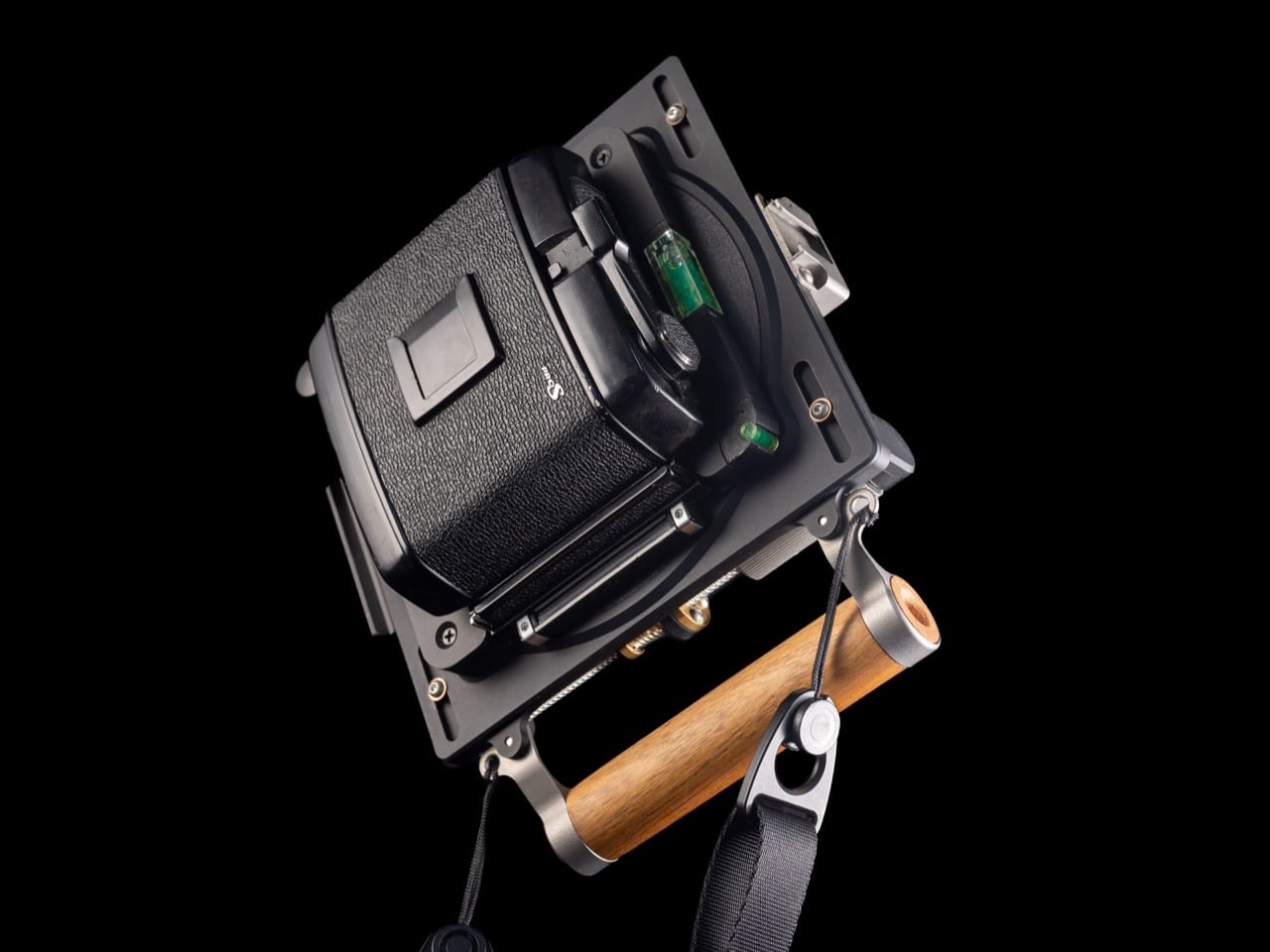
The FTC-1 is designed to shoot medium format 120 film using Mamiya RB67 film backs, while cleverly borrowing its optical glass from the large format photography world. Because large format lenses feature oversized image circles, they provide an abundance of physical room for the optical assembly to move around without clipping the edge of the frame. To combat converging verticals, a photographer simply turns a mechanical knob, causing the lens to rise upward by up to 30 millimeters, or roughly 1.2 inches. This mechanism allows the camera body to remain perfectly level while the frame slides vertically to capture the absolute top of a towering architectural structure. A secondary mechanism handles an additional 15 millimeters, or 0.6 inches, of sideways shift, while the camera back can seamlessly spin between portrait and landscape orientations using magnetic detents.
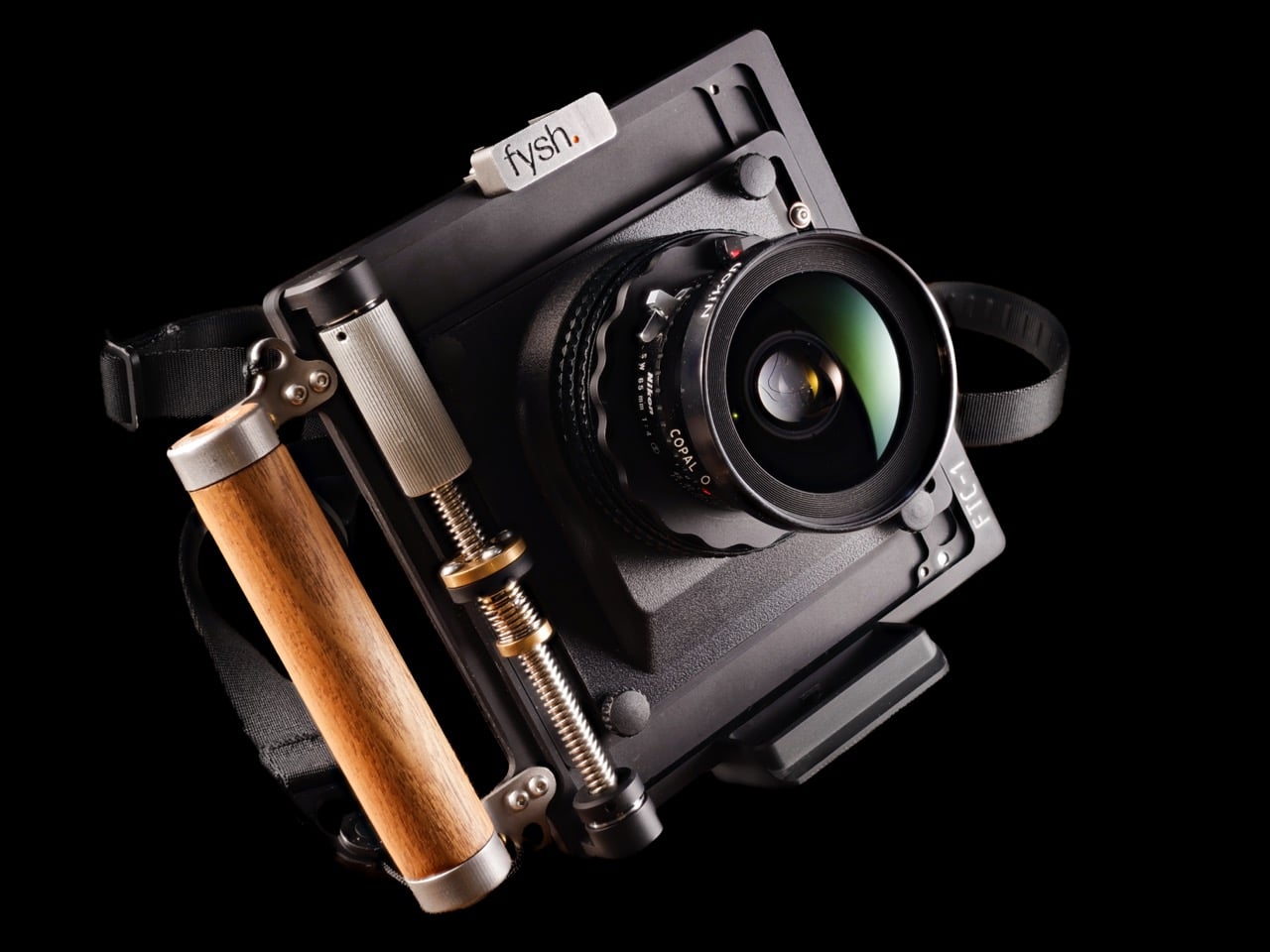
Despite its advanced capabilities and robust engineering, the entire package weighs a remarkably light 2.4 pounds, equivalent to about 1.1 kilograms. Furthermore, it retails for $1,200 Australian Dollars, which translates to roughly $850 USD. In comparison, high-end Swiss technical cameras capable of performing the exact same optical tricks typically start in the thousands of dollars before a photographer has even purchased a single lens. Developed by Fysh Technical, the FTC-1 represents a massive leap forward for independent creators and architectural enthusiasts who have long been priced out of specialized gear.
Metal Only Where It Counts
Fysh’s journey to the final FTC-1 design was iterative and rooted in real-world testing. His very initial prototype was printed entirely out of plastic. While it worked surprisingly well in a casual setting, the flaws became immediately apparent the moment he mounted it on a tripod. The plastic body would sway for a frustrating beat after every minute adjustment before finally settling down—an absolute dealbreaker on a precision camera where the user must focus manually by squinting closely at a piece of ground glass.
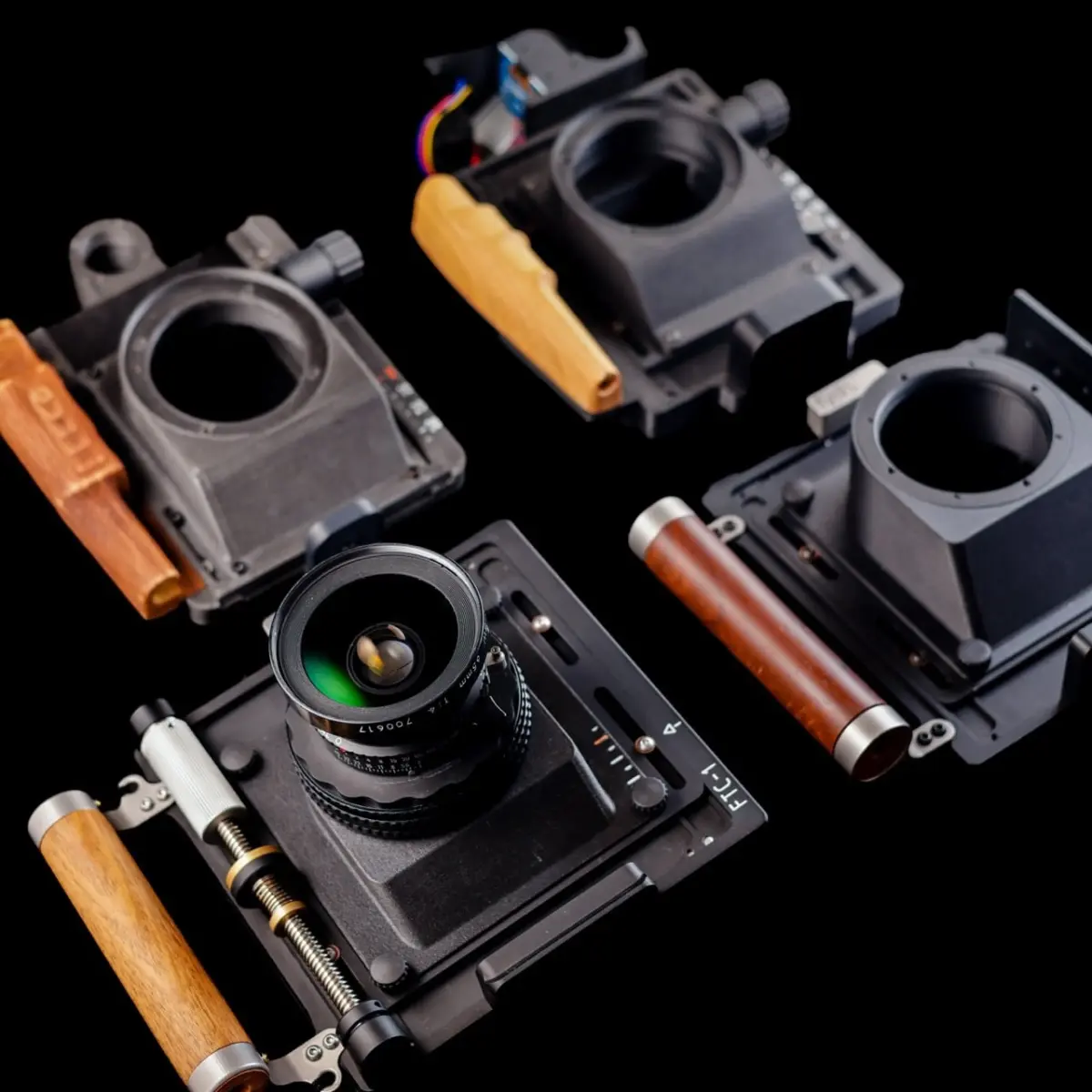
A pivotal turning point occurred during a casual coffee meeting in Japan, where Fysh crossed paths with Oscar Oweson of Panomicron, an independent camera manufacturer known for building his own custom hardware. Oweson nudged Fysh toward incorporating aluminum into the design. Taking this advice to heart, Fysh integrated CNC-machined aluminum plates into the core structure and the tripod base, which are precisely the areas where mechanical stiffness is paramount. Meanwhile, every other component that merely needed to maintain its basic shape remained 3D-printed. This strategic hybrid approach kept the overall body exceptionally lightweight—a crucial factor for a designer who still commutes and shoots while traveling by bicycle.
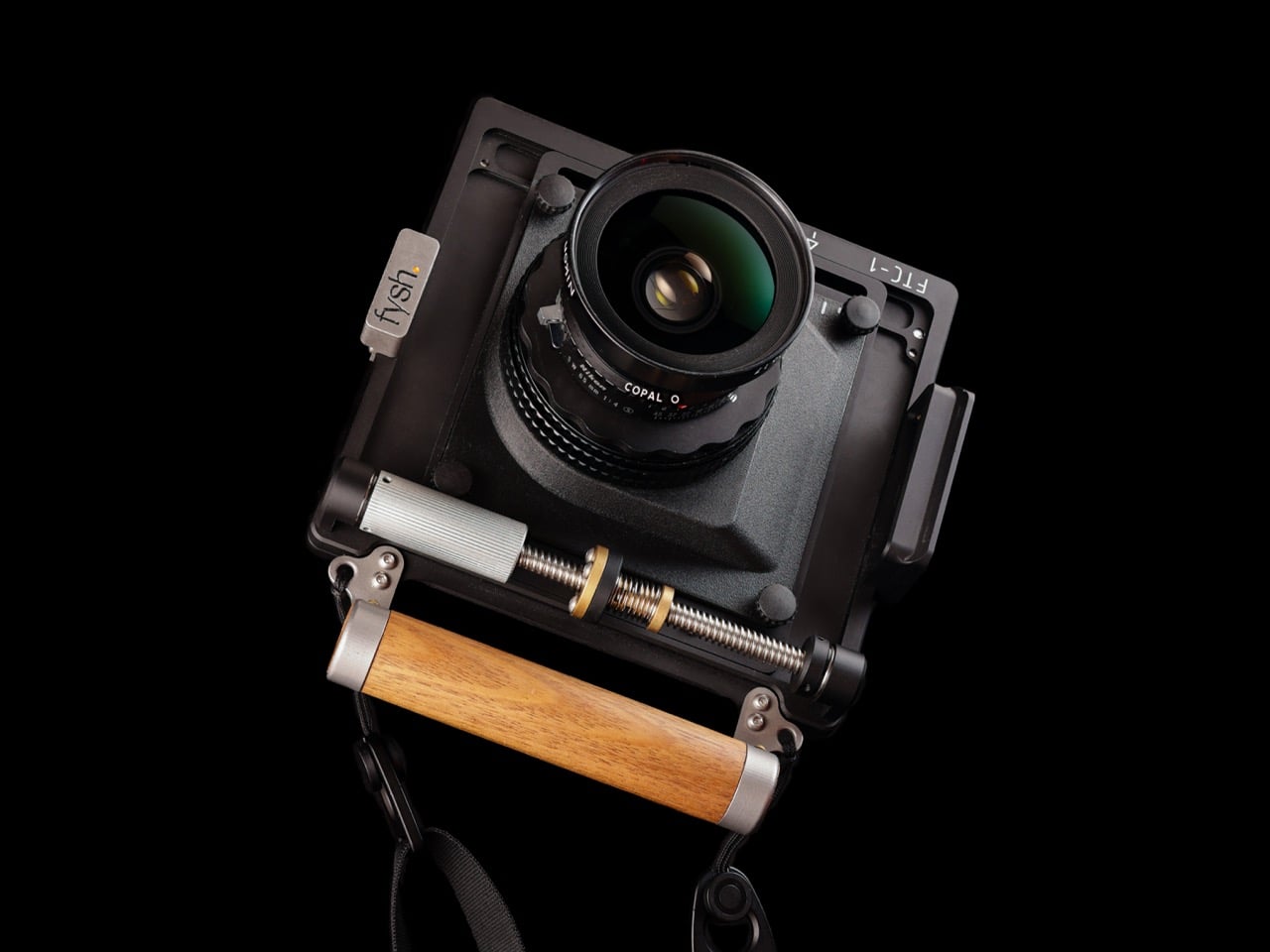
Machining the FTC-1’s large, hollow lens cones entirely out of solid blocks of metal would leave behind a massive mountain of aluminum shavings on the workshop floor, a wasteful byproduct that Fysh actively wanted to avoid for environmental reasons. 3D printing these cones consumes only a fraction of the material while still delivering all the structural rigidity required for the job. Because Fysh operates fused deposition modeling (FDM) printers right at home, he can easily print a custom cone tailored to whatever specific lens a customer happens to own, and quickly reprint a replacement if someone accidentally selects the wrong size.
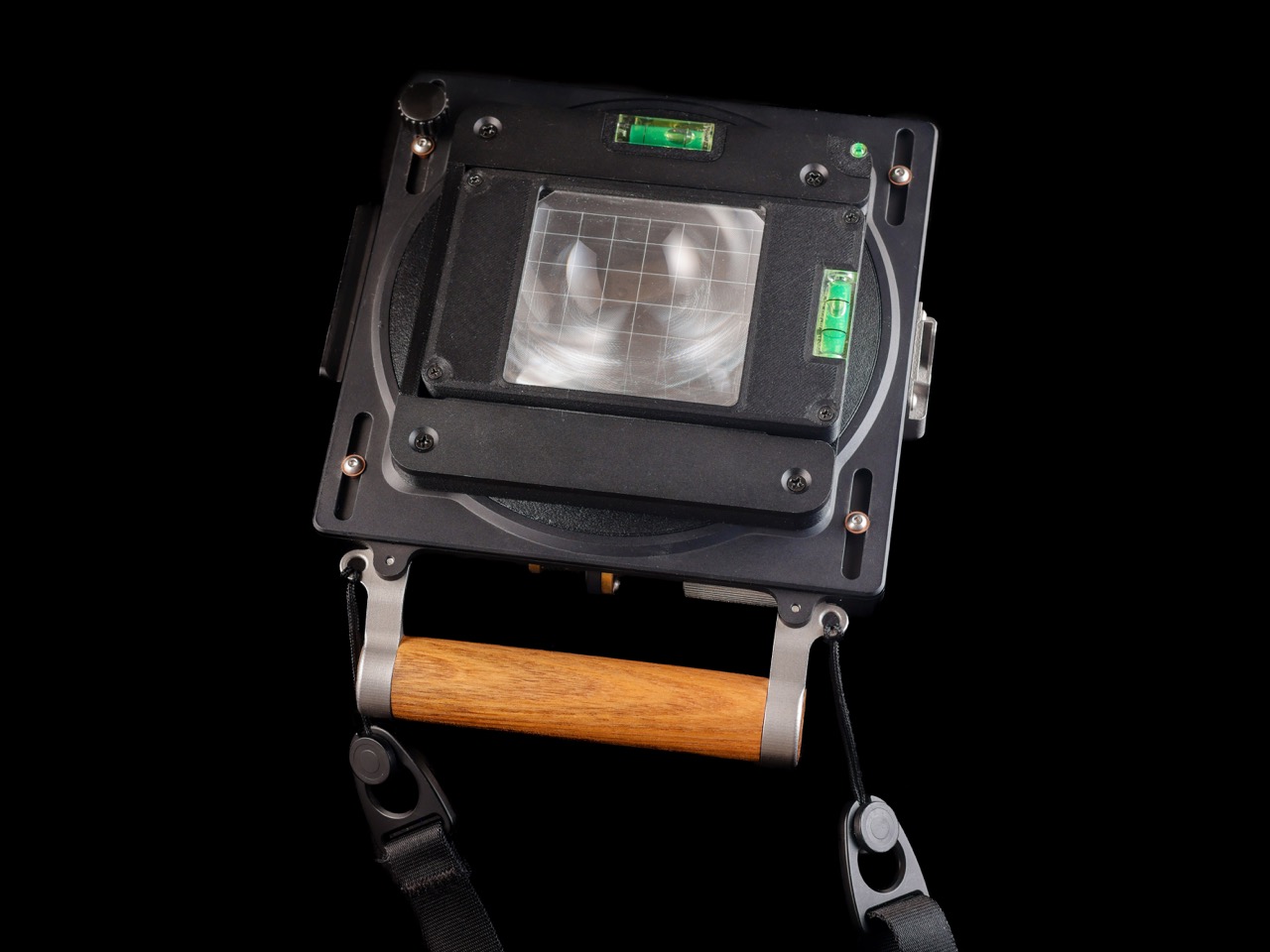
Similarly, the ring-shaped brackets that securely hold the camera handle would present a manufacturing nightmare if milled from traditional stock, so those components are produced using 3D-printed metal—specifically titanium now, which helps shave off a little extra weight. Even the ground glass has been ingeniously substituted with acrylic, a material that stays dependably flat, survives accidental drops in the field, and helps keep the overall retail price remarkably accessible.
A 3D Printer Part in Disguise
The internal mechanics of the FTC-1 rely heavily on components familiar to anyone who builds desktop additive manufacturing machines. The vertical rise mechanism operates on an 8-millimeter TR8 lead screw, which is the exact same threaded rod responsible for driving the vertical axis on a wide variety of standard consumer 3D printers. Fysh initially experimented with smaller TR4 and TR5 lead screws in an effort to save even more weight, but those thinner components forced an annoying compromise between slow adjustment speeds and reliable mechanical locking.
A lead screw inherently holds its position without slipping only when its lead remains under roughly 60 percent of its diameter. Therefore, achieving a speedy 4-millimeter lead required upgrading to the chunkier, more robust 8-millimeter rod. Today, the lens moves smoothly and quickly, staying locked precisely where the photographer leaves it without requiring a separate, cumbersome locking knob. Earlier prototypes utilized rack and pinion gears, but Fysh candidly admits that he frequently kept forgetting to tighten them in the heat of a shoot.
To ensure the mechanism operates with absolute precision, Fysh integrated a brass component featuring a spring known as an anti-backlash nut. This clever part is essentially a standard nut split cleanly into two halves, with an internal spring pushing the respective halves against opposite sides of the threaded rod. The result is zero mechanical slop or play whenever the user changes the direction of the adjustment. Because TR8 hardware is ubiquitous in the global 3D printing ecosystem, these specialized nuts can be sourced directly off the shelf rather than requiring expensive custom machining, which goes a long way toward keeping production costs sane.
While some online commentators on forums like Reddit have questioned whether this heavy-duty hardware is absolute overkill for a camera, Fysh remains confident in his design choices. A buttery, slop-free rise mechanism is precisely what a photographer desperately needs when attempting to nudge a photographic frame by a mere fraction of a millimeter on a windy, exposed rooftop.
Tilt, Locked In
Most traditional technical cameras offer built-in tilt capabilities, allowing the photographer to angle the plane of focus according to the Scheimpflug principle so that a sweeping landscape remains sharply in focus from a small rock right at the user’s feet all the way to distant mountains on the horizon. However, Fysh made the deliberate design choice to leave adjustable tilt completely out of the camera body. He worried that with a fully adjustable tilt mechanism built natively into the camera, he would never be entirely certain whether the lens was sitting at a true, flat zero position, which is where he prefers it to be approximately 95 percent of the time.
His elegant fix for this dilemma is a specialized series of lens cones that feature a fixed tilt angle baked directly into their physical geometry. These specific angles are meticulously calculated for each individual focal length using a custom Scheimpflug visualizer that Fysh programmed himself. Swapping out one cone for another takes roughly a minute while out in the field, and because the angle is structurally fixed, it can never accidentally drift out of alignment during a shoot.
The FTC-1 is currently available for purchase through the Fysh Technical website, retailing for $1,200 AUD, which equates to roughly $850 USD, with fixed tilt cones available for an additional $50 AUD each. For comparison, the 12 STC body made by Alpa costs upwards of 4,300 Swiss Francs—easily eclipsing $5,000 USD—for a comparable degree of rise and shift capability. Because Fysh continues to build each camera around the demands of a full-time job, inventory naturally arrives in small, carefully managed batches. Meanwhile, a larger 6×17 panoramic sibling known as the FTC-W is already actively in development, utilizing the exact same interchangeable cone system.
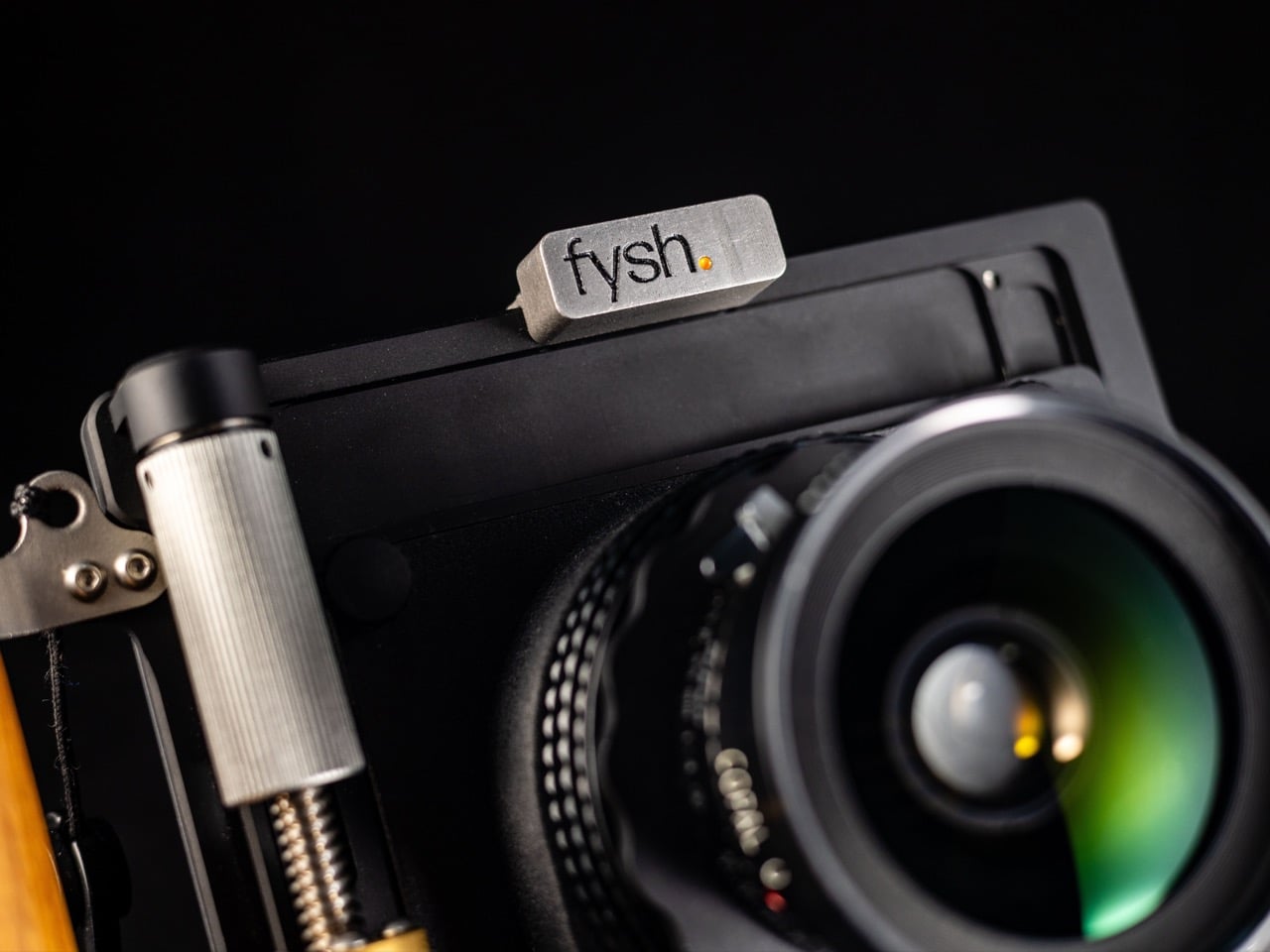
The global jury for the International Design Awards evaluates both conceptual prototypes and fully realized commercial products, making the Gold win particularly sweet for a creator whose hardware is actually available for consumers to purchase. Ultimately, finding an effective cure for the age-old problem of converging verticals required little more than a bicycle trip, a workshop full of 3D printers, and a designer stubborn enough to handle the complex math.