Creators Trey Parker and Matt Stone have returned with another biting installment of "South Park" Season 29, diving headfirst into contemporary internet culture, beauty store obsessions, and the surreal new normal of the mountain town. In the third episode of the milestone season, titled "You Like That On Your Face," the animated series targets online lingo, teenage beauty obsessions, and the bizarre phenomenon of aura battling, managing to weave together multiple absurd plotlines involving the entire ensemble of characters.
The latest episode is packed to the brim with modern internet slang, referencing terms like "mogging," "maxxing," "mewing," "chad," "cringe," and "rizz." These words take center stage as aura battles sweep through the newly named town of South America. The community’s shift to the new moniker, introduced ahead of the Season 29 premiere, continues to serve as the backdrop for the show’s satirical local politics and daily absurdities.
The primary conflict of the episode centers on young Ike, who finds himself preparing for a high-stakes, live-streamed aura battle at school against an opponent named Chad. Kyle attempts to guide his little brother, but his deep-seated skepticism toward the practice leaves him ill-equipped to offer practical help. Kyle goes so far as to voice his concerns about the combination of aura battling and looksmaxxing, calling it a dangerous mix.
Fortunately for Ike, Cartman unexpectedly steps in to offer a helping hand and emotional support, showcasing a rare moment of bizarre mentorship. Expressing a sudden concern for his younger peers, Cartman tells Ike that he is sure their older brother figures want to help, even if they do not know how. Cartman adds that if he had a little brother, he would treat him as his special little guy, setting the stage for an ill-fated trip to the local shopping center.
Cartman escorts Ike to Sephora, which has been entirely overrun by the children of South Park. This storyline serves as a sharp satirical nod to the ongoing cultural joke about tweens and young teenagers spending exorbitant amounts of time inside beauty supply stores. Highlighting this trend, a man sitting on a bench outside the store shares a bewildered observation, noting that his granddaughter initially asked to visit a clothing store before requesting a quick stop inside Sephora. According to the man, that brief visit began six and a half years ago, concluding with the ominous remark that there is something inside those walls that men simply cannot understand.
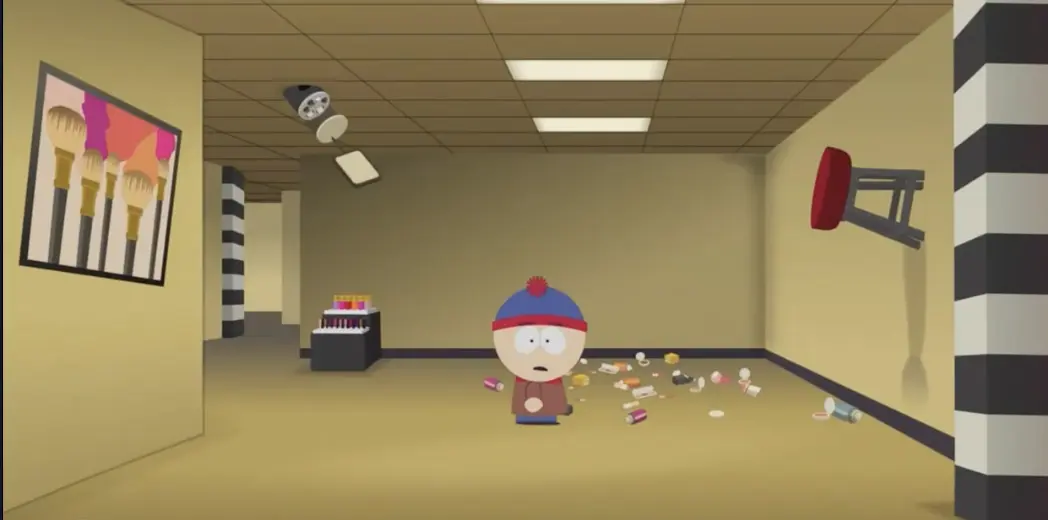
Inside the sprawling beauty retailer, Cartman and Ike become enticed to venture into the store’s "backrooms" by an employee. The subterranean corridors bear a striking visual resemblance to the unsettling aesthetics popularized by creator Kane Parsons in his viral horror films. The hazard is not entirely unfamiliar to the boys; earlier in the episode, Stan had wandered into the same labyrinthine backrooms, granting him the crucial knowledge needed to track down Cartman and Ike and pull them out before Ike’s scheduled aura battle begins.
Despite the successful rescue mission, the effort ultimately proves futile for the competition itself. Ike fails to secure a victory in his live-streamed aura battle. However, the battle takes an unexpected turn when Stan’s father, Randy, intervenes. Randy had previously shrunk himself to the size of his son using products purchased inside Sephora, a bizarre mishap that left him forced to re-enroll as a student. The miniature Randy physically overpowers Ike’s opponent, effectively destroying the rival’s meticulously looksmaxxed face in the process.
Notably, the third episode lacks any direct satirical nods to Donald Trump, continuing a trend of relatively brief mentions of the president compared to the previous season. During Season 28, the commander-in-chief served as the central focal point for a sweeping array of absurd storylines, including a memorable plot point where JD Vance attempted to seduce Donald Trump to avoid punishment for trying to terminate an unborn baby with the assistance of Satan, alongside numerous other political controversies.
The current season has instead leaned heavily into a wide variety of contemporary cultural targets. The premiere episode of Season 29, which aired last month, revolved around Cartman, Stan, Kyle, and Kenny developing an obsessive, sudden love for electric bicycles. Meanwhile, the second episode delivered a heavy dose of satire targeting billionaire-backed data centers, anti-vaccine sentiment, and public health discourse.
In that second episode, character Butters took it upon himself to rid South America of "billionaire weenies"—which literalized the insult into actual penises—and the power-hungry data centers straining the local electrical grid. The storyline also took direct aim at anti-vaxxers. When Butters’ parents attempted to explain his newfound anti-billionaire and artificial intelligence beliefs, they squarely blamed a childhood measles vaccination. His father yelled that he knew what the vaccination would do because he listened to podcasts, angrily criticizing his partner for failing to listen to podcasts herself and declaring that their son had become politically radicalized as a result.
With the rollout of Season 29, creators Trey Parker and Matt Stone are fully committed to the "South America" town name change, a narrative choice announced just before the season debuted. The premiere episode, marking the first broadcast since the town adopted the new regional designation, drew a massive audience, pulling in 4.2 million viewers within its first three days, according to data previously reported by Variety. As the season continues, Parker and Stone show no signs of slowing down their barrage of pop-culture critique, blending high-concept absurdity with everyday generational anxieties.