Traditional public seating has a fundamental flaw: it is surprisingly effective at making conversation awkward. When two people sit side by side on a standard linear bench facing the street, maintaining a fluid conversation requires an uncomfortable sideways turn of the neck and torso. Add a third person to the mix, and the dynamics break down entirely, forcing someone in the middle to lean forward or backward while their companions crane their necks around them. It is a daily urban mismatch between having a place to sit and having a place to actually spend time together.
To address this persistent architectural oversight, designers Lim Junwoo and Hayoung Kang have introduced "Free to Face," a thoughtful public seating project that reimagines how urban furniture facilitates human interaction. Beyond simply fixing the geometry of sitting, the designers frame the project around a much larger socioeconomic concern: the growing trend of conversation becoming inextricably tied to consumption. While meeting a friend over coffee is a cherished social ritual, buying a commercial beverage should not serve as the mandatory entry fee for sitting down and catching up. Free to Face proposes a style of public seating that carves out physical room for people to gather, rest, and converse without a financial transaction attached to the experience. It is a modest yet compelling proposition for modern urban planning—one that asks public spaces to better accommodate individuals and groups who aren’t necessarily on their way somewhere else.
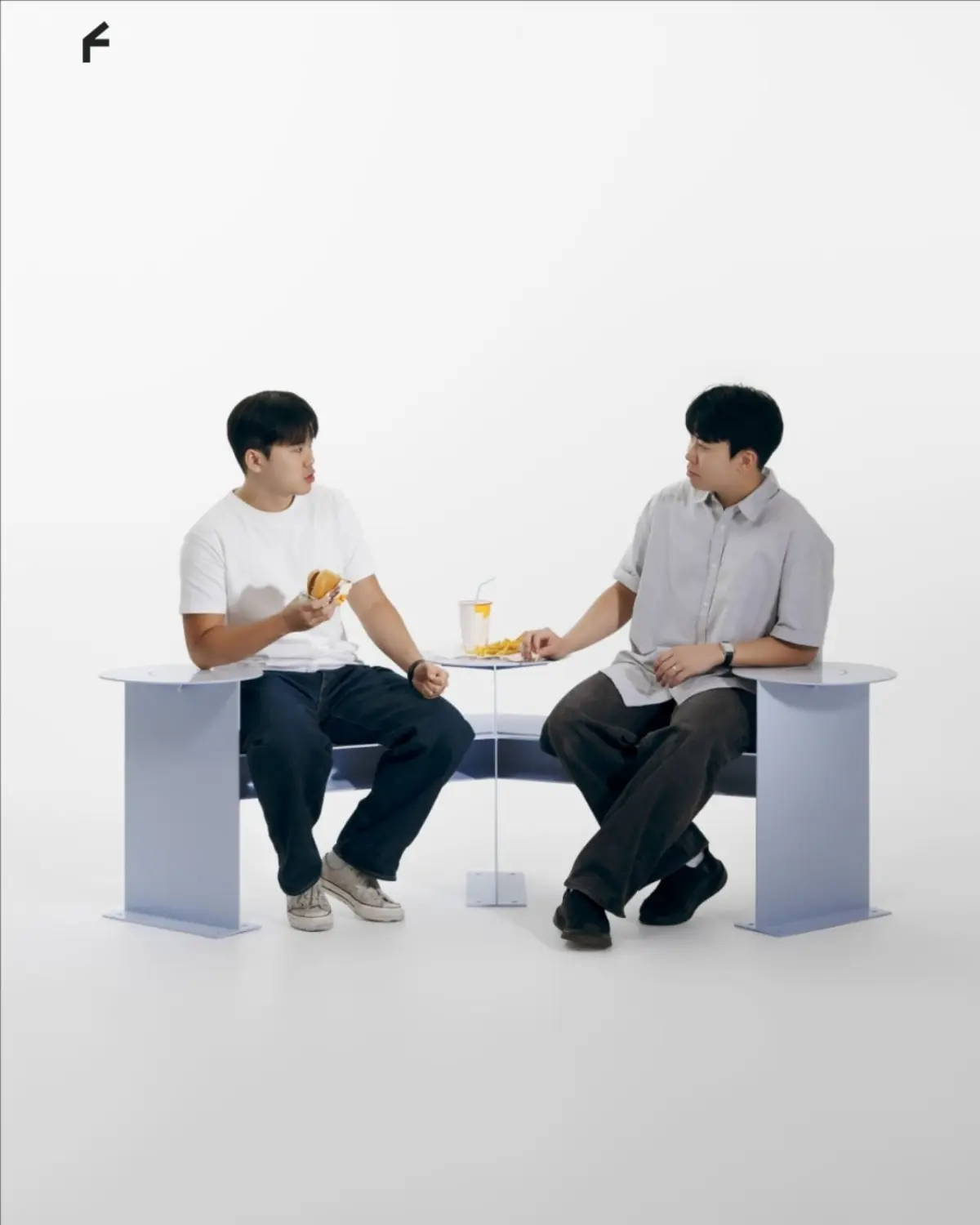
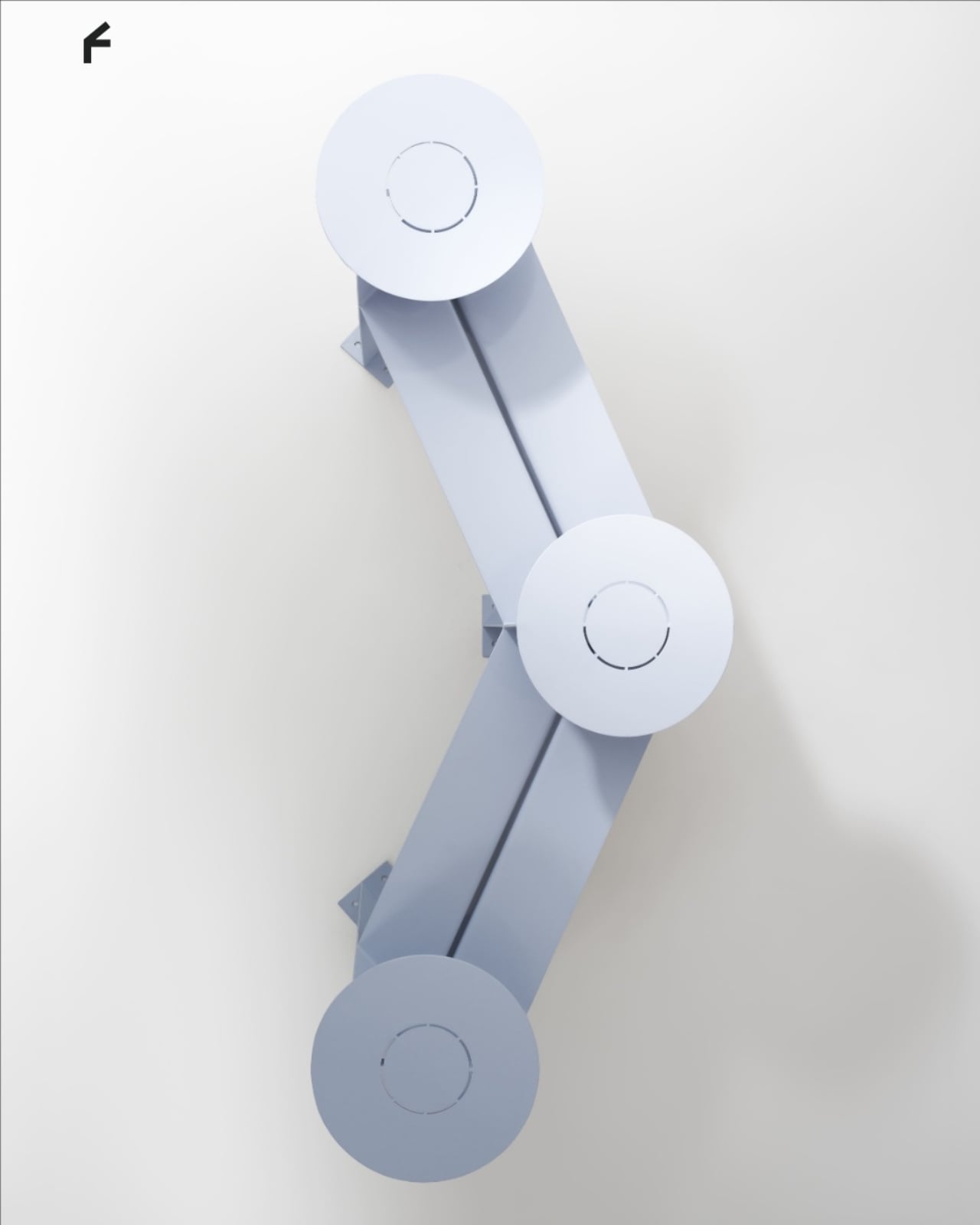
The most prominent design innovation of Free to Face is immediately visible from a top-down perspective. Moving away from the rigid straight line of conventional park benches, the seating arrangement follows a shallow, angular bend. This geometry is punctuated by round platforms positioned cleanly at the ends and at the absolute middle of the structure. Rather than being forced to share a single, forward-facing view of traffic or a walkway, individuals seated along the two angled arms can naturally orient themselves toward one another. This thoughtful configuration leaves an open area directly between the participants, providing a physical center of gravity for conversation without enclosing the group or transforming the furniture into an overly intimate, restrictive booth.
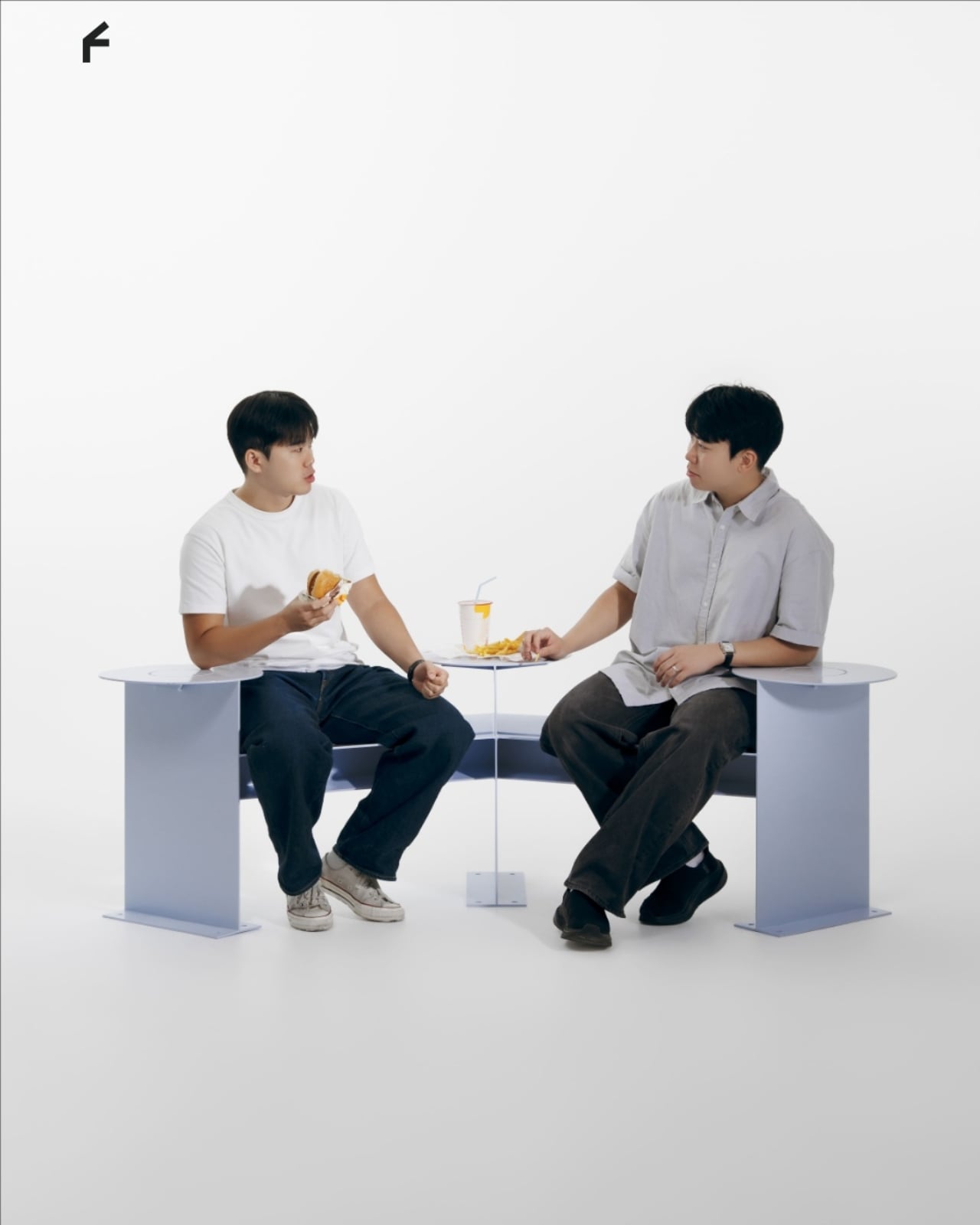
This distinction is crucial to the project’s overall philosophy. Effective public seating should invite eye contact and open dialogue without making either component compulsory. Photographs documenting the Free to Face project show individuals comfortably conversing across the central bend, yet the backless layout leaves plenty of flexibility for occupants to shift their orientation or look out at the wider environment. Urban furniture should offer social possibilities rather than rigidly assigning every user a specific role. A stranger sitting down nearby should not automatically feel pulled into an impromptu conversation, nor should a public bench feel like a forced icebreaker exercise. By balancing communal potential with personal autonomy, the design respects the boundaries of everyday city life.
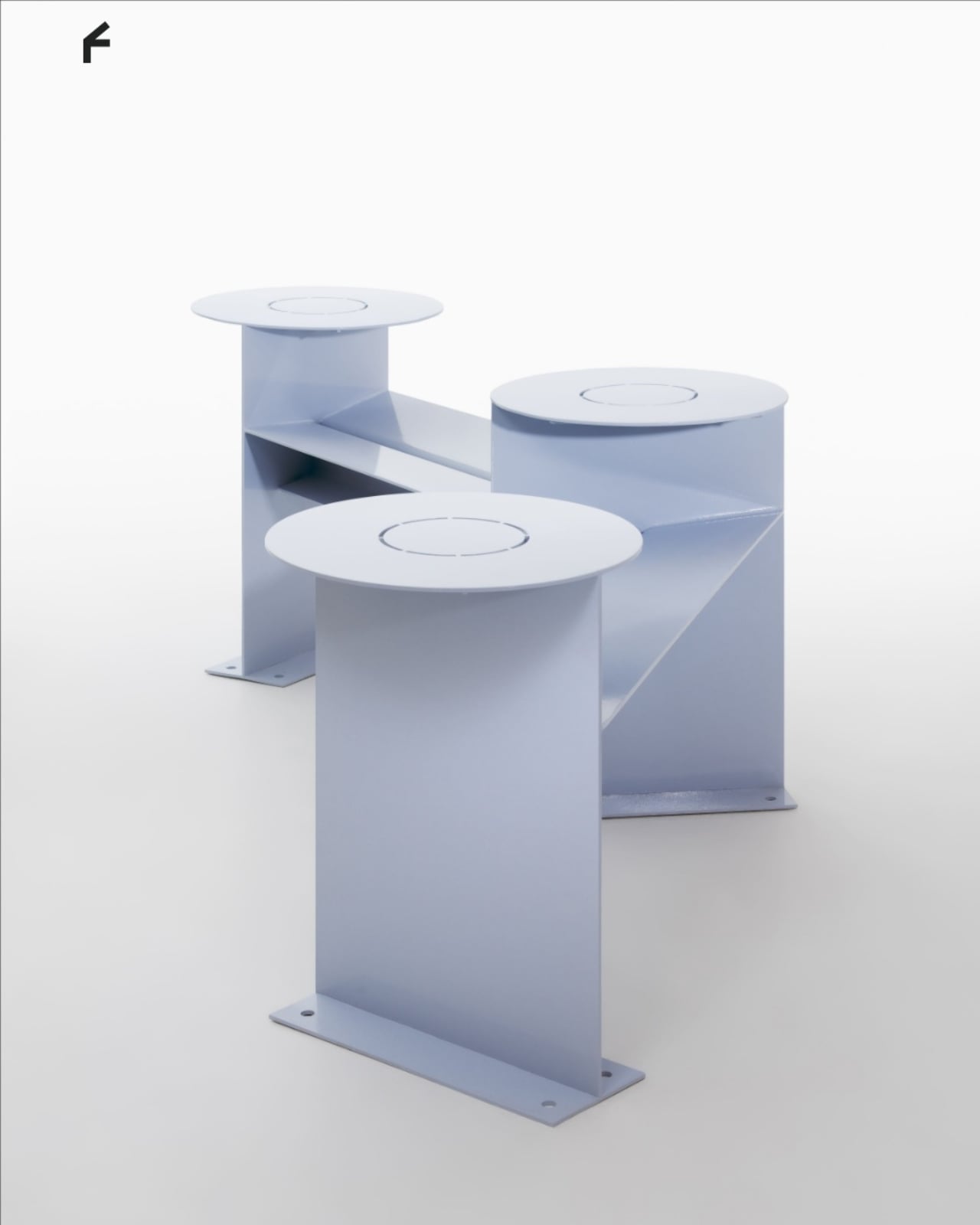
A closer examination of the structure reveals that varying surface heights make the project significantly more engaging than its basic footprint might initially suggest. The descriptive materials surrounding the project present these different levels as functional options for choosing various seating postures, with any unused areas naturally doubling as convenient drop-zones for personal belongings, bags, or food items. In promotional and documentation photographs, one user can be seen occupying a raised circular platform while others remain seated lower along the main arms. Elsewhere, a canvas tote bag rests casually beside its owner. Because these are fixed surfaces rather than mechanized, adjustable components, the true flexibility of the design emerges entirely from how people choose to occupy and interact with the physical structure.
These integrated landing spots prove exceptionally useful in practice. On a standard, utilitarian bench, a person’s lunch, laptop, and bag are constantly competing for limited real estate on their lap or the narrow seat beside them. The circular surfaces introduced by Lim Junwoo and Hayoung Kang provide alternative architecture for these everyday items, and the project’s imagery demonstrates a shared meal neatly arranged around the middle platform. This practical application grounds the broader social premise of the design in tangible reality. Two people splitting food need a dedicated space to place their meal, and urban design does not always require a more elaborate justification than that simple human need.
Visually, Free to Face features a distinctive pale lavender finish, broad and stable flat supports, and clean, exposed structural geometry. The smooth circular tops visually soften what could otherwise be a stark, angular metallic assembly. While fabrication photographs capture the raw metal structure before its final coating process, specific technical details regarding the exact metal alloy or weather-resistant finish have not been formally detailed in the studio’s documentation. Nevertheless, the overarching form remains remarkably intuitive. Passersby can easily follow the bench’s gentle bend, identify the elevated surfaces, and instantly understand several potential use cases without the need for an explanatory instruction panel or plaque.
At the same time, the current studio setting leaves a few practical, real-world questions unanswered. The existing photographs establish a successfully fabricated, full-size physical build, but they do not demonstrate how the materials and structure perform through adverse weather conditions, harsh summer heat, or years of heavy public wear and tear. Furthermore, considerations such as ergonomic back support, optimal seat heights for diverse populations, and adequate clearance space for individuals utilizing wheelchairs would all require rigorous evaluation before any municipal installation. While it would be unfair to dismiss an exploratory design for lacking this extensive technical documentation, it is equally important not to treat a staged studio photoshoot as definitive proof of long-term comfort or universal accessibility. The strongest evidence of the project’s value remains its clever spatial arrangement, thoughtfully demonstrated through a variety of plausible everyday scenarios.
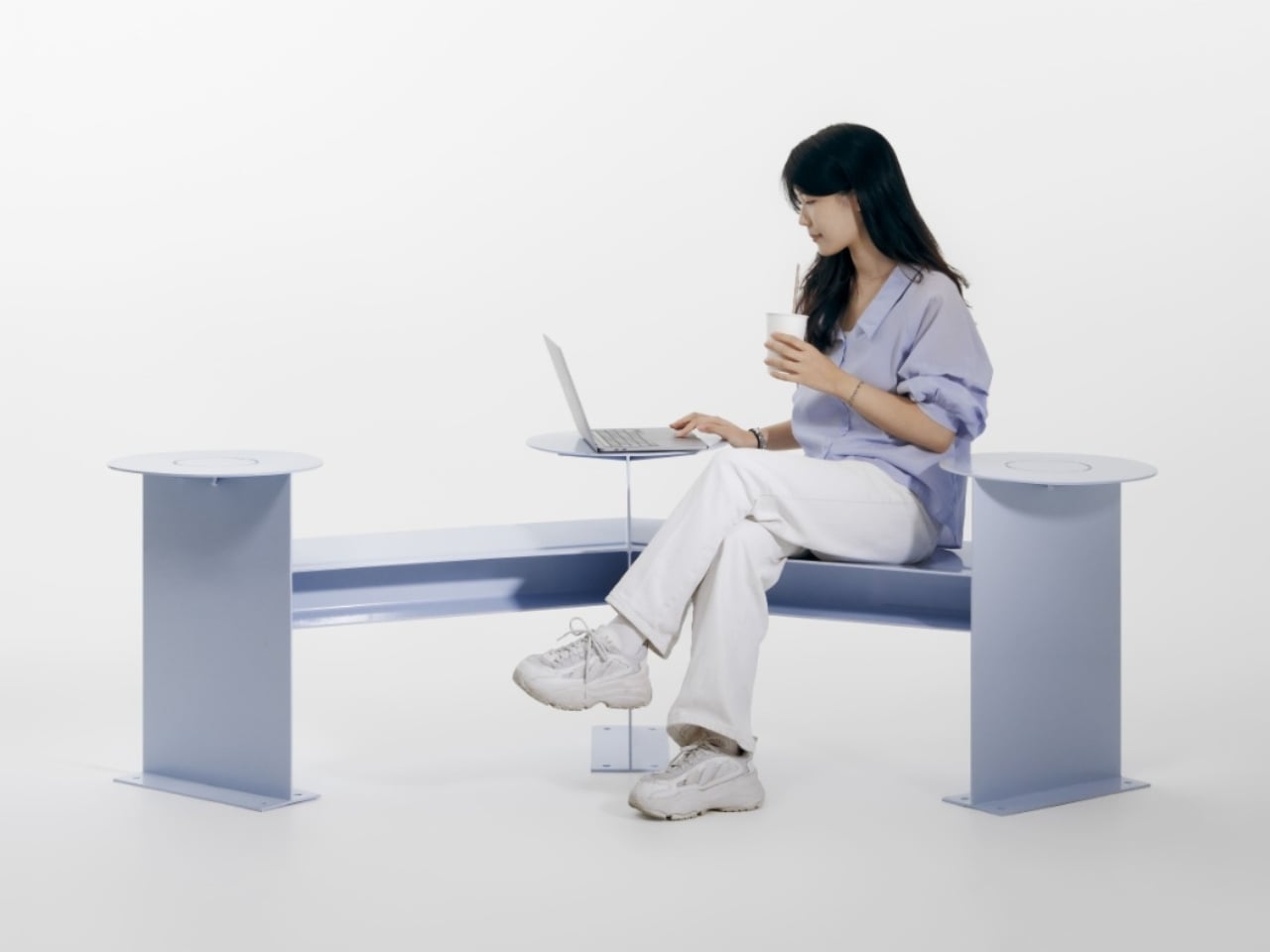
Significantly, one of the project photographs features a woman utilizing a laptop entirely on her own—a welcome and essential detail for any initiative focused on public connection. Healthy public spaces must successfully accommodate solitude just as readily as they facilitate social gathering. Sitting quietly by oneself should never be viewed as using communal furniture incorrectly. Free to Face ultimately resonates because its supplementary surfaces and angled layout provide genuine choices that go far beyond sitting in a rigid, monotonous row. As cities continue to densify and public spaces face increasing commercial pressures, the introduction of furniture that allows people to linger comfortably without needing to order another coffee represents a step forward in urban design.