For generations, aspiring artists have grown up hearing the ubiquitous adage that "practice makes perfect." In the traditional art world, where physical mediums leave no room for error once paint hits canvas, endless repetition of fundamental drawing exercises is treated as an absolute gospel. However, according to professional illustrator Dave Arcade, this traditional rulebook no longer applies to the modern digital artist. Represented by the North American agency Closer & Closer, Arcade is challenging conventional wisdom by arguing that digital creators do not need to endlessly practice drawing to produce exceptional work.
In a recent guest essay and portfolio showcase published by Illustration Age, Arcade addressed the realities of working in a modern digital medium equipped with the ultimate safety net: the command-Z undo function. Because digital illustrators have the luxury of erasing mistakes instantly, the traditional pressure to achieve flawless execution purely through muscle memory and endless sketching diminishes significantly. This technological shift, Arcade suggests, opens up entirely new pathways for traveling from concept to completion.
This reassessment of traditional workflows is particularly relevant in today’s demanding professional landscape. Contemporary freelance illustrators face mounting pressure to divide their attention across numerous non-artistic responsibilities. Between managing social media presence, marketing, administrative tasks, and client communications, today’s creative professionals must juggle multiple plates just to survive in the freelance economy. Consequently, modern artists simply do not have the luxury of dedicating the same amount of time to traditional sketching practices as their historical predecessors did.
This raises a fundamental question for contemporary creators: Is sketching genuinely the best use of a modern illustrator’s time? Arcade argues that it is not—at least not in the traditional sense, and certainly not given the advanced digital tools available today. Furthermore, he points out that artists frequently overlook one of the most powerful and underutilized assets at their disposal: their own minds. According to Arcade, an artist does not need to spend hours practicing basic drawing drills to elevate the quality of their final illustrations.
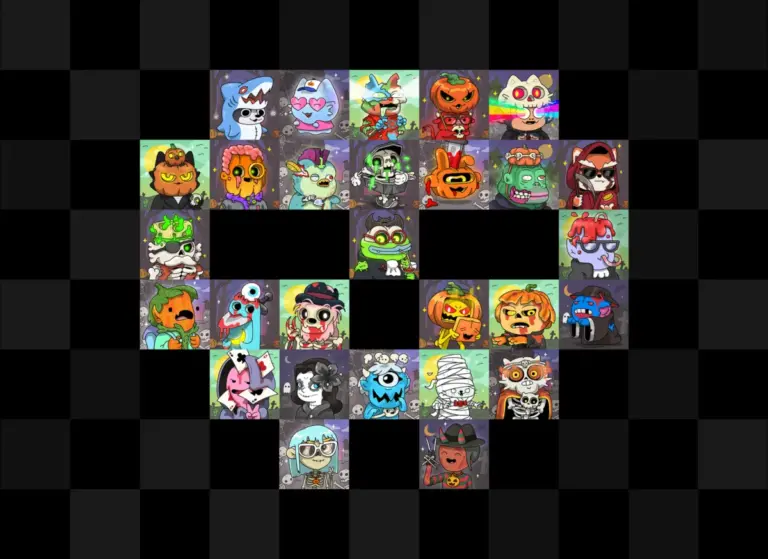
While this proposition may sound paradoxical to traditionalists, Arcade points to his own diverse body of work as living proof. He readily admits that he spends very little of his free time sketching, and rarely engages in traditional warm-up drawings. This does not mean he neglects personal projects; rather, he invests his time very differently. Instead of spending hours honing the muscle memory in his drawing hand, Arcade focuses his energy on the muscle inside his head—specifically, the cognitive practice of brainstorming and ideation.
Arcade’s professional philosophy is rooted in the conviction that illustrations improve exponentially when creators invest more time upfront into thinking through a rough concept rather than rushing through foundational sketches. While jotting down a written idea takes mere seconds, developing a drawing can consume hours. By shifting the bulk of the creative labor to the initial planning phase, artists can streamline execution and achieve more predictable, polished results.

Rather than relying on endless sketching to bridge the gap between imagination and execution, Arcade outlines a holistic set of tools, mental practices, and technical approaches that have successfully defined his distinct artistic style. Central to this methodology is the strict prioritization of ideas before putting pencil to digital tablet. By dedicating a full day or two exclusively to brainstorming, reviewing reference materials, and organizing visual libraries on platforms like Pinterest, an artist can solidify their conceptual direction before a single line is drawn.
Technical precision also plays a vital role in Arcade’s streamlined approach. He stresses the importance of obtaining exact project specifications—such as aspect ratios, pixel density, and document dimensions—directly from producers before beginning a composition. Without knowing the exact boundaries of the frame, building a balanced composition is guesswork. Once the parameters are established, incorporating tools like perspective grids allows artists to visualize spatial relationships effectively, acting as a digital crystal ball for mapping out complex scenes.
Addressing the often-controversial topic of reference materials and digital assistance, Arcade advocates for a pragmatic approach. He firmly maintains that looking at reference photos is entirely appropriate, noting that choosing not to practice drawing specific objects every day does not mean an artist shouldn’t use visual guides while working. He draws a clear line between drawing inspiration from references and outright theft, explicitly condemning the copying of other artists’ original work while simultaneously endorsing the strategic use of modern digital assets for difficult elements.
For many illustrators, certain anatomical features or complex perspectives present persistent hurdles. Arcade acknowledges that drawing is inherently difficult, which is why software developers have created specialized tools to assist with challenging elements like hands, feet, dynamic postures, and multi-point perspectives. Programs that allow creators to manipulate 3D assets, scale objects, and adjust lighting offer practical shortcuts. Arcade encourages artists to utilize these digital aids sparingly and intelligently, freeing up mental energy to focus on the broader creative vision rather than getting bogged down by technical roadblocks.
Technical efficiency extends beyond digital assets into software and hardware selection. Arcade warns against wasting valuable time wrestling with programs unsuited for specific tasks, such as repeatedly redrawing curves in raster-based software when vector tools can execute clean lines instantly. Knowing which application to use for each phase of a composition prevents frustrating bottlenecks. Similarly, choosing the right physical gear—whether an iPad for mobility or a large-format desktop tablet for precision—ensures that an artist’s equipment supports their unique workflow rather than restricting it.
Ultimately, Arcade does not suggest that sketching should be completely abandoned by those who find genuine value in the practice. For artists whose workflows rely heavily on traditional thumbnail sketching to unlock ideas, that method remains entirely valid. Instead, his alternative approach is offered as an empowering option for creators who dislike traditional sketching or find it less effective than modern digital workflows. By reallocating time away from repetitive drawing drills and investing it in strategic planning, digital proficiency, and conceptual ideation, freelance illustrators can optimize their time on the clock and elevate the overall quality of their commercial and personal art.