Remember when wireless phone chargers first felt like magic? You simply set your device down, and it began charging, saving you from fumbling with tangled cables in the dark. Somebody at Kitchenery apparently looked at that little glowing pad one day and wondered why the technology should stop at mobile phones. Now, the same fundamental wireless power concept used to top up small electronics is being engineered to run full-size, high-wattage kitchen appliances. Kitchenery’s patented Quantum Energy Pad delivers over 1,500 watts through a standard countertop—roughly 100 times the power of a typical phone charger—to power battery-free appliances entirely without cords and plugs.
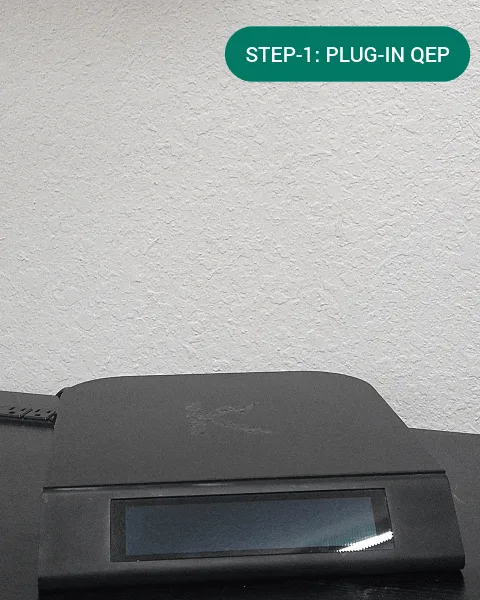
That represents a dramatic jump in scale for a concept most consumers associate with gaining a quick 20% battery boost overnight. Yet, the underlying mechanics remain surprisingly familiar. The Quantum Energy Pad, or QEP, simply plugs into a standard wall outlet. A compatible appliance receives full operating power the moment it is placed on the active surface. The exact second it is lifted away, power delivery instantly stops. There are no heavy, hidden batteries tucked inside your kettle, and no bulky charging cradles taking up precious cabinet space. Instead, a single sophisticated pad handles the heavy electrical lifting while you simply get on with preparing breakfast.
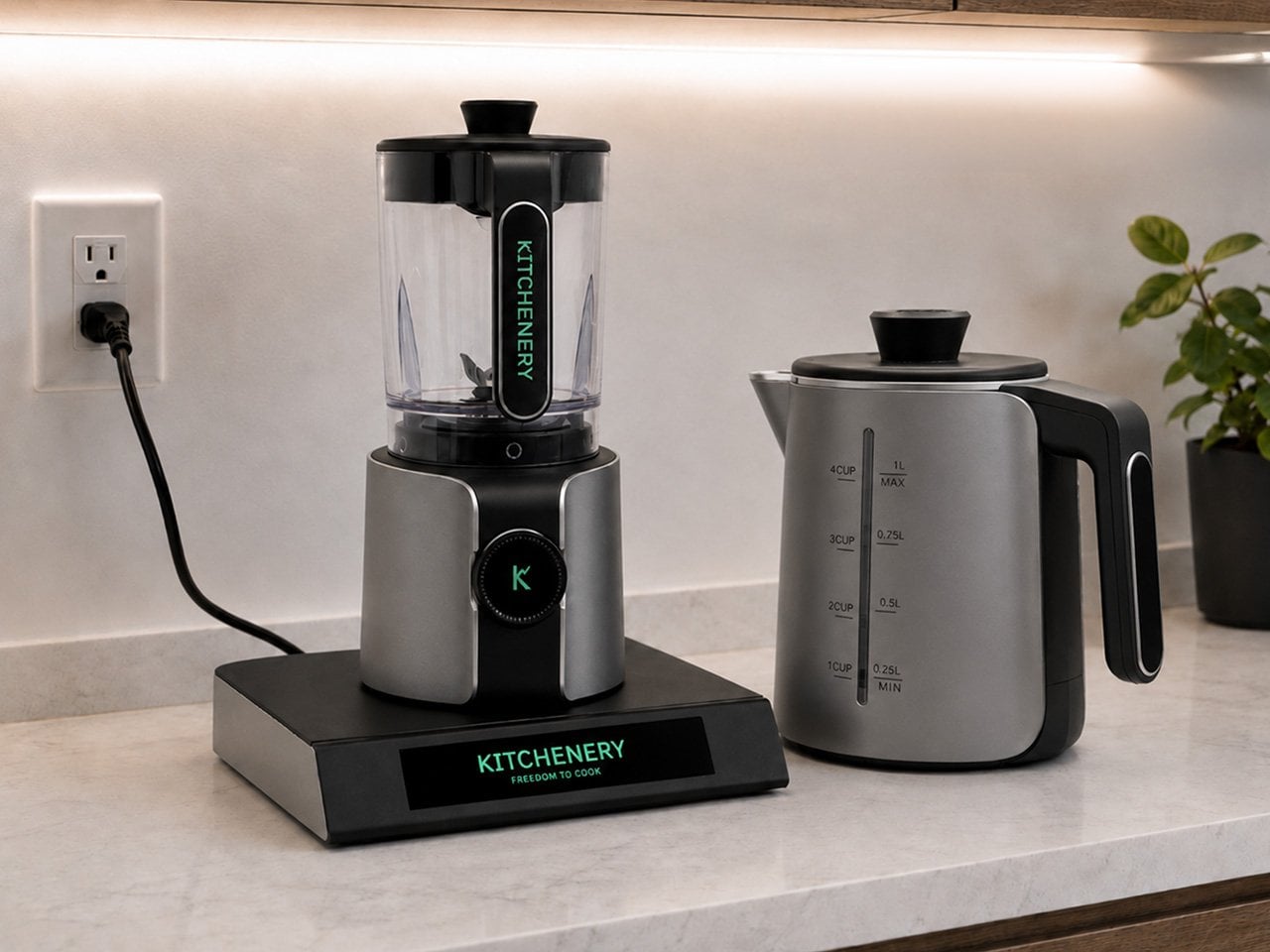
Stacked inside the sleek architecture of the QEP are three key physical components: a durable ceramic-glass surface, a hybrid power coil, and an adaptive touchscreen interface. The hybrid coil serves as the technical core of the system. It is a single transmission coil capable of dynamically switching between different resonance frequencies to perform three distinct jobs from one unified surface. It can power heavy-duty appliances, wirelessly charge personal mobile devices, and simultaneously induction-heat traditional cookware.
The adaptive touchscreen changes its control layout depending entirely on what the user sets down upon the glass. It displays specific, intuitive kettle controls when the kettle is present, and shifts seamlessly to blender presets when the blender takes its place. With a power input capacity ranging from 110V to 240V AC, the unit is designed to accommodate most of the world’s standard wall outlets. Because the ceramic glass surface also accepts induction-compatible cookware, the pad actively earns its valuable counter real estate by functioning simultaneously as a daily cooktop, a wireless appliance power platform, and an interconnected ecosystem hub.
A defining characteristic of Kitchenery’s lineup is that the appliances themselves are entirely battery-free. Unlike various cordless appliances currently on the market that rely on heavy, integrated rechargeable batteries, the Silent Blender and the Perfect Pour Kettle carry no energy storage components whatsoever. They draw electrical power exclusively while resting directly on the active pad. This architectural choice results in significantly less weight, far less electronic waste, and zero degrading batteries that eventually require frustrating replacements. Before delivering full operational power, the pad securely verifies each appliance through a low-power Bluetooth handshake, ensuring that only recognized and safe devices are ever energized. This approach establishes a meaningfully different architecture from competing concepts, keeping the door wide open for smarter, app-connected software layers down the road.
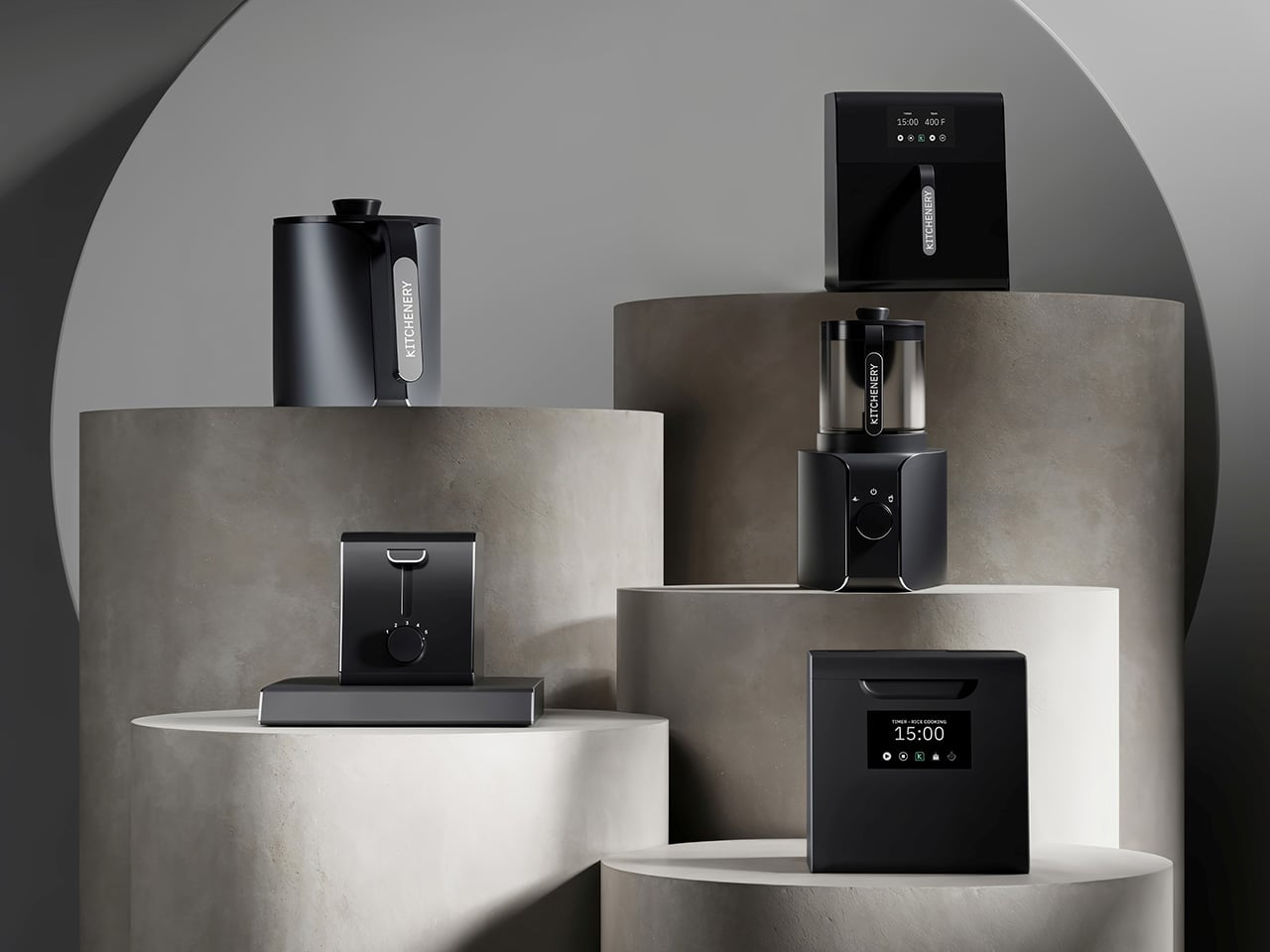
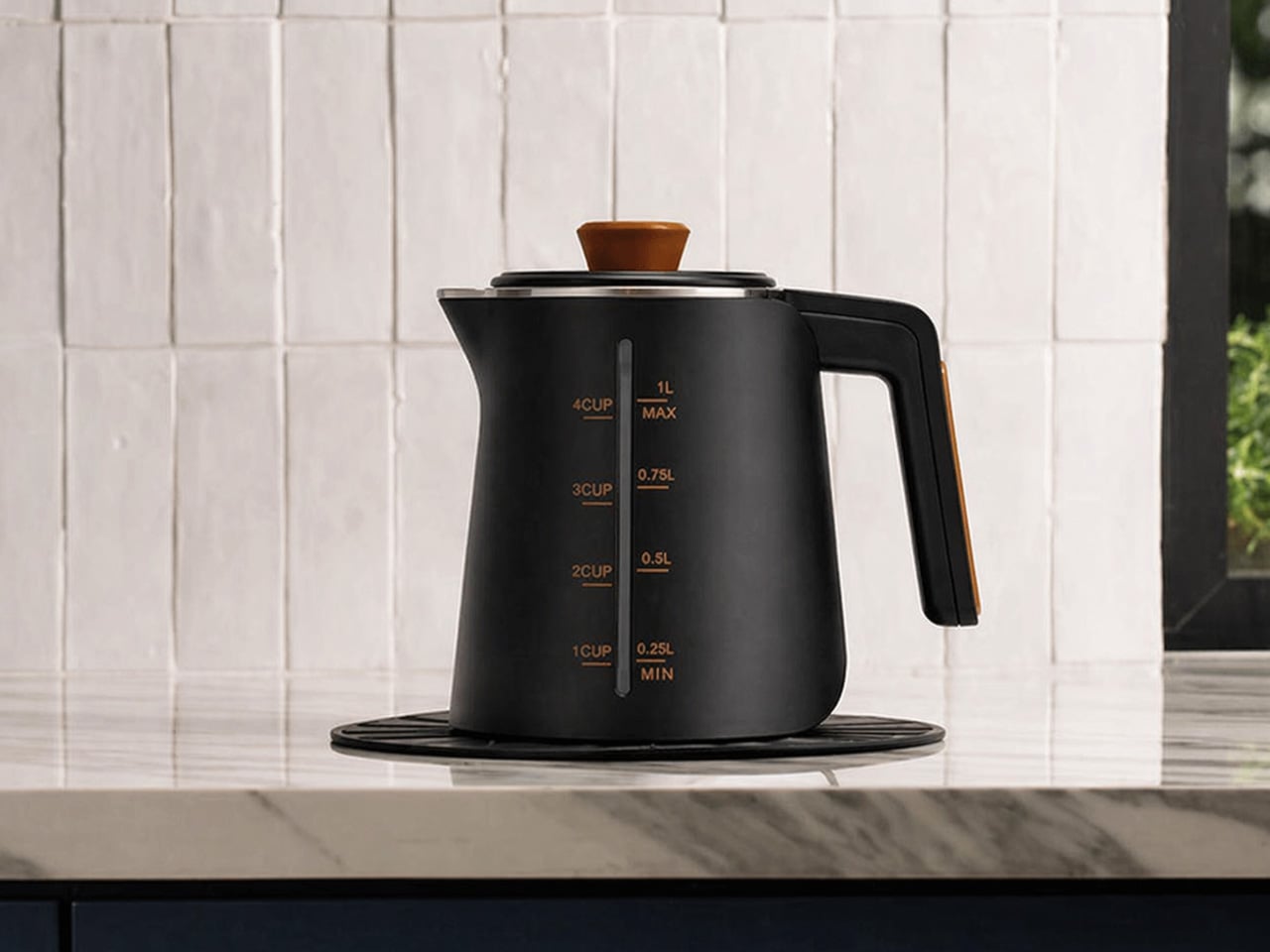
The Perfect Pour Induction Kettle is a one-liter appliance specifically designed for controlled pouring, featuring a 316 stainless-steel inner tank, a clear digital temperature display, and an ambient color-changing handle light. These elements are fully integrated into the broader Kitchenery system to streamline everyday tea, coffee, and hot-water preparation. A removable lid provides easy access to the stainless-steel interior for straightforward filling and cleaning, while the carefully shaped spout is engineered for a precise, steady liquid flow—a critical detail for pour-over coffee enthusiasts and loose-leaf tea drinkers alike. The kettle ships in both classic stainless and sophisticated dark finishes, and it can additionally operate on compatible standard induction cooktops beyond the QEP, offering a degree of hardware flexibility that ecosystem-locked appliances rarely provide.
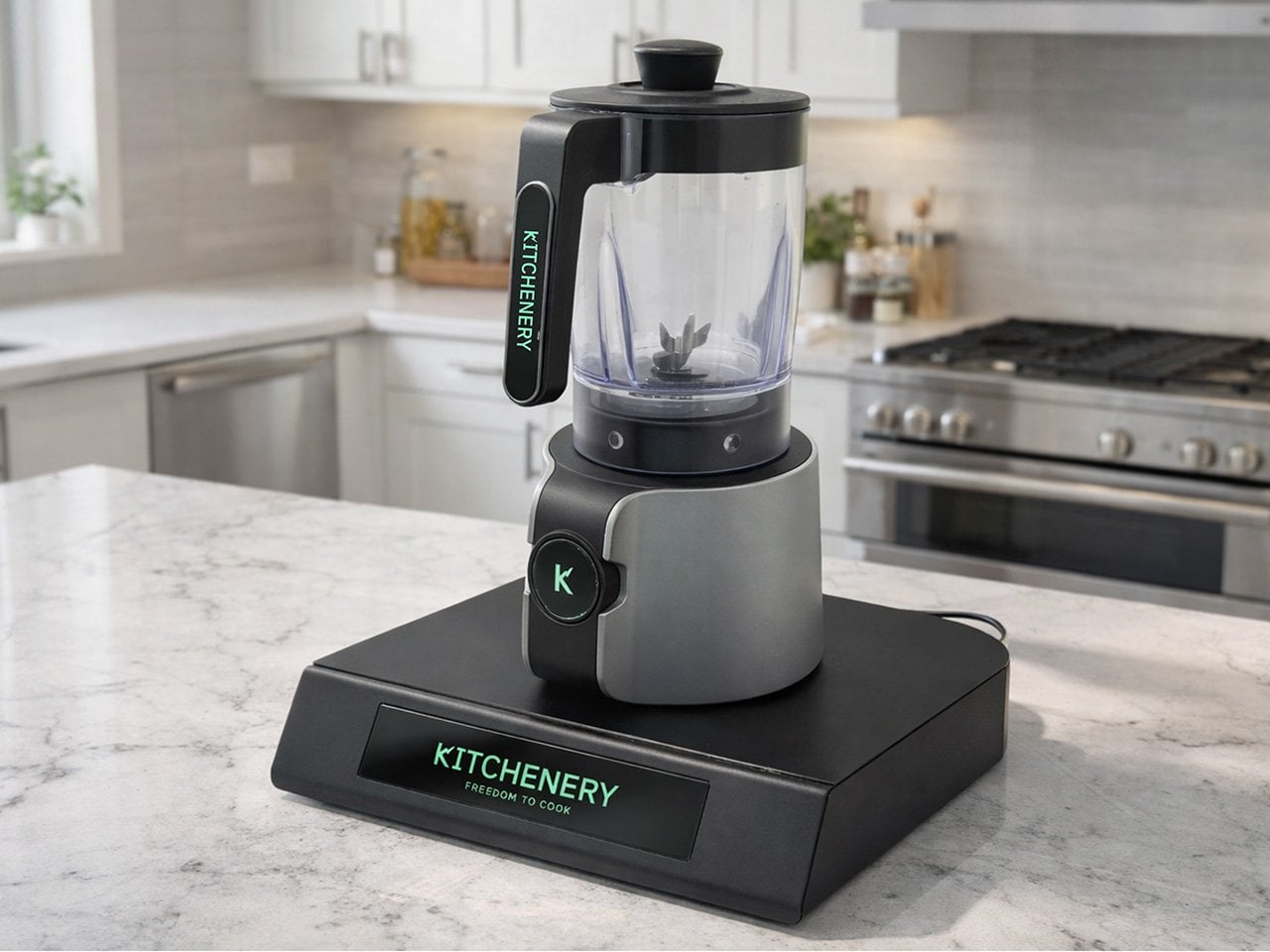
Meanwhile, the Silent Blender serves as Kitchenery’s cordless countertop blending solution. It features an integrated receiver inside its base that draws operating power directly from the QEP, eliminating the need for either a permanent wall cord or an internal appliance battery. Developed for smoothies, sauces, and everyday food preparation, the motor is specified at 15,000 RPM at the current design stage, utilizing a wireless-power receiver coil and advanced electronics as its core power architecture. While "Silent Blender" is the designated product name, quieter blending operations remain a primary development goal, with comparative sound results currently undergoing rigorous final validation. For an appliance category defined almost entirely by high noise levels and persistent cord clutter, the functional proposition is compelling on concept alone.
The most conventional use case for this technology is also the most obvious: a modern home kitchen where counter space is chronically limited, outlet access requires daily negotiation, and the tangled maze of cords behind everyday appliances has quietly become everyone’s problem and nobody’s priority. For consumers facing these exact spatial hurdles, the QEP consolidates multiple devices onto a single wall plug, while the appliances themselves remain free-floating. They can be tucked safely away into storage when not in use, then grabbed and set down without the nuisance of threading a cord through tight spaces. Because the appliances are modular, entirely cord-free, and easy to store, they tuck neatly into tight cabinets and can be rearranged on demand, opening up kitchen layouts that traditional corded appliances simply cannot serve efficiently.
This inherent flexibility reveals an exceptionally interesting target audience for Kitchenery’s ecosystem. Yacht galleys, where limited space, strict safety protocols, and weight restrictions are paramount, represent a natural fit. Private aircraft galleys requiring compact, cord-free appliances can similarly benefit. Recreational vehicles and overlanding setups, where cordless and stackable hardware maximizes every available inch, find immense value in the design. Tiny homes and modular housing units built explicitly around space-saving innovations are equally well-suited.
Furthermore, senior living and accessibility environments stand to gain significantly from a kitchen setup entirely free of open flames and dangling cords. The safety and accessibility argument for a cordless kitchen writes itself, representing an underserved demographic that the traditional small appliance industry has frequently overlooked. Any residential or commercial environment where cord management, heat hazards, and limited electrical outlets present daily concerns becomes a legitimate use case, broadening the market far beyond standard marketing aesthetics.
The wider consumer hardware industry is actively validating the momentum behind the cordless kitchen concept. The Wireless Power Consortium, the influential organization behind the global Qi phone-charging standard, has introduced "Ki," a dedicated cordless-kitchen standard designed to deliver up to approximately 2.2 kilowatts of power to appliances placed on a transmitter. Kitchenery’s patented architecture targets this same high-power reality at over 1,500 watts, but pairs it with battery-free appliances and a fully finished, ready-to-use ecosystem rather than isolated components, while also offering the platform for licensing to other appliance brands and original equipment manufacturers.
While the Ki standard utilizes NFC-based authentication, Kitchenery connects via Bluetooth, establishing a communication layer with considerably more headroom for system intelligence, user personalization, and eventual smart-home integration. Kitchenery is the named assignee of U.S. Patent No. 12,603,526 B1, titled "Hybrid Wireless Power Device and Method," which was officially issued on April 14, 2026. The fact that two very distinct organizations are converging on the same fundamental idea from opposite directions serves as a strong indicator that the underlying technology holds genuine viability.
Every product set includes the QEP induction cooktop and shared power platform, alongside the chosen appliances. Estimated delivery for backers is slated for February 2027. The Starters set, which includes one QEP unit, one Perfect Pour Induction Kettle, and a protective silicone mat, is priced at $1,299 during the super early bird phase. The Smooth set, featuring one QEP and one Silent Blender, starts at $1,499, while the comprehensive Trio package containing both appliances runs $1,699. All Kitchenery products include a standard one-year warranty covering both parts and labor. Worldwide shipping is planned, with additional costs for freight, local taxes, and import duties to be confirmed upon fulfillment.