Shooting super-slow-motion video has long served as a powerful medium, enabling creators to craft engaging visual content while offering scientists, researchers, and engineers a window into intricate technological and natural processes that completely bypass the naked eye. While many modern consumer and professional cameras offer dedicated slow-motion settings—sometimes scaling up to roughly 1,000 frames per second—even these respectable frame rates frequently fall short of what is required to fully appreciate and analyze extremely rapid, blink-and-you-miss-it occurrences.
This inherent limitation is precisely where specialized high-speed cameras enter the market. Traditionally, devices capable of capturing thousands or tens of thousands of frames per second have been highly specialized, expensive instruments reserved primarily for rigorous industrial and scientific applications. However, a growing segment of the market has focused on bridging the gap, delivering high-speed engineering with relatively accessible price tags aimed at broader professional and creative use.
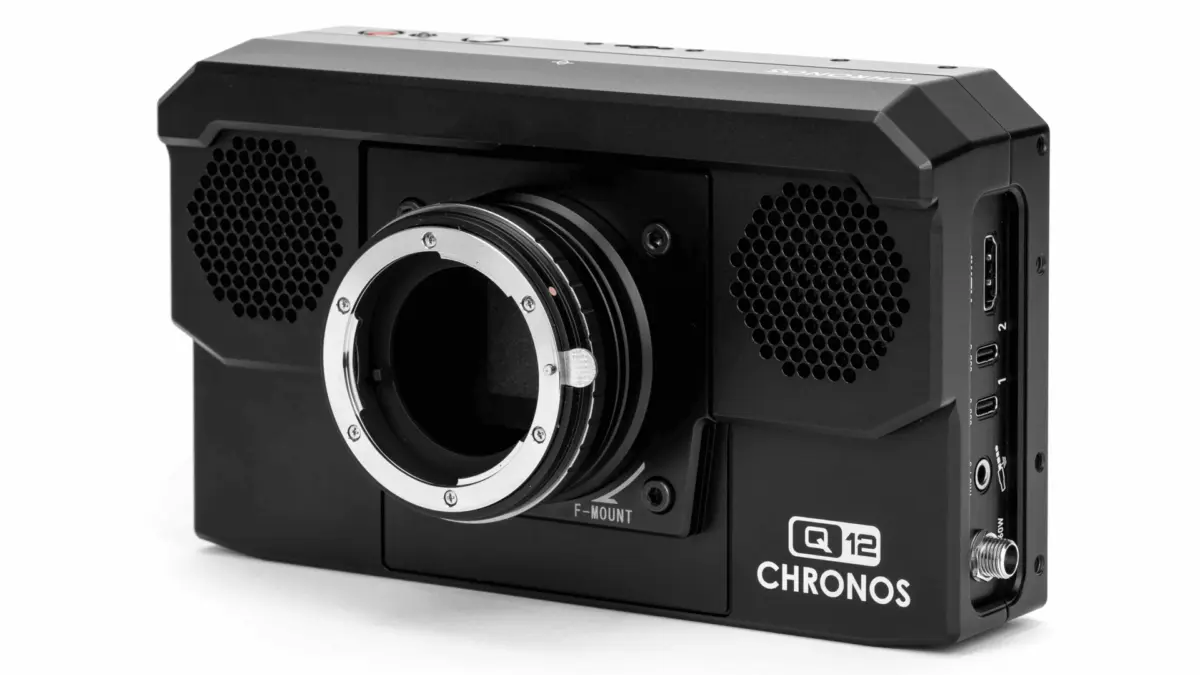
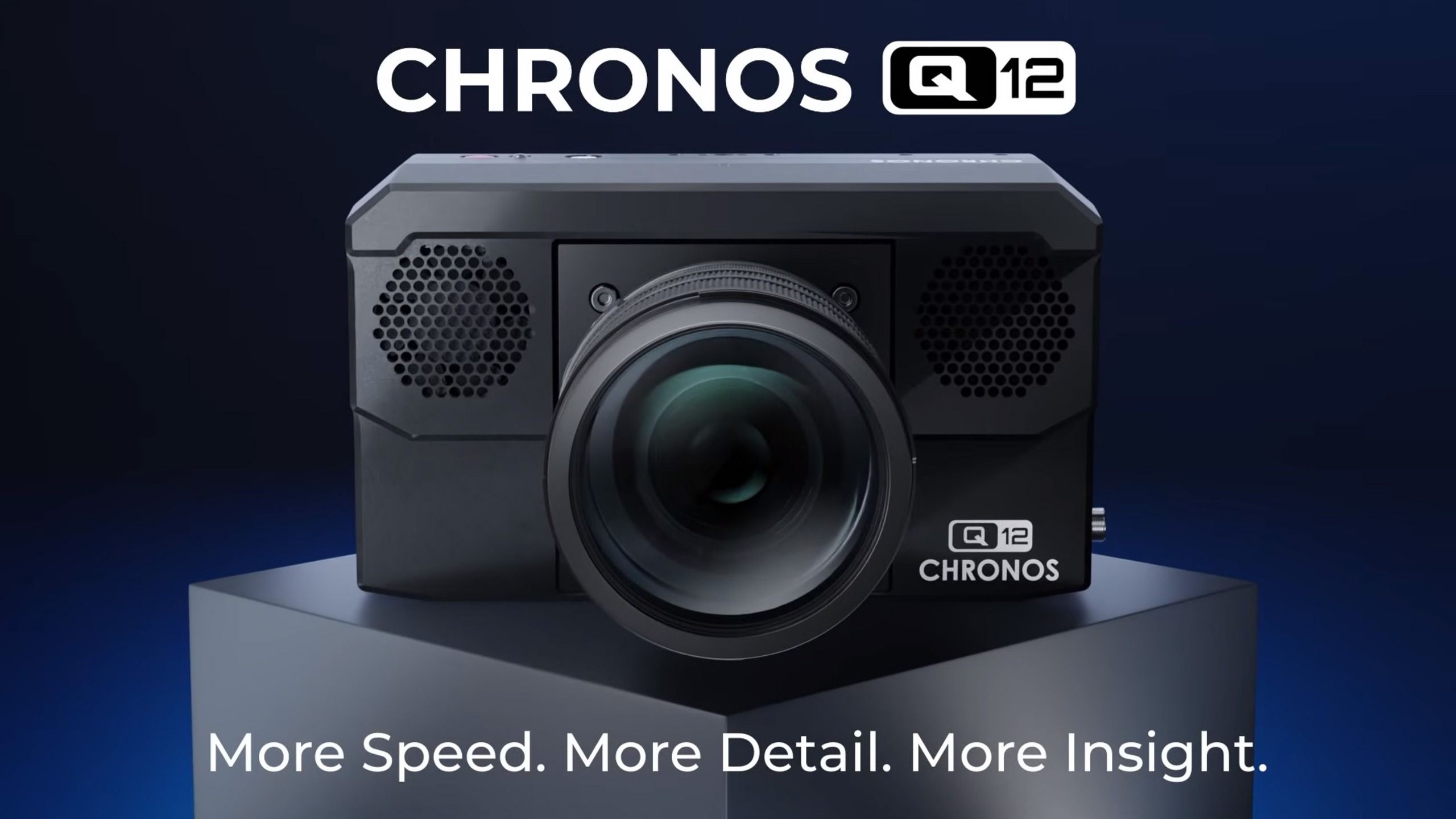
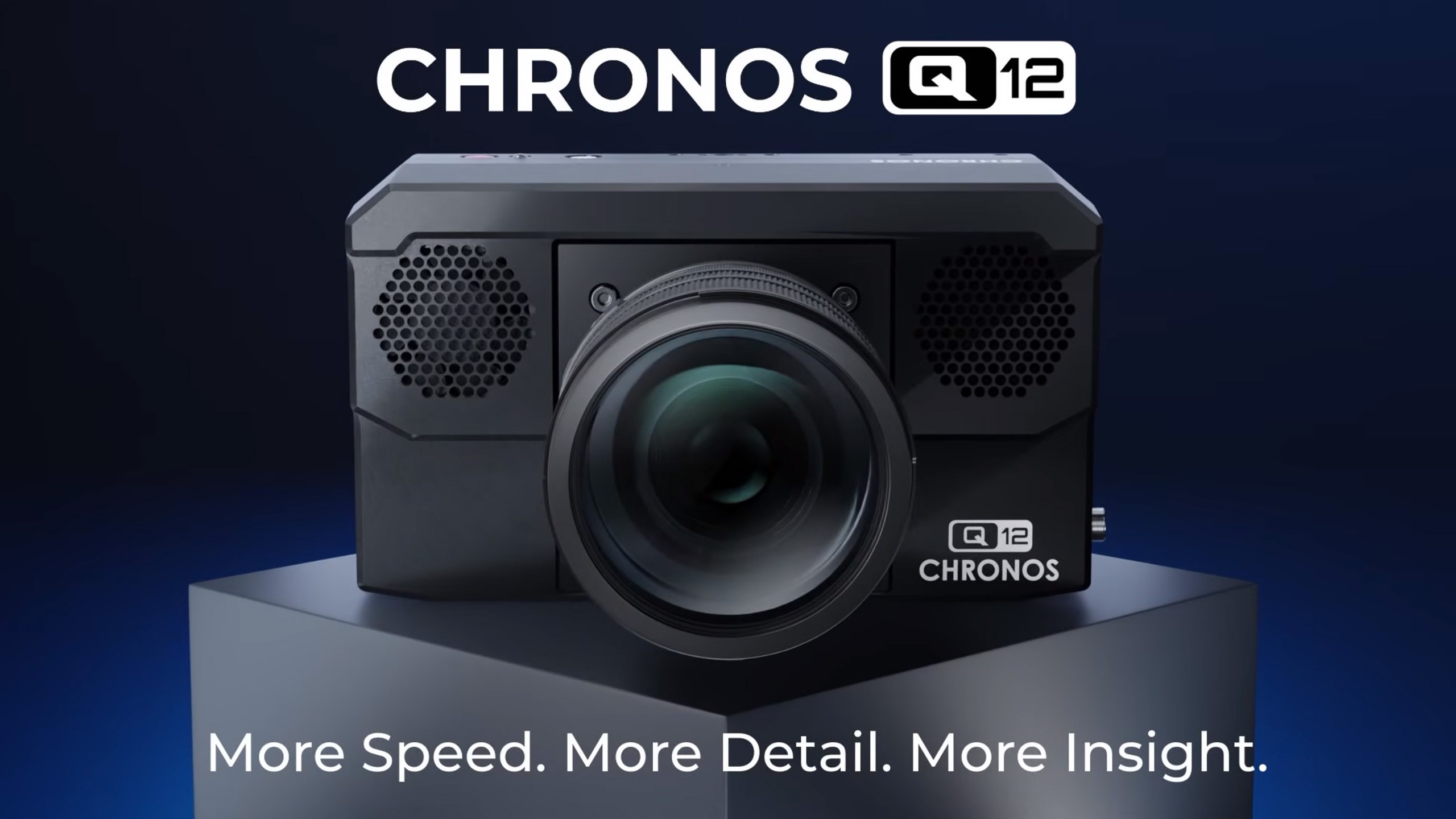
Entering squarely into this specialized yet increasingly accessible category is the new Chronos Q12 camera from Kron Technologies. Measuring a compact 188mm by 111mm by 53mm, which equates to roughly 7.40 inches by 4.37 inches by 2.08 inches when measured without a lens attached, and tipping the scales at just 1.32 kilograms, the device is remarkably light and portable for a high-speed camera system. Engineered deliberately to serve researchers, engineers, scientists, and industrial professionals, the Chronos Q12 is equally well-suited for creative professionals and videographers seeking to record captivating, ultra-smooth slow-motion footage that reveals motion too fleeting for conventional recording equipment to catch.
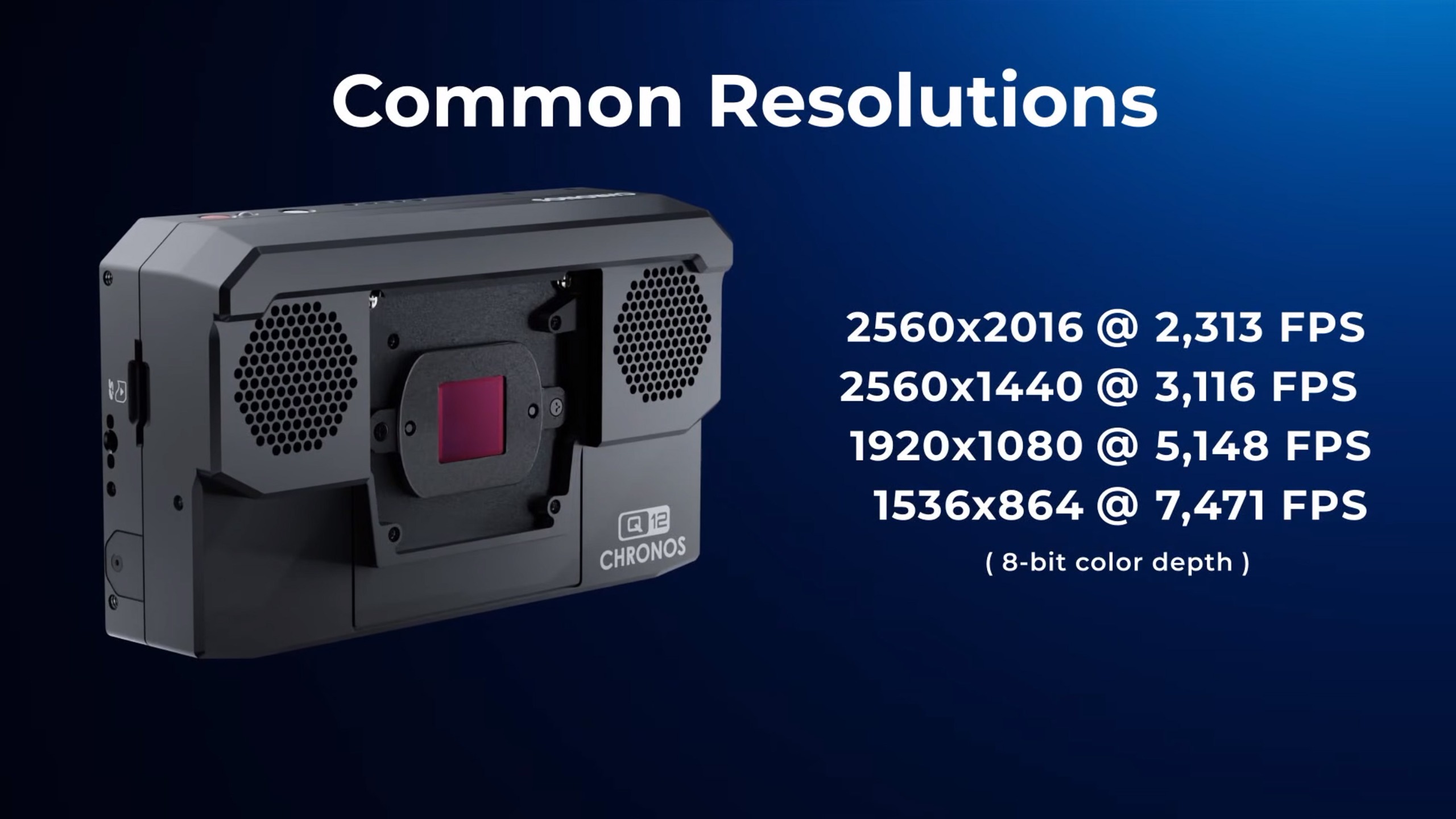
At its maximum native resolution of 2560 by 2016 pixels, the Chronos Q12 is capable of shooting at an impressive 2,313 frames per second, a performance threshold that more than doubles the maximum speeds typically found in mainstream consumer mirrorless or cinema cameras. Yet, the camera’s operational flexibility allows users to push performance even further by sacrificing resolution for raw speed. By simply dialing the capture resolution down to 2560 by 1440 pixels, users can achieve a capture rate of 3,116 frames per second. Scaling down further to standard 1080p high-definition footage unlocks an extraordinary speed of 5,148 frames per second.
For those rare scenarios requiring extreme, specialized scientific analysis where resolution is secondary to raw temporal capture, the Q12 can be pushed to an astonishing 29,515 frames per second. However, achieving this maximum velocity requires restricting the video resolution to a largely impractical 128 by 32 pixels. What makes these performance metrics particularly striking is that they are delivered from a hardware chassis that is not significantly bulkier than a typical full-frame mirrorless body manufactured by industry heavyweights like Sony or Canon.

Beneath its rugged exterior, the Chronos Q12 utilizes an APS-C image sensor capable of recording in full color. This represents a significant advantage for users requiring accurate chromatic data, as many ultra-high-speed industrial cameras are restricted to capturing monochrome imagery only. To accommodate varying workflow requirements and project lengths, Kron Technologies offers two distinct versions of the camera, differentiated primarily by the capacity of their internal high-speed memory buffers.
The 64GB buffer model is capable of recording approximately 5.7 seconds of continuous high-speed video in a single burst, while the higher-tier 128GB Q12 variant doubles this capacity to deliver 11.5 seconds of continuous clip recording. While these durations may sound brief compared to standard video recording devices, they are more than adequate for the intended use cases. Fleeting, high-speed events—such as a ballistic projectile shattering a pane of glass, fluid dynamics experiments, or mechanical component failures—typically unfold and conclude in a fraction of a second, rendering extended run times unnecessary for the specific moments being targeted.
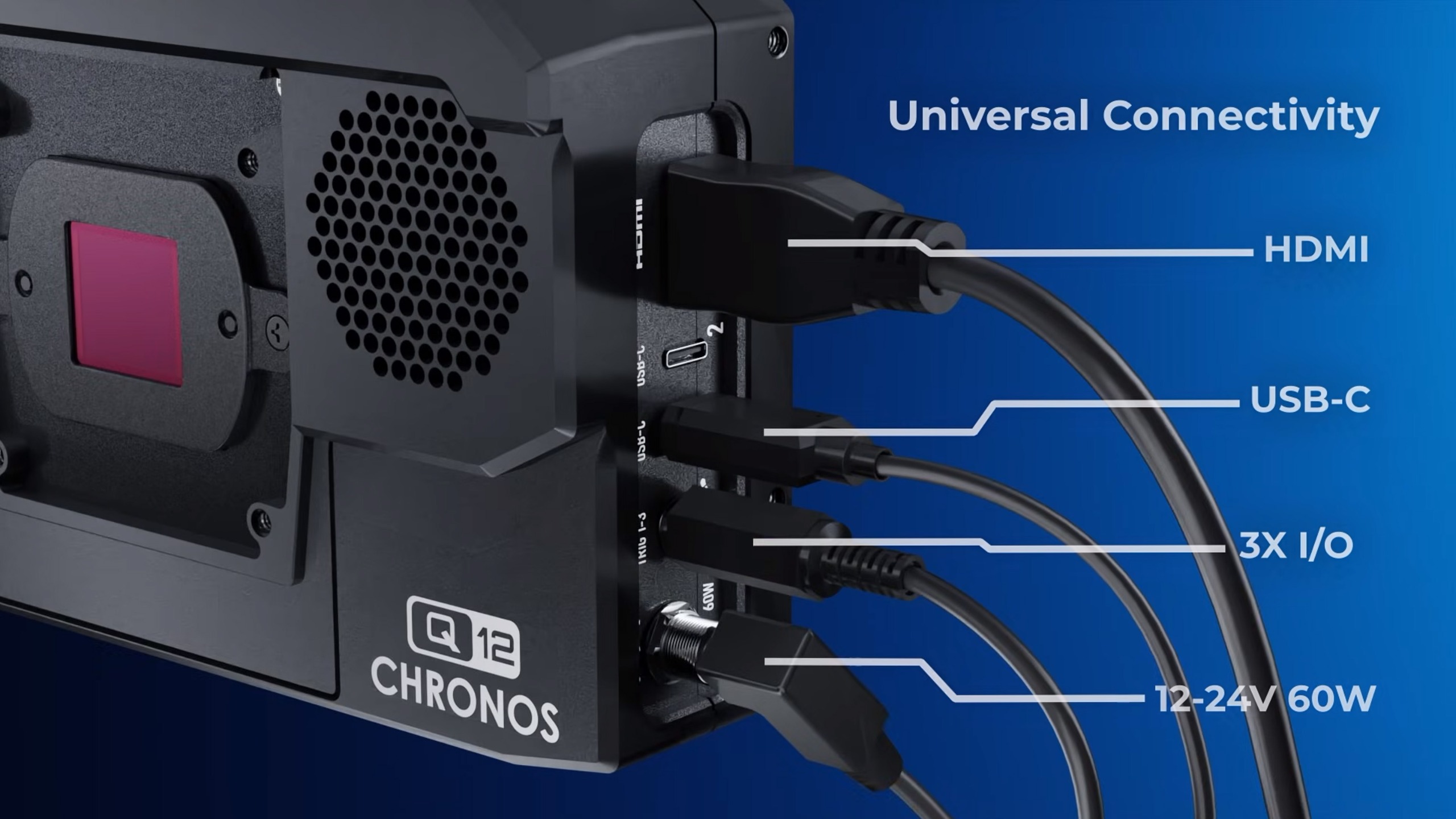
Once the internal high-speed memory buffer fills up during a capture sequence, the data is transferred and stored securely. The Q12 features a built-in 1TB NVMe solid-state drive alongside a dedicated traditional SD card slot. Furthermore, operators can attach external USB-C solid-state drives directly to the camera to supplement the internal storage architecture, ensuring seamless offloading and management of large video files in the field or the laboratory.
When it comes to video output and encoding formats, the Chronos Q12 provides robust options. Operators can choose to record footage in uncompressed Raw formats or utilize compressed H.264 and H.265 video standards. Additionally, the camera supports user-selectable 8-bit, 10-bit, and 12-bit color depth modes, giving cinematographers and technical analysts precise control over color fidelity and dynamic range depending on their analytical or creative needs.
All system parameters, capture triggers, and camera settings are managed through a large, integrated 5-inch touchscreen display featuring an 800 by 480 pixel resolution. Engineered with a high 1000-nit brightness rating, this display functions effectively as an integrated field monitor under various lighting conditions. This design choice eliminates the traditional requirement for operators to carry separate external field monitors or remain tethered to a laptop during field deployments.
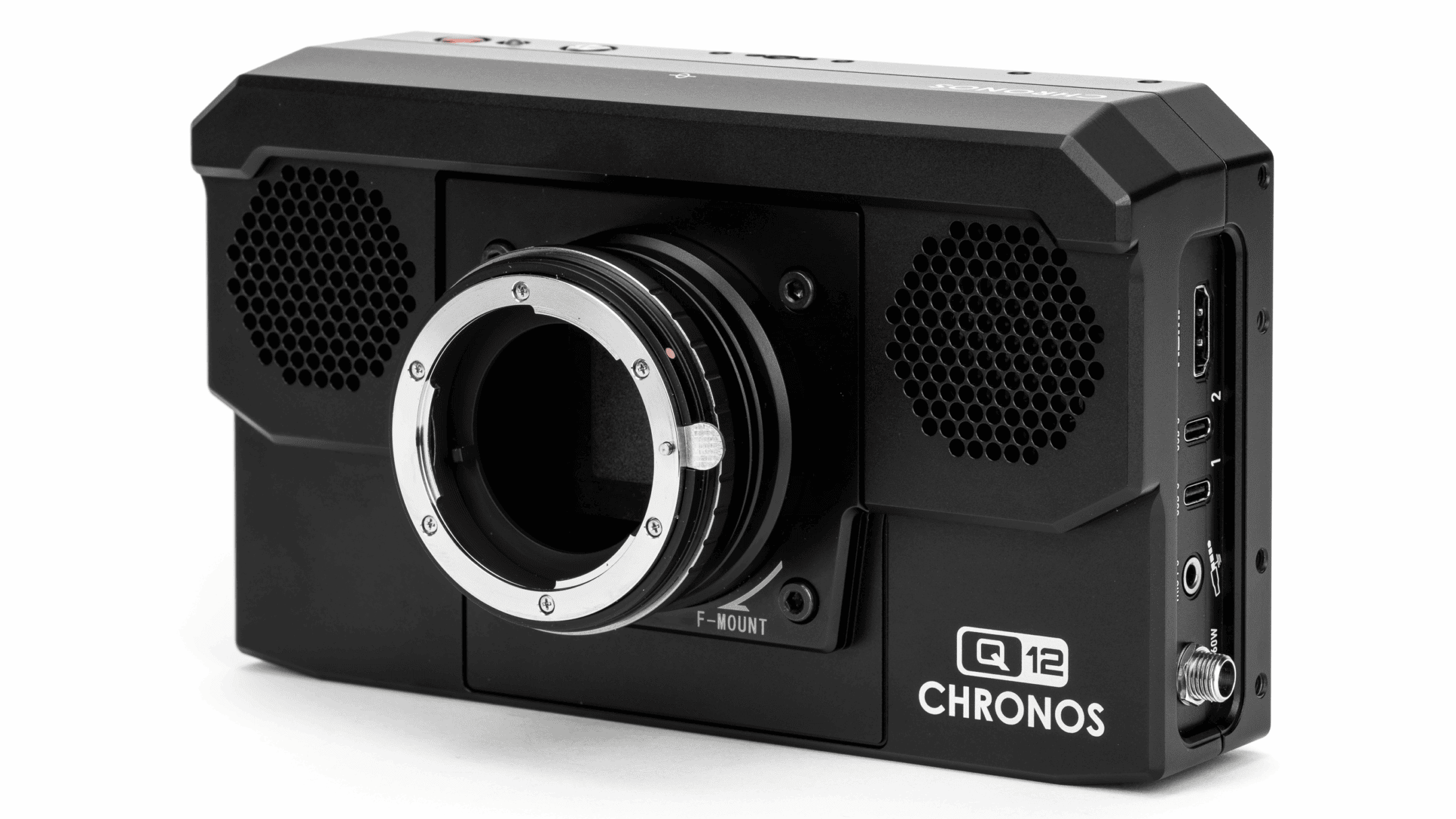
In terms of optical compatibility, the Chronos Q12 offers exceptional versatility through an interchangeable lens mount system. The camera supports a wide array of popular lens mount standards, including C-mount, E-mount, F-mount, EF-mount, PL-mount, and MFT-mount lenses, allowing users to integrate existing optical glass inventories seamlessly into their high-speed workflows.
The Chronos Q12 is available for purchase immediately through manufacturer channels and authorized distributors. Pricing for the system starts at $19,995 USD for the 64GB memory buffer model, while the expanded 128GB version is priced at $21,995 USD. While these price points represent a substantial investment compared to conventional APS-C mirrorless cameras designed for general consumer use, they remain remarkably competitive within the high-speed imaging sector, where specialized scientific cameras frequently command prices extending well into six-figure territory.