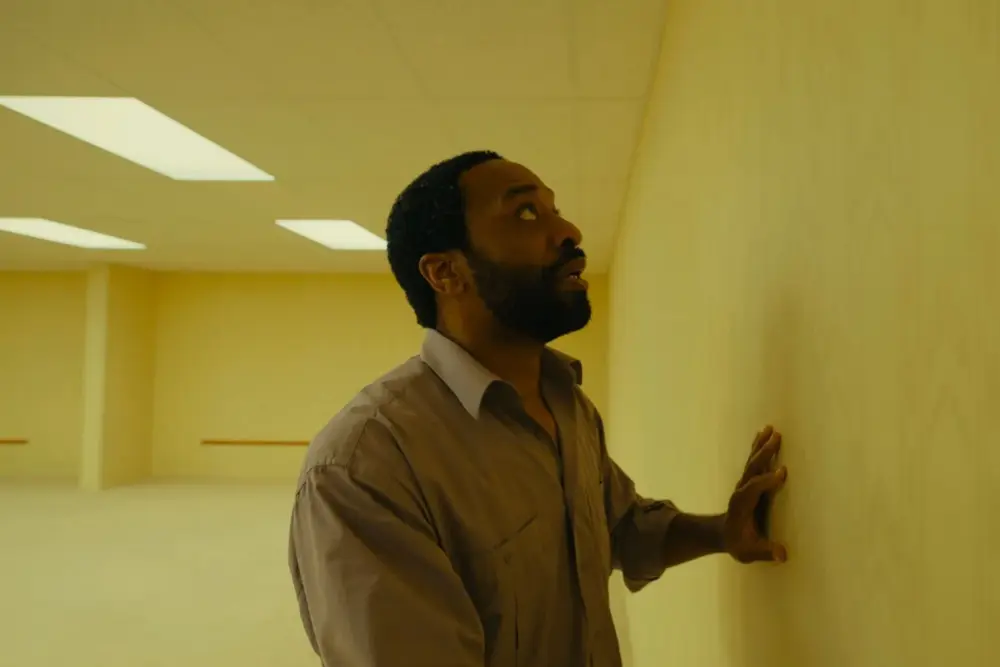
For the past three months, major film producers, studio executives, and industry insiders have found themselves returning to a single, transformative topic at every major motion picture event across the globe: the staggering phenomenon of Kane Parsons’ “Backrooms” and Curry Barker’s “Obsession.” These two breakout films, both helmed by visionary creators in their early twenties who transitioned directly from viral success on YouTube to the silver screen, have completely shattered box-office expectations. More importantly, they have successfully accomplished a feat that Hollywood has struggled with for years: driving droves of Gen Z audiences back into traditional movie theaters.
As traditional studios scramble to understand how to capture and capitalize on this unexpected cultural momentum, the young trailblazers behind these hits are already looking toward the future. Kane Parsons, the young director currently spearheading the sequel to the $400-million-grossing A24 film, addressed a packed audience of international industry insiders at the prestigious Zurich Summit on Saturday. During the panel, Parsons revealed that he never approached the feature-length adaptation of his beloved YouTube analog web series with the intention of making a traditional horror film.
“I don’t view it as a horror project,” Parsons told the attentive crowd of producers and executives. “I think that’s just naturally in the path of least resistance from a marketing perspective and is what seems comfortable to people as a framing device.”
Looking ahead at his burgeoning career in the traditional studio system, Parsons expressed a desire to shed conventional industry categorizations. “I’m gonna try to stay as oblivious to those labels as possible,” he added. “I think I have more creative control now with future projects. So those sort of structures will probably be a little less forceful, I think, in the future.”
Parsons was far from the only high-profile panelist discussing the future of blockbuster cinema and potential franchise continuations at the Zurich Summit. Speaking of major studio sequels, fellow panelist Robbie Brenner, president and chief content officer at Mattel Studios, was directly asked about the status of a potential follow-up to Greta Gerwig’s historic, smash-hit cultural phenomenon, “Barbie.” Brenner’s response was brief, measured, but decidedly positive, leaving little doubt that the studio is eyeing a return to the plastic paradise.
“Look, we all wanna have a ‘Barbie’ sequel,” Brenner said. “I mean, who doesn’t wanna see the sequel to ‘Barbie’? And I’m sure at some point in time there will be one. We all want it to happen. We’ll see.”
The presence of the young maverick Parsons on the panel alongside such established industry titans created a fascinating dynamic. Sitting next to Brenner were Michael Barker, co-president of Sony Pictures Classics, and Bill Kramer, CEO of the Academy of Motion Picture Arts and Sciences. While acknowledging his youth, Parsons noted that he did not want to make the discussion “too much of an age thing,” though he emphasized that there is an undeniable, powerful “appetite” for the theatrical experience among younger demographics at the moment.
Elaborating on why these specific films resonated so deeply, Parsons suggested that audiences view properties like “Backrooms” as a pre-existing but decentralized intellectual property presence living organically online. He believes that modern moviegoers are actively searching for true novelty—a refreshing detachment from the cyclical cultural icons and legacy franchises that continually feed on themselves.
Bill Kramer jumped into the conversation to praise “Backrooms” as an extraordinary, unprecedented example of massive digital fandoms successfully migrating from YouTube into traditional cinema houses. “It was the first time that we saw [that],” Kramer remarked, highlighting the bridge built between independent digital creation and high-stakes theatrical distribution.
“Young people want to go back to movie theaters,” Kramer added, expanding on the broader industry implications of the summer box office. “Fandoms shift; theatrical can inform a fandom, YouTube can inform a theatrical fandom. It’s all connected in a way that I don’t think we thought was possible. And that, for me, was a big takeaway of this summer. And it gives me great hope for the film industry because we’re seeing young people come back to the movies, and that’s really key.”
The discussion also touched upon modern media consumption habits and the psychological relationship younger generations have with digital screens. When Parsons briefly brought up the notion that people around his age “gravitate toward short-form material,” Kramer immediately intercepted the thought to label the assumption as “reductive.” Parsons readily agreed, stating, “Yes, it is reductive.”
Parsons further elaborated on the underlying sentiment of media consumption, suggesting that the relentless push toward hyper-short digital content often feels weaponized against the audience. “I feel like the sentiment is more that this is weaponized,” Parsons explained. “This algorithmically incentivized [reality] is not really something I think most people enjoy about their own wiring. They don’t love that their attention spans are being sucked into the spiral of mostly consuming stuff that is that short. Going into a closed room without outsider interference […] lowers the tempo in a way that is refreshing.”
Drawing historical parallels to help contextualize the current moment, Michael Barker compared the massive cultural impact of “Obsession” and “Backrooms” during the summer box office to the seismic industry shift triggered by Dennis Hopper’s groundbreaking film “Easy Rider” back in the 1970s.
“‘Easy Rider’ came out in the middle of the Vietnam War, in the middle of a right-wing presidency,” Barker recalled. “It spoke to young people; they responded in huge numbers, and it affected the movies that were gonna be made afterwards.” Comparing that turbulent era of filmmaking to the current box office landscape, Barker stated definitively, “I think this is that moment, this summer with ‘Obsession’ and ‘Backrooms.’”
Beyond the cinematic box office, Kramer also used the platform to discuss broader institutional shifts bridging traditional media and the digital landscape, specifically highlighting the Academy’s landmark multi-year agreement granting YouTube exclusive global rights to stream the Oscars live and free worldwide. The historic deal is scheduled to begin in 2029 and run continuously through 2033.
Asked by industry observers whether securing the YouTube partnership was a favorable business move for the Academy, the CEO smiled and offered a reassuring assessment of the long-term collaboration. “A very good deal,” Kramer said. “We are a nonprofit, so this also allows us to sustain our great work.”