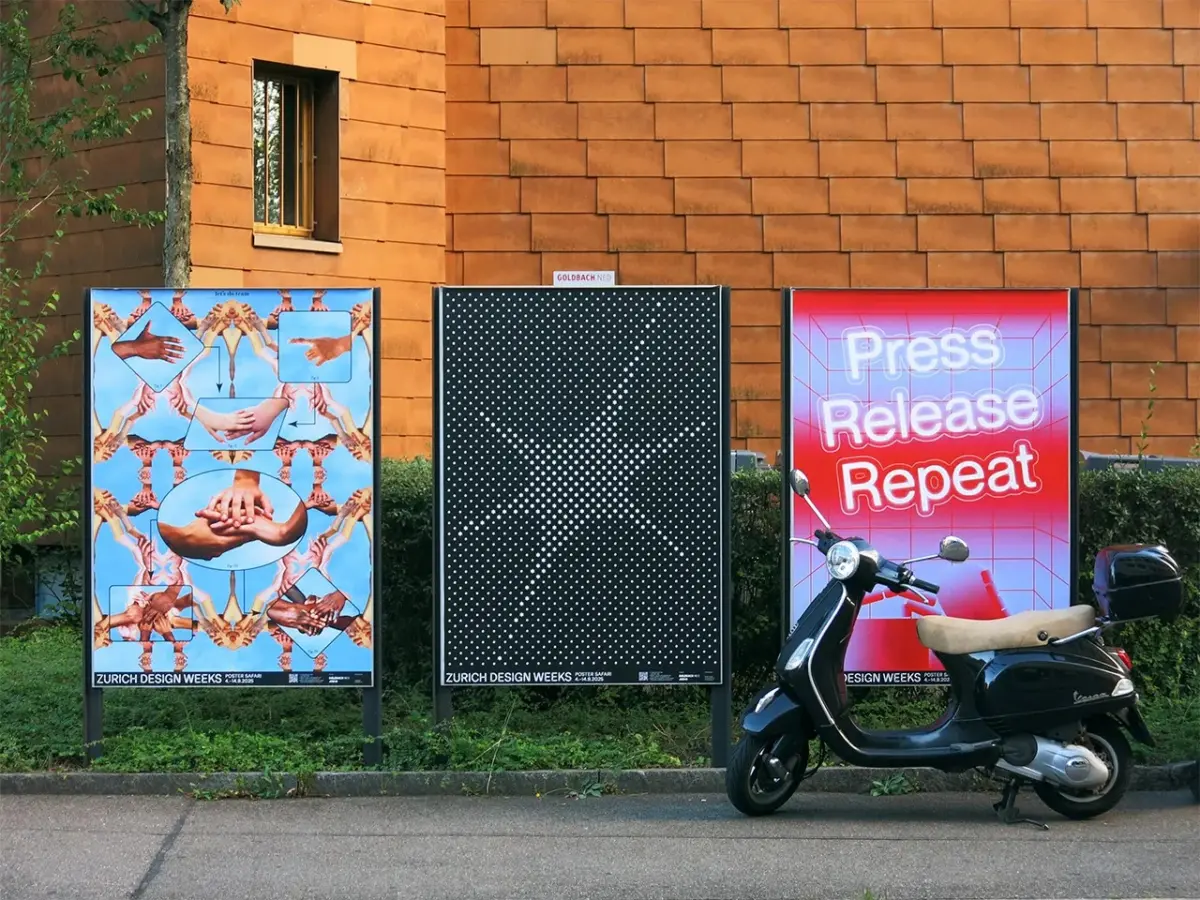
As pedestrians navigate the bustling thoroughfares of Zurich’s Kreis 5 this week, encountering the district’s large-format public displays is an unavoidable and striking experience. The expansive outdoor showcase forms a central pillar of the Zurich Design Weeks Poster Safari programme, an initiative designed to bring high-calibre graphic design directly out of traditional galleries and into the public sphere, making it instantly accessible to everyday commuters, residents, and visitors alike.
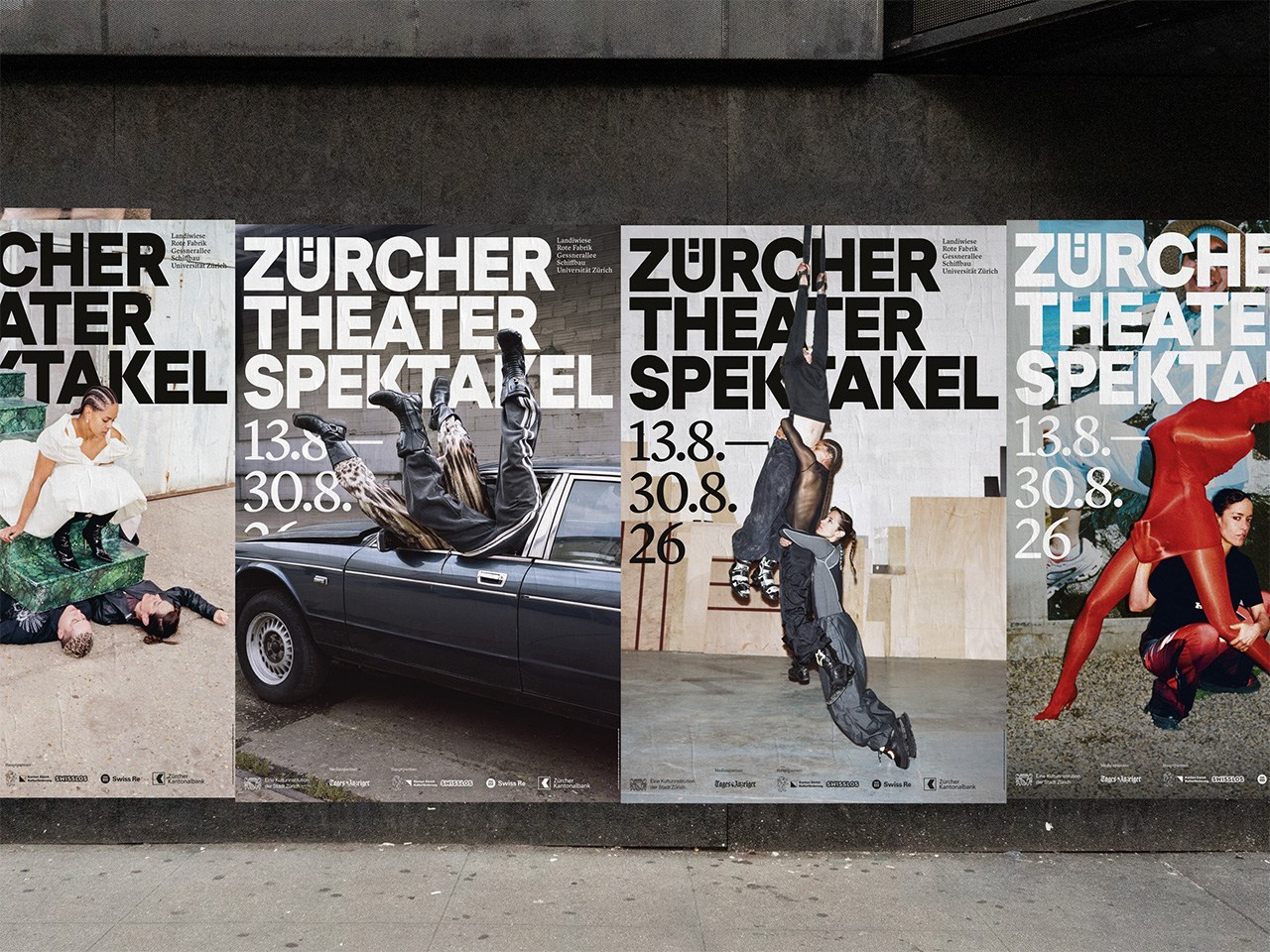
Beyond serving as a temporary public exhibition, the showcase functions as a vibrant celebration of the city’s deep and influential visual history. Zurich has long held a premier position in the global design community, and the streetscape itself serves as a living testament to that legacy. Even as digital screens make steady headway across the city’s transit hubs—including the central airport and major train stations—the traditional paper poster remains an integral, enduring fixture of Zurich’s urban environment. For nearly a century, these physical installations have defined the character of the city’s streets, displaying cutting-edge works from a diverse array of local graphic design firms, such as Studio Markus Kraft, the renowned creative team behind the identity and campaigns for the annual Zürcher Theater Spektakel.
The Concretists and the Rise of Modern Swiss Design
The historical turning point that elevated the poster from simple commercial advertising to a celebrated art form took place during the 1930s and 1940s. During this era, a pivotal shift occurred when the Zurich concretists established a bold new aesthetic tone for the city and the broader design world.
Prior to this movement, many artists maintained a strict division between fine art and commercial commissions, often keeping quiet about making a living through applied graphic work. There was a prevailing anxiety within the artistic community that commercial application might compromise an artist’s creative credibility. The concretists, however, approached the medium with an entirely different philosophy. They actively sought to operate simultaneously as fine artists and applied designers, viewing no inherent contradiction in that dual identity.
Max Bill, the visionary founder of the concrete art movement, alongside his immediate circle of peers and collaborators, demonstrated definitively that poster design could successfully bridge the gap between authentic, autonomous artistic creation and functional, commissioned work. Their pioneering efforts laid the crucial groundwork for what the international design community would eventually come to recognize as the definitive “Swiss style.” Characterized by clean typography, mathematically precise structural grids, and a remarkable economy of visual elements, this design ethos continues to look remarkably fresh, modern, and influential decades after its inception.
Street-Level Discipline and Modern Urban Rhythms
The execution of poster displays across Zurich remains deeply tied to the city’s broader reputation for precision, organization, and civic pride. New posters continue to be meticulously hand-pasted onto dedicated wooden and metal boards distributed throughout the urban landscape.
In a manner that feels quintessentially Swiss, these large-format sheets are carefully measured and aligned during installation to prevent overlapping, ensuring that each individual piece commands its own distinct visual space. This unique intersection of creative design discipline and everyday Swiss punctuality unfolds directly on street corners across the city, turning mundane urban infrastructure into a curated visual experience.
Outside the temporal boundaries of Zurich Design Weeks, the cultural preservation of this rich visual history is championed year-round by institutions such as the Museum für Gestaltung. The museum houses one of the most comprehensive and significant poster collections in the world, preserving more than 385,000 individual works. This vast archive chronicles the fascinating evolution of the print medium from the mid-19th century up to the digital age, offering a profound look at how graphic communication has developed over generations.
For local residents and visiting design scholars alike, the presence of paper posters provides a distinct cadence to city life. Amid the rapid acceleration of digital media, the physical street posters of Zurich invite commuters to momentarily pause, appreciate the deliberate interplay of colours and typefaces, and observe how the city continually reinvents its visual identity on a weekly basis. By keeping these works embedded in the public architectural fabric, Zurich proudly wears its rich design heritage on its walls every single day of the year.