Over the past couple of years, a fresh spatial typology has moved firmly into the mainstream: the high-touch, high-fidelity listening room. Once the exclusive domain of niche audiophiles and dedicated hi-fi hobbyists, these carefully styled and technically optimized environments have evolved into refined public and semi-private sanctuaries. Today, they manifest in diverse settings ranging from avant-garde commercial showrooms and urban penthouses to cutting-edge hospitality and wellness spaces. Drawing in part from the much older, revered tradition of the Japanese jazz kissa—intimate establishments where patrons gather in silence to listen to recorded music on master-grade sound systems—today’s listening rooms are finding renewed relevance as designers rethink both where and how modern society gathers around music.
This contemporary resurgence arrives squarely amid a broader, fundamental shift in social habits and cultural preferences. Younger adults are drinking less alcohol than they did in previous decades, while interest in more intentional, mindful gathering experiences has grown exponentially. In this cultural landscape, traditional nightlife venues like conventional bars or loud clubs no longer appeal to everyone. Listening rooms offer a compelling alternative, providing a grounding, sensory-rich space for the shared analog experience of focused listening. Instead of shouting over thumping bass lines in chaotic environments, patrons are invited into shared contemplation, bonding over the pristine reproduction of recorded sound.
Interior design is critical to the success of these distinctive venues. Crafting a modern listening refuge requires far more than simply installing high-end turntables and vintage speakers—or even brand-new, state-of-the-art ones. It demands a seamless, highly calculated synthesis of acoustic engineering, dynamic lighting schemes, rich textural finishes, and meticulous spatial planning. By carefully controlling sound diffusion, dampening ambient noise, and modulating atmosphere through tactile materials, designers transform everyday spaces into meditative cocoons where shared, focused appreciation can take center stage with little to no disruption.

From subtle, atmospheric illumination and bespoke seating to rich textural palettes and custom architectural woodwork, these intricate design details actively shape the listening experience itself. While each space approaches sound through a unique lens, the growing attention to acoustics seen in these projects points to a much broader focus within contemporary interior design. These considerations—especially acoustic attenuation and sound management—are proving increasingly vital in retail environments, hospitality venues, corporate workspaces, and other modern interiors where traditional category boundaries are rapidly blurring.
Five Spaces With a Design Focus on Sound
SILENT MATTERS by SILENCE PLEASE
Lower Manhattan, New York City
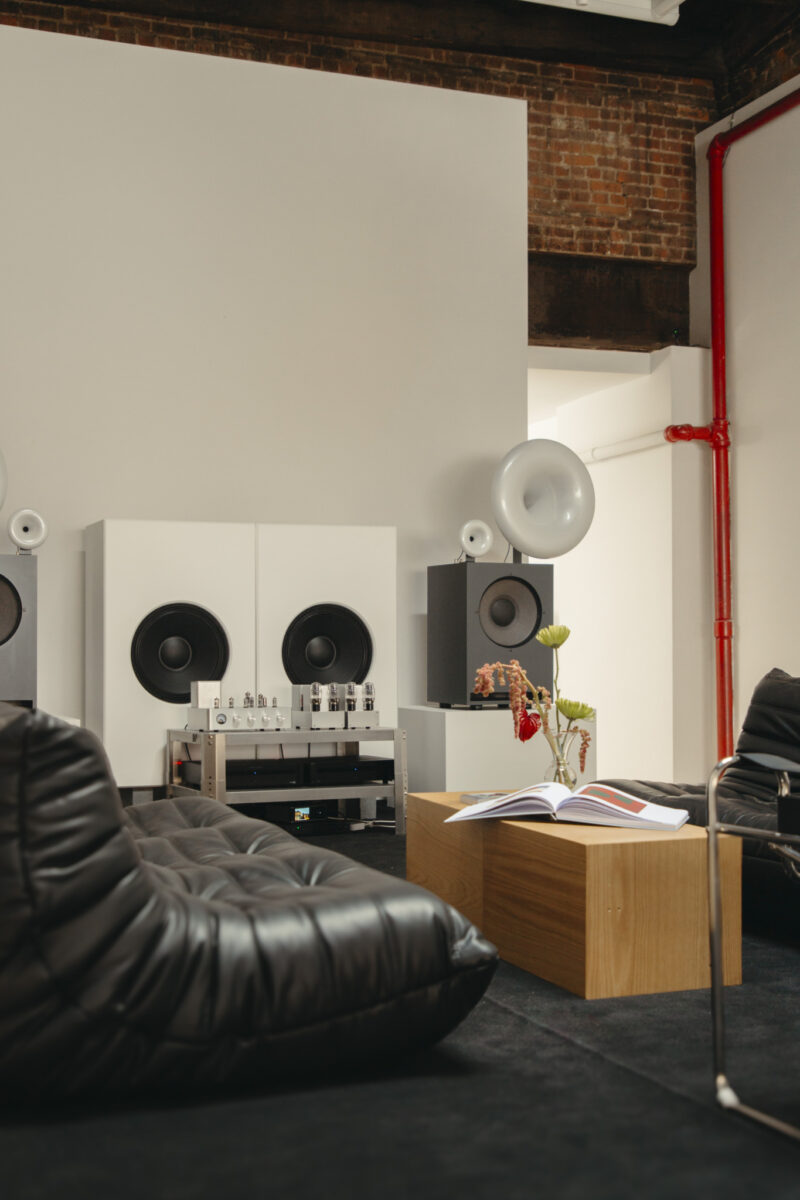
Situated amid the relentless kinetic energy and sensory bombardment of Lower Manhattan, SILENT MATTERS by creative studio and speaker brand SILENCE PLEASE actively shapes urban acoustic design through a distinct lens of quiet minimalism. Conceived as a physical haven from the chaos of the city outside, the space relies on hidden, high-performance acoustic paneling that is seamlessly integrated behind textured, cream-toned plaster walls. Intimate, low-wattage ambient lighting casts soft, calming gradients across warm, tactile upholstery and rich, oiled timber flooring. The layout is intentionally curated to encourage intimate conversation and deep listening, featuring low-slung, custom lounge seating arranged thoughtfully around an ultra-crisp custom sound system.
Stylus by O’Neill Rose Architects
Lower East Side, New York City
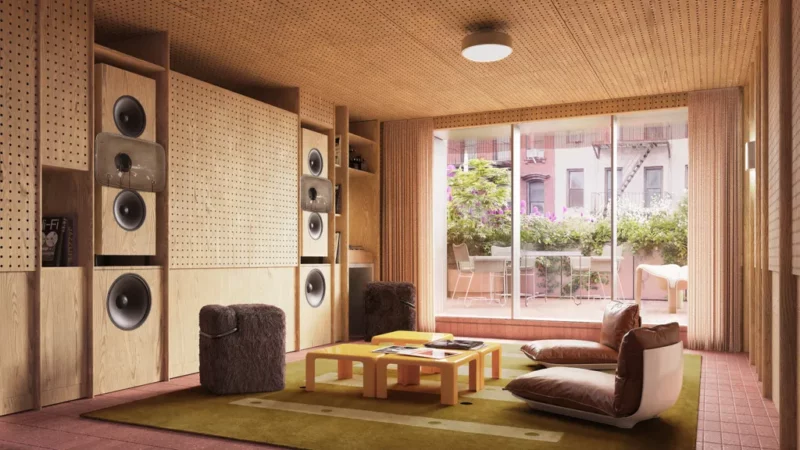
On New York’s Lower East Side, O’Neill Rose Architects is set to complete Stylus—a dynamic multi-level music lounge wrapped in cantilevered, curved perforated aluminum panels. This striking exterior creates a dramatic, rhythmic visual presence while ensuring fluid movement between distinct interior zones. Inside, the design team prioritized clever acoustic solutions from the moment of entry, incorporating an isolated reception buffer designed specifically to contain and neutralize outside ambient noise.
Within earshot of the bustling nightlife pocket of Dimes Square, the project brings together a star-studded lineup of multidisciplinary collaborators. Devon Turnbull of OJAS is developing a custom analog sound system; Amadeus Acoustics is engineering its advanced spatial audio system; Criterion Acoustics and Bourdeau Acoustical Design are consulting on technical acoustics; and renowned Dutch artist Sabine Marcelis is contributing a selector station alongside several custom resin pieces. Additional interior coordination is being handled by Selene Privitera and Paolo Matera, who are working alongside O’Neill Rose Architects. Together, this collaborative team is forging a sanctuary that balances bold architectural and sculptural expression with uncompromised acoustic fidelity. The complex is scheduled to open its doors later this year.
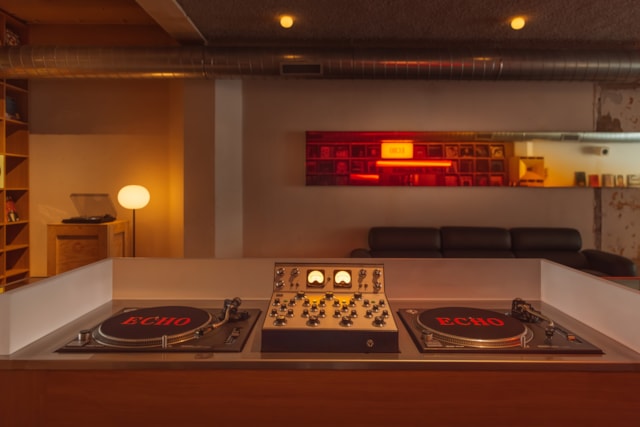
ECHO Listening Bar by Paul Cournet, Jeff Hogendijk, and Khalil Ryahi
Rotterdam, the Netherlands
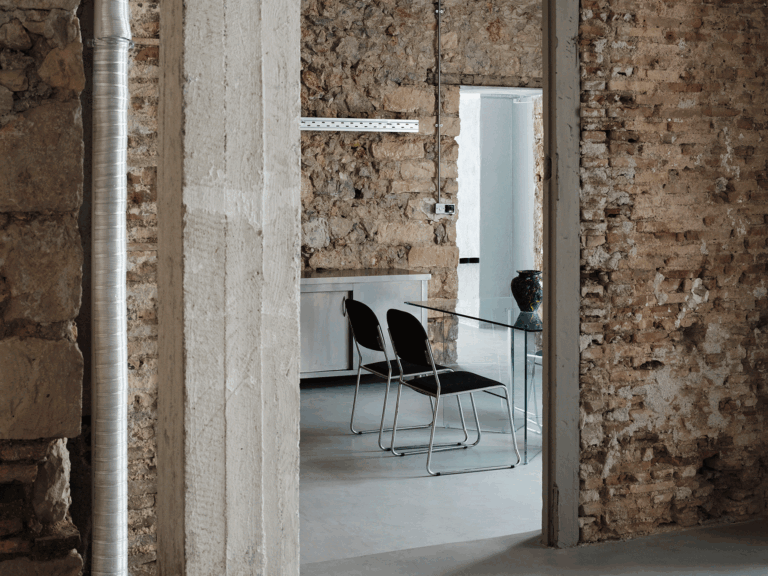
Embodying a sophisticated and understated Dutch design ethos, ECHO Listening Bar in Rotterdam—co-conceived by architect Paul Cournet alongside sound curators Jeff Hogendijk and Khalil Ryahi—marries raw industrial materials with profound acoustic warmth. The venue features exposed poured concrete structures paired deliberately with acoustic cork walls and brushed aluminum fixtures. Custom-designed timber speaker cabinets are integrated directly into the core architecture, double-functioning as room dividers that help guide visitor circulation naturally through the space.
Vibrant yet muted color accents break up the otherwise raw material palette, while tactile wool upholstery softens reflections and absorbs sound within the room. ECHO presents an understated, industrial-chic sanctuary that reflects the port city’s experimental spirit and long-standing reputation as an architectural test bed, proving a place where spatial flow and high-fidelity sound can completely align.
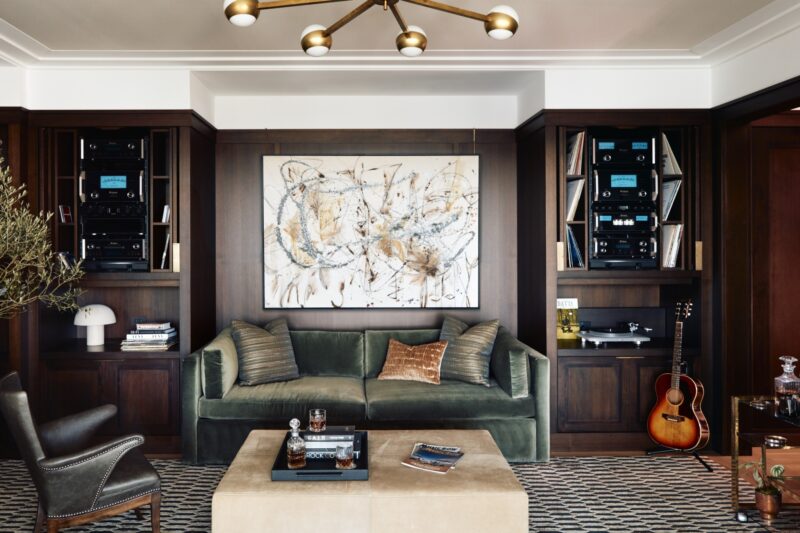
Music Row Penthouse Listening Room by Pembrooke & Ives
Nashville, Tennessee
Translating the public listening lounge trend into an elevated, private residential context, interior design firm Pembrooke & Ives created a state-of-the-art listening room inside a penthouse located in Nashville’s famous Music Row. The location is deeply fitting given the neighborhood’s historic, enduring connection to the American music industry.
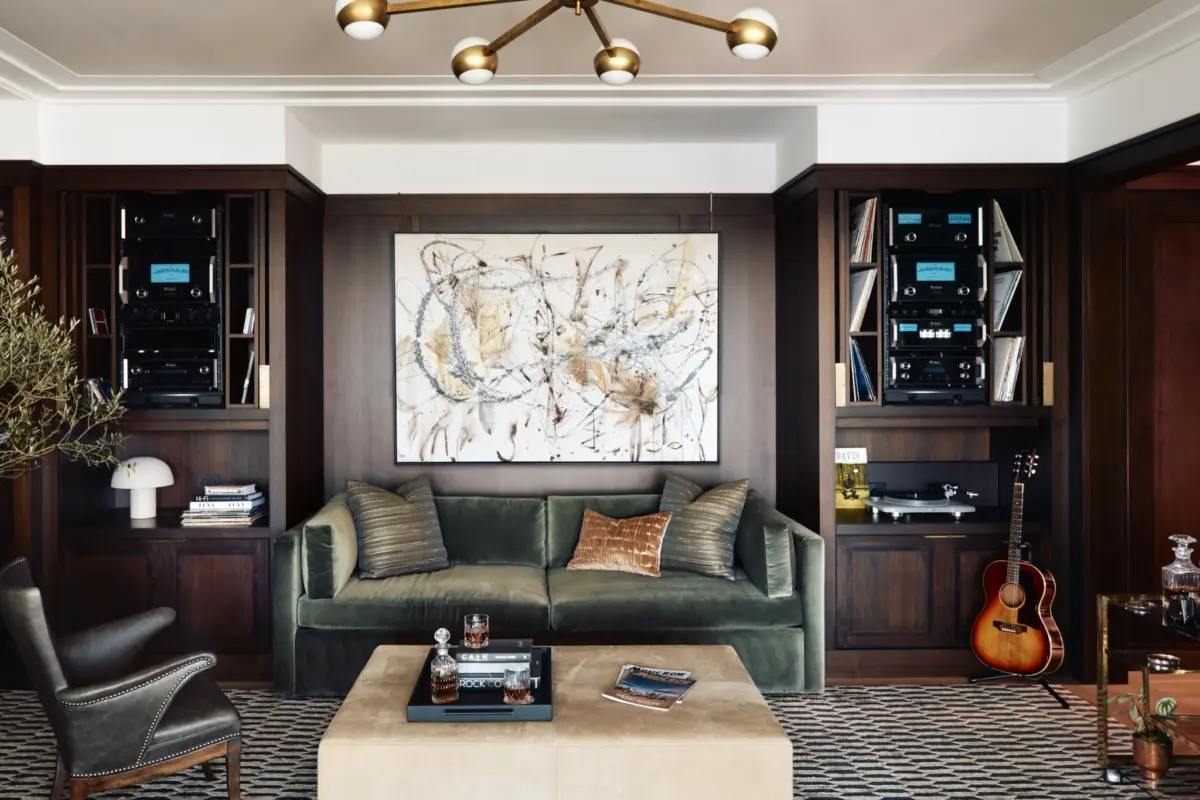
Successfully merging residential warmth with audiophile-grade technology, the room features rich walnut wall paneling punctuated by sculpted micro-perforations designed for maximum acoustic absorption. Deep velvet banquettes, tailored leather armchairs, and bespoke silk carpets collectively cultivate an atmosphere of plush comfort. High-end audio hardware—including custom valve amplifiers and floor-standing audiophile speakers—is elegantly integrated into custom-built cabinetry, demonstrating how a domestic interior can comfortably embrace high-fidelity sound without ever compromising advanced technological performance or bespoke craftsmanship.
La Boiserie for Modern Listening by David/Nicolas
Milan, Italy
In Milan, acclaimed design duo David/Nicolas offers a retro-futuristic interpretation of sound design with their project, La Boiserie for Modern Listening. Riffing on traditional French wood wall cladding, the designers engineered a custom geometric shelving system that accommodates a variety of interchangeable attachments. As demonstrated in their residential-style office setup, the modular storage unit seamlessly houses advanced sound gear while actively attenuating ambient noise.
The intricate yet flexible woodwork motif modulates sound dispersion across the room while introducing striking visual interest. Rich mid-century Italian design influences emerge through polished brass accents, deep jewel-toned velvet textiles, and curving spatial partitions. This modern yet entirely functional interior successfully balances nostalgic aesthetic cues with contemporary acoustic technology, integrating state-of-the-art sound systems effortlessly within sculpted timber walls.