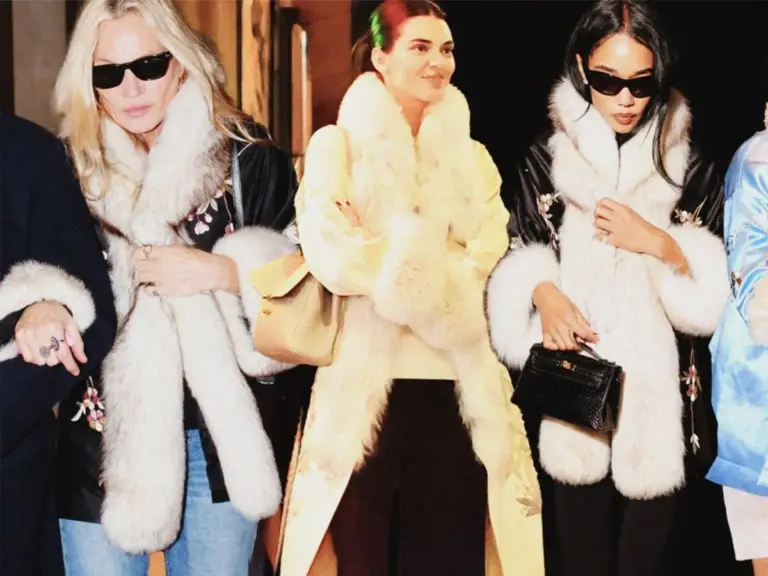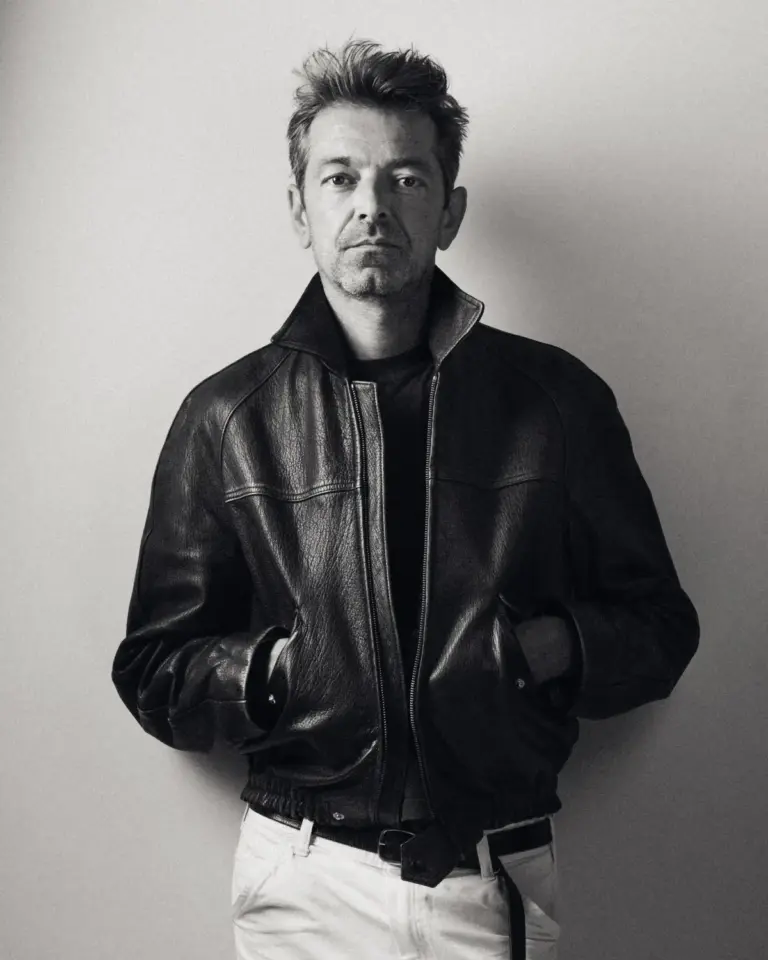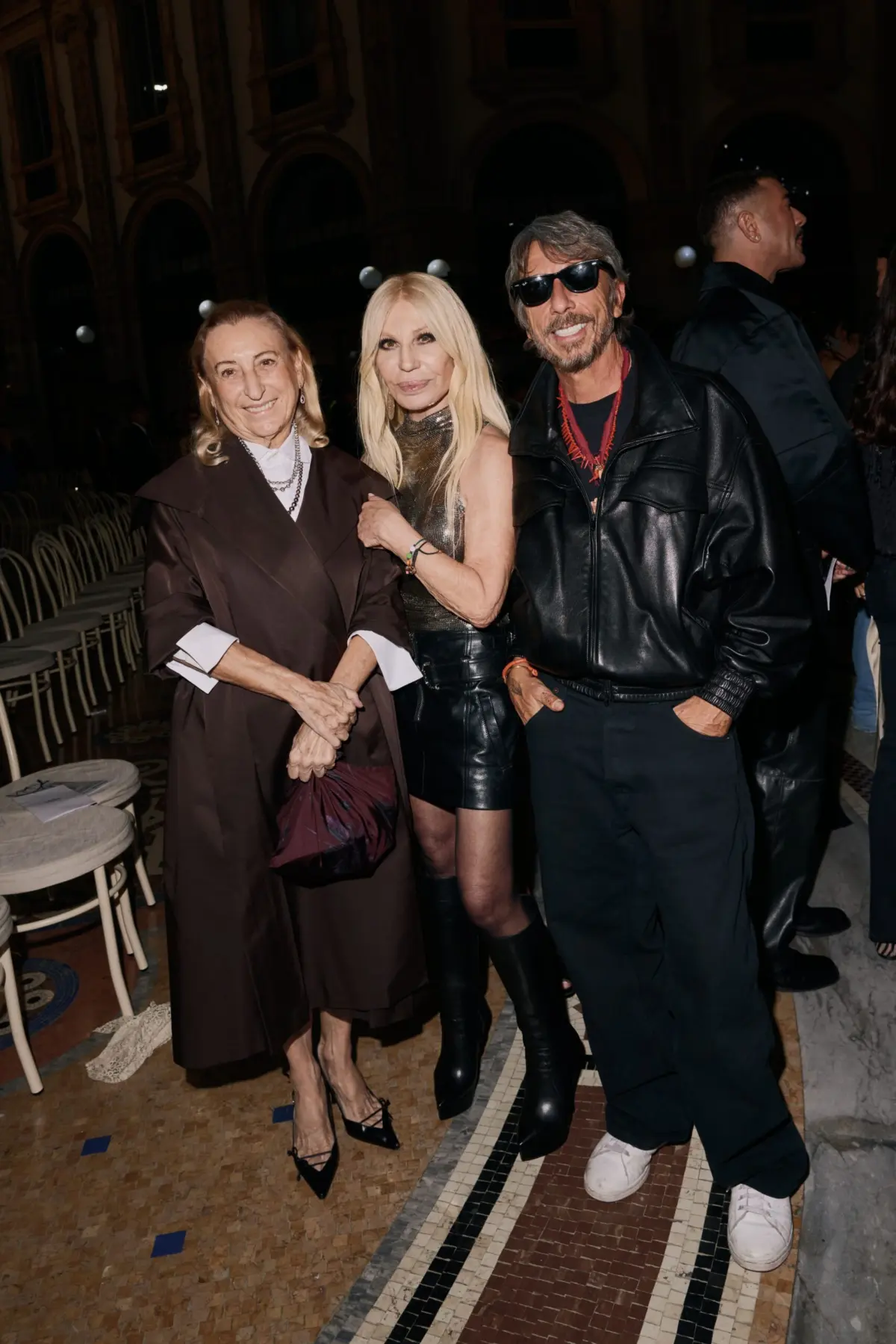
The triumvirate of Italian design icons was far from alone in occupying the coveted front-row real estate. They were joined by a dense constellation of Italian style masters, including Domenico Dolce, Stefano Gabbana, Pierpaolo Piccioli, Francesco Risso, and Maria Grazia Chiuri. Alongside these native visionaries sat a carefully curated assembly of international talents functioning as honorary Italians, each currently shaping the legacy of historic Italian luxury houses. Among them were Demna, the artistic director of Gucci; Raf Simons, the co-creative director of Prada; Louise Trotter, creative director of Bottega Veneta; Maximilian Davis, creative director of Ferragamo; Meryll Rogge, creative director of Martin; and Pieter Mulier, who is currently deep in development on his inaugural collection for Versace, slated to make its highly anticipated debut in February 2027.

The presence of such an extraordinary gathering of creative minds was hardly unexpected, given the overarching theme of the evening. The event served not only as a celebration of Italian fashion, heritage, and uncompromising craftsmanship, but also as a living, breathing greatest-hits retrospective of their collective life’s work. As the models swept down the runway housed within the magnificent nineteenth-century shopping arcade, spectators were treated to a parade of archival masterworks and contemporary reinterpretations. One could easily imagine Miuccia Prada gazing fondly at the reappearance of her iconic lipstick skirt, mentally tracing its lineage back to its original debut on the runway during her landmark spring 2000 collection. Similarly, Signora Versace likely experienced a wave of nostalgia—and perhaps a sharp intake of breath—at the triumphant return of a Warhol-inspired catsuit from Gianni Versace’s legendary spring 1991 collection, a piece famously revived by his sister for her emotional spring 2018 tribute collection. Meanwhile, Domenico Dolce and Stefano Gabbana, who were strategically positioned flanking Jennifer Lopez in the front row as the global superstar wore one of their bespoke designs, must have shared a moment of profound pride and delight upon witnessing the opulent, sun-drenched silhouettes worn by Wali Deutsch and James Turlington, which drew direct inspiration from the duo’s celebrated early 2010s Sicily-focused collections. For those eager to decode the exact reactions and micro-expressions of fashion’s elite as their greatest historical hits unfolded before them, a thorough review of the official Vogue World livestream remains the ultimate visual archive.

What remains beyond dispute, however, is the sheer rarity of the occasion. It is an event that occurs perhaps once in a blue moon to witness every single one of these titans gathered not just in the same city, or even the same building, but sharing the exact same stretch of front-row seating. The visual of these creative directors, often fiercely competitive industry rivals yet united by a shared devotion to Italian sartorial excellence, chatting and exchanging glances is an image that will define the fashion calendar for years to come. For observers and fashion historians alike, the temptation to secure a hypothetical second-row seat directly behind them simply to eavesdrop on the unguarded gossip, critique, and commentary was almost overwhelming. It was the kind of surreal, concentrated convergence of talent that could only ever materialize under the banner of Vogue World, and certainly could only ever take place in Milan, the beating heart of Italian fashion.