An American credit union chief executive was forced to cut her international vacation short and issue a public apology after an artificial intelligence-edited photo of her family wearing provocative novelty apparel went viral, sparking widespread outrage across Canada.
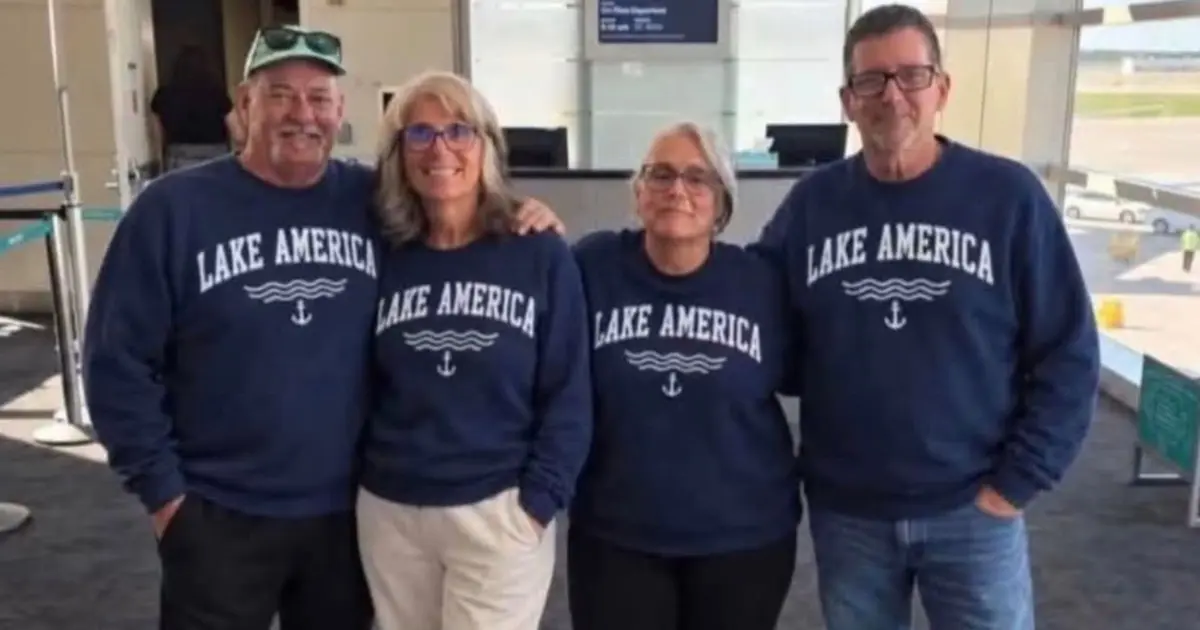
Jane Smith, the CEO of Family First Credit Union based in Saginaw, Michigan, found herself at the center of an international firestorm after sharing a doctored image on social media. The photograph, which was originally posted to her private Facebook account before being reshared publicly by a family member, depicted Smith and three relatives standing inside an airport terminal while wearing matching navy blue sweatshirts bearing the words "Lake America" alongside a wave and anchor graphic.
The incident, which unfolded in mid-September, quickly escalated from what Smith described as a misguided attempt at private humor into a major cross-border controversy. The uproar ultimately forced the executive to abort her ten-day holiday in Nova Scotia and return home to Michigan after receiving severe threats over the digital fabrication.
Background on the Controversy
The sequence of events began on September 11, as Smith and her family prepared to board a flight to Halifax, Nova Scotia, for a planned ten-day getaway. While waiting at the airport terminal, the group found themselves discussing recent geopolitical tensions and trade disputes between the United States and Canada. Specifically, the conversation touched upon a controversial recent executive order by President Donald Trump regarding the renaming of Lake Ontario to "Lake America."
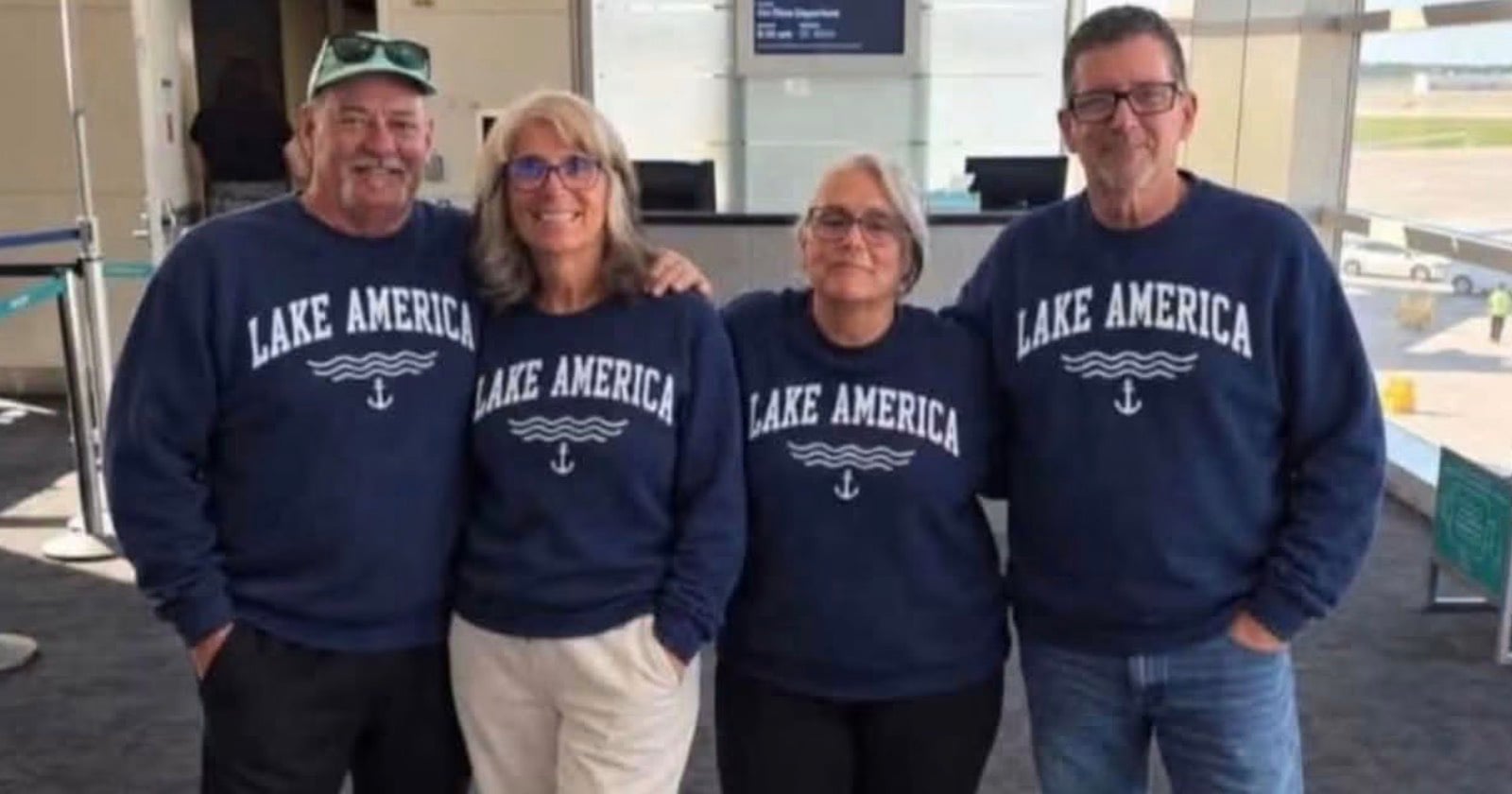
Seeking to poke fun at the unfolding news cycle and the contentious renaming of one of the Great Lakes, Smith decided to experiment with consumer technology. Using ChatGPT, she generated a synthetic image showing herself and her relatives posing in the terminal while sporting fictional apparel emblazoned with the "Lake America" branding.
According to Smith, the intention was never to produce physical clothing or launch a political campaign, but rather to create a satirical visual representation for a small group of friends and family. Upon posting the image to her private Facebook profile, Smith included a text marker indicating that the visual content had been generated by artificial intelligence. She accompanied the post with a lighthearted caption reading, "Like our sweatshirts? Not sure Canada will," followed by laughter markers.
However, the situation took a turn after the group landed in Canada. Smith’s sister, Lila, who had accompanied her on the trip, decided to repost the image publicly on her own Facebook account. Unlike the original post, the reshared version omitted the crucial disclosure marker identifying the image as AI-generated. Furthermore, the screenshot was shared directly into online spaces where local residents in Halifax could view it without context, presenting the doctored garments as if they were real items worn by traveling American tourists entering Canadian territory.
Viral Spread and Public Outrage
As the image circulated online, it quickly caught the attention of social media users in Canada, igniting a wave of fierce criticism. The reference to the "Lake America" renaming initiative struck a sensitive nerve amid ongoing trade friction and diplomatic sensitivities between the neighboring nations. Many online commentators viewed the apparel as an arrogant and deliberately provocative statement by American travelers visiting Canadian soil.
The digital backlash swiftly transitioned from online condemnation to mainstream media attention, with major news outlets in both Canada and the United States picking up the story. The perception that American visitors were proudly wearing merchandise mocking a contentious geographic renaming inside a Canadian airport terminal provoked widespread anger.
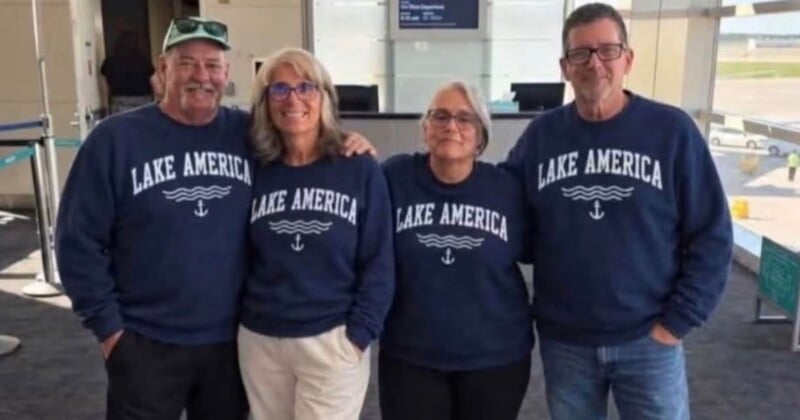
As the story gained traction, the hostility directed at the family intensified rapidly. Smith revealed that the situation deteriorated to the point where she and her traveling companions began receiving direct threats to their safety. Recognizing the escalating danger and the severity of the public reaction, the family made the decision to abandon the remainder of their ten-day vacation and cut their trip to Canada short, returning immediately to Michigan.
Reflections and Warnings on Artificial Intelligence
In the wake of the incident, Smith deleted the original posts and came forward to express deep remorse for the fallout caused by the digital creation. Speaking with local news organizations, the credit union executive emphasized that the photo was never intended to serve as a genuine political statement or to demean anyone.
"I think that AI can be dangerous in the fact that it can make people think something’s real that’s not," Smith stated in an interview with ABC 12 News. Addressing how the image would naturally be perceived by residents in Halifax, she acknowledged the validity of the public’s negative reaction. "I understand if I was someone in Halifax and I thought a poor group of people walked in wearing those sweatshirts, it is highly offensive and I would understand why they would be so angry."
Smith added that she deeply regrets any pain or offense her actions caused, noting that the outcome runs entirely counter to her personal values and professional responsibilities. She stated unequivocally that she does not wish to make anyone feel undervalued as a human being and confirmed that she intends to steer clear of generative artificial intelligence tools for image creation in the future.
The incident has since been widely cited by media analysts and digital ethics observers as a cautionary tale regarding the rapid proliferation of synthetic media, the ease with which AI-generated images can be stripped of their context, and the real-world consequences that can arise when digital satire crosses international borders.