Nearly 70 years after its groundbreaking introduction, the legendary Olympus PEN design concept continues to survive and evolve. Crossing the vast technical chasm from analog film to advanced digital photography, the spirit of the original camera lives on in the modern OM System PEN mirrorless camera. Yet, looking back at the history of this iconic design reveals a surprising piece of historical irony: Yoshihisa Maitani, the brilliant designer behind the original PEN and several other revolutionary Olympus cameras, once famously dismissed his own masterpiece as a "huge failure."
The reasoning behind Maitani’s harsh self-assessment of the 1959 original comes down to the radical nature of its engineering. The first Olympus PEN was a half-frame film camera designed to be drastically smaller and lighter than standard SLRs of its era. To achieve this unprecedented compactness, Maitani and his engineering team utilized innovative mechanical layouts and patented solutions. However, because Olympus locked down the technology with strict patents, competing camera manufacturers were completely blocked from manufacturing similar devices.
Reflecting on the market impact decades later, Maitani explained that because his company secured all the relevant patents, no other corporation could produce this specific type of camera. Consequently, the industry failed to see an immediate wave of compact competitors, meaning the anticipated market boom for half-frame engineering never materialized in the way he had initially envisioned.
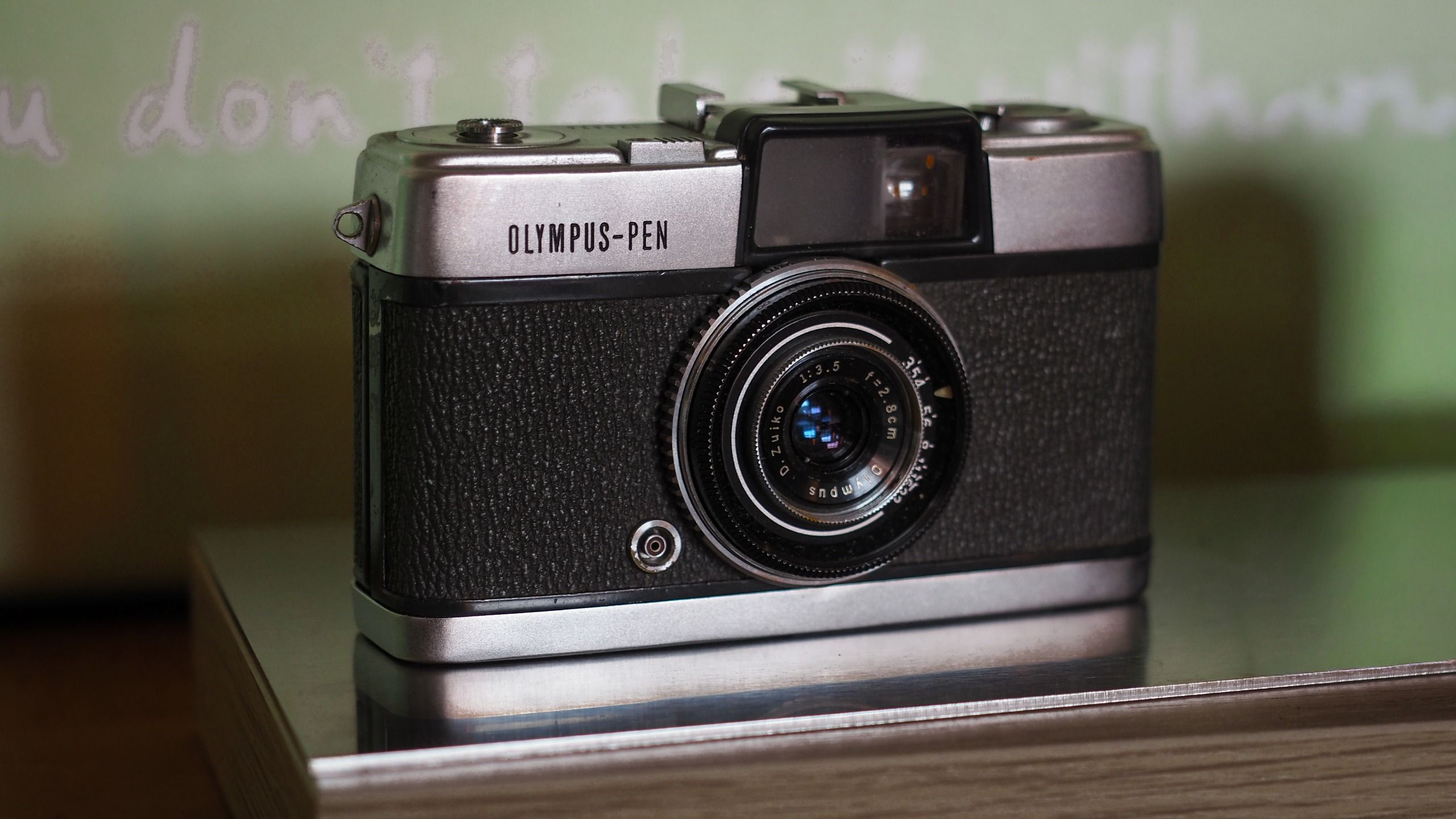
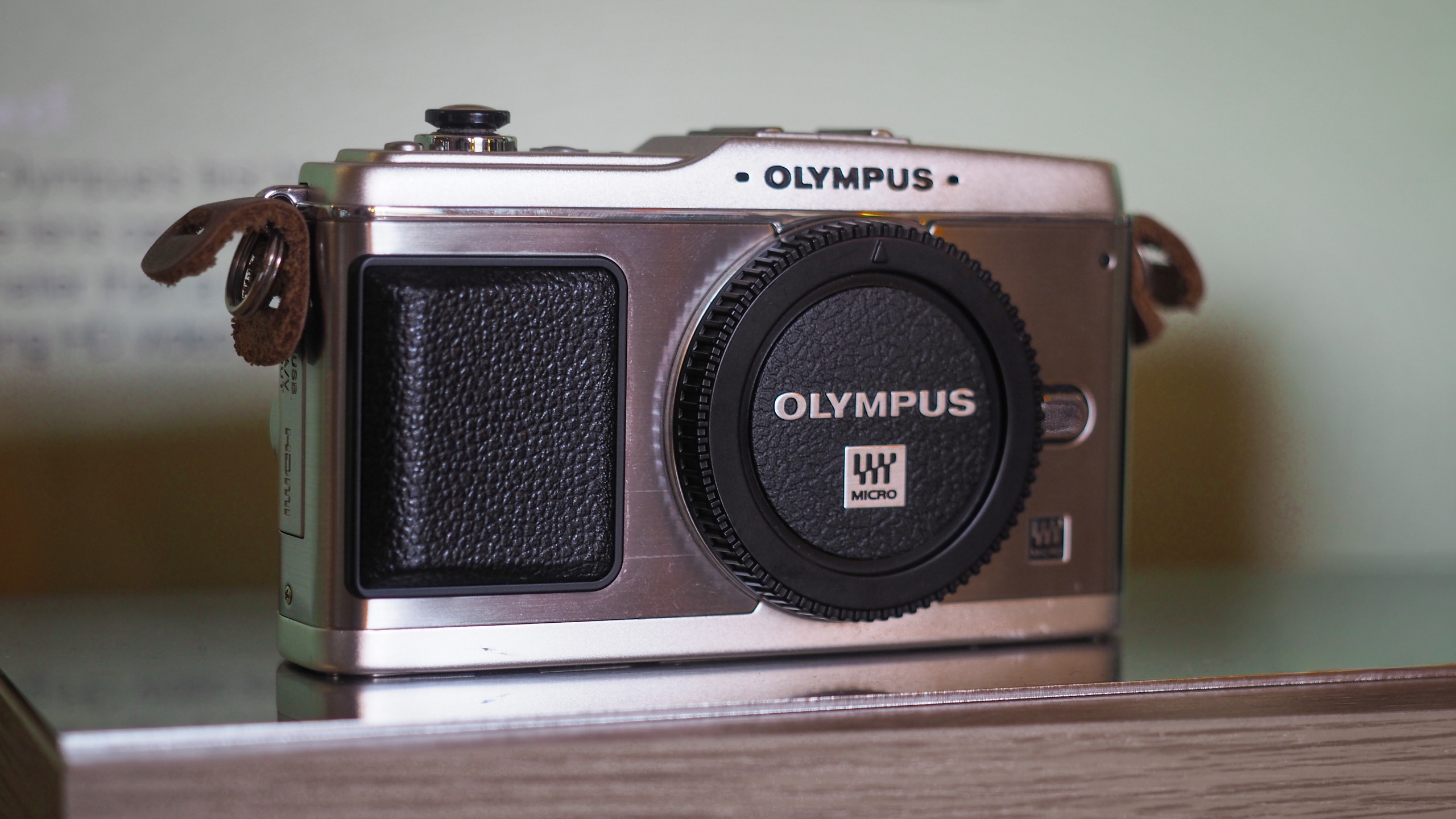
Despite failing to trigger an immediate industry-wide movement of direct copycats, the original PEN—as the first half-frame camera produced in Japan—sparked a broader cultural and technical shift toward half-frame film photography. It captured the public imagination and achieved an unexpectedly massive level of popularity among everyday consumers. Even though Maitani maintained a critical view of its initial commercial ripple effect, the PEN format proved resilient. Over the decades, it underwent numerous iterations, surviving major technological revolutions from the vintage film-based PEN F all the way to modern digital marvels like the Olympus PEN E-P7.
Had Maitani lived to witness the long-term evolution spanning from the 1959 original to the contemporary OM System PEN releases, industry observers note that he likely would have reconsidered his "failure" label. Despite the passage of nearly seven decades between the original model and its modern descendants, both the foundational 1959 PEN and its contemporary digital equivalents remain firmly anchored to the exact same three core design pillars: minimized size, operational simplicity, and accessible pricing.
A Camera Built for Anyone to Enjoy
Maitani’s original vision for the target audience of the PEN camera remains clearly reflected in its very name. The visionary designer famously described the camera not as an intimidating piece of professional machinery, but as a universal tool designed to allow everyone to enjoy photography as easily and effortlessly as writing with a piece of paper and a pen.
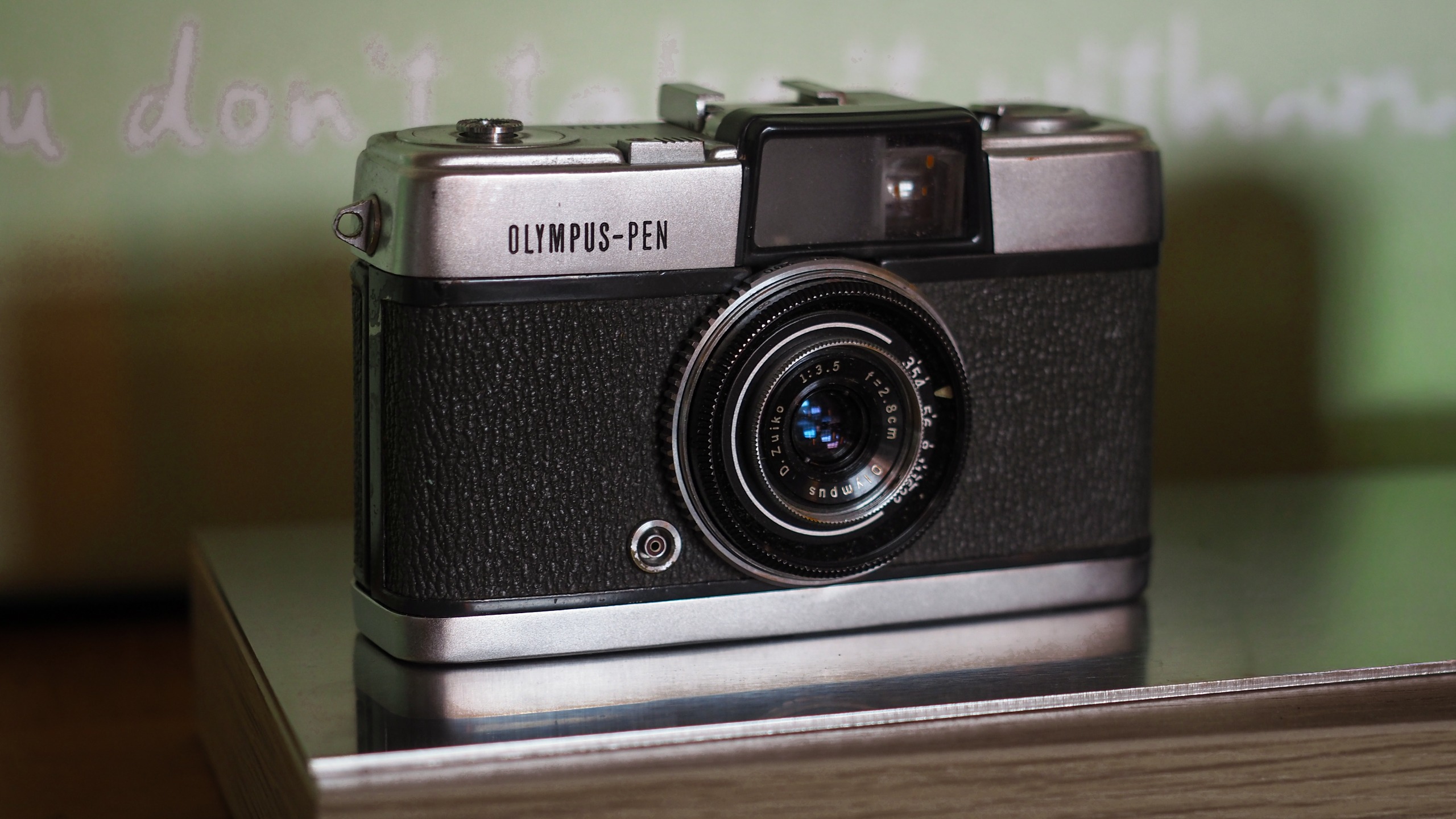
That philosophy has successfully endured through multiple decades and technological transitions. While the modern OM System PEN incorporates a sophisticated retro aesthetic that directly honors its mid-century ancestor, it retains a classic, straightforward mode dial that grants users immediate and uncomplicated access to automated shooting modes.
This emphasis on accessibility has always been intrinsically tied to physical portability. Size reduction was a primary obsession for Maitani when he first began his career with Olympus back in 1956. The original PEN was remarkably unconventional for its time because of its half-frame configuration—a design philosophy that shares a spiritual and functional kinship with today’s Micro Four Thirds mirrorless camera ecosystem.
Perhaps the most significant structural difference between the PEN of the past and the PEN of the present lies in lens modularity. The original 1959 release was strictly a fixed-lens compact camera rather than an interchangeable-lens system. Even as Maitani continued developing compact, fixed-lens models like the popular PEN EE series, he was acutely aware of a growing consumer demand for small yet progressively advanced photographic equipment.
The principal engineering challenge in developing a smaller, more portable SLR camera during that era was the mirror box mechanism. To overcome this hurdle, Maitani engineered a miniature mirror box positioned on its side. However, this unconventional orientation created operational conflicts with traditional focal-plane shutters. To solve the problem, he pioneered an innovative rotary shutter design crafted from titanium, which ultimately paved the way for the creation of the series’ first interchangeable-lens camera, the iconic PEN F, launched in 1963.
A Camera Meant to Head Outside
OM System’s steadfast commitment to the Micro Four Thirds standard feels entirely authentic to the rich heritage of Olympus’ compact camera designs, particularly the enduring legacy of the PEN line. Yet, physical miniaturization was not the only priority from Maitani’s playbook that modern engineers have chosen to carry forward.
A major focus for OM System in recent years has been the development of rugged equipment specifically built for outdoor shooting and unpredictable environments. The latest iteration of the OM PEN marks a significant milestone for the series, representing the first time a PEN model has featured comprehensive, full weather-sealing. This protective capability extends directly to the accompanying kit lens, the OM System M.Zuiko 14-42mm f/3.5-5.6 III, which is similarly sealed against the elements.

This rugged outdoor focus echoes another one of Maitani’s most famous and frequently cited design philosophies: the belief that a camera is ultimately meaningless unless the user actually takes it outside into the world.
Company executives emphasize that the contemporary PEN is engineered to function seamlessly as an everyday carry item, and robust rain resistance plays a crucial, practical role in making that concept viable for modern street and travel photographers.
Beyond physical dimensions and weather durability, another foundational pillar of the 1959 PEN was its remarkably aggressive pricing strategy. While developing the original model, Maitani operated under a strict and demanding internal cost target of ¥6,000. To put that figure into perspective, it represented just a small fraction of the cost of Olympus’ absolute cheapest consumer camera at the time, which retailed for ¥23,000.
Calculated against historical foreign exchange rates during that era, the original PEN carried a price tag of roughly $17 or £15. Adjusting those figures for modern inflation yields an equivalent value of approximately $196 or £315 today, highlighting just how democratically priced the original concept was intended to be.
While modern manufacturing realities and advanced digital electronics mean the contemporary mirrorless PEN cannot match those historical price points, it stands out as the most affordable entry point within the current OM System mirrorless lineup, sitting alongside accessible legacy models like the Olympus OM-D E-M10 Mark IV.
Retailing at $999, £849, or AU$1,499, the modern PEN represents a rare breed in the contemporary market: a mirrorless camera priced under four figures that simultaneously manages to incorporate advanced in-body image stabilization, full weather-sealing, a built-in electronic viewfinder, and a distinct retro visual identity that pays direct homage to Yoshihisa Maitani’s visionary blueprint from all those decades ago.