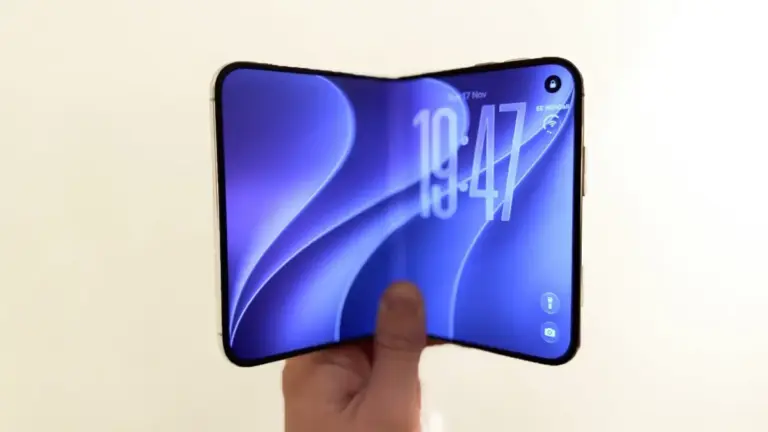
The feature wasn’t so much a sophisticated salve for a fundamental design flaw as it was a pragmatic acknowledgment of an unfortunate, recurring truth in manufacturing: when building something intended for millions of people, one size can never fit all. As Luke Westra, a designer at the Chicago-based design studio IA Collaborative, points out, that quick software adjustment represents a very modern dilemma
. "The double tap is the most obvious human factors workaround," Westra says.
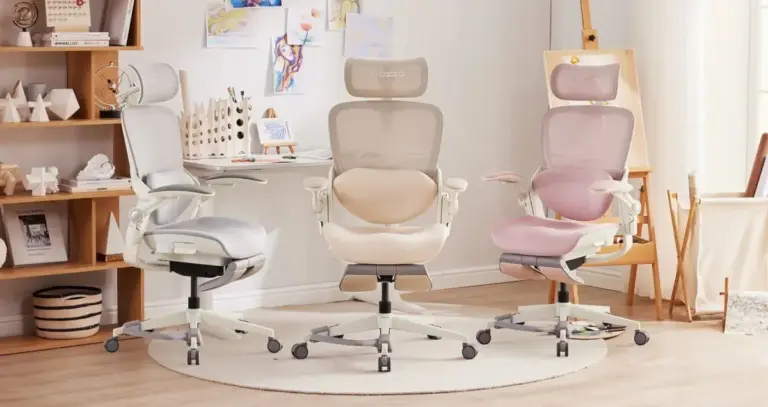
When Westra talks about human factors, he is referring to a specialized field of design concerned primarily with how people’s bodies physically interact with their environments, a discipline more commonly known as ergonomics. All good designers theoretically think about human factors when developing a new product, whether they are working on consumer electronics, furniture, or automobiles. Those who fail to account for these vital metrics inevitably end up creating products that fail in everyday use, such as stools that are too short for a standard table or office chairs that leave employees with chronic backaches.
While contemporary innovators like Steve Jobs and the late Apple design chief Jony Ive relied heavily on advanced computers and computer-aided design, or CAD, software to shape the final form of the iPhone and other revolutionary hardware, designers decades before the smartphone hit the market relied on a remarkably different kind of tool. Long before digital modeling software dominated the industry, industrial designers depended entirely on an analog reference system to help them better understand the intricacies and limitations of the human body.
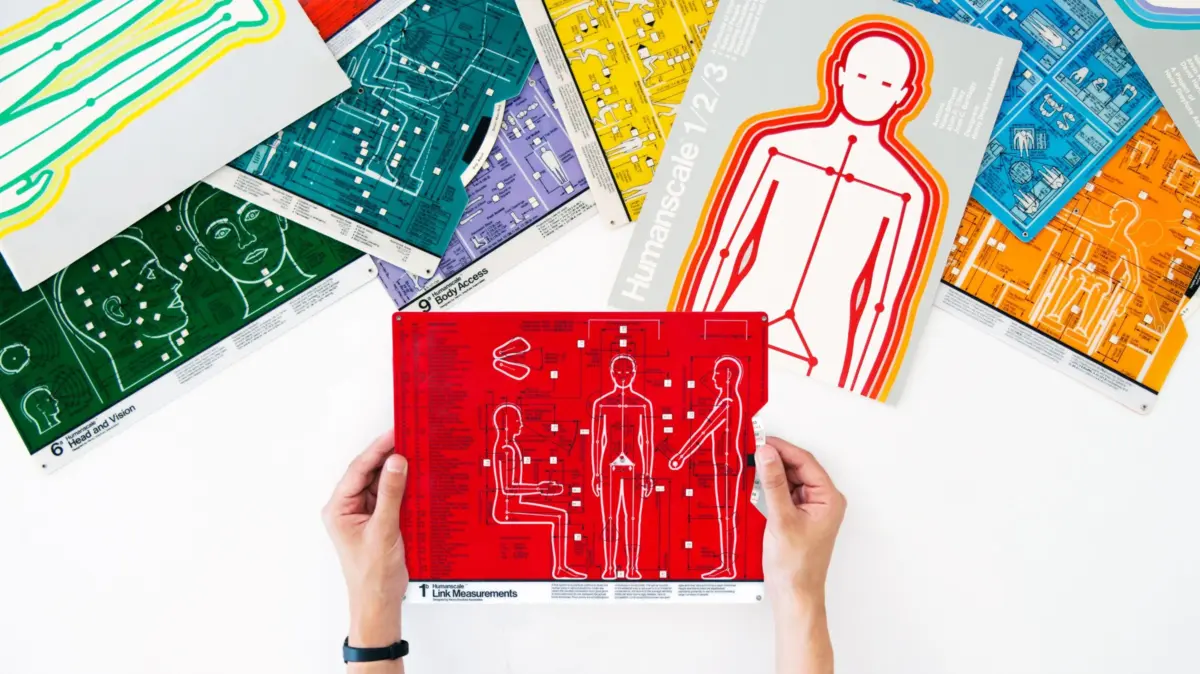
This vital tool was called Humanscale, a comprehensive physical reference system consisting of nine rotating plastic disks filled with more than 60,000 meticulously researched data points. By simply spinning the selector in any direction, a designer could watch as a series of numbers aligned neatly within small cut-out windows, instantly revealing the correct measurement values for whatever specific subject they happened to be designing for at the moment.
During the 1970s and 1980s, industrial designers used this reference tool as a reliable cheat sheet to secure quick data points without having to dig through massive libraries of academic literature. But after MIT Press stopped printing the physical kits in the mid-1980s, the physical objects gradually transitioned from everyday studio equipment into rare collector’s items. In the decades that followed, original copies of Humanscale became increasingly scarce, frequently selling for upwards of $2,000 to eager buyers on online marketplaces like eBay.
Now, Humanscale is making an unexpected comeback, thanks to Westra and a dedicated team at IA Collaborative’s Venture arm. The studio has taken on the task of creating faithful reprints of the classic design tool, making them available to a new generation of creators for $79 per print or $199 for the complete set.
The original Humanscale system was the remarkable product of Henry Dreyfuss Associates, commonly known as HDA, the legendary design firm behind such iconic mid-century objects as the Honeywell round thermostat and Bell’s classic tabletop telephone. Its founder, Henry Dreyfuss, was an early and passionate champion of ergonomic design, and his studio approached the practice not as an artistic afterthought, but as a rigorous science. Under the guiding philosophy of the firm, form always followed function, and function closely followed data—lots and lots of data.

No product was ever manufactured by the firm without first consulting a comprehensive laundry list of bodily statistics. These included critical human dimensions like average height, arm span, sitting hip width, and the ideal viewing angle from an office desk. According to Bill Crookes, who worked at HDA from the early 1970s until the firm’s closure in the early 2000s, gathering this information was a monumental challenge. "The big problem back then was that data wasn’t necessarily in a nice, easily usable form," Crookes recalls.
While vital human measurements certainly existed at the time, they were scattered piecemeal across various disparate industries and government archives. If a designer wanted to know the precise dimensions of the average North American man’s leg, they had to track down aging military recruitment records. If they wanted to understand the maximum decibel level comfortable to the human ear, they had to dig through environmental statistics published by federal agencies. Recognizing this glaring inefficiency, one of the firm’s partners, Niels Diffrient, became determined to consolidate all of this critical ergonomic data into a single, highly portable, and remarkably easy-to-use tool that designers could physically bring with them out into the field.
Diffrient and his dedicated team, which included Crookes, spent years tediously gathering human engineering data from every available credible source. During their extensive research, they learned hyper-specific measurements that most people would never consider, such as the fact that the average height of a traditional fedora was exactly two inches—a crucial detail when taking historical door frame measurements into consideration during interior planning. They meticulously combed through official demographic sources for accurate information on the physical reach and height of wheelchair-bound men and women. They even measured the subtle differences in gripping posture when a human hand holds a cylinder, a ball, or a pencil, and then systematically organized every single data point onto Humanscale’s themed disks.
The creation of the tool was an intensely manual labor of love. "They laid out every little bit of info on these tools by hand with a square triangle and a compass on a drafting table," explains Nathan Ritter, a design researcher at IA Collaborative.
The physical design of the disks was brilliant in its execution. Illustrations printed on both the front and the back of the disks depicted humans and various individual body parts in multiple working positions, with printed arrows meticulously annotating dozens of specific measurement points. Simply rotating the layered disks allowed a designer to filter the massive underlying data sets so they could view information specifically tailored to women, men, and children across their various demographic percentiles.
In many ways, Humanscale was an absolute masterpiece of information design, and it can rightfully be regarded as one of the very first interactive data visualizations ever created for industrial applications. While the physical tool is undeniably a relic of a bygone analog era, it is still widely revered among veteran industrial designers as the gold standard of human engineering statistics. In the modern era, physical disks like these have largely been replaced by far more technologically advanced tools, such as proprietary digital ergonomics databases that modern design corporations license for thousands of dollars annually.
Yet, for the team at IA Collaborative, allowing the Humanscale disks to fade permanently into historical obscurity would have represented a massive, inexcusable missed opportunity. "They’re still just as relevant today as when they were just launched," Ritter notes, emphasizing the enduring nature of human anatomy.
The designers are beginning their revival effort by reissuing the original disks and accompanying books in their physical glory, but they have bigger ambitions for the future. Eventually, they plan to fully digitize the comprehensive information contained within the system and create a modern, interactive digital interface for the data. The underlying motivation is simple: most modern product designers could desperately use an accessible, straightforward tool to help ensure their creations are genuinely centered around the real physical needs of the people who will actually use them.
As Westra points out, it is far too easy for creators to lose touch with reality when working in isolation. "You can design anything in a vacuum," Westra says. "Pero if you’re not considering the people who are going to use it, they’re not going to have a great experience."