The annual holiday shopping season is officially underway, bringing a welcome wave of early Black Friday discounts on Apple’s MacBook lineup. Consumers looking to upgrade their hardware have been eagerly anticipating this year’s sale event, particularly following a challenging year marked by mid-2026 price increases across Apple’s laptop range.
Driven by an industry-wide component shortage linked to the rapid expansion of artificial intelligence data infrastructure globally, retail prices for consumer electronics experienced upward pressure earlier in the year. Despite these broader supply chain challenges and elevated retail MSRPs, major electronics vendors are now rolling out initial price reductions on current-generation MacBooks, offering meaningful savings for creatives, professionals, and students ahead of the holiday rush.
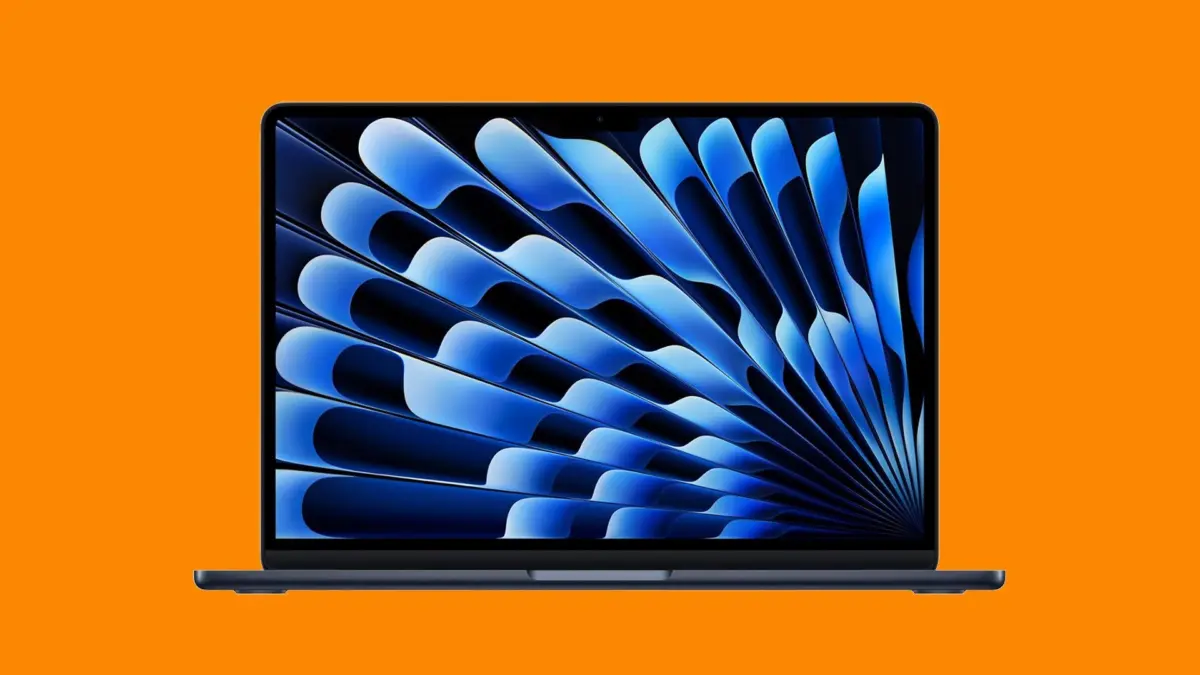
Early promotions indicate that retailers are cutting prices across multiple tiers of Apple’s laptop range. Leading the initial wave, Amazon has introduced a $200 price drop on the 2026 13-inch MacBook Air powered by the M5 chip. Simultaneously, specialized camera and tech retailer B&H Photo has unveiled discounts of up to $300 on selected M5 MacBook Pro configurations.
While discounts are actively appearing on established M5 models, industry observers remain cautious regarding potential price cuts on Apple’s newest hardware releases. The recently launched flagship MacBook Pro featuring a touchscreen PROLED XDR display—which arrived on store shelves earlier this month—is unlikely to see substantial price drops during the sales period. However, minor promotional adjustments or retailer-specific incentives may still surface as Black Friday approaches.
Component Supply Pressures and the 2026 Pricing Landscape
Understanding the significance of this year’s Black Friday MacBook promotions requires examining the macroeconomic factors that reshaped the consumer hardware landscape over the past year. In mid-2026, Apple adjusted the base prices of its entire laptop portfolio upward—a move largely attributed to the severe supply constraints affecting high-performance semiconductors, advanced memory modules, and specialized display components.
The primary catalyst behind these shortages has been the unprecedented surge in global AI data center construction. Enterprise demand for high-bandwidth memory and cutting-edge processing components absorbed a substantial portion of global semiconductor manufacturing capacity, driving up component costs across the broader technology sector. As a result, PC manufacturers, including Apple, faced increased production expenditures that ultimately impacted retail pricing.
Because baseline prices were elevated earlier in the year, retailer appetites for deep discounting during Black Friday were initially expected to be muted. In typical shopping seasons, previous-generation MacBooks or baseline models might experience steep markdowns as vendors clear remaining inventory. However, the tighter margins of 2026 mean that early savings—such as the $200 discount on the M5 MacBook Air and $300 off M5 MacBook Pro variants—represent some of the most competitive pricing buyers are likely to encounter this season.
For consumers navigating this altered pricing environment, timing and retailer selection play crucial roles. Historical trends show that standard consumer configurations generally see steady discounts throughout the shopping week, but specialized high-tier models often sell through inventory quickly once promotional pricing goes live.
M5 MacBook Air vs. MacBook Pro: Evaluating the Options
Choosing between the MacBook Air and the MacBook Pro depends heavily on individual workflow requirements, hardware expectations, and portability priorities. While both lines share the architectural foundations of Apple Silicon, their physical designs and performance thermal limits cater to distinctly different user bases.
The MacBook Air: Silent Efficiency and Maximum Portability
The 2026 MacBook Air powered by the M5 processor remains the benchmark for ultralight mobile computing. Designed around an entirely fanless enclosure, the MacBook Air operates completely silently regardless of workload intensity.
Despite its passive cooling system, the M5 chip delivers exceptional single-core and multi-core performance, making the Air more than capable of handling everyday productivity tasks, web application development, document processing, and light image manipulation. The absence of internal cooling fans also contributes to superior energy efficiency, allowing the laptop to maintain high battery endurance throughout full working days.
For students, writers, mobile professionals, and casual creators who prioritize low weight, thin form factors, and silent operation over sustained peak processing output, the MacBook Air offers the most balanced feature set. The current $200 price reduction at Amazon significantly improves its value proposition, bringing the modern M5 entry point closer to pre-shortage price levels.
The MacBook Pro: Built for Sustained Creative Workloads
In contrast, the MacBook Pro range is engineered specifically for sustained compute-intensive tasks. Unlike the fanless Air, MacBook Pro chassis incorporate active thermal management systems featuring internal fans. This cooling capacity permits high-performance processors—including the M5, M5 Pro, and M5 Max chips—to operate at maximum clock speeds for extended durations without thermal throttling.
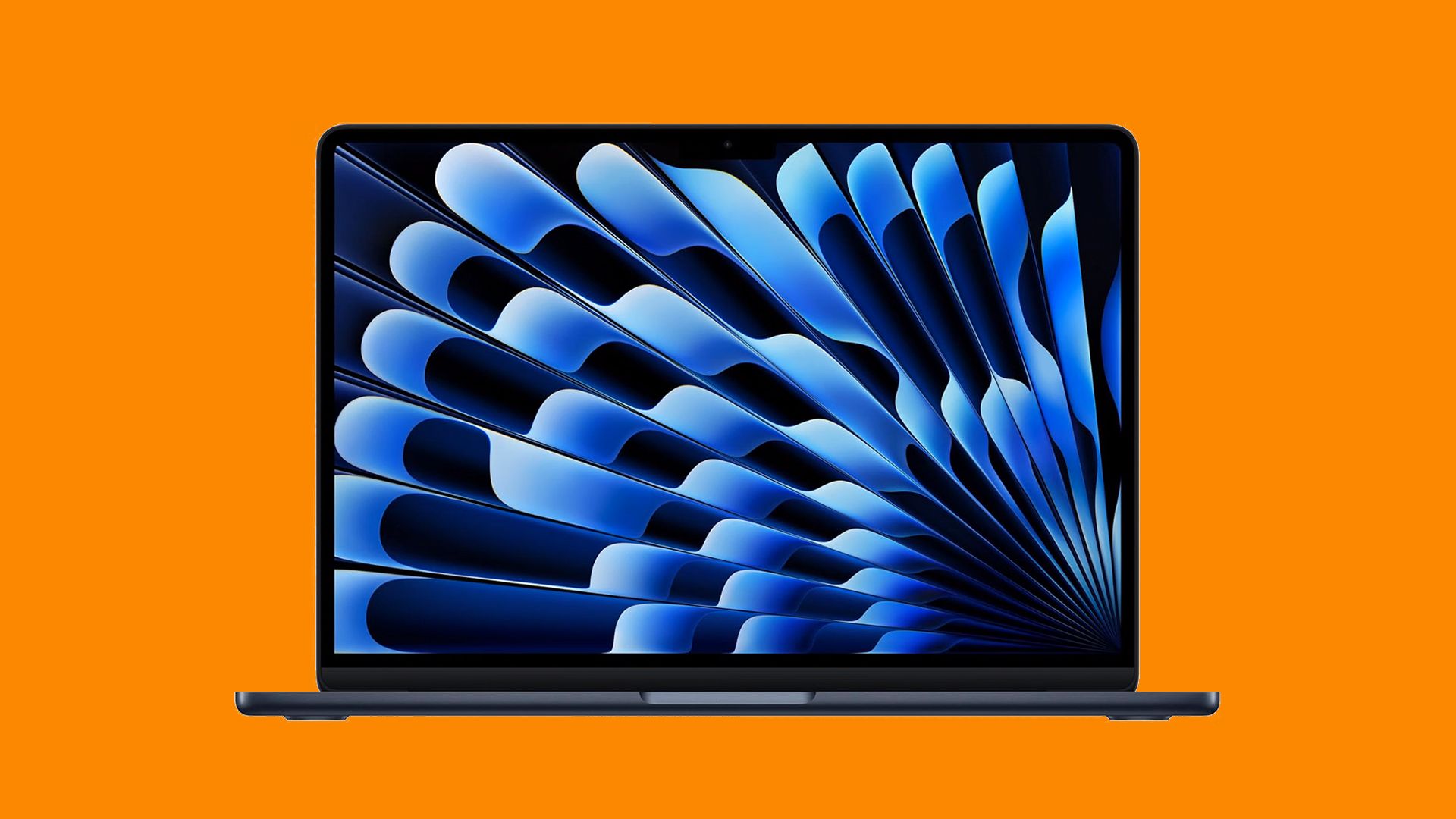
Beyond raw processing power, the MacBook Pro distinguishes itself through superior display capabilities and expanded physical connectivity. The laptops feature Liquid Retina XDR displays equipped with ProMotion high-refresh-rate technology, providing higher peak brightness levels, deeper contrast ratios, and smoother visual scrolling.
Connectivity is another major differentiator. While the MacBook Air relies primarily on Thunderbolt/USB-C ports, the MacBook Pro provides native hardware ports including a full-sized HDMI output and a dedicated SD card slot, eliminating the need for external adapters during field shoots or multi-monitor studio setups.
These added hardware features position the MacBook Pro as the preferred tool for creative professionals working in 4K video editing, complex 3D rendering, audio production, and large-scale software engineering. With B&H Photo offering up to $300 off M5 MacBook Pro models, professional users facing demanding hardware requirements have a compelling window to upgrade.
The Case for Refurbished MacBooks
For shoppers seeking larger cost reductions, the refurbished marketplace presents a practical alternative to buying brand-new retail units. Certified refurbished MacBooks sourced through official manufacturer programs or established third-party platforms like Back Market frequently yield savings exceeding $800 / £800 off original retail prices.
Properly certified refurbished laptops undergo extensive hardware testing, internal cleaning, and component verification before resale. In many cases, these units receive fresh outer aluminium shells and brand-new battery replacements, ensuring that their physical appearance and operational longevity closely match factory-new devices. Most reputable refurbished outlets also bundle standard warranties to protect buyers against post-purchase hardware defects.
However, selecting a refurbished machine requires careful consideration of the underlying chip architecture and long-term software support:
- Legacy Silicon (M1 Generation): Original M1 MacBooks from 2020 remain remarkably capable for baseline tasks such as web browsing, document composition, and media consumption. However, their older architecture lacks the specialized neural hardware required to support modern software features, including Apple’s latest suite of integrated Apple Intelligence tools. Furthermore, M1 systems may struggle when subjected to modern 3D rendering or heavy multi-track video editing pipelines.
- Modern Silicon (M3, M4, and M5 Generations): Refurbished models from more recent silicon generations bridge the gap between affordability and longevity. They offer advanced media engines, hardware-accelerated ray tracing where supported, and sufficient neural processing bandwidth to run current software features comfortably for years to come.
Buying refurbished is particularly suitable for users seeking a secondary travel machine, budget-conscious students, or general consumers whose computing needs revolve around standard office productivity. Conversely, creative professionals who demand maximum operational speed, guaranteed multi-year operating system feature support, or cutting-edge display technologies like the new touchscreen PROLED XDR panel are generally better served investing in current-generation new hardware.
Expected Discount Ranges and Shopping Strategy for Black Friday 2026
Evaluating historical pricing data alongside current market conditions helps establish realistic expectations for Black Friday 2026 savings. In previous years, standard consumer-tier MacBooks—predominantly MacBook Air configurations—typically received price cuts ranging between $150 and $200. Standard MacBook Pro baseline models frequently saw reductions between $200 and $300.
Higher-end custom configurations of the MacBook Pro featuring expanded unified memory (such as 36GB RAM or higher) and high-capacity internal storage (2TB SSDs and above) occasionally yielded much steeper price drops of up to $500. However, these larger discounts were historically concentrated on previous-generation models being phased out to clear inventory space.
Given the mid-2026 price adjustments caused by global component shortages, discount structures this year mirror these upper historical boundaries quite closely:
- MacBook Air (M5): Expect steady discounts centered around $200 off retail MSRP.
- MacBook Pro (M5 / M5 Pro / M5 Max): Savings are hovering between $200 and $300 for standard retail configurations.
- Legacy and High-Spec Models: Select high-memory configurations or remaining stock of previous-generation hardware may occasionally reach savings approaching $400 to $500, though inventory levels for these units remain tightly controlled.
Key Calendar Dates to Remember
The traditional Black Friday event takes place on Friday, November 27, 2026. However, the retail landscape has evolved into an extended shopping window spanning much of November. Major electronics retailers began introducing early promotional pricing at the start of the month, with deals continuously refreshing leading up to the official holiday weekend.
The shopping event officially culminates on Cyber Monday, which falls on November 30, 2026. Cyber Monday typically represents the final major opportunity to secure promotional pricing on computing hardware before inventory shifts back to standard holiday pricing structures for the remainder of December. Prospective buyers looking to secure specific hardware configurations are advised to monitor retail listings closely, as high-demand models may experience stock fluctuations throughout the promotional period.