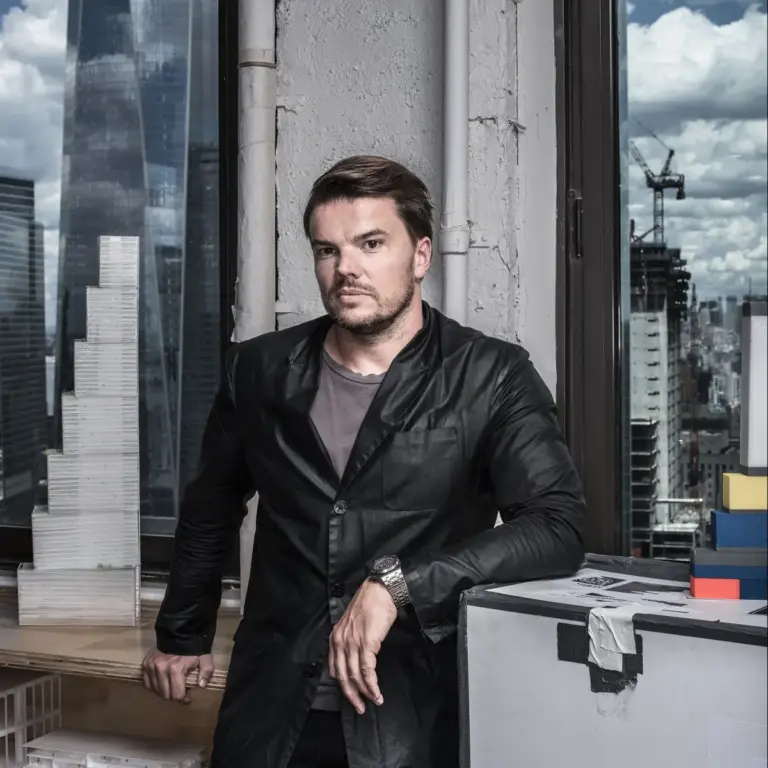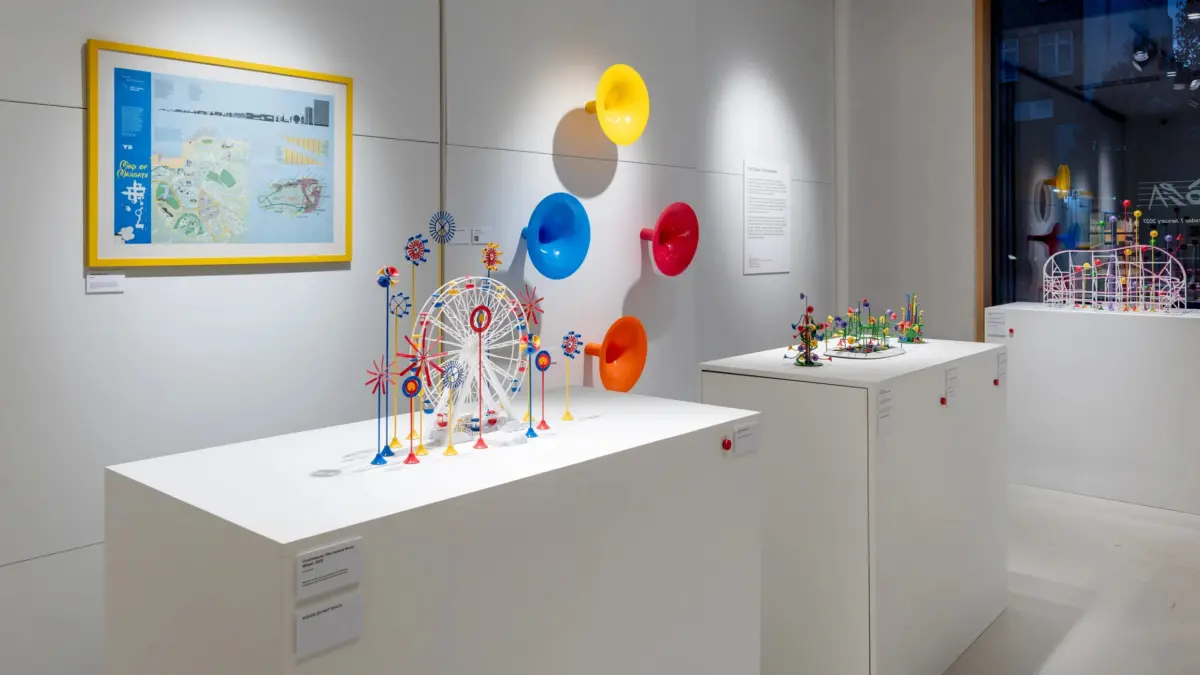
Sound artist, designer, and electronic musician Yuri Suzuki is inviting audiences to experience the architecture of amusement through their ears in his new exhibition, Onomatopia. Currently on display through January 7, 2027, within the Osh Gallery at Pentagram’s London headquarters, the exhibition explores the deeply interconnected relationships between play, sound, and spatial design. At its core, the exhibition features five meticulously crafted dioramas inspired by theme park attractions, world fairs, and expos, functioning collectively as a working prototype of a theme park built entirely around the human sense of hearing.
Rather than relying on visual spectacle alone, each miniature ride in Suzuki’s installation produces its own distinct, carefully calibrated noises. The park in its entirety is intentionally designed to evoke a much greater appreciation for the often-overlooked role that sound plays in our daily environments and spatial experiences. By scaling down the grand, immersive architecture of an amusement park into intricate tabletop dioramas, Suzuki bridges the gap between massive public art installations and intimate acoustic investigations.
Suzuki, a former Pentagram partner whose multidisciplinary career spans industrial design, sound art, and electronic music, has long been fascinated by the ways humans interact with auditory culture. His previous notable projects include designing an innovative, highly expressive logo for the universal musical standard MIDI that functions in both visual and sonic realms. He also reimagined the everyday appliance landscape with his Ambient Machine, a device that allows users to fully customize and curate their own white noise experiences. Furthermore, Suzuki has conceptualized and executed public multisensory artworks for prestigious institutions such as the San Francisco Museum of Modern Art, alongside his widely celebrated Sonic Playground installation created for Atlanta’s High Museum of Art.
Onomatopia serves as a direct continuation and refinement of these long-standing creative investigations. Among the five miniature dioramas on display is a miniature roller coaster titled “Harmony in Motion.” The tracks of this dynamic little ride are surrounded by an array of protruding horns in vibrant shades of red, yellow, blue, and green, varying dramatically in height. As the miniature cars traverse the course, the setup produces rich, layered acoustic tones that sound remarkably like a traditional pipe organ playing in full harmony.
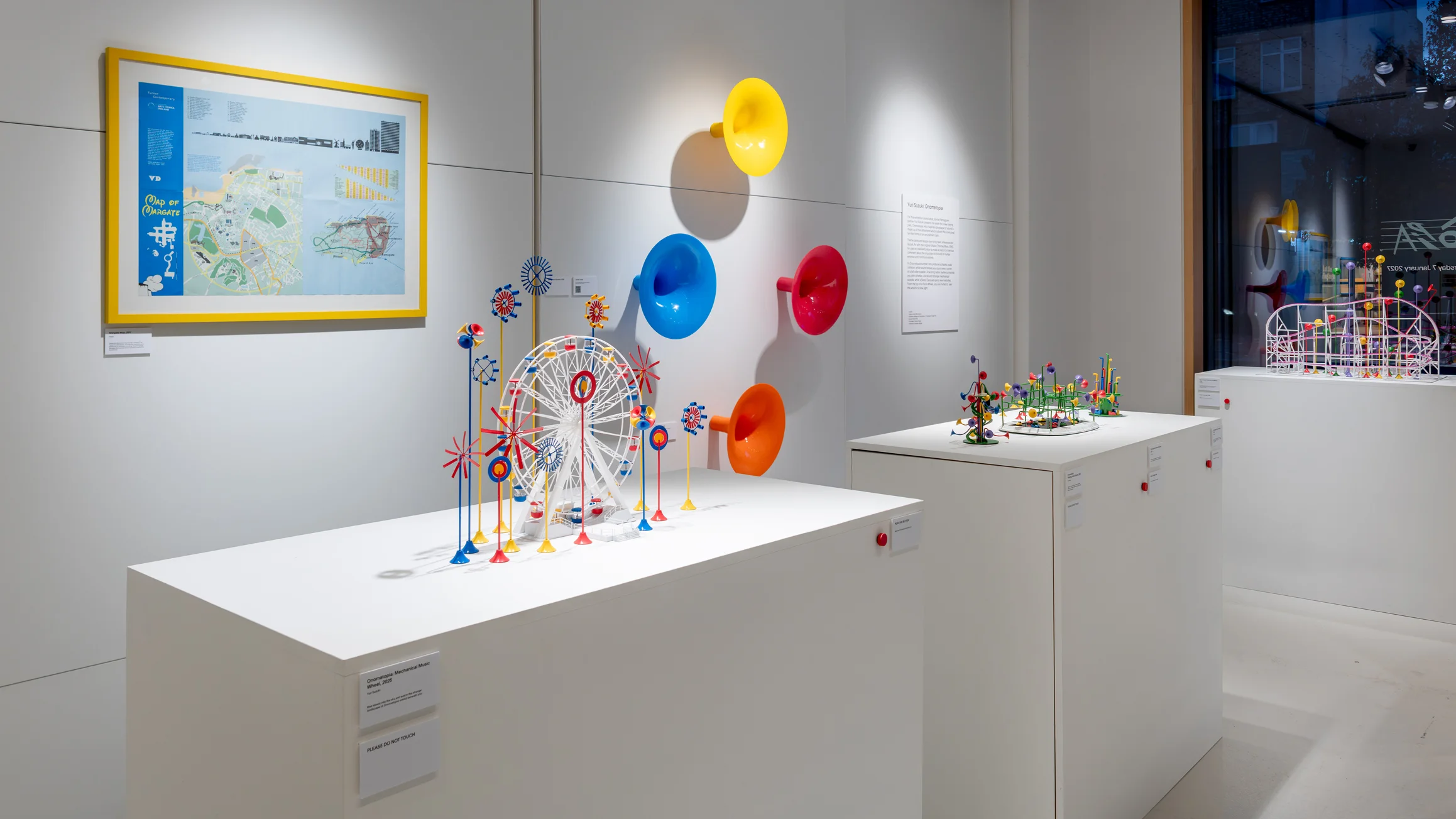
Another standout piece in the exhibition is a red, yellow, and blue Ferris wheel display named the “Mechanical Music Wheel.” As this classic circular attraction rotates, it generates the bright, cascading sound of rising and falling chimes, transforming mechanical motion into a delicate musical composition. Elsewhere in the gallery, a miniature bumper cars attraction produces a series of playful, irregular plucking sounds reminiscent of plucked strings, while a sonic carousel and a helter-skelter slide are each constructed from arrangements of multicolored horns, turning traditional amusement park architecture into functional acoustic sculptures.
In executing these vibrant installations, Suzuki relies heavily on primary colors, a deliberate choice rooted in both design philosophy and accessibility. Explaining his palette to Fast Company, Suzuki notes that primary colors are inherently more accessible to a broader audience, including individuals with visual impairments.
“Even color-blind people can see the difference in the color,” Suzuki explains. At the same time, the strategic deployment of primary and secondary colors serves to visually simplify structures that might otherwise appear overwhelming given the complexity of the twisting shapes and horn arrays.
“Sometimes my installation looks very complicated . . . like lots of pipes coming together. But if you divide it by color, it’s a clear division,” he notes, illustrating how chromatic organization can bring clarity and order to complex architectural forms.
Through Onomatopia, Suzuki successfully transforms the nostalgia and kinetic energy of the amusement park into a thoughtful meditation on acoustic awareness, proving that the built environment—no matter how small—resonates with a life and voice of its own.