Candle wax drips slowly onto the holder, hardening in intricate ridges, while the last trickle of wine is poured out between glasses before another bottle is uncorked to keep the evening alive. A window is cracked open, letting an icy breeze seep in from the dark street outside, a sharp contrast to the warmth inside. People are casually picking at the remnants of a cheese board, while others linger in the narrow corridor, completely rapt in conversation. The rich, layered sound of talking fills every single inch of the room, creating that specific, comforting hum of a successful gathering.
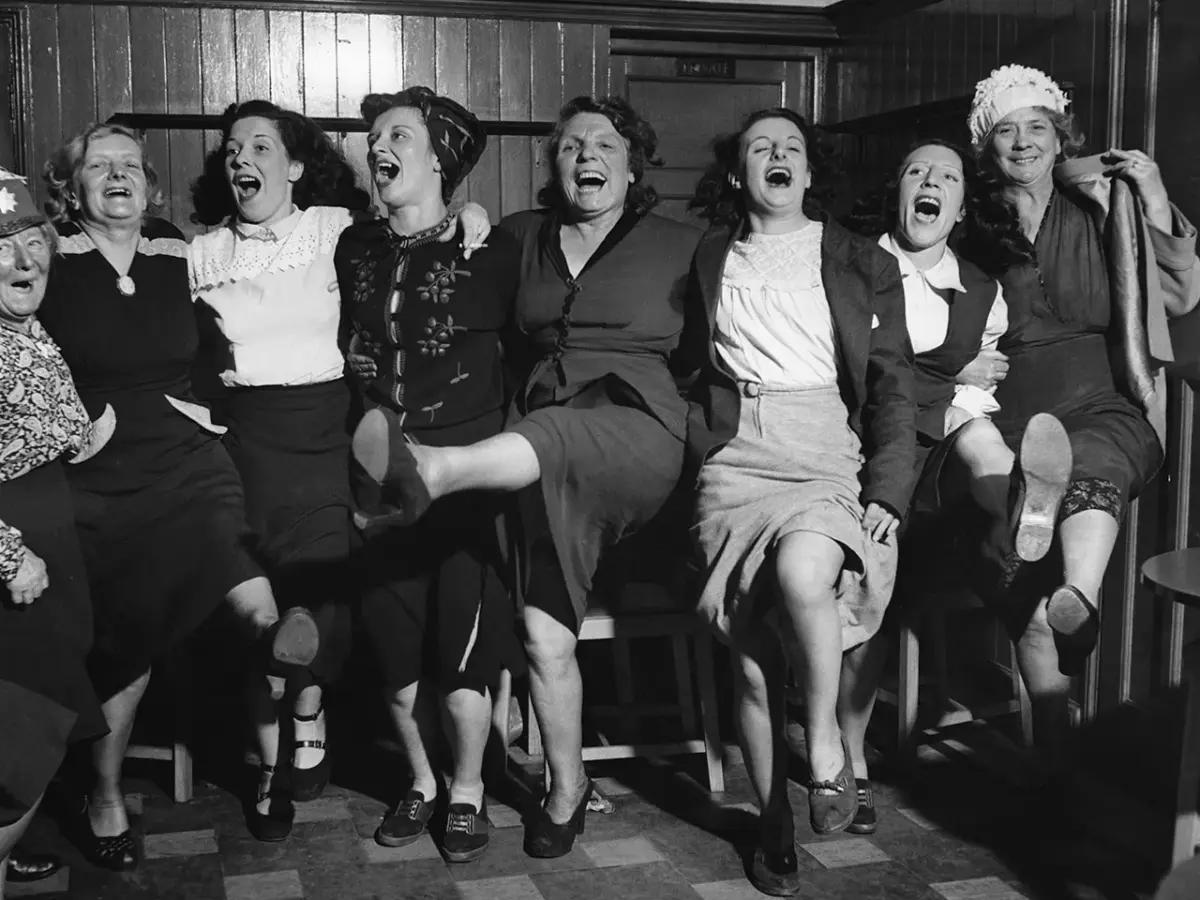
Then comes the familiar, unmistakable plink of piano keys. Someone at the party has requested a song, cutting through the general chatter. As it slowly becomes clear which holiday carol has been chosen, a shift occurs in the room. Everyone naturally gathers around the instrument to start singing. Arms are slung over shoulders, and suddenly, a chaotic cacophony of individual voices melts into one cohesive sound.
This is often the way that soirées end when visiting friends who own a piano. In the modern city, having such a bulky instrument in a home is increasingly rare due to severe space restrictions and notoriously poor sound insulation in apartments. But visitors know that when they enter this particular home, there is a very good chance that the evening will eventually wind its way toward the keys. The hosts, known since childhood, are both musically inclined—one now working professionally in the field. Countless hours have been spent singing alongside them over the years, whether crammed into school buses, performing in concert halls, or practicing in various choirs. Growing up together, playing together, making musical mistakes together, and ultimately becoming themselves together has made this tradition feel entirely natural. It would feel almost jarring if they stopped doing it now.
At these dinner parties, there are usually a handful of guests whom the narrator has never met before—people who certainly did not witness their awkward, sometimes disgraceful adolescence the way the hosts did. Yet, by the end of the night, complete strangers are throwing their hands up in the air, riotously belting out "five gold rings" at the exact right moment in "The Twelve Days of Christmas," suddenly bonded by the shared experience. It is a striking real-world demonstration of what researchers have dubbed the "ice-breaker effect" of singing.
When people sing together spontaneously, they tend to keep going much longer than expected, working their way through all of the old favorites until the small hours of the morning. This musical pursuit is by no means reserved exclusively for the depths of winter. Beyond the festive season, the group naturally gravitates toward a diverse range of music, stretching from Squeeze’s 1980s pop-rock classic "Tempted" to Ivor Novello’s poignant wartime anthem "We’ll Gather Lilacs," depending entirely on whether the prevailing mood calls for upbeat pop-rock or reflective nostalgia.
However, at this particular time of year, there is a myriad of songs from which to choose that carry a universal appeal. The holiday season remains one of those rare cultural moments when everyone, regardless of whether they consider themselves religious or strictly secular, can comfortably join in and sing. The traditional festive repertoire is wonderfully forgiving by design: its melodies tend to be instantly memorable, its rhythms clear and steady, and its refrains delightfully repetitive. A late arrival can walk through the door halfway through a verse and still easily find their way into the musical fold.
There is something profoundly cathartic about participating in group singing in this fashion. It feels intrinsically good to allow your voice to travel outward into the room, to physically feel your lungs fill and empty, your ribs expand, and your throat open up to project sound. Singing together forces everyone in the room to unconsciously breathe to the exact same rhythm. The vagus nerve, which is directly connected to the human vocal cords, plays a vital role here by putting the nervous system into a deeply relaxed state. Meanwhile, controlled exhalation releases endorphins—chemical messengers closely related to pleasure and elevated feelings of wellbeing—while simultaneously supporting cardiovascular health.
The therapeutic benefits of this activity extend far beyond casual parties. Singing in a choir has been extensively studied as a powerful clinical tool to enhance the overall quality of life for individuals suffering from various chronic health conditions. Most notably, medical researchers have found that regular choral participation significantly improves the ability of Parkinson’s disease patients to articulate speech. It has also proven remarkably effective at prompting long-lost memories and piercing the fog for those living with dementia. Furthermore, group singing forces individuals to connect in real time with the people immediately surrounding them—a form of genuine human engagement that has become increasingly difficult to maintain in an isolated, digital age.
Many evolutionary biologists and psychologists firmly believe that singing actually predates formal human language. It is arguably a much more immediate, primal way to connect with fellow human beings than relying on words alone. Compelling archaeological evidence from the Upper Palaeolithic period, which began approximately 50,000 years ago, suggests that early humans regularly gathered around communal fires to sing, orally passing down cultural traditions, survival knowledge, and histories to successive generations. Even in the modern era, with highly developed language systems fully at our disposal, communal singing helps human beings bond much more effectively and deeply than standard speech can achieve. A notable 2022 United States study found that singing produced significantly greater positive emotional responses for choir members compared to simple conversation with one another, alongside a measurable increase in their overall sense of social connectedness.
Throughout modern history, singing has consistently served as a vital tool of solidarity and collective resilience. One need only think of the spirituals sung by enslaved people on United States plantations, which provided profound hope and united communities during the darkest hours of institutionalized oppression. Centuries earlier, sailors traversing the globe during the age of exploration sang rhythmic sea shanties to help synchronize heavy labor aboard wooden ships.
Then there is the powerful, transformative singing that takes place within places of worship across cultures: united, liberated, and whole-bodied. Such spiritual environments have historically acted as a fertile training ground for some of the greatest vocalists the world has ever known. Icons such as Aretha Franklin, Elvis Presley, Sam Cooke, Luciano Pavarotti, and Patsy Cline all spent their formative childhoods singing passionately in local churches long before achieving global fame.
The finest singers in these casual settings are not necessarily those with the most technically polished instruments or professional training, but rather those who warble unselfconsciously and straight from the heart—an atmosphere that being part of a supportive choir or informal group naturally facilitates. For most people, the prospect of standing entirely alone on a physical stage and belting out a tune takes an immense amount of personal courage: they must mentally prepare themselves, actively calm their racing nerves, and find a way to lean awkwardly into the performance.
Yet, when people stand shoulder to shoulder beside others tackling the exact same song, that heavy psychological weight instantly evaporates. All that remains is the pure, unfiltered joy of the music. If an individual’s voice wobbles or cracks, there are dozens of other voices right beside them to catch it. If someone comes in slightly late on a measure, somebody else is already carrying the phrase forward. The influential French sociologist Émile Durkheim famously coined the term "collective effervescence" to describe precisely this sacred, electric joy that occurs when a community moves and sings in unison. In those moments, participants become something much larger than themselves, transcending individual isolation and feeling the deep, underlying happiness of simply being human.
So, every December, these familiar melodies inevitably resurface from forgotten hymn books, scratchy old recordings, and the recesses of human memory. Some of these tunes date back hundreds of years; some are deeply sentimental or spiritual; and many are wonderfully ridiculous, such as "We Wish You a Merry Christmas," in which persistent carollers brazenly demand sweet figgy pudding and outright refuse to leave the doorstep until they finally get some. But therein lies the enduring charm. When the very last musical chord fades into the room, glasses are topped up with wine, windows are adjusted, and the evening simply moves on to the next beat.