Good day from a muggy, toasty Bangkok, where the official launch of our Thailand handbook is set to get underway shortly. This finds me on day 20 of a whirlwind spin around the world. To recap the itinerary so far, this global tour began in Zurich before moving on to Milan, Paris, London, Austin, Manila, and Hong Kong. Last week, our journey left off in Fukuoka, which served as the ideal landing point for the extensive Japan leg of the tour.
Fukuoka by Night
Unlike the bustling metropolises of Tokyo, Kyoto, and Niseko, Fukuoka remains pleasantly free from the heavy waves of international tourism, particularly of the Western variety. While a few travelers can be spotted here and there, the majority of the visitors stocking up on outerwear staples from Uniqlo, Muji, and Snow Peak appear to be arriving from Taiwan, Korea, and Hong Kong.
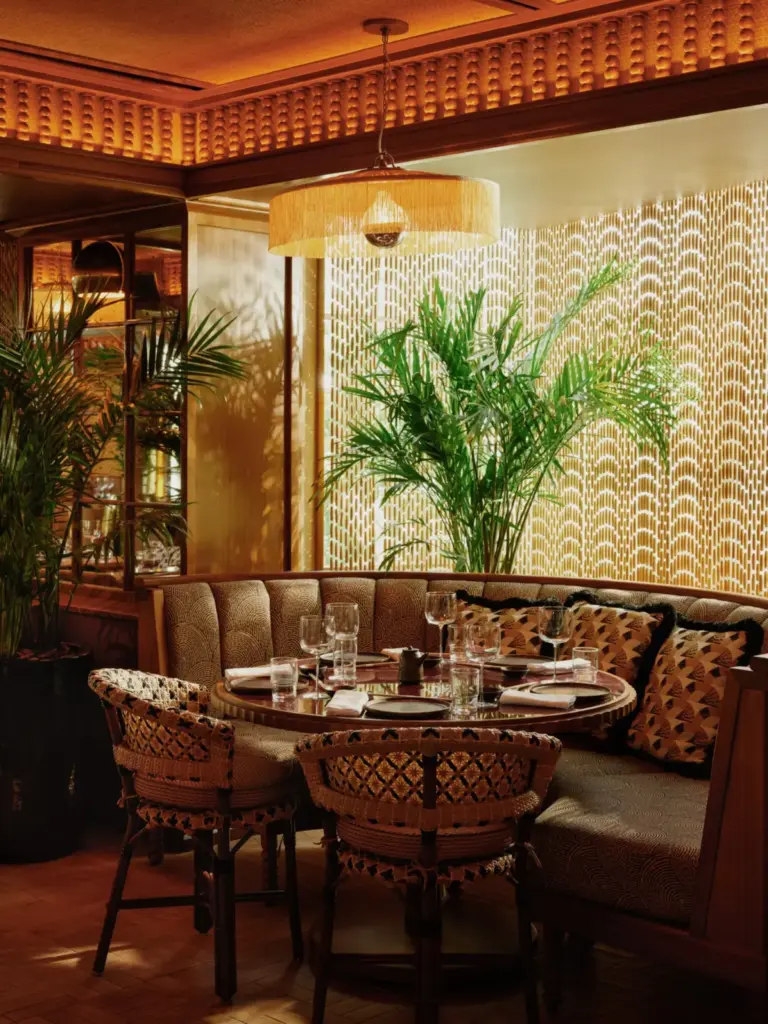
Dinner during our stay was hosted at a remarkably charming bakery that seamlessly transforms into an Italian dining spot by night. Glancing across the surrounding tables, the clientele proved to be an entirely domestic, Japanese affair. Afterward, our evening continued at what is surely the best-lit bar in all of Japan—a notable distinction given the country’s high standards for interior illumination. Designed by the acclaimed architect Koichi Futatsumata, the venue features an enormous, slightly rounded triangular bar that feels spacious enough to facilitate an aircraft-carrier-style landing. For the warmer months, the establishment also offers a relaxed rooftop setup, blending innovative architecture with functional hospitality.
Fukuoka on the Up
Beyond its culinary and design credentials, the city is currently actively lobbying to be designated as Japan’s official backup capital. This strategic positioning aims to provide a functional continuity hub in the unlikely event that an earthquake or a major man-made disaster were to render Tokyo non-functional.
This ambitious vision has already translated into considerable urban development, particularly centered around Hakata Station and the Tenjin district. Across the city, modern towers are rising, older building stock is being systematically dismantled to make way for contemporary architecture, and thoughtful urban improvements are visible everywhere you look. For travelers and professionals fancying a Japanese setup that sits an hour or so closer to commercial hubs like Hong Kong and Seoul, Fukuoka is rapidly proving to be a town worth watching.
JR Central Supreme Class, Fukuoka to Kobe
While certain European rail operators continue to debate the merits of eliminating a class system and squeezing as many passengers as possible into their rolling stock, the forward-thinking team at JR Central is moving proudly in the opposite direction at high speed. Following our recent November issue coverage of the newly launched Supreme Class cabins, I simply had to sample the experience firsthand.
Positioned a couple of tiers above the Green Car, which serves as the traditional first-class offering on the Shinkansen, the Supreme Class elevates rail travel to an entirely new echelon. The cabins feature significantly more comfortable seats capable of a deep recline, sophisticated and flattering lighting, a state-of-the-art surround sound system integrated directly into the headrest courtesy of NTT, faster onboard Wi-Fi, and attentive service available at the simple touch of a button. If there is any genuine drawback to the experience, it is that my two-hour journey felt far too short. In hindsight, I should have opted to take the service all the way to Tokyo.
Kobe
Stepping off the train and onto the wide boulevards of Kobe’s city center, the immediate question posed by my colleagues was simple: Where are we? Looking upward, one is greeted by solid, stone Western facades and a distinct urban scale that evokes the architectural grandeur of pre-war Manhattan or the historic City of London.
This unique blend of international influences is further reflected in the city’s exceptional retail design landscape. Inside a former bank, the Vague gallery ranks as one of the finest retail experiences in Japan. Downstairs, the interior design firm Wonderwall has crafted an extraordinary shop for the brand Human Made, anchored by an enormous, imposing bull sculpture that dominates the center of the space. Also at ground level sits an exceptionally elegant branch of Visvim.
Elsewhere in the city, urban upgrades are well underway, highlighted by newly minted pocket parks, a comprehensive tree-planting initiative, and a strategic municipal mission to secure scheduled international flight routes. Our eighteen-hour window in the city was far too brief, but I can confidently promise that readers will be hearing and reading several more reports from Kobe across Monocle’s platforms soon.
Shimano Global HQ, Osaka
Having visited a fair share of corporate world headquarters throughout my career, I can report that the recently completed home for global cycling and fishing leader Shimano operates on an entirely different level. It represents a literal gear shift in how a major manufacturing and lifestyle company chooses to host, welcome, and present itself to the world.
Green Car, Osaka to Tokyo
A brief note of friendly advice for non-Japanese rail travelers is warranted here. It is 2026, and you are currently traveling at nearly 300 kilometers per hour aboard one of the true modern wonders of global mobility—a system engineered by and for a society built fundamentally on courtesy, good manners, and a remarkable knack for knowing how to pack efficiently. It is not 1926, nor is it an antiquated era defined by leisurely steam travel, heavy Goyard trunks, and personal porters.
If you are physically unable to manage your own luggage on your own—yes, I am looking directly at the two of you from Vancouver—if you find yourself incapable of lifting your excessively large, expandable cases into the overhead storage racks independently, as demonstrated by the travelers from Perth, or if you simply cannot maintain a respectful whisper in a shared quiet environment, like the pair from Boston, then please kindly reconsider using this service. The doors will soon be closing. Thank you.
The Shopping Arcade at the Palace Hotel Tokyo
For those navigating the seasonal rush, the hotel’s dedicated wine shop and adjacent bakery serve as the ultimate one-stop destination for speedy, sophisticated Christmas gift solutions. After all, who on your list wouldn’t appreciate a chicly packaged Baumkuchen for a December 24 holiday dinner? It raises a broader question: why don’t more luxury hotels around the world devote valuable real estate to this kind of practical, brand-building retail convenience?
As this global tour continues, the journey forward promises more insights from the road, keeping pace with the ever-evolving rhythms of design, architecture, and mobility across Asia and beyond.