In an advance announcement tailored specifically for its syndication audience, a digital publication has initiated a soft rollout of a site redesign, granting RSS subscribers an exclusive early preview of the updated web interface. The quiet deployment marks the initial phase of a broader user experience transition, with a full structural breakdown and formal presentation scheduled to be published at the start of the coming week.
By delivering the preliminary notification directly to RSS subscribers, the publication has prioritized its most consistent and technologically engaged reader base. Content syndication feeds have long served as an essential connection between digital platforms and core audiences who consume updates outside of third-party social media algorithms or promotional landing pages. Providing these readers with the initial heads-up reflects a deliberate communication strategy, ensuring that the platform’s dedicated community is informed of structural and aesthetic changes taking place across the primary website prior to a full public unveiling.
The decision to execute a soft push rather than an immediate, full-scale public release represents a standard and strategic methodology within modern web development and digital media management. In software engineering and site administration, a soft launch involves deploying code updates and visual modifications directly to live production environments with minimal advance publicity. This staged deployment allows technical, editorial, and design teams to observe the real-world performance of the redesigned layout under actual user traffic conditions.
Operating under live conditions provides an operational window to monitor essential backend performance metrics. Technical teams can evaluate server response times, verify that stylesheet and script assets are loading efficiently, monitor database performance, and ensure cross-browser compatibility across a wide range of desktop and mobile devices. Identifying potential rendering anomalies or performance bottlenecks during a controlled soft launch ensures that minor layout issues can be addressed smoothly without impacting the broader audience base.
Beyond technical infrastructure testing, a soft release offers a practical environment for evaluating user interaction with updated design elements. Readers who navigate to the site following the early announcement serve as an initial user group, helping demonstrate how effectively the new layout functions in daily use. Observing these early interactions allows developers and designers to evaluate whether navigation paths remain intuitive, whether typography choices enhance readability across different screen resolutions, and how effectively the new visual hierarchy directs attention to key content categories.
Looking ahead to the formal documentation scheduled for Monday, the publication indicated that a comprehensive write-up will be published to detail the complete scope and rationale of the visual overhaul. This upcoming release will provide high-level details explaining the underlying design philosophy, functional improvements, and structural changes integrated into the updated site architecture.
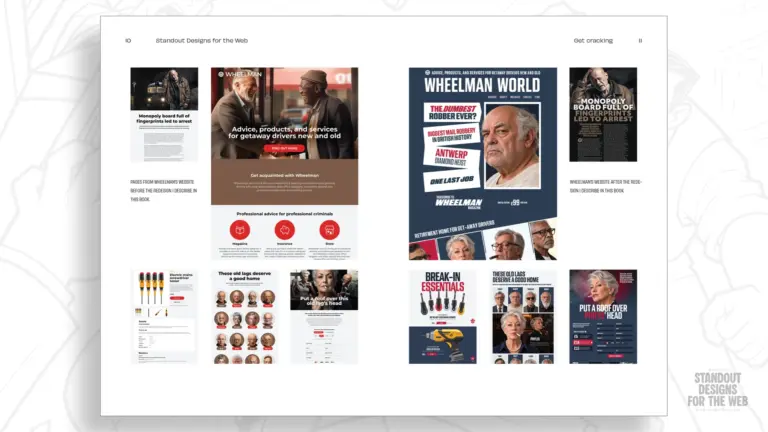
Central to the upcoming Monday presentation will be a comprehensive side-by-side comparison contrasting the legacy website layout with the newly implemented design. Comparative documentation of this nature is widely considered best practice in digital product design and user experience publishing. When established online platforms undergo visual overhauls, long-time readers frequently experience initial navigation friction as familiar layout structures, color schemes, and menu placement are modified.

A clear, side-by-side comparison demystifies these changes by mapping legacy design features directly to their updated counterparts. This approach offers clear insight into why specific layout decisions were implemented—whether to reduce visual clutter, improve content density, optimize touch-screen interaction for mobile users, or streamline navigation across high-traffic content sections. It provides readers with direct visual context, helping them adapt quickly to the updated interface while understanding the strategic goals behind the transformation.
Redesigning an established website is rarely a purely cosmetic exercise in the contemporary digital publishing landscape. Website overhauls are typically driven by the need to adapt to evolving web standards, changing content consumption habits, and updated technology stacks. Over years of continuous operation, digital publishing platforms naturally accumulate legacy code, fragmented navigation elements, and disparate layout patterns as new features and content verticals are added over time. A dedicated redesign provides an essential opportunity to clean up underlying web code, remove redundant assets, and establish a cohesive visual design system that scales efficiently.
In modern web development, design overhauls also heavily emphasize performance optimization and web accessibility standards. Fast page load speeds are essential not only for retaining reader attention but also for maintaining search engine visibility and mobile usability. Site redesigns frequently focus on streamlining CSS frameworks, optimizing media asset delivery, and adhering to modern accessibility guidelines. These back-end enhancements ensure that text contrast levels meet legibility requirements, screen-reading software can parse site navigation accurately, and interactive components are fully navigable using keyboard inputs, creating an inclusive reading environment for all visitors.
Throughout any major site overhaul, preserving content integrity and infrastructural stability remains a top priority. Digital publications maintain extensive archives of articles, media assets, and historical references that must remain intact and easily searchable throughout a visual migration. A staged soft launch allows system administrators to verify that URL routing rules, internal links, canonical tags, and RSS feed mechanisms remain fully functional, preventing broken links or syndication errors that could disrupt access for regular readers.
The decision to communicate early updates specifically to RSS readers also highlights the persistent importance of open web syndication standards. While digital media distribution has increasingly shifted toward closed platforms, mobile applications, and direct email newsletters, RSS feeds remain a critical tool for users who prefer direct, unmanipulated access to chronological content streams. Acknowledging RSS subscribers first underscores the importance of this user segment and reinforces transparent communication between digital publishers and their audience.
The clear, direct tone of the announcement reflects an emphasis on operational transparency and reader engagement. Rather than introducing sudden structural changes without context, providing advance notice sets clear expectations for the user community. By pairing an immediate soft launch with a promised, detailed follow-up, the publication establishes an open timeline for when deeper insights, visual comparisons, and formal explanations will be shared with the broader public.
As the weekend proceeds, the soft-launched interface remains active for early exploration while final preparations are completed for Monday’s detailed report. Visitors navigating the updated site during this period have the opportunity to experience the high-level design and navigation changes firsthand prior to the release of the complete visual breakdown. The publication concluded its initial notification on a warm note, extending good wishes to its reader base for the weekend as anticipation builds for the formal early-week disclosure.
This soft push and upcoming comparative analysis reflect a broader trend across the digital publishing industry toward viewing site redesigns as transparent, iterative processes rather than sudden, unannounced updates. In an era where user experience plays a fundamental role in audience retention, involving readers early and documenting design choices through detailed comparative write-ups has become a established approach for digital platform maintainers. The forthcoming Monday update is set to elaborate fully on how these structural choices serve both the publication’s long-term editorial goals and the everyday reading experience of its audience.