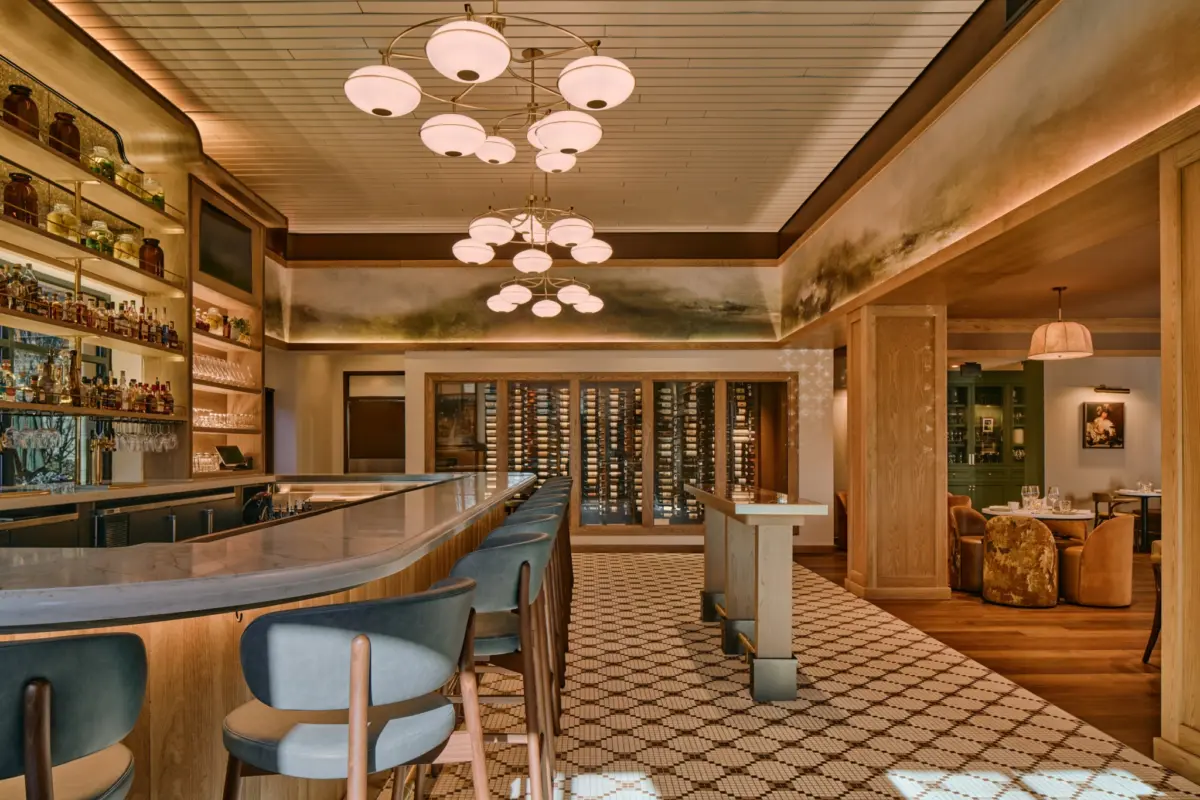
In Charlotte, North Carolina—one of the Southeast’s most rapidly expanding and economically vibrant metropolitan areas—a once-ordinary restaurant space has begun a striking new chapter. Designed by the multidisciplinary studio FictionWorks, the newly minted Napa Bistro and Wine Bar Stonecrest draws its primary inspiration from a monumental moment in culinary history: the legendary 1976 Paris Wine Tasting, an event that famously upended the global wine establishment by placing Californian vineyards on the world map. By channeling the historical spirit of that tasting, the design team has successfully blended the distinct aesthetics of a classic French bistro with the relaxed, earthy charm of a Napa Valley farmhouse, creating a destination that feels simultaneously historic and refreshingly modern.
The realization of this ambitious spatial concept required a deeply collaborative effort across multiple creative disciplines. Alongside FictionWorks, the architectural execution was spearheaded by In Situ Studio, while the interior lens was captured through the photography of Pablo Enriquez. Together, the design and architecture teams sought to dismantle the flat, uninspired layout of the former taco restaurant that previously occupied the 6,500-square-foot footprint, transforming it into a layered, immersive environment that encourages lingering over food, conversation, and carefully curated wine pairings.

According to FictionWorks co-founders Andrea De Camps and Olivia King, the driving vision behind the project was versatility and balance. “The goal was to create a restaurant that feels approachable enough for a casual weeknight dinner while offering the sense of occasion people look for when celebrating a great meal and a bottle of wine,” the co-founders explain. Achieving this duality within a substantial commercial square footage meant breaking down the massive floor plan into a series of intimate, connected rooms, each possessing its own unique character and spatial rhythm.
Working within the physical constraints of an existing structure is rarely straightforward, and the project presented its own distinct set of roadblocks. Transforming a former fast-casual taco establishment into a warm, wine-focused hospitality destination required strategic deployment of resources. Completed in under nine months, the intensive renovation demanded rigorous coordination, smart financial budgeting, and a clear design hierarchy. Rather than spreading their capital thin across every square foot, the FictionWorks team made deliberate choices about where to concentrate their investments for maximum visual and tactile impact.

“We put the money into the details that would really make an impact—the stained-glass installation, custom lighting, and millwork,” the team at FictionWorks notes, outlining their economic and aesthetic strategy. In contrast, they adopted a more practical approach toward secondary elements, utilizing standard or budget-friendly solutions for the tabletops, mosaic flooring, thrifted artwork, and miscellaneous accessories. This calculated distribution of resources allowed the design to feel luxurious and bespoke without falling victim to unnecessary extravagance or budget overruns.
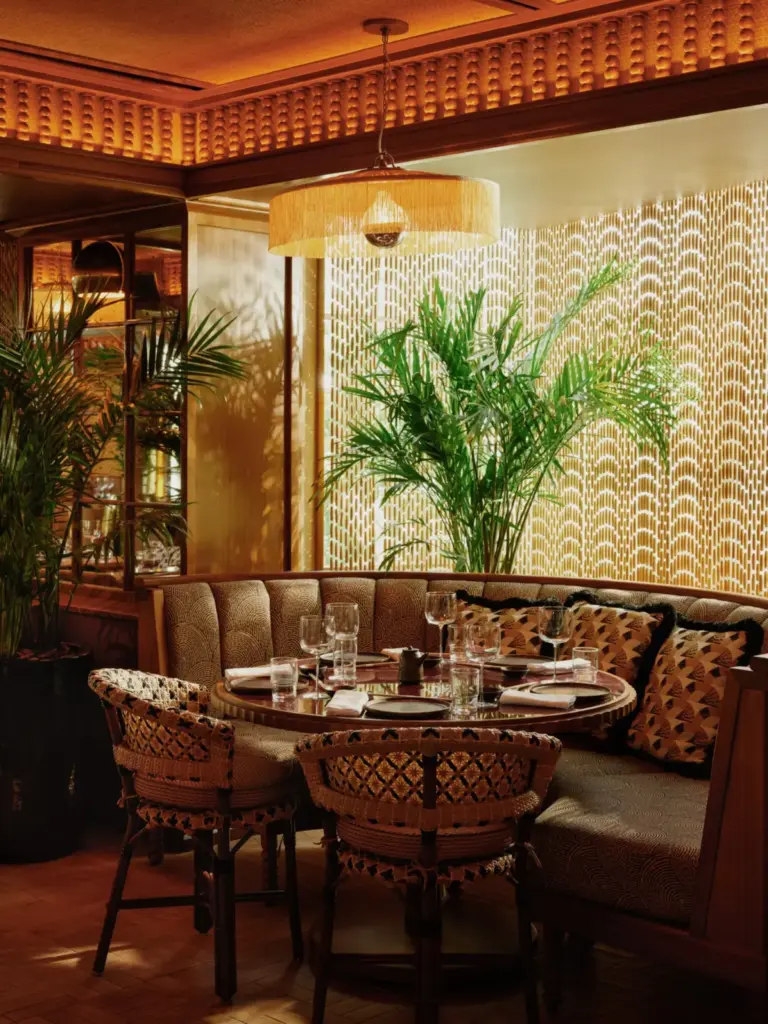
Visitors navigating the 6,500-square-foot interior are immediately greeted by a sophisticated architectural composition. The space is organized into thoughtfully scaled dining rooms featuring intimate seating areas defined by worn leather upholstery, inviting guests to comfortably settle into their surroundings. Overhead, a curved, vaulted ceiling integrated with an advanced acoustical system by Baswa Acoustics serves a dual purpose. Not only does it soften the ambient noise of a busy, bustling dining environment, but it also contributes significantly to the interior’s organic spatial rhythm, mimicking the rolling topography of wine country hillsides.

The color palette deployed throughout Napa Bistro and Wine Bar draws directly from three foundational influences: the verdant, vine-covered hills of the Napa Valley, the rich and expressive warmth of 1970s interior design, and the refined, timeless character of a Parisian brasserie. Deep greens and warm wood tones form the heavy base of the palette, accented purposefully by shades of amber and bronze. These metallic and earthen hues evoke the visual richness of aged wine without leaning into pastiche or feeling dated. Grounding the entire spatial experience are classic black-and-white tiles from Daltile’s Keystone collection, which provide a striking mosaic floor pattern that contrasts sharply against the softer, more natural materials found at eye level.
For De Camps and King, every single design decision—spanning the foundational architecture, the selection of tactile materials, the curation of artwork, and the overarching guest experience—is intended to support a deeper, more meaningful appreciation of food, wine, and the historical milestones that inspired the brand’s identity. This narrative depth is particularly evident in the restaurant’s custom artistic installations.

Chief among these is a breathtaking custom stained-glass installation crafted from hand-blown rondels. Directing a clear nod to 1970s glasswork traditions, the installation is ingeniously shaped in the form of a wine bottle punt—the indentation found at the bottom of a wine bottle. This piece is complemented by custom lighting, delicate linen pendant fixtures, and sculptural chandeliers that are strategically arranged to work in harmony with natural daylight while cultivating intimate, moody vignettes as the sun sets over Charlotte.
The commitment to storytelling and community connection extends directly to the artwork lining the walls. A series of distinctive photographs and digital pieces by California-based artist Julia Crane are seamlessly intertwined with works by local creatives from Charlotte. This blending of distant inspiration with local talent anchors the restaurant firmly in its host city, ensuring that the physical materiality tells a compelling story that reaches far beyond the contents of the printed menu.

Ultimately, Napa Bistro and Wine Bar Stonecrest is built around the ethos of the event that inspired it—a global wine competition that fundamentally shattered preconceived notions about what Californian wines could achieve. By translating that historical spirit of disruption into architectural and interior form, FictionWorks has created a space that honors the past while reimagining it for a contemporary audience. As Andrea De Camps and Olivia King emphasize, that spirit of transformation shaped every single aspect of the design, resulting in a venue that challenges expectations and establishes a new benchmark for dining environments in the Southeast.