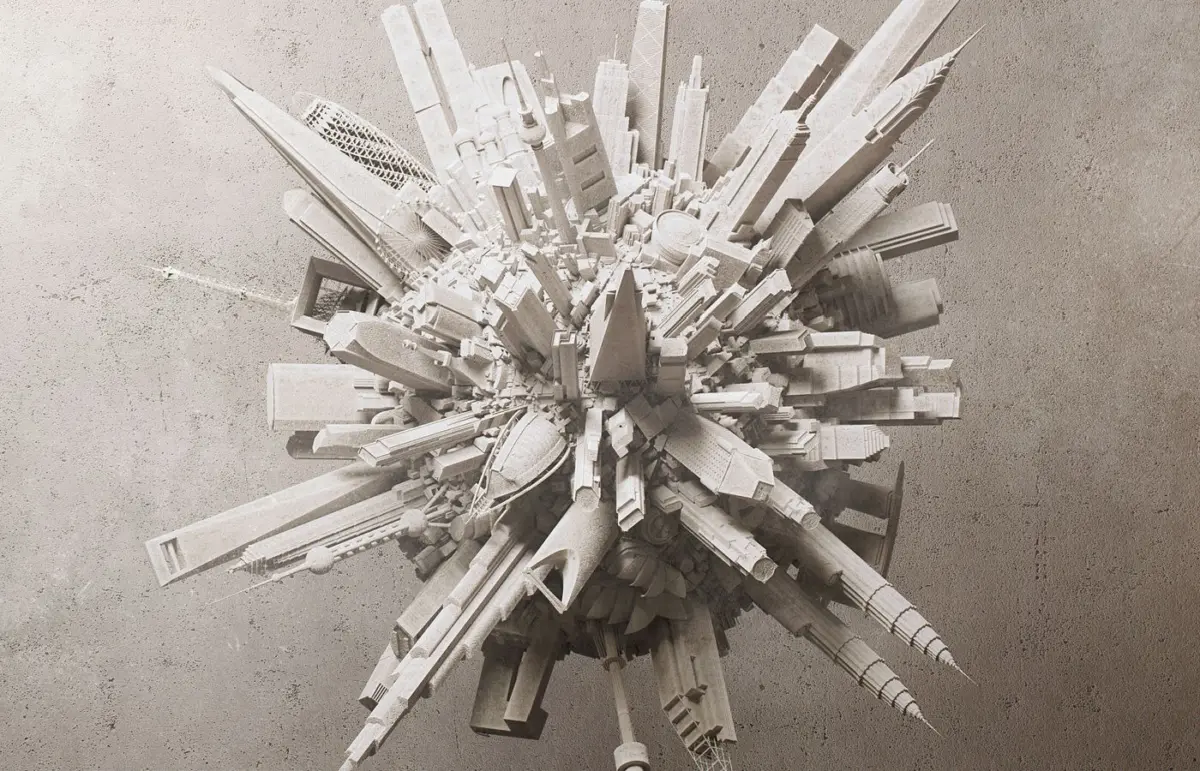
Cities used to grow by accident. Historically, a location usually made sense for pragmatic reasons—someplace defensible on a hill or an island, near an extractable resource, or at the confluence of two transport routes. But what happened next was almost entirely ad hoc. The people who worked in the fort, the mines, the port, or the warehouses needed places to eat, sleep, and worship. Infrastructure threaded through the hustle and bustle—water, sewage, roads, trolleys, gas, and electricity—in vast networks of improvisation. While history contains planned exceptions such as Alexandria, Roman colonial towns, certain districts in major Chinese cities, and Haussmann’s Paris, urban growth for the most part was driven by happenstance, luck, and layering the new on top of the old.

At least, that is the way things worked for most of human history. Around the second decade of the 20th century, however, things changed. Cities started to happen on purpose. Beginning with New York City’s landmark zoning laws in 1916, development began to occur by commission rather than omission. Laws and regulations dictated the shape of the architectural envelope, and functional decisions increasingly determined aesthetic outcomes—not always for the best.

Today, a century after human beings started putting their minds toward designing cities as a whole, urban design is entering a golden age. High-tech materials, sensor networks, new science, and better data are allowing architects, designers, and planners to work smarter and more precisely. Urban centers are becoming more environmentally sound, more engaging, and more visually striking. This transformation comes just in time, as a majority of human beings now live in cities rather than rural areas. From the intricate detail of a new streetlight to a sacred city in flux, masterful museums, and infrastructure engineered specifically for bicycles, the cities of tomorrow may still assemble haltingly, but when done right, the process is no longer accidental. Every block, building, and brick represents innumerable decisions, and when decided well, cities become magic.

LA Goes LED and Gets Connected
Los Angeles is retrofitting 4,500 miles of orange-yellow sodium-vapor streetlights with a moonlight-hued matrix of light-emitting diodes. While roads will look visibly brighter, they will also be far more connected. Every energy-efficient lamp links wirelessly to the Bureau of Street Lighting, giving headquarters real-time status updates on whether a light is active, offline, or broken. Future iterations may feature lights that change in response to their immediate surroundings, blinking to signal an approaching police car or ambulance, or brightening for pedestrians dispersing from a major sporting event. While other cities use LEDs primarily to save money or add splashes of color, LA is building a network that communicates data about the entire urban ecosystem.

An Airport Within an Airport for Elite Fliers
More than 70 million people passed through Los Angeles International Airport in 2014, navigating a jet-lagged gauntlet of luggage and travelers. LAX subsequently embarked on an $8 billion overhaul encompassing everything from concession areas to moving walkways. Delta Air Lines contributed $229 million to revamp Terminal 5, introducing Delta One—an exclusive lounge environment catering to celebrities and wealthy travelers. Upon arrival, a curbside attendant verifies credentials in a velvet-rope-style screening before guests retire to a private lounge. When boarding time arrives, Delta escorts guide passengers up a private elevator and down a dedicated corridor directly to the front of a priority security checkpoint. Returning passengers can also opt for an express exit via the VIP Select service, which provides a chaperone directly to the tarmac where a hybrid Porsche whisks them across the airfield toward Century Boulevard.

To Beat the Drought, LA Turns to Less-Thirsty Landscapes
The iconic palm trees along Hollywood Boulevard are not native to Los Angeles. As California battles persistent drought conditions, landscape architects are replacing imported plants and water-intensive turf with native, drought-resistant flora. This emerging aesthetic, often called California Dry, relies on creative textures and structures. Traditional lawns are yielding to decomposed granite or mulch, while rocky pathways, planters, and bridges add visual variety. Architectural plants such as pointy foxtail agave and spiraling echeveria are planted in organized rows, complemented by native plants that soften the hardscape with natural color and texture.

A Mobile Opera Cruises Downtown LA
The experimental opera Hopscotch unfolds inside 24 limousines and SUVs traversing downtown Los Angeles, placing audiences knee-to-knee with singers and musicians. Over the course of its autumn run, the vehicles follow three distinct routes tracing a narrative about the search for a lost love. Actors and dancers equipped with wireless microphones perform on sidewalks and passing cars, seamlessly blending high art with everyday city life. Director Yuval Sharon notes that Los Angeles itself functions as the central character. Limited to 96 audience members per performance, attendees step out of vehicles into buildings and public spaces, with each journey revealing a fraction of the narrative’s 36 total chapters.

An Evolving Museum Spirals Between Past and Present
Shanghai’s skyline has exploded upward with skyscrapers in recent years, but the new Shanghai Natural History Museum takes a different architectural approach. Set in a park near the Pudong financial district, the building spirals downward into the earth like an excavation of the city’s pre-urban roots. A central courtyard inspired by the classical water gardens of Suzhou honors ancient Chinese traditions of natural beauty, while a honeycombed glass wall evoking plant cell structures floods the interior with sunlight.

Architect Ralph Johnson of Perkins+Will modeled the building’s sweeping shape on the nautilus shell, a design choice that also serves to manage heavy visitor traffic by guiding crowds down a continuous, chronological ramp exploring life on Earth. Visitors encounter approximately 11,000 specimens, including a towering Mamenchisaurus skeleton and fauna that once inhabited Shanghai’s vanishing wetlands. Modern green climate and water systems, including the cooling courtyard pool, ensure the facility bridges Shanghai’s futuristic ambitions with its ecological history.

Medellín’s New Cable Cars Unify a Fractured City
Nestled in a high Andean valley, Medellín features steep hillside comunas where many of the city’s poorest residents reside. During the 1990s, drug gangs and guerrilla fighters controlled these narrow neighborhoods. As violence receded, residents faced a severe physical barrier: navigating the steep terrain to reach the rest of the city was exceptionally difficult.

Former mayor Luis Pérez proposed an innovative solution to knit the fractured city together: cable cars. Instead of traversing perilous hillsides on foot, residents could board gondolas that soared directly to metro stations. The first Metrocable line opened in 2004, successfully integrating impoverished communities into the broader urban economy by granting reliable access to jobs and opportunities. As citizens from all socioeconomic backgrounds began utilizing the system, public investment in the city’s collective future flourished, sparking a decade of internationally recognized urban planning innovation.

Combining Libraries and Parks into Safe Spaces for All
Following the success of the Metrocable, municipal urban projects director Alejandro Echeverri championed the use of high-quality architectural design in low-income neighborhoods. Echeverri maintained that dignified public transit, cultural events, and well-designed buildings foster psychological inclusion. This philosophy drove the construction of five distinct library-parks surrounded by public greenery, providing historically underserved neighborhoods with safe community spaces. Supplemented by street-level improvements such as tree planting and school renovations, these interconnected projects transformed Medellín through collaborative community planning.

Community Activists Fight Back With Graffiti
Grassroots initiatives have played an equally vital role in Medellín’s revitalization. Local artists and activists, such as Daniel Felipe Quiceno, have led mural projects in neighborhoods like Comuna 13 to cover areas scarred by past violence with historical depictions and memorials. Educational programs and community gardens spearheaded by residents demonstrate that the city’s physical transformation is deeply rooted in neighborhood-level activism and local empowerment.

The Hovenring Lets Cyclists Pedal Over the Traffic Jam
Once a sleepy provincial town, Eindhoven transformed into a major technology and research hub after the Philips family established lightbulb manufacturing there in 1891. To accommodate commuting workers without compromising bicycle safety, the city commissioned design firm ipv Delft to construct the Hovenring. Completed in 2012, this $8 million suspended roundabout features a 1,000-ton steel deck supported by 24 cables radiating from a central pylon. Adorned with LEDs, the elevated structure allows thousands of daily cyclists to bypass ground-level traffic safely and efficiently.

How Saudi Arabia Tried to Prepare for 3 Millions Pilgrims
For five days each year, the annual Hajj pilgrimage increases Saudi Arabia’s population by 3 million people, creating immense crowd management challenges. To protect and accommodate these massive gatherings while respecting Islamic traditions, the government has enlisted world-class architects and designers to upgrade Mecca’s infrastructure.

The 2.8-million-square-foot Hajj Terminal at King Abdulaziz International Airport draws inspiration from traditional Bedouin tents, utilizing Teflon-coated fiberglass roofs and natural ventilation to maintain comfortable temperatures in waiting areas. Underground, a pneumatic waste management system routes 600 tons of daily trash through a network of tubes at 40 miles per hour to a distant disposal station.

At the Masjid al-Haram, architects from Gensler expanded the Great Mosque surrounding the Kaaba by proposing eight-sided, multi-level platforms that improve traffic flow and double capacity without obstructing pilgrims’ spiritual experiences. Meanwhile, in the Mina Valley, a sprawling tent city of more than 100,000 air-conditioned, fireproof fiberglass structures provides temporary lodging, supported by dedicated medical facilities and upgraded transit infrastructure like the multi-level Jamarat Bridge.

Taming a Chaotic Minibus Network With an Orderly Map
Nairobi’s primary public transit relies on privately run minibuses known as matatus. While plentiful and affordable, these ad hoc vehicles lacked standardized schedules or route maps, making navigation difficult for unfamiliar riders. A research team known as Digital Matatus deployed university students with smartphone GPS apps to record routes and stops, subsequently publishing a subway-style transit map. The integration of Nairobi’s matatus into global platforms like Google Maps has successfully brought institutional order to an informal transit network.

Coworking Spaces Deliver Much More Than a Desk and a Phone
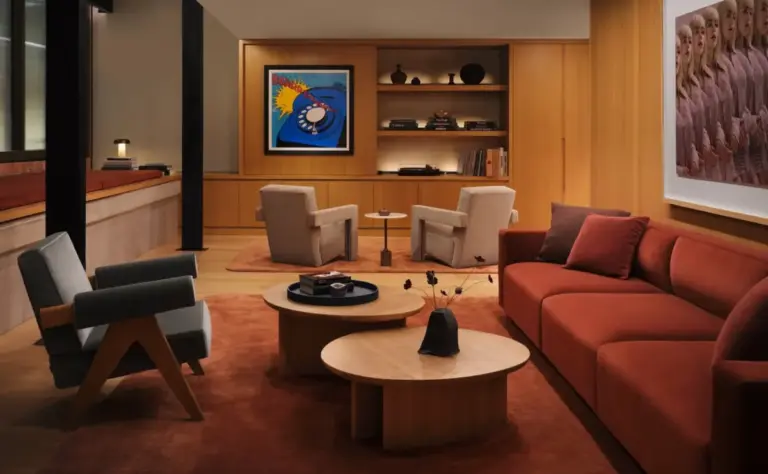
The modern workspace in cities like San Francisco has evolved far beyond traditional corporate offices. Companies like WeWork operate multi-functional coworking environments that offer startups and remote teams flexible leases, communal spaces, and comprehensive amenities. By prioritizing natural light, architectural character, and community networking, these spaces provide independent professionals with agile alternatives to rigid long-term commercial leases.

Dubai’s Turbine Interchange: Where Design and Velocity Intersect
To eliminate severe traffic congestion at a major highway intersection that previously forced drivers to halt before merging onto a roundabout, Dubai officials constructed the Arabian Ranches Interchange. Opened in 2008 after a two-year, $111 million project, the structure utilizes a turbine interchange configuration. Spanning nearly a third of a mile with 11 bridges totaling 1.5 miles, the design allows motorists approaching from four directions to execute continuous high-speed turns and lane changes without weaving through traffic, demonstrating the practical application of advanced civil engineering in modern urban planning.