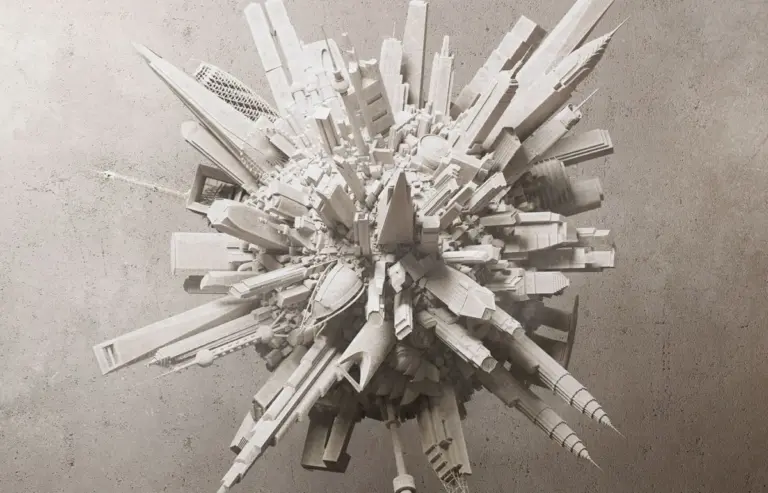
Cities used to grow by accident. Historically, a settlement’s location usually made practical sense—someplace defensible on a hill or an island, near an extractable resource, or at the confluence of transport routes. Yet what happened next was largely ad hoc. The people who worked in the fort, the mines, the port, or the warehouses needed places to eat, sleep, and worship. Infrastructure threaded through the hustle and bustle—water, sewage, roads, trolleys, gas, and electricity—in vast networks of improvisation. While planned exceptions existed, such as Alexandria, Roman colonial towns, certain districts in major Chinese cities, and Haussmann’s Paris, the development of human habitation was mostly a matter of happenstance, luck, and layering the new on top of the old.

For most of human history, that was simply the way things worked. But around the second decade of the 20th century, cities started to happen on purpose. Beginning with New York City’s pioneering zoning laws in 1916, development began to occur by commission rather than omission. Laws and regulations dictated the shape of the architectural envelope, while functional decisions increasingly determined aesthetic outcomes—not always for the best.

Today, a century after human beings first turned their collective minds toward designing cities as integrated wholes, urban planning is entering a golden age. High-tech materials, sensor networks, emerging sciences, and superior data analytics are empowering architects, designers, and planners to work with unprecedented intelligence and precision. Consequently, global cities are becoming more environmentally sound, more engaging, and more visually striking. This transformation comes just in time, as a majority of the human population now resides in urban environments rather than rural ones.

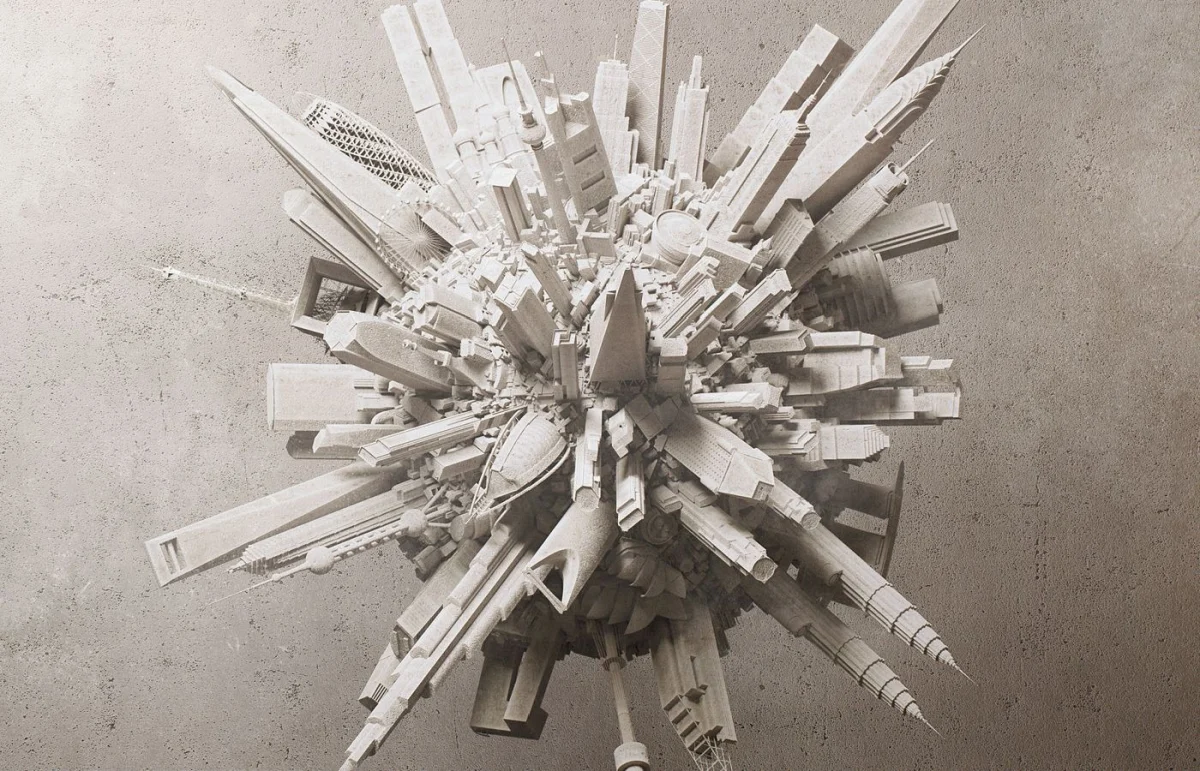
Examining projects ranging from intelligent streetlights to sacred cities in flux, from masterful museums to bicycle infrastructure governed by sophisticated algorithms, it is clear that the cities of tomorrow may still self-assemble, but the process is no longer accidental. Every block, every building, and every brick represents innumerable deliberate choices. Done right, the modern city is a masterpiece of intentional design.

LA Goes LED and Gets Connected
Los Angeles is systematically retrofitting 4,500 miles of orange-yellow sodium-vapor streetlights with a moonlight-hued matrix of light-emitting diodes. While roadways will appear noticeably brighter, they will also become part of an interconnected digital nervous system. Every energy-efficient lamp links wirelessly to the Bureau of Street Lighting, transmitting real-time operational status back to headquarters. Future iterations promise lights that dynamically respond to their environment, blinking to signal the approach of emergency vehicles or brightening automatically to accommodate pedestrians leaving a major sporting event. While municipalities worldwide utilize LEDs to reduce costs and add flashes of vibrant color, Los Angeles is building an integrated network that reveals operational insights about the entire metropolitan area.

An Airport Within an Airport for Elite Fliers
More than 70 million travelers passed through Los Angeles International Airport, navigating a jet-lagged gauntlet of wheeled luggage and neck pillows. To combat this friction, LAX initiated an $8 billion overhaul encompassing everything from expanded concessions to modernized moving walkways. Delta Air Lines contributed $229 million to completely rework Terminal 5, introducing Delta One—an exclusive sanctuary that functions as an airport within an airport, catering directly to celebrities and wealthy travelers.

Upon arrival, passengers are greeted by a curbside attendant reminiscent of a velvet-rope entrance. Following check-in, guests retreat to a private lounge before a dedicated escort guides them up a private elevator and down a secure corridor straight to the front of the line at priority security. For returning travelers, an express exit option via the VIP Select service provides a private escort to the tarmac, where a hybrid Porsche whisks them across the airfield directly to Century Boulevard.

To Beat the Drought, LA Turns to Less-Thirsty Landscapes
The iconic palm trees lining Hollywood Boulevard are not native to Los Angeles. As California endures historic droughts, landscape architects are replacing imported flora and water-intensive turf with native, drought-resistant vegetation. Dubbed "California Dry," this aesthetic movement relies on creative textures and architectural shapes. Green lawns are giving way to decomposed granite and mulch, while rocky pathways, raised planters, and bridges add visual variety. Architectural plants like pointy foxtail agave and spiraling echeveria are planted in organized rows, complemented by native shrubs that soften the hardscape with natural color.

A Mobile Opera Cruises Downtown LA
For the experimental opera Hopscotch, audiences sit knee-to-knee with vocalists and musicians inside 24 limousines and SUVs traversing downtown Los Angeles. Over a multi-week run, the vehicles navigate three distinct routes following a narrative about a search for lost love. Actors and dancers equipped with wireless microphones perform on sidewalks and passing cars, seamlessly blending high art with the daily ballet of urban life. With audiences capped at 96 people per performance, attendees periodically exit the vehicles to enter buildings and public spaces, experiencing individual chapters of a 36-part story.

An Evolving Museum Spirals Between Past and Present
Shanghai has seen skyscrapers shoot skyward in recent years, yet the city’s new Natural History Museum takes the opposite approach. Located in a park near the Pudong financial district, the building spirals downward into the earth, evoking an excavation of pre-urban history. Inspired by Suzhou water gardens, a central courtyard brings natural beauty indoors, while a honeycombed glass wall mimicking plant cellular structures floods the interior with sunlight.

Designed by architect Ralph Johnson of Perkins+Will, the nautilus-inspired shape serves a dual purpose: controlling heavy crowds by steering visitors down gentle, descending ramps. Along this chronological tour of life on Earth, guests encounter approximately 11,000 specimens, including a towering Mamenchisaurus skeleton. Advanced green climate and water systems, including the cooling courtyard pool, ensure the museum balances Shanghai’s forward-looking futurism with a deep respect for natural history.

Medellín’s New Cable Cars Unify a Fractured City
Nestled in a high Andean valley, Medellín historically forced its poorest residents into precarious hillside settlements known as comunas. During the 1990s, drug cartels and guerrilla fighters dominated these narrow streets. When the violence eventually receded, residents faced a severe mobility crisis.

To bridge this geographic and social divide, city leaders introduced an innovative transit solution: cable cars. Opening in 2004, the Metrocable system allowed residents to bypass perilous hillsides and soar directly to metropolitan rail stations. By integrating marginalized populations into the broader economic life of the city, the system drastically reduced crime in connected areas and fostered a renewed sense of civic investment, sparking a global renaissance in urban planning.

Combining Libraries and Parks into Safe Spaces for All
Building upon the success of the Metrocable, municipal officials leveraged architectural design to address deep-seated urban challenges in low-income neighborhoods. Recognizing that dignified public spaces generate feelings of social inclusion, the city constructed five striking "library-parks" surrounded by verdant greenery. Complementing these cultural hubs with tree-planting initiatives and modernized schools, urban planners transformed neighborhoods block by block through deeply collaborative community engagement.

Community Activists Fight Back With Graffiti
Grassroots efforts have played an equally vital role in Medellín’s revitalization. In Comuna 13, local artists and activists known as Graffitour organizers have transformed once-dangerous streets into vibrant open-air galleries. By covering neglected walls with murals that depict local history and memorialize lost friends, alongside establishing community gardens, residents have reclaimed their neighborhoods from the ground up.

The Hovenring Lets Cyclists Pedal Over the Traffic Jam
Once a sleepy provincial town anchored by the Philips lighting company, Eindhoven has evolved into a bustling technology hub. To accommodate commuters without compromising bicycle safety, the city commissioned design firm ipv Delft to build the Hovenring. Completed in 2012, this $8 million infrastructure project features a 1,000-ton steel deck suspended by 24 cables from a central pylon. Illuminated by LEDs, the circular floating bridge separates cyclists from high-speed vehicular traffic while maintaining gentle slopes on its approach ramps.

How Saudi Arabia Tried to Prepare for 3 Million Pilgrims
For five days annually, the population of Saudi Arabia swells by three million people during the Hajj pilgrimage to Mecca. To manage these massive crowds safely, the Saudi government has partnered with leading architects to implement advanced infrastructural solutions.

Key developments include the Hajj Terminal at King Abdulaziz International Airport, whose Teflon-coated fiberglass roofs mimic Bedouin tents while providing natural ventilation. Beneath the surface, an underground network of pneumatic tubes quietly disposes of 600 tons of daily trash, sucking refuse at 40 miles per hour through tunnels leading to distant processing stations.

At the heart of the pilgrimage, the Great Mosque of Mecca has undergone massive expansion. Architects proposed innovative multi-level platforms surrounding the sacred Kaaba to double crowd capacity while preserving historical sight lines and pedestrian traffic flow. Meanwhile, in the Mina Valley, a sprawling tent city featuring over 100,000 air-conditioned, fireproof fiberglass structures is safeguarded by permanent hydrants and dedicated medical facilities. For the final rituals, the multi-level Jamarat Bridge helps streamline the movement of pilgrims performing the stoning of the devil, mitigating the historical risks of dangerous crowd crushes.

Taming a Chaotic Minibus Network With an Orderly Map
In Nairobi, the primary mode of public transit consists of privately operated minibuses known as matatus. While plentiful and affordable, their ad hoc routes and schedules historically made navigation difficult and unpredictable.

To bring order to this informal transit system, researchers and designers launched Digital Matatus, deploying university students with smartphones to map routes and stops. By publishing a standardized, subway-style map and integrating the network into global platforms like Google Maps, the project has legitimized the informal transit fleet, empowering riders—particularly women traveling at night—to navigate the city safely and efficiently.

Coworking Spaces Deliver Much More Than a Desk and a Phone
The modern concept of an office continues to evolve rapidly. Companies like WeWork have transformed traditional commercial real estate by offering full-service coworking environments tailored to startups and remote teams. By emphasizing natural light, open-plan communal zones, private rooms, and flexible leasing agreements, these spaces foster spontaneous networking and collaboration, shifting the workplace culture away from isolated cubicles toward vibrant, community-driven ecosystems.

Dubai’s Turbine Interchange: Where Design and Velocity Intersect
To eliminate severe bottlenecks at a major highway intersection that previously forced drivers to halt before merging onto a roundabout, Dubai officials implemented a modern turbine interchange. Constructed over two years and opened in 2008, the 1.5-mile network of 11 bridges allows motorists traveling from four directions to execute turns without slowing down or weaving across lanes. Featuring rotational symmetry and requiring fewer vertical tiers than traditional stacked interchanges, the design offers high-speed, high-capacity traffic flow suited to the region’s expansive geography.