In contemporary furniture design, the holy grail of aesthetic assembly has long been invisibility. Designers routinely spend countless hours engineering hidden fasteners, invisible dowels, flush welding seams, and proprietary interlocking mechanisms that promise a seamless, monolithic appearance. The ultimate compliment for a piece of flat-pack or modular furniture is often thought to be that it looks as though it was carved from a single, uninterrupted block of material, completely masking the technical challenges of its creation.
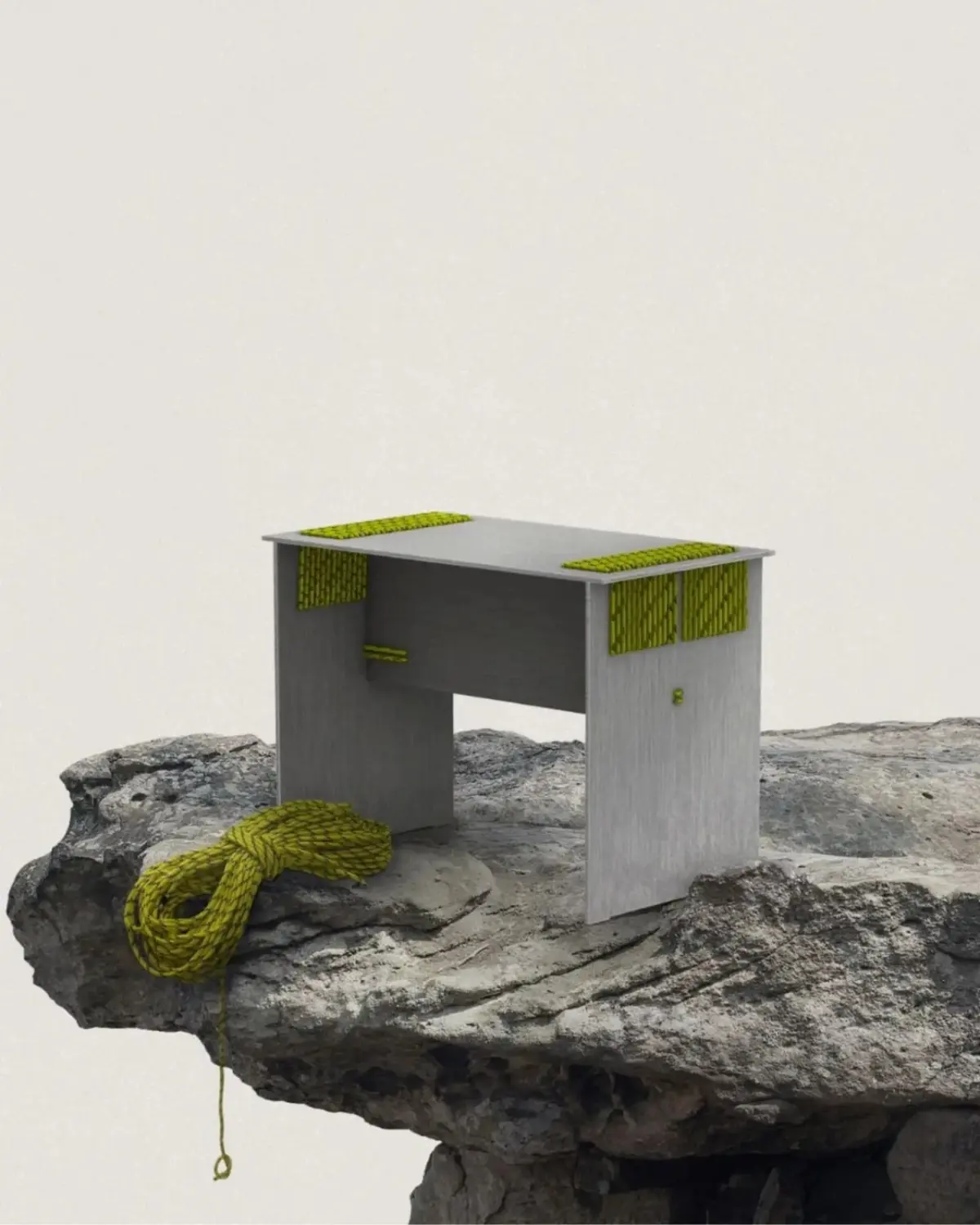
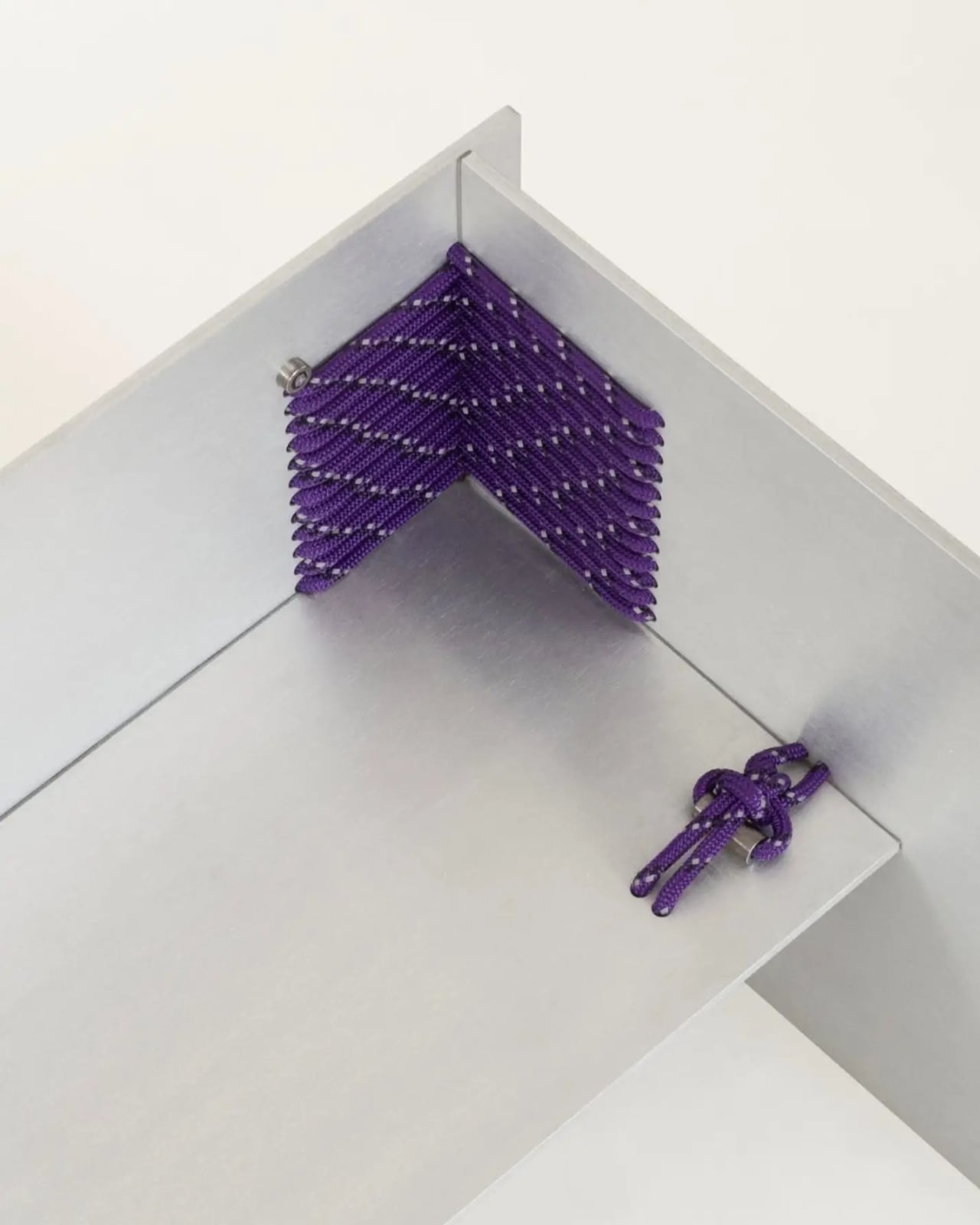
The Knot Stool, a striking collaborative piece designed by Studio Yann Gandon in partnership with Maxime Sauce, decisively rejects this prevailing design philosophy. Instead of burying its structural mechanics beneath sleek plastic end-caps, recessed screw heads, or industrial adhesives, the stool proudly thrusts its construction challenges directly into the spotlight. A small, intentional knot sticks out prominently from the side of the structure, serving as an unvarnished visual signature of how the entire object holds together. It introduces the fundamental engineering puzzle behind the design: how to maintain a rigid, highly functional seat using nothing more than precision-cut metal and tautly pulled cord, turning the connection itself into the primary feature you are meant to notice rather than something to quietly overlook.
At its core, the stool utilizes a thoughtful marriage of materials, pairing laser-cut aluminum components with heavy-duty lashing. The metal provides the rigid seating surface and essential structural supports, while the rope binds the individual pieces together into a cohesive, load-bearing entity. This distinction is crucial to understanding the integrity of the project. The rope is not merely deployed as a crafty surface detail or a decorative afterthought wrapped around an otherwise conventional, screw-assembled stool; it has a fundamental structural job. Without the lashing, the object ceases to function. Recognizing the strength of this concept, Studio Yann Gandon has listed the project for sale, successfully pushing the design out of the realm of purely speculative industrial design concepts and into the commercial sphere.
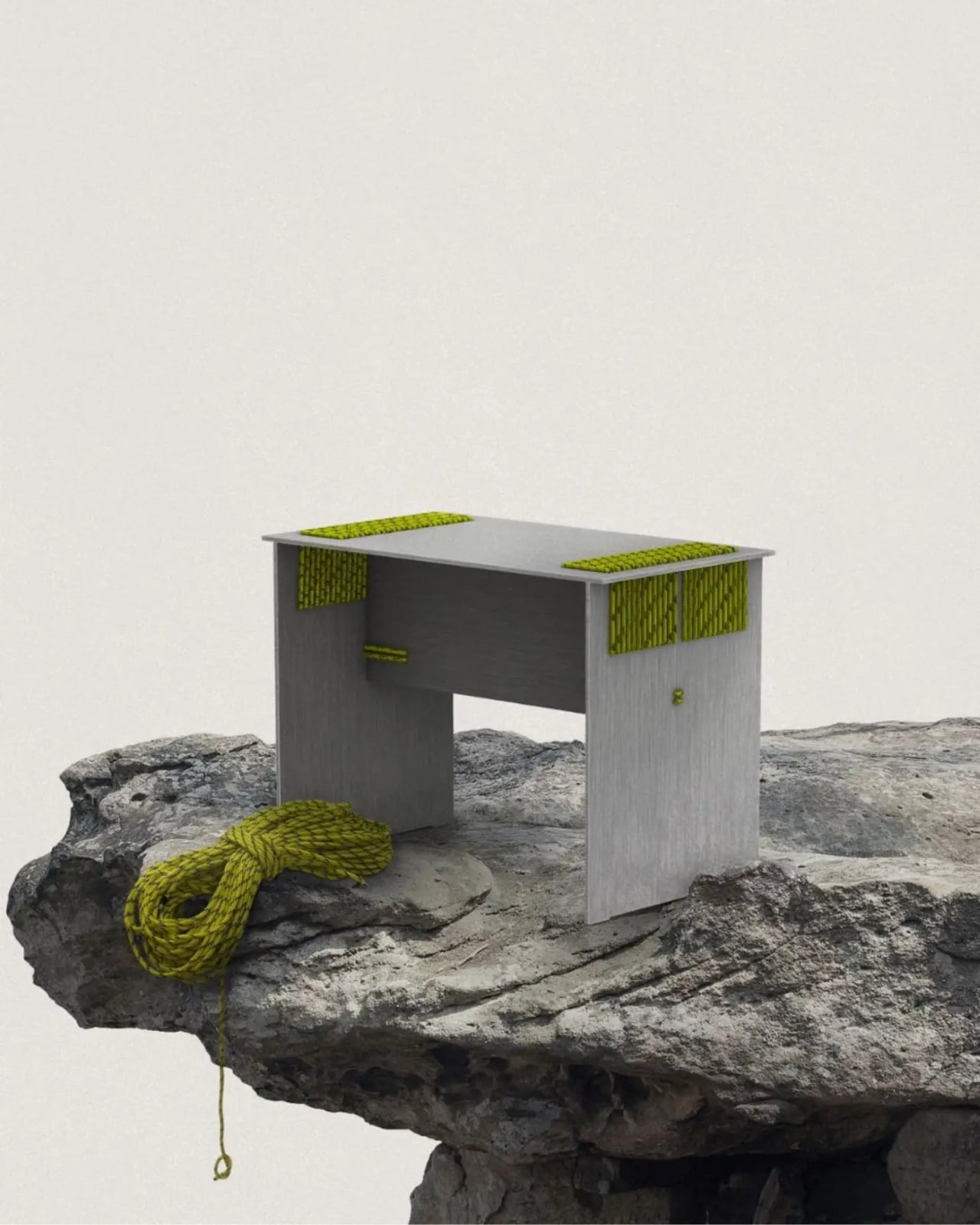
The overall physical silhouette of the Knot Stool is almost stubbornly straightforward, deliberately avoiding unnecessary complexity to keep the focus squarely on its innovative joinery. A clean rectangular top rests above two broad side panels, with an additional supporting panel running directly between them. There are no sweeping, ergonomic curves or superfluous geometric flourishes to distract the eye from the intricate connections. Instead, rows of cord travel horizontally across the top near either end, before continuing cleanly down the sides in dense, orderly bands. From a distance, these tightly wound bands read primarily as solid blocks of rich texture, breaking up the coldness of the metal. Up close, however, the visual narrative shifts, allowing the observer to follow individual strands, trace the path of the lashing, and appreciate the physical tension holding the piece together.
For the finished version, the studio specifies brushed 5754 aluminum, creating a restrained, matte backdrop for the vibrant or muted knotting that secures it. Visually, this pairing evokes the striking imagery of professional climbing equipment translated directly into domestic furniture: flat, industrial metallic surfaces meeting flecked, utilitarian cord that looks entirely ready for a completely different kind of rigorous, real-world work. The core appeal of the object stems precisely from this delightful industrial mismatch. Had the designers chosen to give the metal a more elaborate, sweeping silhouette, it likely would have directly competed with—and ultimately undermined—the intricate rope detailing that makes the stool uniquely worth looking at.
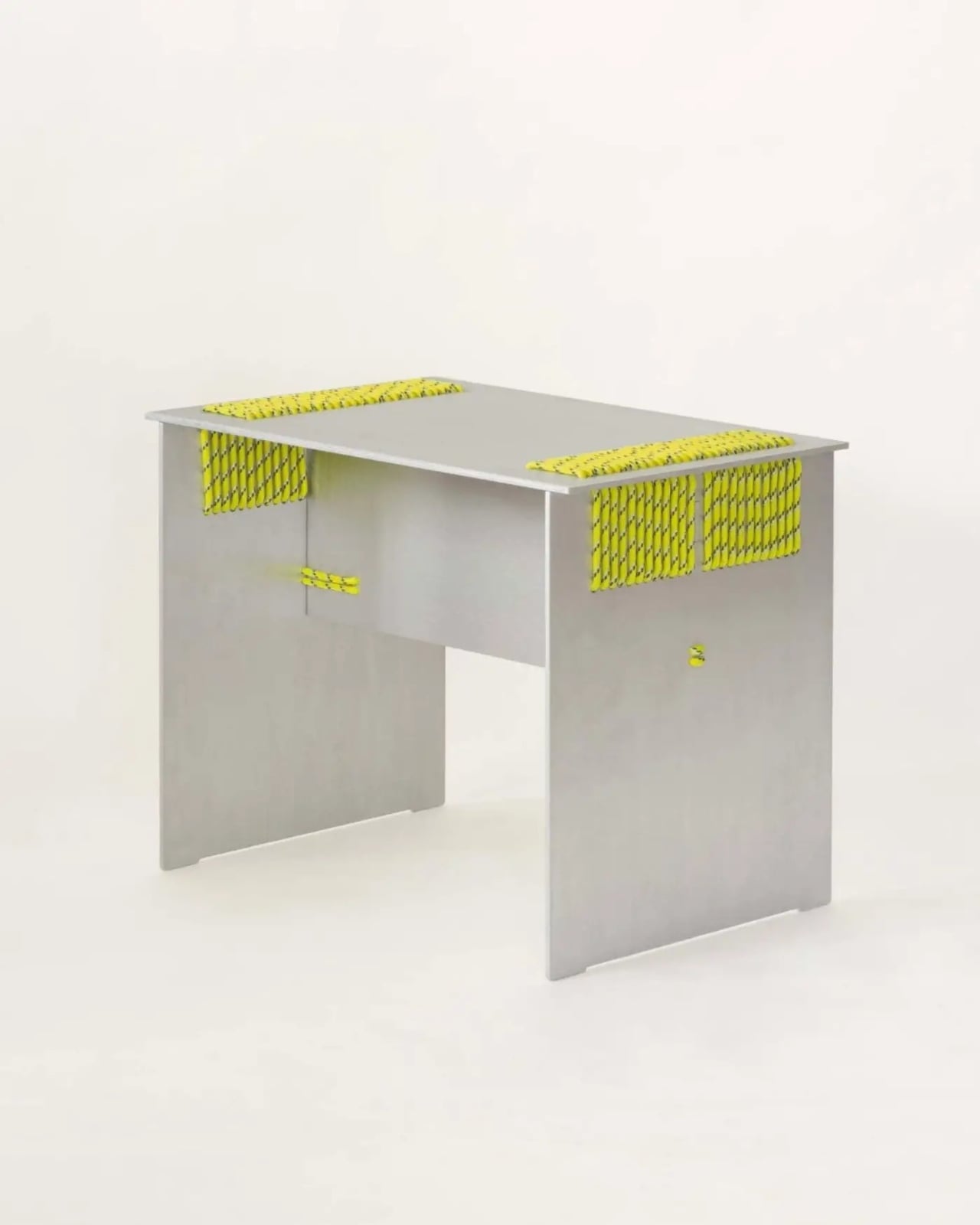
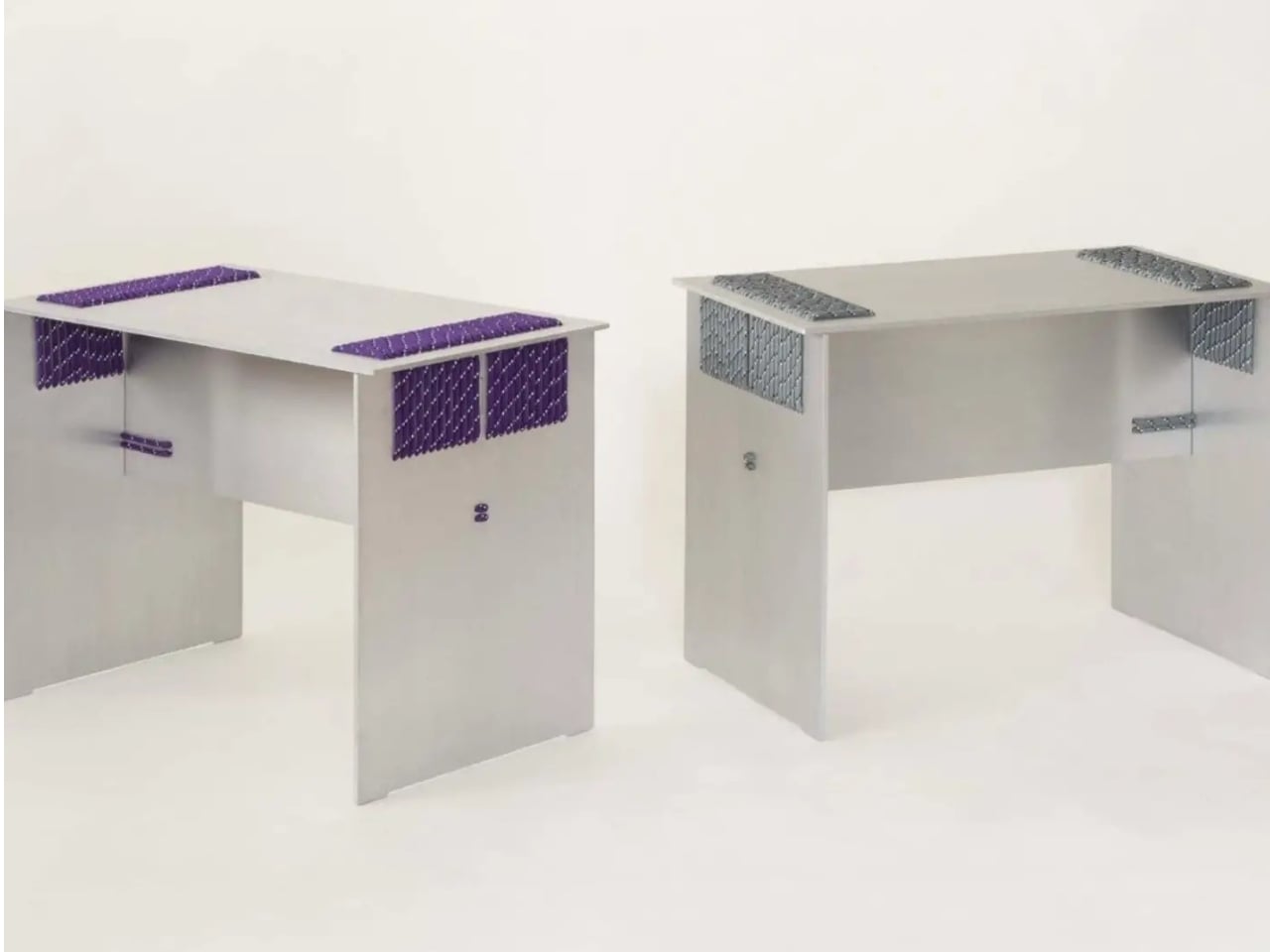
The documented rope options for the stool include striking shades of purple, yellow, and gray, and the official project imagery makes a compelling case for just how drastically color choices can alter the character of the object. Opting for a sophisticated gray keeps the entire assembly close to a unified, monochromatic palette, allowing the individual loops and weaves to register subtly through their natural shadows and contours. Choosing a vibrant purple transforms the stitching into a deeply graphic element, turning the stool into a piece of functional pop art. Meanwhile, yellow—perhaps the most striking choice for a traditionally restrained interior—infuses the stool with the visual language of industrial safety gear, bringing high-visibility utility indoors without masking the underlying properties of the aluminum framework.
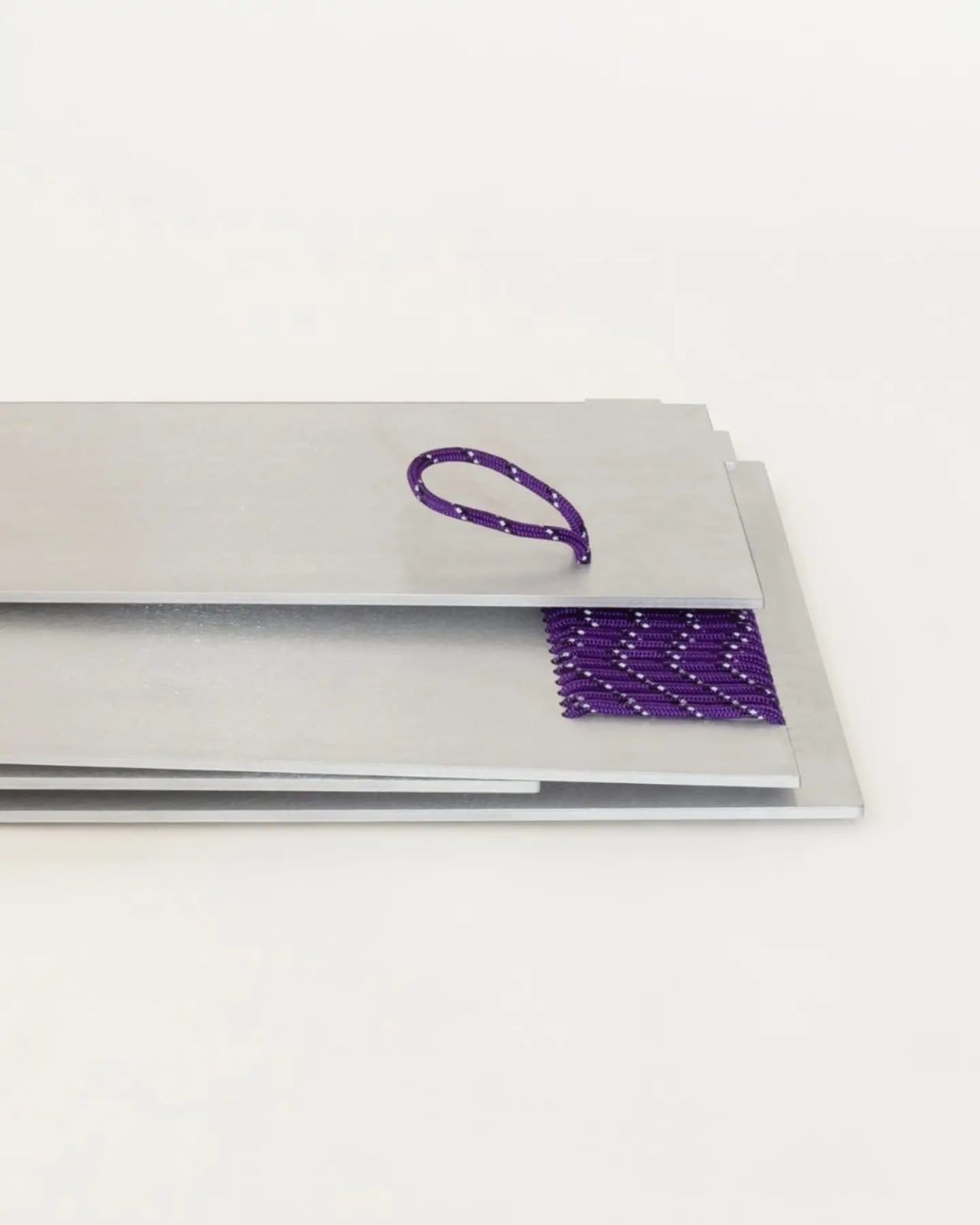
Equally fascinating is a view of the stool’s components neatly stacked flat. The individual metal panels rest in a shallow pile, with sections of rope already pre-threaded into their designated mounting locations. This glimpse into the un-assembled state suggests a remarkably compact packing and shipping arrangement, minimizing the environmental and logistical footprint of transport, although static photographs alone cannot fully reveal how intuitive the final assembly process would be for the end-user. Appreciating this view alongside the polished, finished object enriches the overall experience of the design. It allows the creation to be understood honestly as a collection of individual parts engineered to work in concert, rather than merely presenting a polished silhouette photographed exclusively from its most flattering angles.
Belgian retailer RUIMTE describes the stool as a bespoke, made-to-order piece, offering customization options for both overall dimensions and rope colors. However, its online listing prominently displays a sold-out label, indicating that securing one requires direct communication and confirmation with the producers. This retail context helps accurately frame the nature of the design: this is a highly considered, deliberate furniture purchase intended for design enthusiasts, rather than a quick substitute for the inexpensive extra seat hastily pulled out of a closet when unexpected guests arrive. Its primary attraction relies heavily on the owner’s explicit desire to have the raw mechanics of furniture construction maintain a visible, conversational presence within their living space.
Even so, prospective buyers might naturally seek out practical, everyday answers before integrating such a unique piece into daily domestic life. The studio’s initial project description does not explicitly provide a certified load rating or detailed care instructions for the long-term maintenance of the rope connections. Providing these operational details would certainly help establish how the lashing should be periodically checked, tensioned, or maintained over time as the materials age and settle. Furthermore, while the dense rows of cord add wonderful visual and tactile texture near the edges, the main seating surface remains a largely flat piece of brushed metal. Most design critics and observers would reasonably approach it primarily as striking occasional seating or a sculptural accent piece, rather than assuming it offers the plush, long-term comfort of an overstuffed armchair.
Despite these minor practical questions, the Knot Stool easily earns sustained attention through a series of specific, highly readable design decisions. Observers can look directly at the rope, physically follow its complex route through the metal panels, and immediately begin to understand why it is there and how it holds the structure together. That transparency makes the small, exposed knot far more compelling than a standard ornamental flourish or a concealed fastener. It gives an otherwise ordinary seat a distinct reason to be examined closely from the side, from underneath, and up close. The clever construction successfully rewards human curiosity before anyone even sits down.