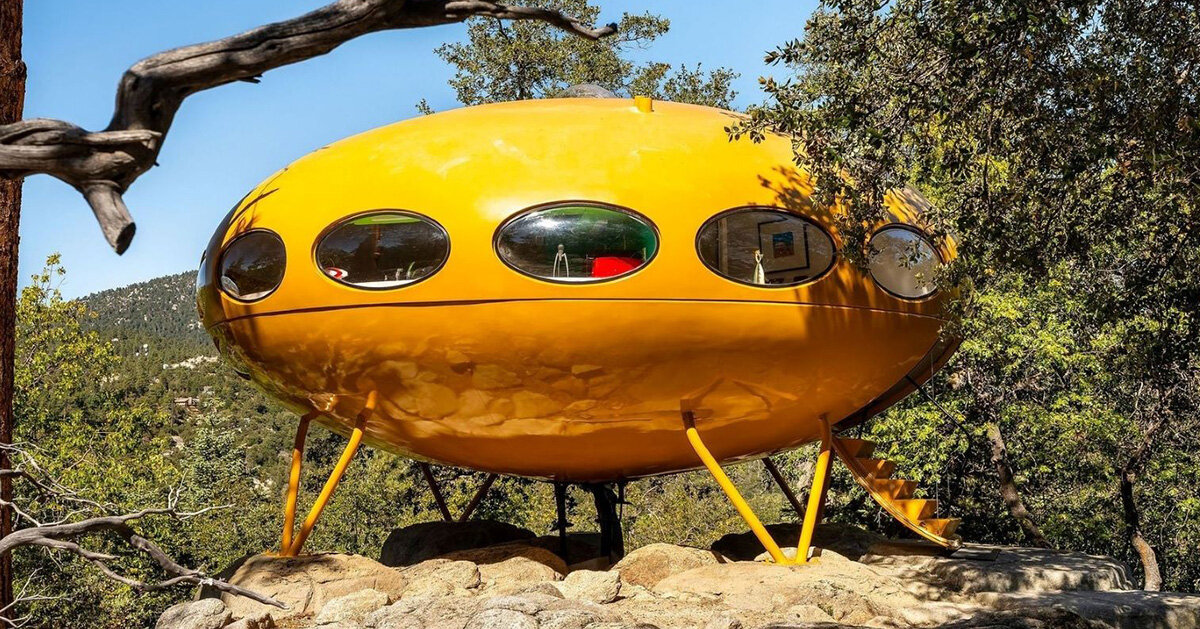
A rare, UFO-shaped Futuro house nestled among the pine trees and rocky terrain of Idyllwild, California, has officially hit the market with an asking price of $1.495 million. Designed by the visionary Finnish architect Matti Suuronen in the late 1960s, the iconic prefabricated dwelling represents a bygone era’s radical optimism, when lightweight synthetic materials and space-age mobility promised entirely new ways to inhabit remote landscapes.
Listed via Desert Sotheby’s International Realty, the distinctive property is owned by noted historic preservationist and former Obama administration appointee Milford Wayne Donaldson alongside his wife, Laurie Donaldson. Locally and historically celebrated as the Donaldson Futuro, the structure holds a prestigious spot on the National Register of Historic Places. This official recognition cements its status as a surviving physical embodiment of an experimental approach to residential architecture that was born from the technological fervor and space exploration boom of the late 1960s.
The Matti Suuronen-Designed House Is Built to Go Anywhere
When Matti Suuronen originally conceived the Futuro, his brief was to design a portable ski cabin that could effortlessly adapt to various difficult topographies. The primary objective was to engineer a lightweight, prefabricated structure that could be constructed off-site in modular components, transported via helicopter, and swiftly bolted together in isolated environments where traditional construction methods would prove impractical or ecologically destructive.
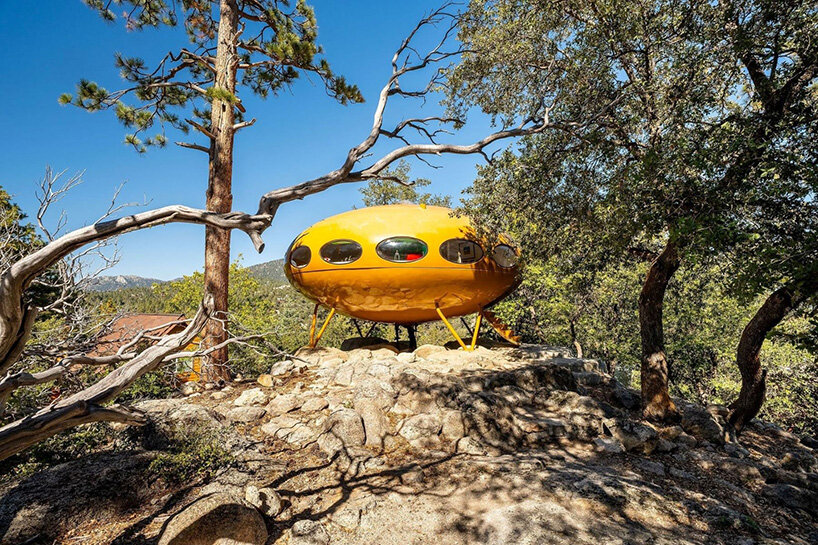
The resulting architectural marvel features an elliptical, bright yellow fiberglass-reinforced polyester plastic shell insulated with polyurethane. This ingenious material combination allowed the structure to be remarkably quick to install and heat, even when deployed in freezing, harsh mountain climates. Rather than requiring extensive, disruptive excavation and permanent foundations, the original conceptual design relied on just four simple concrete piers to safely elevate and support the entire dwelling above the ground.
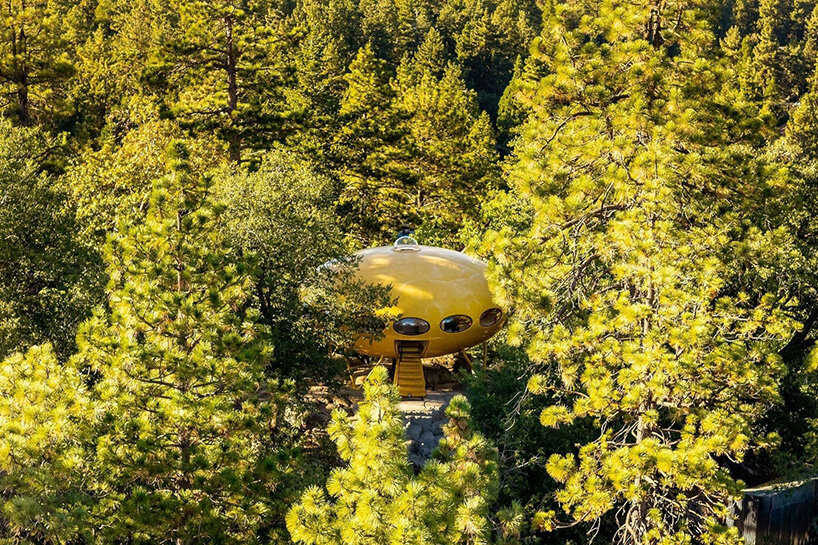
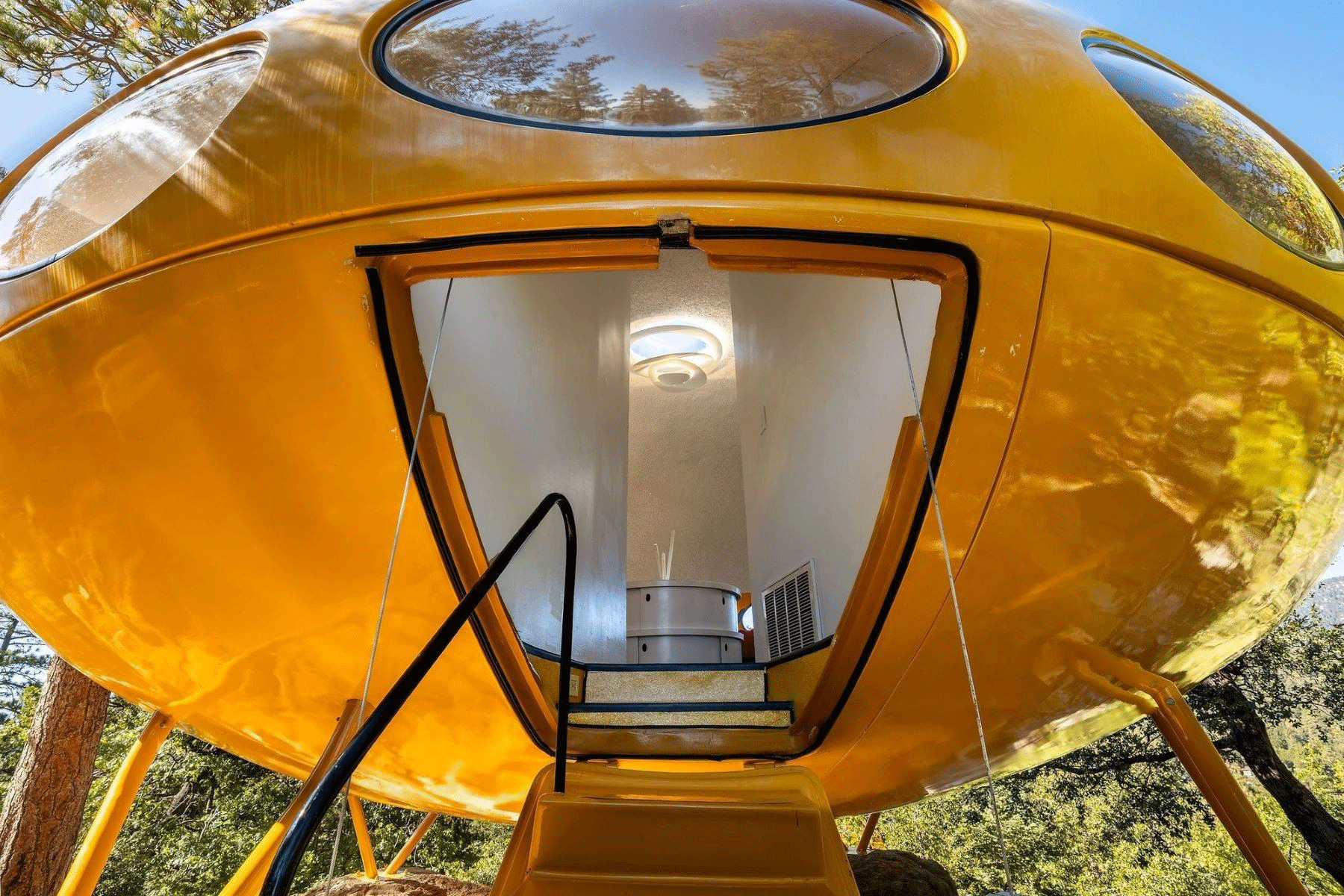
Measuring approximately 8 meters in diameter and 4 meters in height, the Donaldson Futuro provides roughly 73.7 square meters of interior living space. The entire aerodynamic structure weighs an estimated 5,398 kilograms and rests securely on a 0.23-hectare plot of land within the scenic San Jacinto Mountains. Its unmistakable exterior aesthetic is defined by its smooth, glossy curved profile, circular porthole-style windows, and an aircraft-inspired retractable staircase entrance that immediately evokes mid-century science fiction.
Why the Futuro Never Became the House of the Future
Developed during a decade characterized by soaring confidence in industrial manufacturing and mass production, the Futuro offered a compelling alternative to the traditional site-built home. Its creators and supporters envisioned a future where human dwellings could be manufactured on an assembly line, shipped across vast distances, and set down lightly upon the earth without leaving a permanent scar on the landscape.
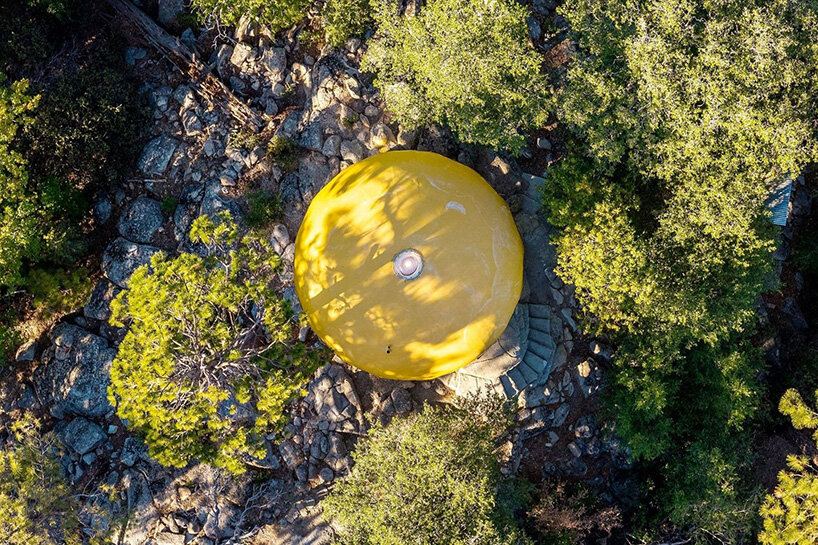
Despite capturing the global imagination, the Futuro ultimately struggled to achieve widespread commercial success or transition into mainstream housing. The design’s radical, extraterrestrial appearance and unconventional plastic composition frequently encountered resistance from conservative local planning commissions, neighborhood associations, and zoning boards. Furthermore, securing conventional mortgages and financing for a plastic, UFO-shaped house proved exceptionally difficult for prospective buyers.
The economic tides turned sharply against the project with the onset of the 1973 oil crisis. As petroleum prices skyrocketed, the cost of producing the necessary synthetic polymers surged, completely undermining the economic viability of plastic architecture. Consequently, historical records indicate that fewer than 100 Futuro houses were ever manufactured worldwide. What began as an ambitious industrial attempt to revolutionize portable living instead devolved into an ephemeral architectural experiment. Today, the few surviving examples are heavily sought after by collectors, architectural historians, and preservationists due to their extreme scarcity and unique cultural footprint.
Preservation, Scarcity, and the Modern Collector’s Market
Over the years, the Donaldson Futuro has undergone meticulous, extensive restoration efforts designed to protect and honor its original 1969 design integrity, authentic materials, and expert workmanship. Because it has been preserved so faithfully, the property serves as a time capsule of a specific historical moment when architects genuinely believed that space-age technology would permanently alter domestic life.
The current listing highlights an inherent tension at the core of the Futuro’s original design philosophy. Conceived primarily as a mass-producible, highly transportable utility cabin capable of occupying any wilderness landscape, it now occupies the opposite end of the spectrum: a rare, highly regulated, and carefully protected artifact of historical significance.
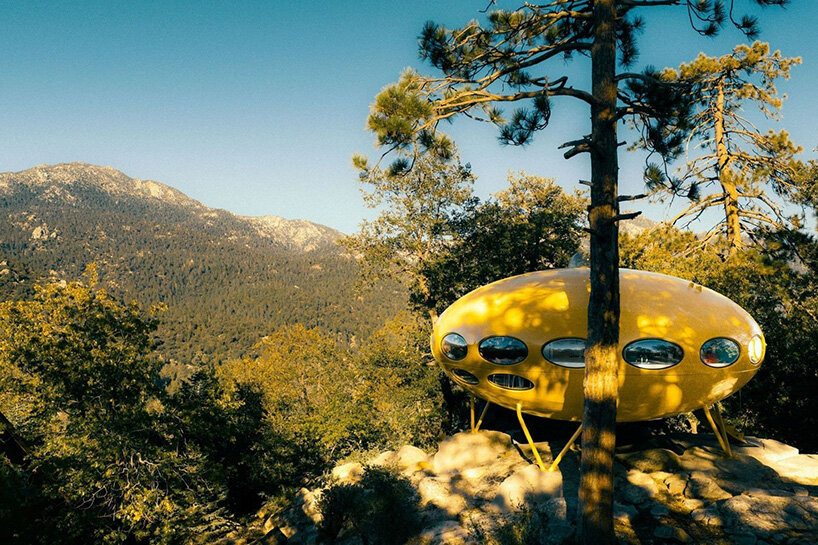
Priced at nearly $1.5 million, the property operates firmly within the collector’s market. It stands as a testament to the fact that architectural experiments which fail to capture mainstream adoption during their own time can eventually accrue entirely new layers of value through sheer rarity, historical recognition, and dedicated preservation. As the Donaldson Futuro seeks its next steward, it remains a striking monument to a mid-century dream of mobility, technological progress, and otherworldly design anchored safely in the mountains of Southern California.