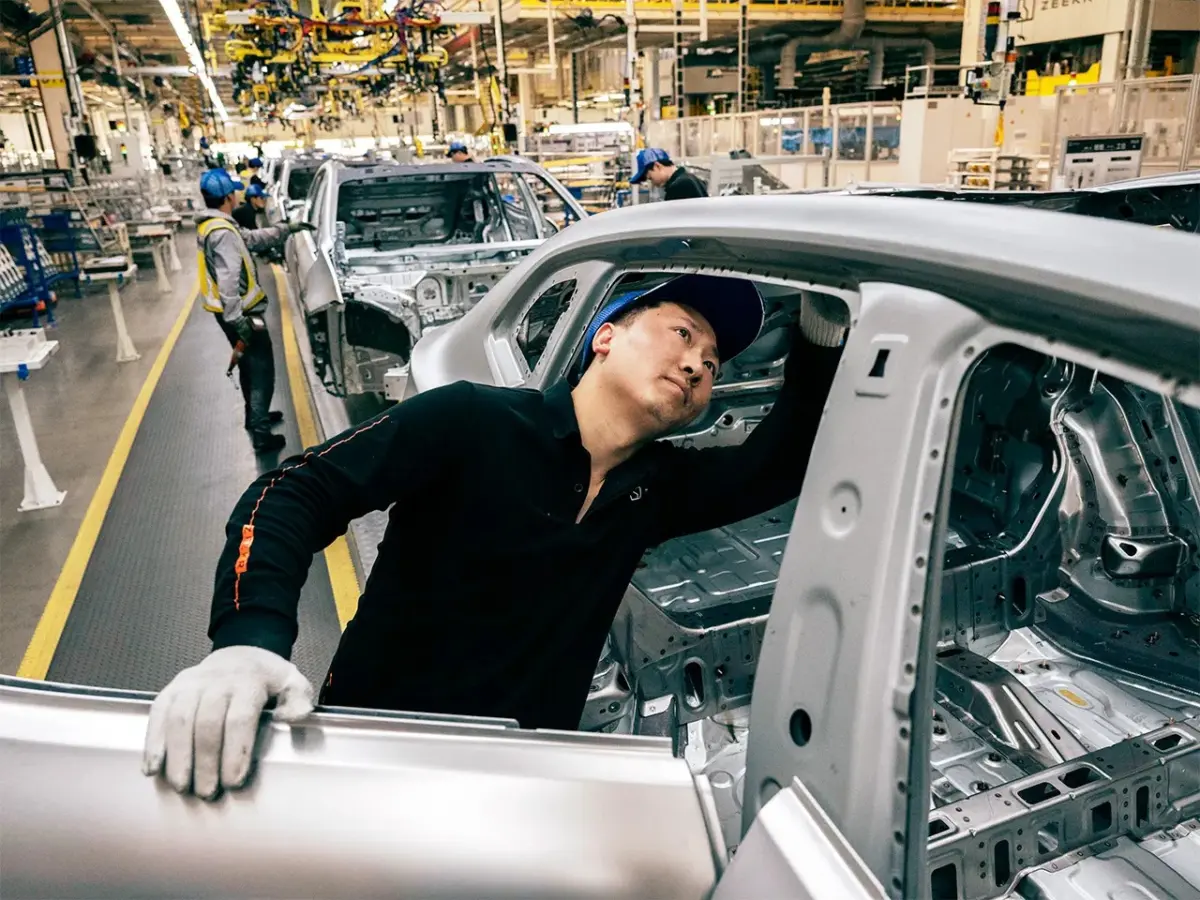
French cars have historically dominated the floors of the Paris Motor Show, standing as proud symbols of national industrial might and engineering heritage. However, as Chinese manufacturers rapidly take over the global automotive industry, Europe is being forced to put its foot hard on the accelerator just to keep up. This shifting balance of power was the undeniable undercurrent at this year’s exhibition, transforming what is usually a celebration of homegrown French manufacturing into a tense examination of competitiveness, market protection, and the future of European mobility.
The Paris Motor Show, formally known as the Mondial de l’Auto, has long served as a vital international showcase for French car manufacturing. French President Emmanuel Macron famously likes to tour the grand exhibition halls when the event comes around every other year, prominently featuring homegrown legacy brands such as Renault and Citroën. This year’s edition was no exception, with political leaders walking the aisles to inspect the latest domestic offerings. Yet, when the show officially opened earlier this week, all anyone could really talk about was the sprawling presence of Chinese marques fanned out across the Paris Expo Porte de Versailles.
The Asian automotive powerhouse arrived in the French capital with a newly minted confidence. This newfound dominance includes remarkable technological advancements in the electric-vehicle space, all offered at price points that have already proven exceptionally attractive to cash-strapped European consumers facing a persistent cost-of-living squeeze. The sleek designs, advanced battery technology, and aggressive pricing strategies of these new arrivals left little doubt among attendees that the traditional hierarchy of the European car market is facing its most serious challenge in decades.
Even so, China might not be racing ahead entirely unchecked, as the geopolitical and regulatory landscape shifts in real-time. This year’s show conveniently opened with a potential get-out-of-jail-free card for European carmakers. Recent intensive negotiations between the European Union and China led Beijing to agree to export quotas for Chinese hybrid vehicles, which have been flooding the European market and disrupting local production ecosystems.
The news was cautiously welcomed by industry insiders and executives whom Monocle spoke to on the ground at the exhibition. Katrin Adt, the CEO of the Renault-owned Romanian brand Dacia, offered a pragmatic perspective on the unfolding situation. “Anyone embraces fair competition,” Adt said during the event. “Pero it’s difficult to compete against competition that might not be fair.” Her sentiment encapsulates the broader anxiety felt across European boardrooms, where legacy automakers are grappling with how to counter rivals who may benefit from state support, overcapacity pressures, and vastly different economic models at home.
The definition of fairness, of course, often depends on who is looking at the ledger. A decade ago, the situation was remarkably different, with the shoe firmly on the other foot. Back then, it was China that sought to tightly limit foreign access to its domestic automotive market, forcing Western companies to enter restrictive joint ventures and partner with local players if they wanted to sell cars to the burgeoning Chinese middle class.
Now, the tables have completely turned. A combination of severe domestic overproduction and an increasingly sluggish domestic consumer market in China is prompting major Chinese automakers to look aggressively abroad for growth. Europe, which once reaped massive profits from exporting and manufacturing cars within China, now finds itself in the defensive position of protecting its own domestic market from external disruption. As he toured the bustling Motor Show, President Macron strongly emphasized the critical importance of keeping manufacturing “Made in Europe” and openly welcomed the recent European Union deal that successfully limits the sheer volume of Chinese hybrid vehicles entering the continent.
Yet, the concepts of “Made in Europe” and “Made in China” are becoming increasingly fluid and intertwined in the modern global economy. This blending of cultures and supply chains was strikingly visible on the exhibition floor. For instance, German designer Stefan Sielaff shaped the luxury vehicles that the Chinese brand Zeekr proudly displayed on its stand. Notably, Zeekr’s exhibition space was situated right near Mercedes-Benz, a pillar of German automotive prestige that is itself approximately 20 percent Chinese-owned.
The depth of Mercedes-Benz’s Chinese financial stake is so profound that it could potentially face unexpected regulatory hurdles elsewhere in the world. Under newly proposed legislation in the United States, foreign companies with significant foreign ownership could face severe restrictions, including potentially being barred from selling vehicles if legislation caps Chinese ownership stakes at 15 percent. This cross-border entanglement illustrates just how complex the global automotive supply chain has become, rendering simple protectionist borders harder to maintain.
China’s agreement to—at least partially—level the playing field through export quotas is undeniably a positive development for European manufacturers, but industry experts warn that it only goes so far. Regulatory shields and political agreements will not solve the fundamental underlying challenge. The European continent also needs to put up a robust commercial fight, proving definitively that it can compete directly with Beijing on both price and technological innovation.
In France, legacy giants like Renault and Citroën have already taken a meaningful step forward by cleverly rewiring their rich historical heritage for the 21st century, blending nostalgia with modern electric utility. Citroën, for instance, has dramatically brought back its decades-old, iconic 2CV model in a playful, highly accessible new style designed to capture the imagination of modern drivers.
“We always want to be a bit experimental, a bit weird,” said chief designer Pierre Leclercq while discussing the reimagined vehicle, which thoughtfully comes equipped with a ready-made picnic basket to emphasize its lifestyle appeal.
Meanwhile, Renault is leaning heavily into its own past by reviving the beloved Twingo model as an affordable urban electric vehicle. Alongside this, its value-focused Dacia brand is successfully laying claim to some of the most competitively priced electric vehicles currently available on the European market, proving that European brands can still deliver high-value options for everyday motorists.
What remains abundantly clear after a walk through the exhibition halls is that Chinese marques are certainly not going away anytime soon. Rather than simply exporting finished products, these companies are increasingly forming deep partnerships with established European names and systematically expanding their manufacturing hubs right into the heart of the vieux continent.
These Chinese market entrants are eager to tap into long-standing European design heritage, engineering expertise, and local supply chains, often outperforming legacy brands in terms of speed to market and technological integration in the process. As the dust settles in Paris, it is evident that European rivals will have to lean on far more than just their own historical prestige and government trade interventions if they hope to successfully respond to this historic industrial shift.