French cars have historically dominated the polished exhibition halls of the Paris Motor Show, standing as proud symbols of national industrial might and engineering heritage. Yet, as the global automotive industry undergoes its most radical transformation in a century, Europe is finding itself forced to put its foot firmly on the accelerator just to keep up. The tables have turned dramatically on the continent, with Chinese manufacturers taking center stage and challenging legacy brands on their home turf.
The Paris Motor Show, traditionally known as the Mondial de l’Auto, remains a vital showcase for French car manufacturing and a fixture of national pride. French President Emmanuel Macron typically enjoys a high-profile tour of the exhibition halls when the biennial event rolls around, and this year’s edition was no exception. However, when the prestigious show opened earlier this week, the primary topic of conversation among industry insiders, journalists, and attendees was not a homegrown French innovation, but rather the formidable presence of Chinese marques fanned out across the Paris Expo Porte de Versailles.
The Asian automotive powerhouse arrived at the exhibition with a renewed sense of confidence, showcasing rapid technological advancements in the electric-vehicle (EV) space. Crucially, these technological strides are paired with consumer-friendly price points that have already proven remarkably attractive to cash-strapped European consumers grappling with high inflation and cost-of-living pressures. The sheer scale and sophistication of the Chinese exhibits underscored a fundamental shift in market dynamics, signaling that foreign challengers are no longer knocking on Europe’s door—they have firmly stepped inside.
Yet, despite the palpable momentum of the visiting brands, China might not be racing ahead entirely unchecked. This year’s motor show opened against the backdrop of a potential get-out-of-jail-free card for European legacy carmakers. Recent high-stakes negotiations between the European Union and China resulted in an agreement in which Beijing consented to export quotas for Chinese hybrid vehicles. These vehicles have been flooding the European market in recent months, undercutting local competitors and sparking intense regulatory debate.
The news of the export quota agreement was met with a mixture of relief and cautious skepticism by European automotive leaders on the ground at the show. The sentiment reflects a broader industry anxiety regarding the terms of engagement in a rapidly globalizing market.
“Anyone embraces fair competition,” said Katrin Adt, CEO of the Renault-owned Romanian brand Dacia, during conversations with reporters at the exhibition. “But it’s difficult to compete against competition that might not be fair.”
Fairness, of course, is very much in the eye of the beholder, and the current geopolitical friction is the result of years of shifting economic power dynamics. A decade ago, the situation was starkly different. Back then, it was China that sought to strictly limit foreign access to its domestic market, compelling Western automotive companies to form joint ventures and partner with local players if they wanted a slice of the booming Chinese consumer base.
Now, the tables have turned entirely. Today, overproduction within China’s borders and an increasingly sluggish domestic market are prompting Chinese automakers to aggressively push their vehicles abroad to absorb excess manufacturing capacity. Meanwhile, Europe—which once profited immensely from exporting and manufacturing cars within China—finds itself in the unfamiliar position of having to protect its own domestic market from external disruption. As President Macron toured the Paris Motor Show, he heavily emphasized the strategic importance of “Made in Europe” manufacturing and publicly welcomed the recent European Union deal that places hard limits on the number of Chinese hybrids entering the continent.
However, defining where Europe ends and China begins has become increasingly complex, as the concept of “Made in Europe”—or indeed “Made in China”—grows remarkably fluid in the modern globalized economy. Economic integration runs deep, creating tangled webs of ownership and design that defy simple protectionist boundaries.
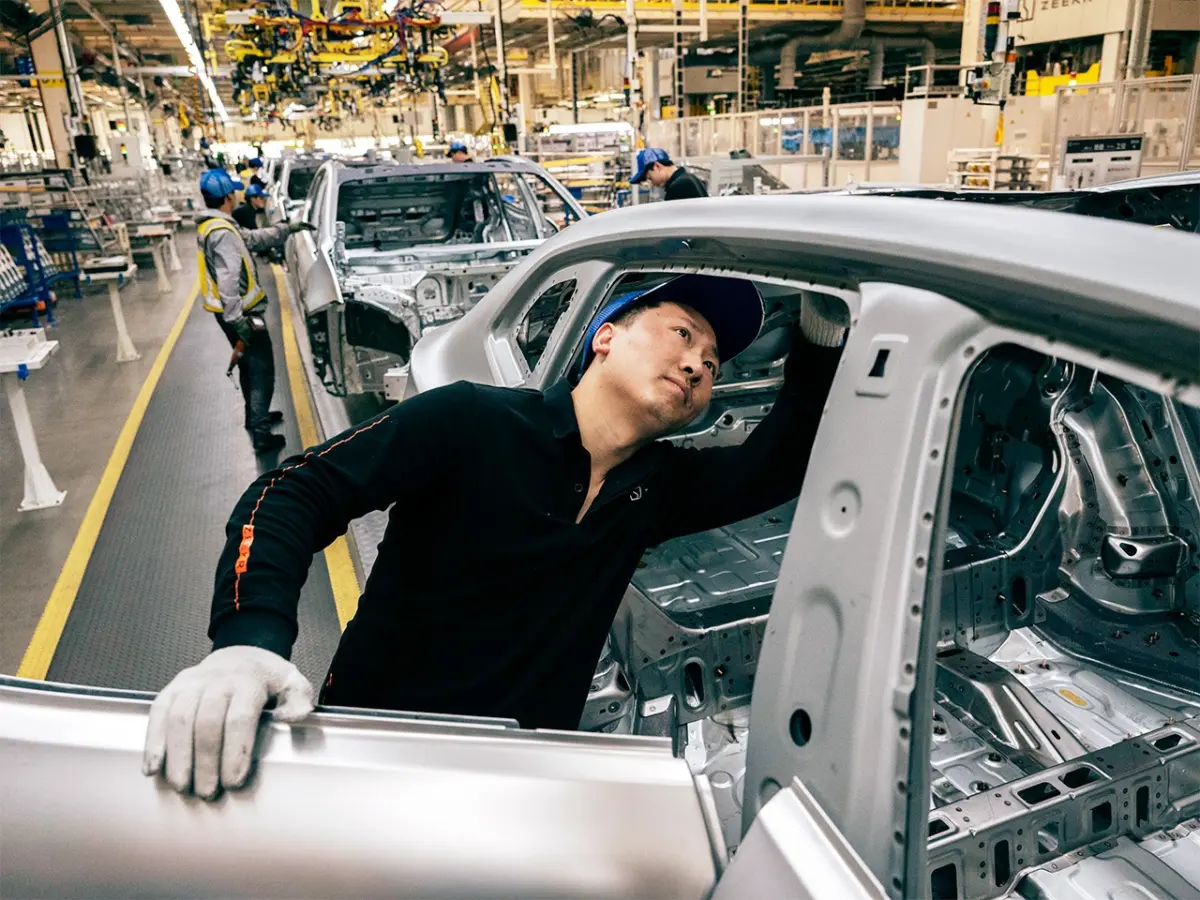
As a striking illustration of this interconnected reality, German designer Stefan Sielaff shaped the luxury vehicles displayed by Chinese brand Zeekr at their exhibition stand. Notably, Zeekr’s stand was positioned right next to Mercedes-Benz—a towering titan of German automotive history that is itself approximately 20 per cent Chinese-owned. The scale of Mercedes-Benz’s Chinese stake is so substantial that the historic German automaker could potentially face complications or even be barred from selling vehicles in the United States under newly proposed legislative measures designed to cap foreign Chinese ownership at 15 per cent.
China’s recent agreement to—at least partially—level the playing field represents a welcome diplomatic development for Europe, but industry analysts agree that it only goes so far. Regulatory shields and export quotas can buy time, but the continent’s legacy automakers ultimately need to put up a serious commercial fight. They must prove beyond doubt that they can successfully compete with Beijing on both pricing and cutting-edge innovation without relying entirely on government intervention.
In France, historic brands like Renault and Citroën have taken tangible steps forward, attempting to rewire their rich heritages for the demands of the 21st century by blending nostalgia with modern electric utility. Citroën, for instance, has cleverly resurrected its decades-old 2CV model, reinterpreting the iconic vehicle in a playful, accessible, and affordable new style designed to capture the public imagination.
“We always want to be a bit experimental, a bit weird,” said chief designer Pierre Leclercq, describing the neo-retro vehicle, which thoughtfully comes equipped with a ready-made picnic basket to emphasize its lifestyle appeal.
Renault, meanwhile, is similarly digging into its archives by bringing back its beloved Twingo model. Alongside its sibling brand Dacia, Renault is actively laying claim to some of the most affordable electric vehicles currently available on the European market, targeting budget-conscious drivers who might otherwise be tempted by cheaper Chinese imports.
What remains abundantly clear as the Paris Motor Show draws attention is that Chinese marques are not a passing trend or a temporary market fluctuation. They are deeply entrenched for the long haul, increasingly forging strategic partnerships with historic European names and aggressively expanding their own manufacturing and assembly hubs directly onto the European continent. These Chinese manufacturers are intensely eager to tap into long-standing European design heritage, engineering expertise, and brand cachet, occasionally outperforming traditional legacy brands in the process.
For Europe’s historic automotive sector, survival will require looking far beyond regulatory trade barriers and corporate history. As the dynamic showcase in Paris has demonstrated, legacy alone will no longer guarantee pole position on the road ahead.