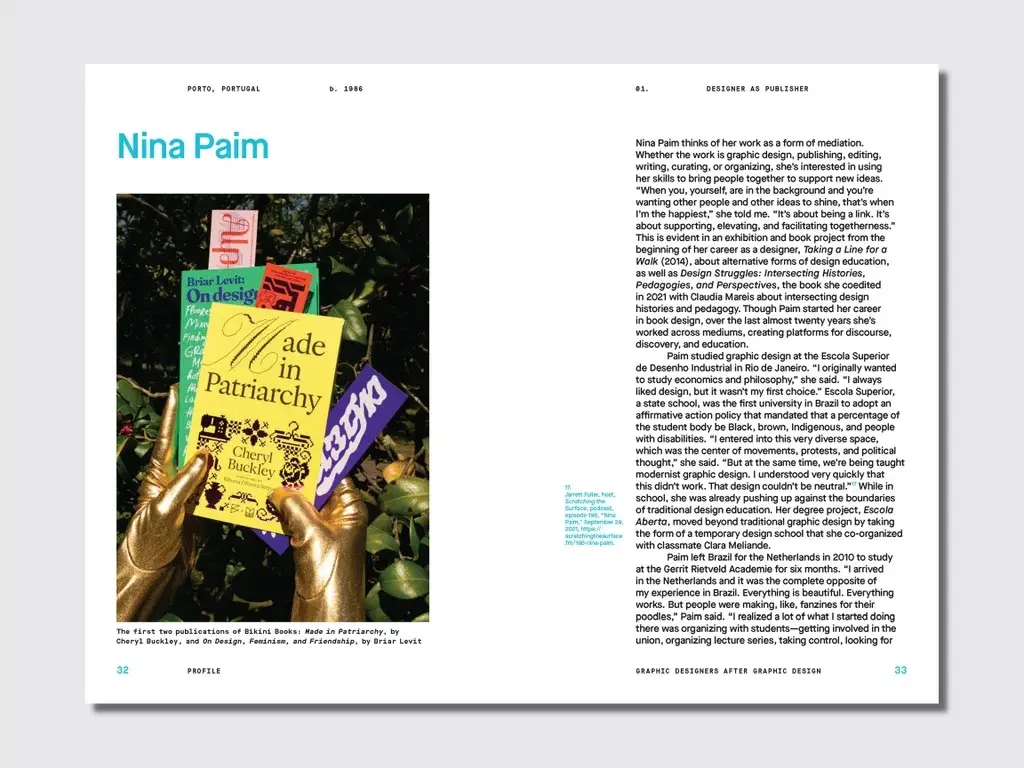
Fuller—a multifaceted practitioner who works as a designer, writer, podcaster, and professor at North Carolina State University—makes a vigorous and uplifting case for an expansive definition of the graphic design discipline. Through a series of insightful conversations with practitioners working across diverse fields such as publishing, research, changemaking, performance, and artistic practice, he argues that graphic design has evolved far beyond its traditional boundaries of producing posters, corporate logos, and static websites.
The release of the book coincides neatly with the tenth anniversary of Fuller’s acclaimed podcast, Scratching the Surface, a long-running program that highlights practitioners whose work intersects and overlaps with graphic design. In his new volume, Fuller turns his analytical attention specifically toward graphic designers whose practices are expansive, blurry, and remarkably public, challenging the conventional confines of the profession.
As fellow design educators, Fuller and design educator Nika Simovich Fisher recently caught up to discuss what this broader, more fluid understanding of design means for the current generation of students entering the field. As Fuller points out, graphic designers have historically been inherently insecure about their discipline’s identity and relevance, constantly questioning what graphic design truly is and what its value is to society. But rather than trying to resolve that persistent uncertainty or seeking a rigid definition, Fuller suggests an alternative approach: what if the profession simply embraced it? Their conversation, held over Zoom and subsequently edited for clarity, explored the profound confidence it takes for a creator to define a practice entirely on their own terms, as well as the boundless creative possibilities that open up when they finally do so.
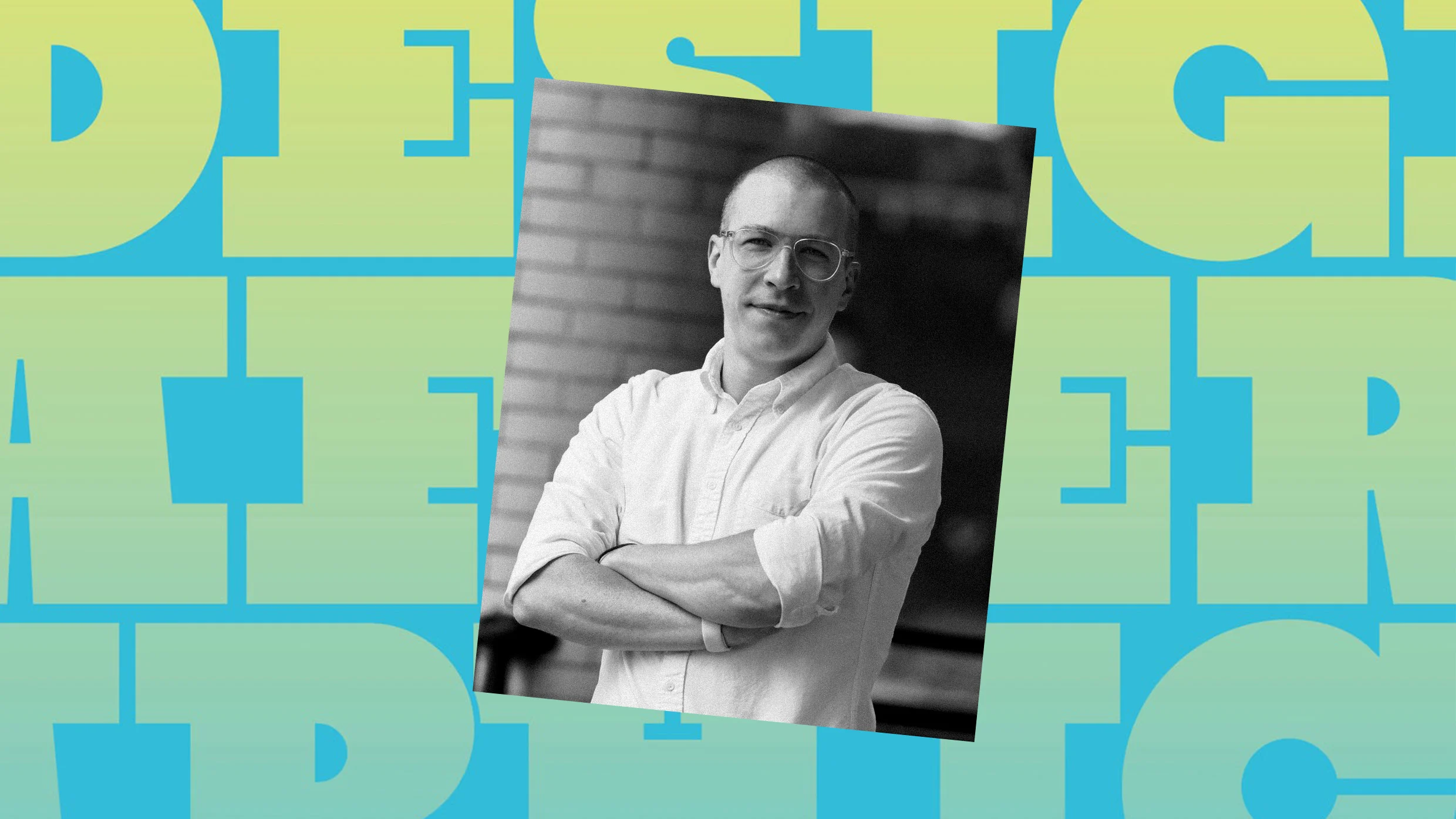
The dialogue between Fisher and Fuller touches immediately upon the anxieties felt by students and young professionals navigating today’s complex creative landscape.
Nika Simovich Fisher opened the conversation by offering her congratulations on the new book, noting how much she enjoyed the expansive, blurry, and multidisciplinary model presented through the various perspectives within its pages. She emphasized that having an optimistic perspective is particularly important during challenging times. Fisher shared an anecdote from her classroom, recounting how a sophomore student asked her whether, in her opinion, it was a genuinely good time to enter the interaction design field. Fisher noted that she thought of Fuller’s book immediately because it does such an exceptional job of encapsulating how design can function seamlessly across many different realms, and she responded to her student in that spirit. At the same time, Fisher acknowledged that she could clearly hear the underlying anxiety in the student’s question, prompting her to wonder how Fuller himself would have addressed the student’s concerns.
Responding to the query, Fuller acknowledged the weight and universal nature of the question. He noted that while he did not want to pivot the conversation entirely to the book right away, the question strikes at the heart of one of the core arguments he makes in his writing, as well as a very real, lived experience from his own professional journey—and, as he presumed, from Fisher’s as well. Looking broadly at the realities of the creative industries, Fuller offered a candid and thought-provoking perspective on entering the profession, suggesting that, in many ways, it is fundamentally never a truly good time to go into design.