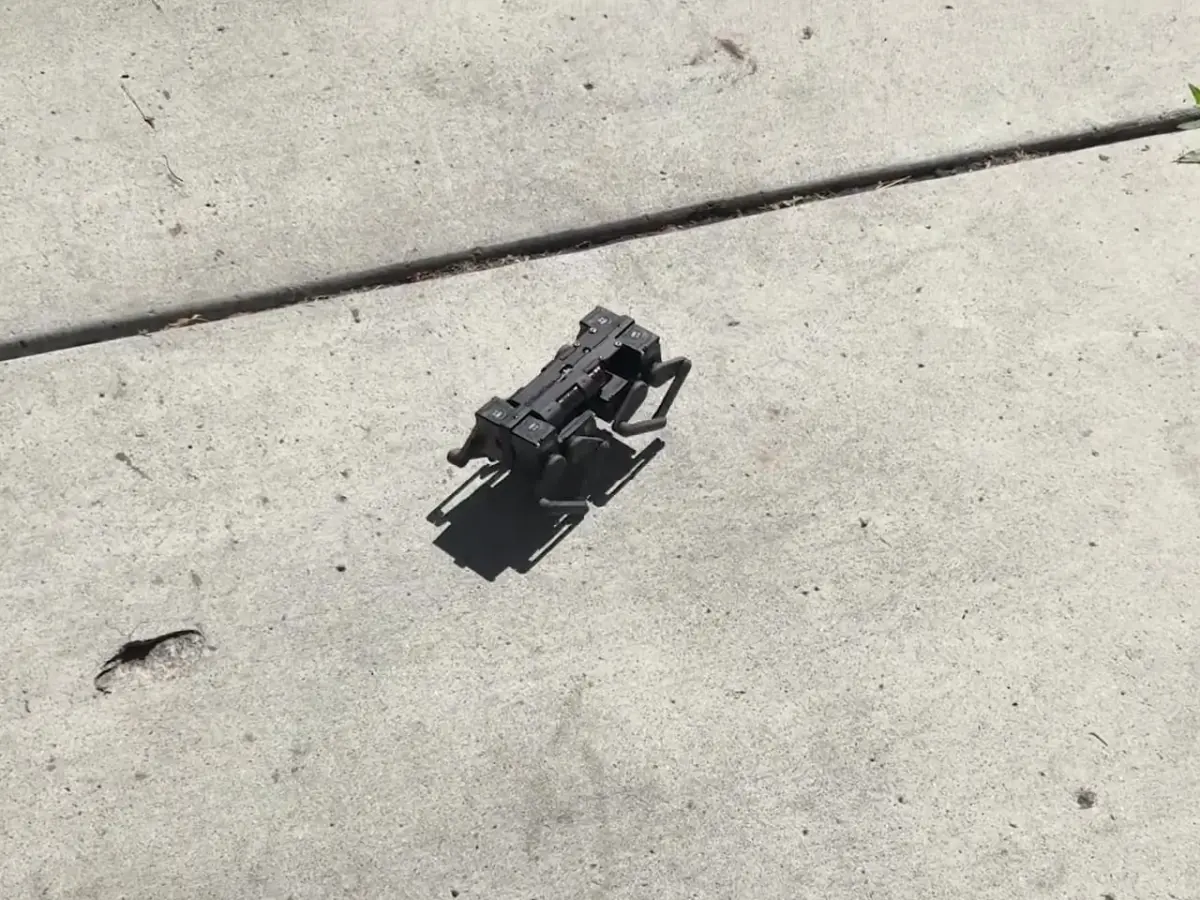
While the robotics industry frequently focuses on making quadruped machines larger, more autonomous, and increasingly animal-like, a new entry from ZeroWire Robotics takes a radically minimalist approach. The newly introduced Q8botOne is a palm-sized robot dog designed not to mimic household pets, but to lay bare the mechanics of locomotion for engineers, students, and hobbyists. Priced at $599 for a fully assembled unit, the device condenses the complex wiring and structural overhead of traditional robot dogs into an open-source, highly tactile desktop platform.
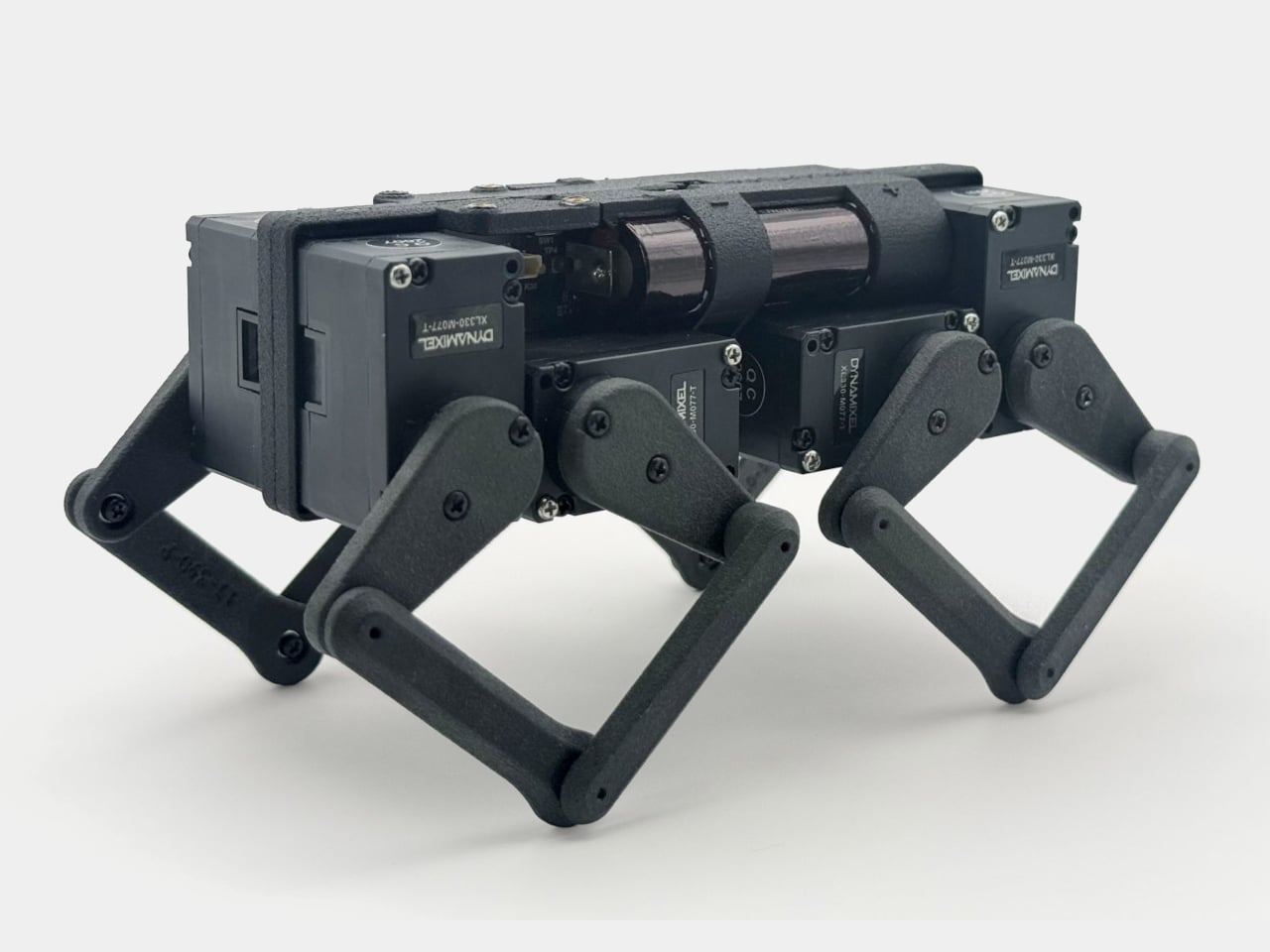
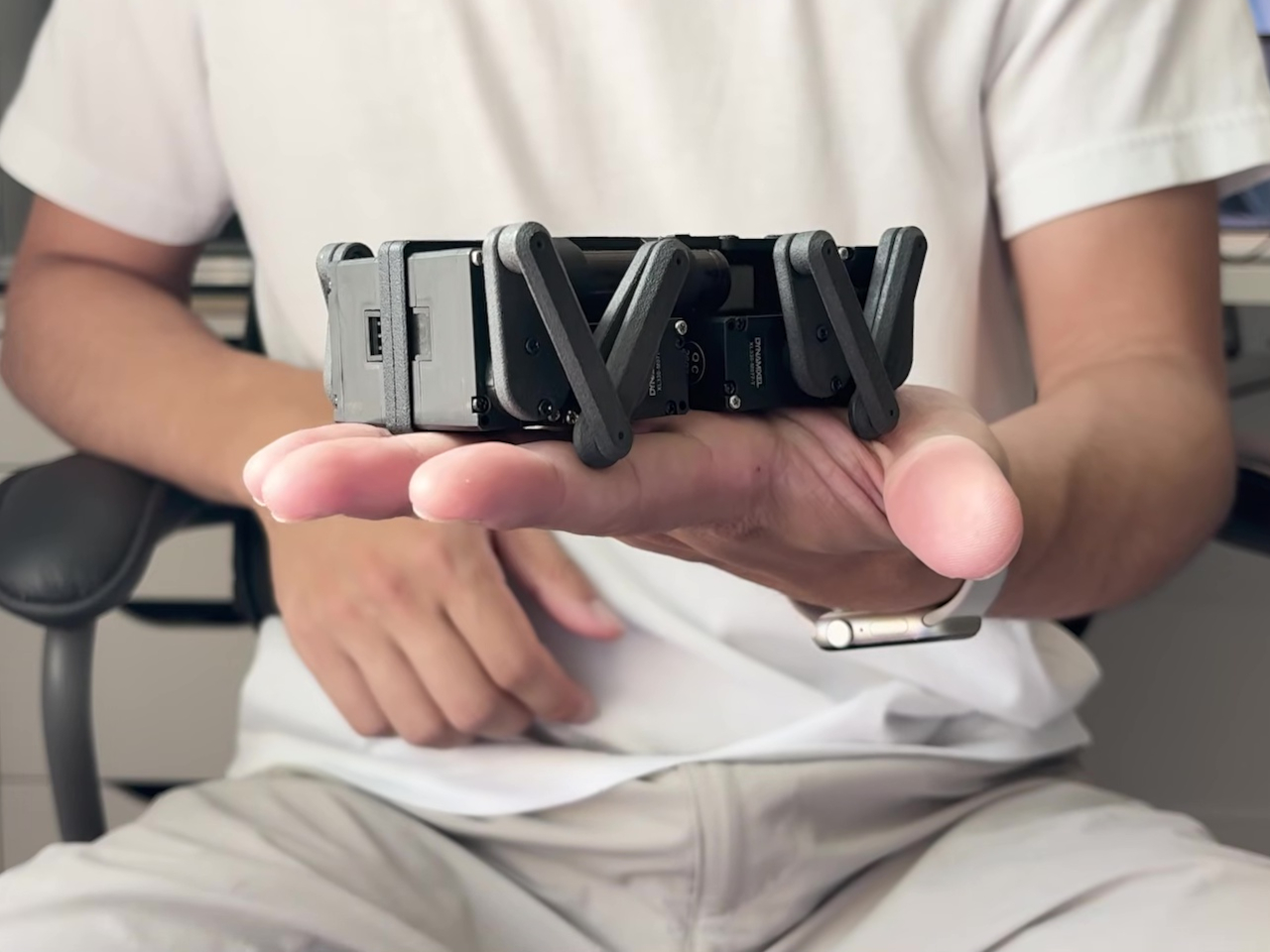
Measuring approximately 4.7 inches long and 2.8 inches wide, the Q8botOne is small enough to navigate a cluttered worktable alongside a laptop and a coffee cup. However, rather than hiding its internal components beneath molded plastic shells or synthetic fur, the robot exposes its workings. Its central design philosophy relies on a printed circuit board that serves a dual purpose: it houses the core electronics while simultaneously acting as the structural backbone of the machine.
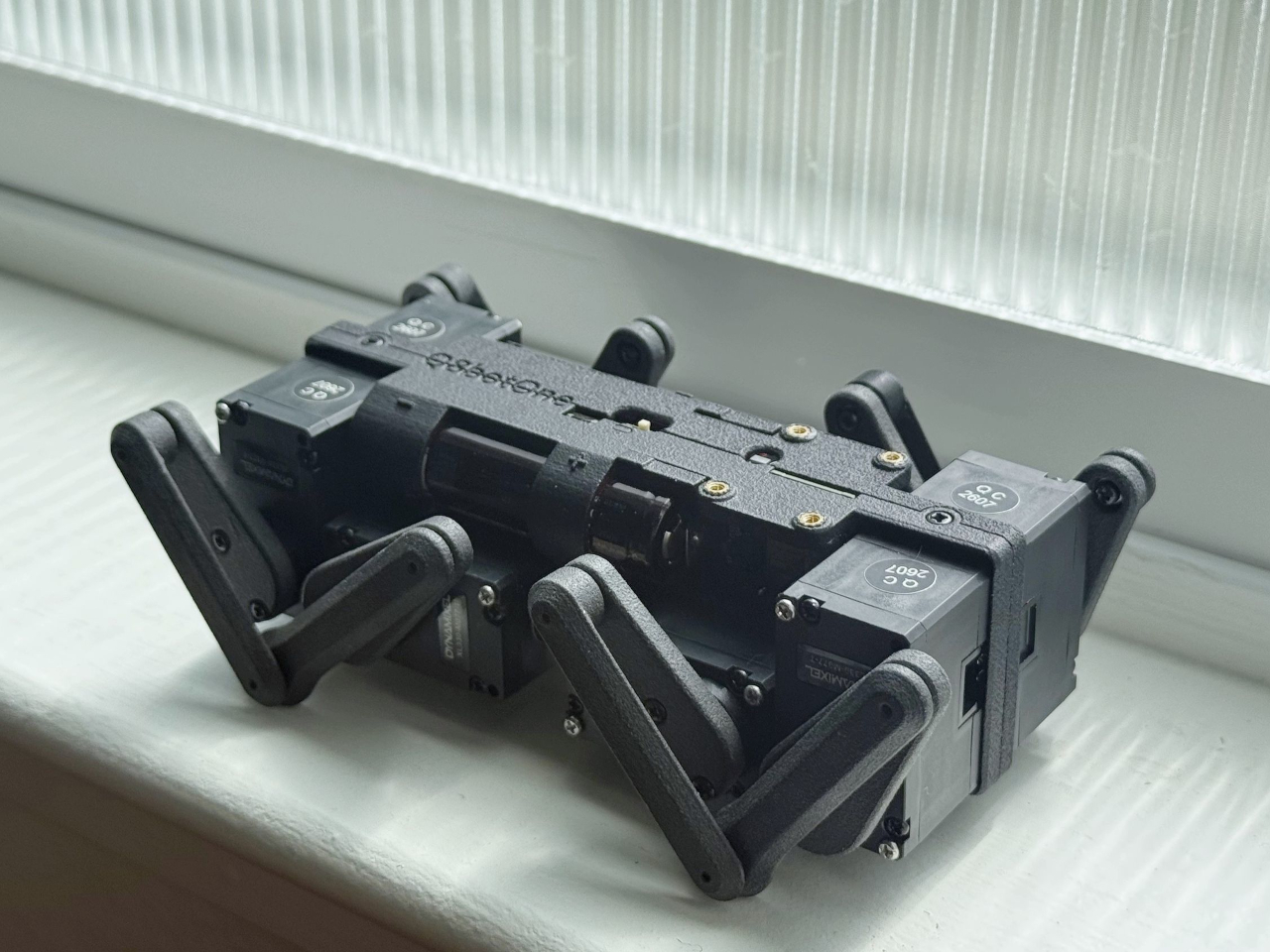
This architectural choice directly addresses one of the most persistent frustrations in small-scale robotics: the tangled web of internal cabling. By having eight motor modules and two batteries plug directly into the main printed circuit board, ZeroWire Robotics has significantly reduced the number of internal connections. While adding optional sensors, such as a camera or additional environmental modules, can reintroduce external wiring, the baseline machine remains remarkably clean and easy to troubleshoot.
Rather than incorporating a face, tail, or other superficial markers of animal charm, the Q8botOne embraces a purely functional, mechanical aesthetic. Its rectangular body is supported by four parallel-linkage legs driven by eight DYNAMIXEL actuators. These actuators provide active joint feedback, enabling the machine to do more than simply execute pre-programmed paths. According to the developers, the robot is capable of jogging, jumping, and carrying up to twice its own body weight, though these performance metrics await independent verification from third-party testers.
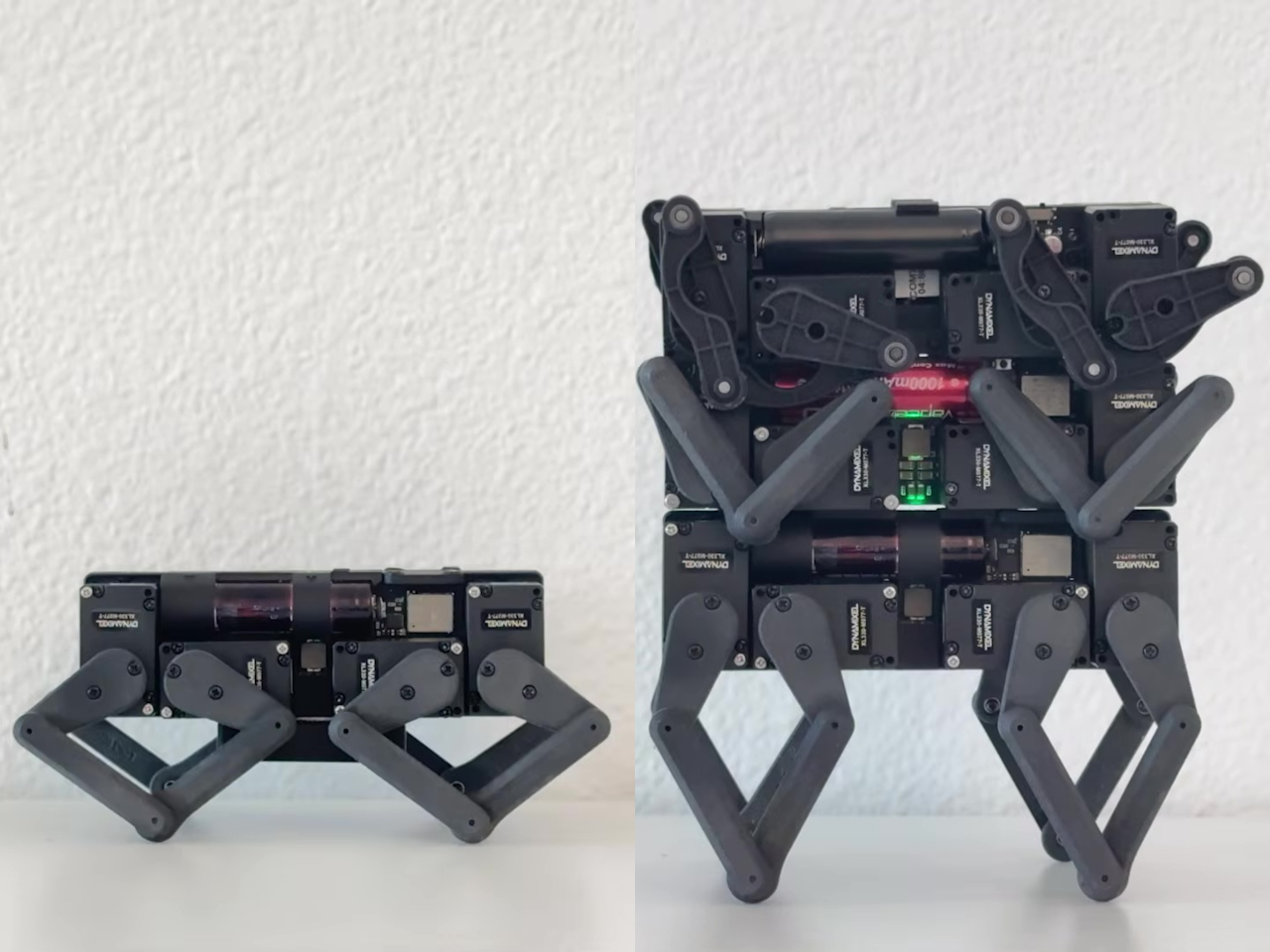
For robotics students and enthusiasts, observing the physical implementation of a quadruped gait on a tabletop offers a tangible educational advantage over viewing digital simulations. The robot’s printed nylon legs and bearing-supported joints keep the mechanics transparent, allowing users to visually trace how torque and movement translate through the chassis.
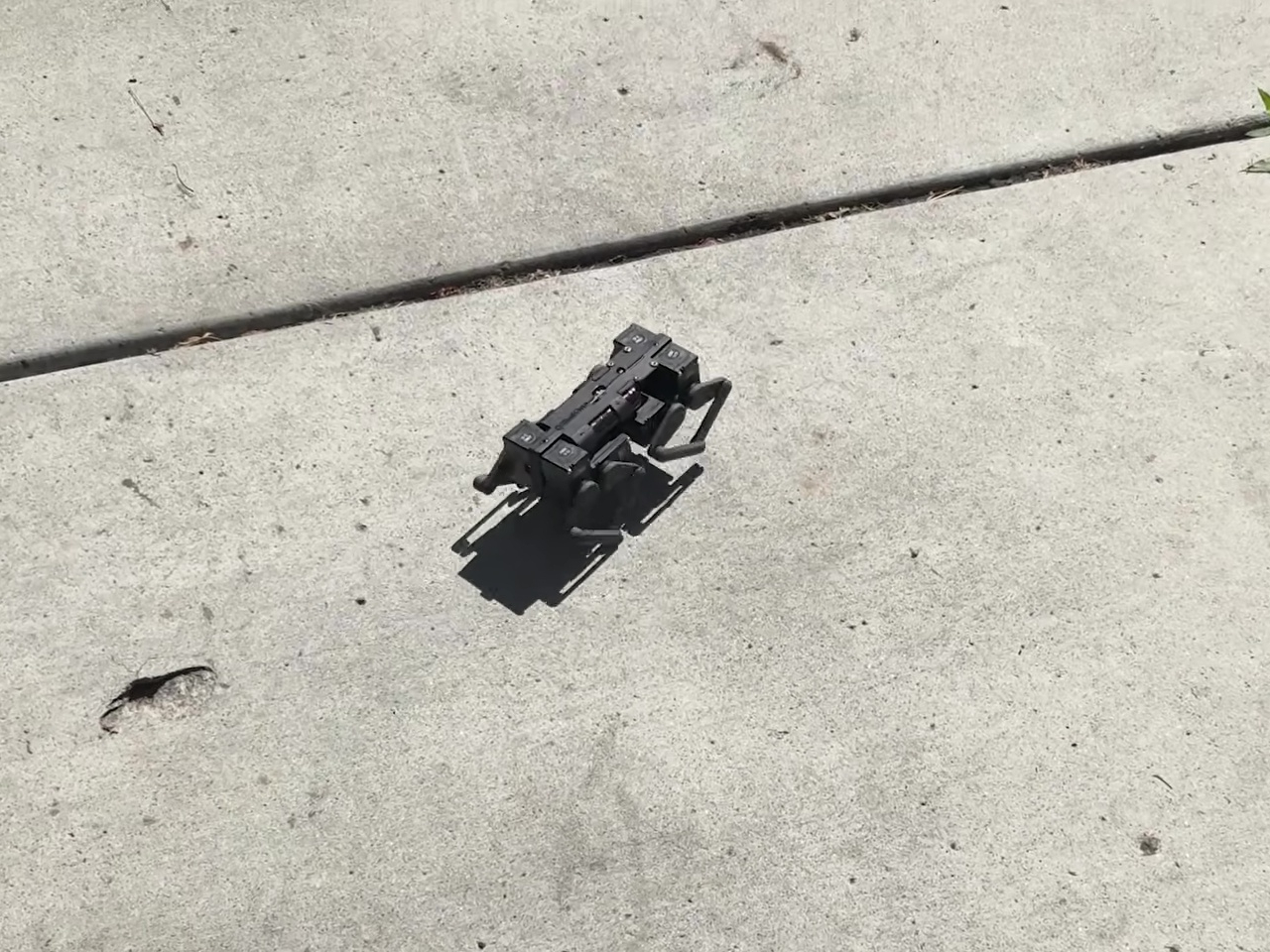
Getting the Q8botOne moving requires minimal initial friction. The device ships with a dedicated controller powered via USB-C, featuring physical joysticks and buttons that allow users to steer the robot wirelessly straight out of the box. For those looking to dive deeper, connecting the controller to a computer opens up compatibility with desktop interfaces, standard Xbox controllers, or custom user-written software. This tiered approach allows beginners to start with basic remote-controlled driving before gradually transitioning into programming custom leg trajectories and complex gaits.
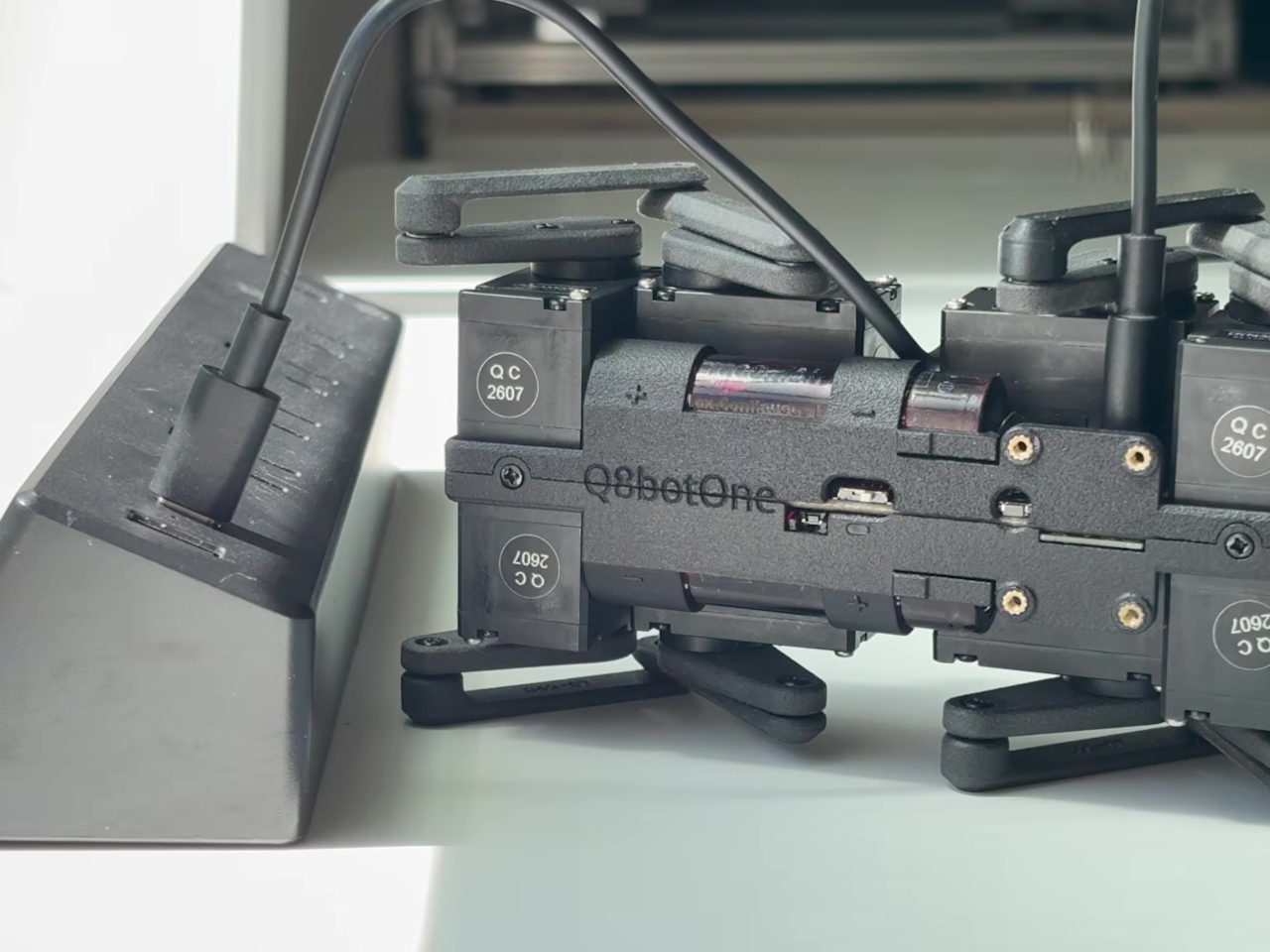
Out of the box, the base model of the Q8botOne intentionally omits built-in cameras and advanced motion sensors. While this keeps the design streamlined and uncluttered, it also means the robot lacks autonomous room-navigation capabilities by sight. To bridge this gap, ZeroWire Robotics integrated dedicated mounting holes and expansion connectors onto the chassis. This open space above the main body invites tinkerers to mount their own sensors, cameras, and experimental hardware, transforming the robot into an evolving platform for personal projects.
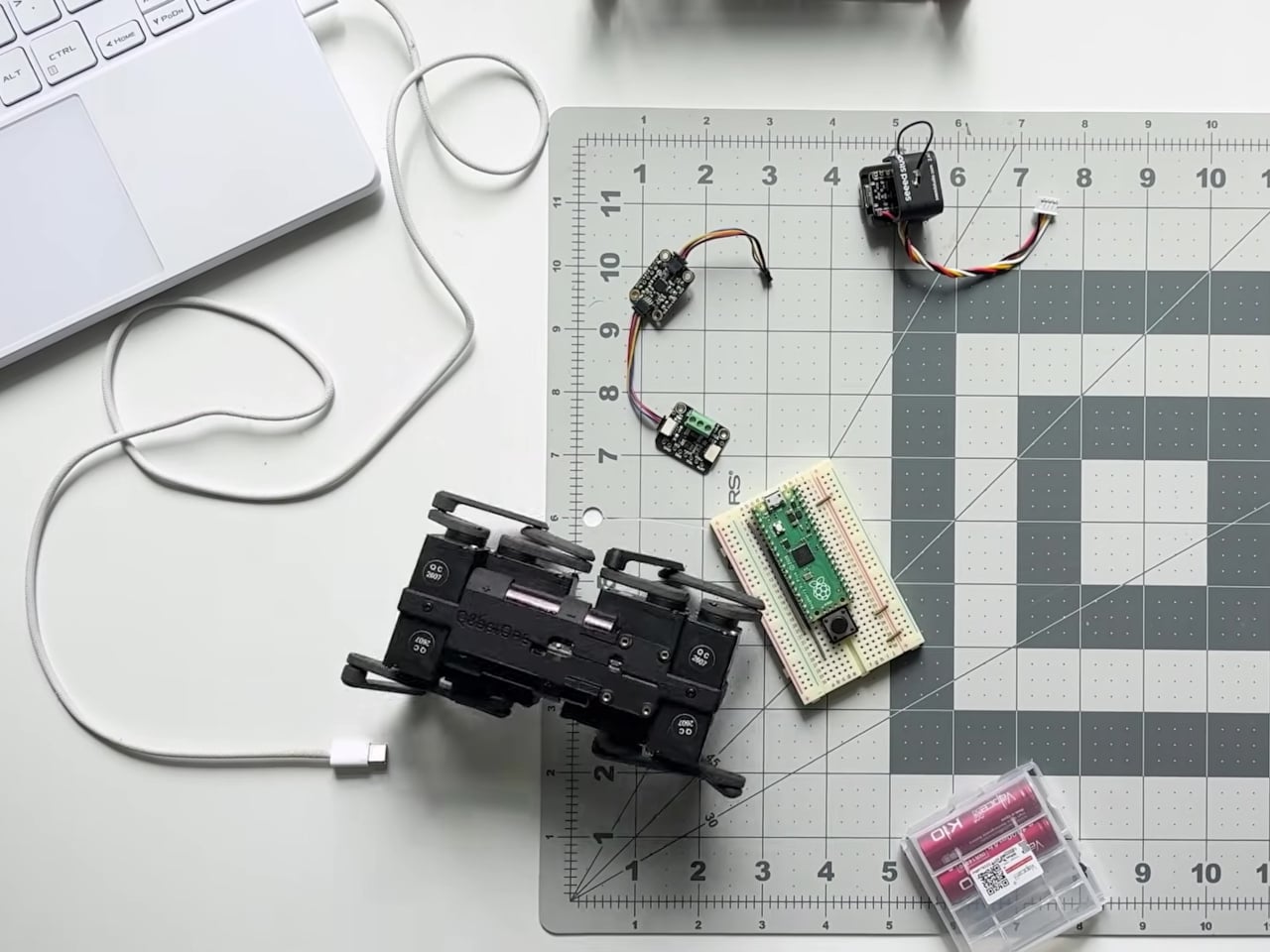
This philosophy of openness extends far beyond physical modularity. ZeroWire Robotics has made the hardware plans, firmware, and comprehensive assembly instructions openly available to the public. This open-source accessibility enables users to thoroughly examine the circuit board layout, modify the physical chassis through 3D printing, or even design entirely new controllers tailored to the same foundational architecture.
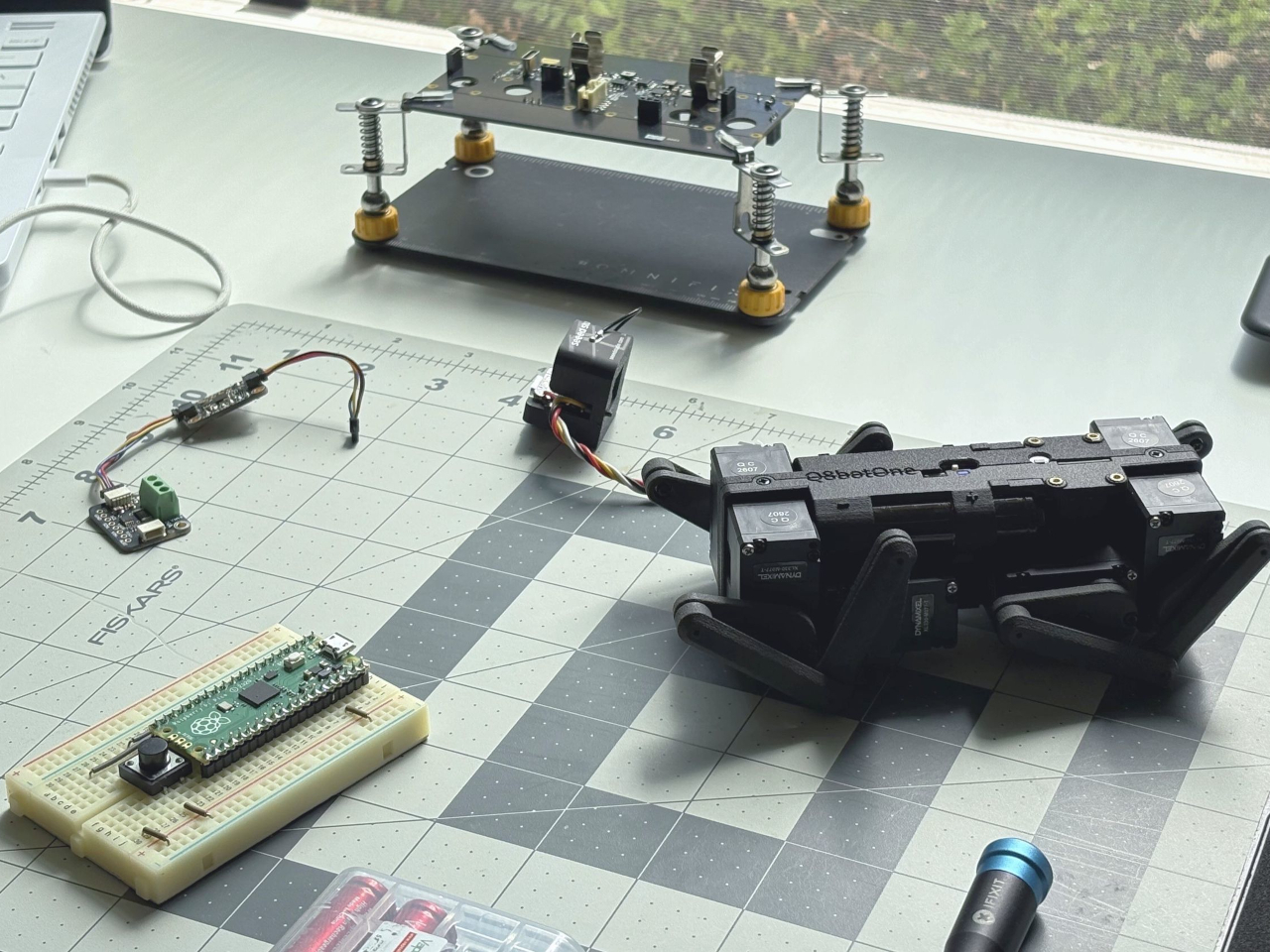
Market options reflect this modular philosophy. Beyond the $599 fully assembled version, a stripped-down $199 kit is available for builders who prefer to source their own eight actuators independently. As production scales and initial units make their way to customers, the broader robotics community will have the opportunity to rigorously test the platform’s durability, actuator performance, and strength claims. For now, the Q8botOne’s most significant contribution lies in its structural ingenuity—proving that a serious quadruped can fit in the palm of a hand while leaving enough architectural freedom for users to make the machine entirely their own.