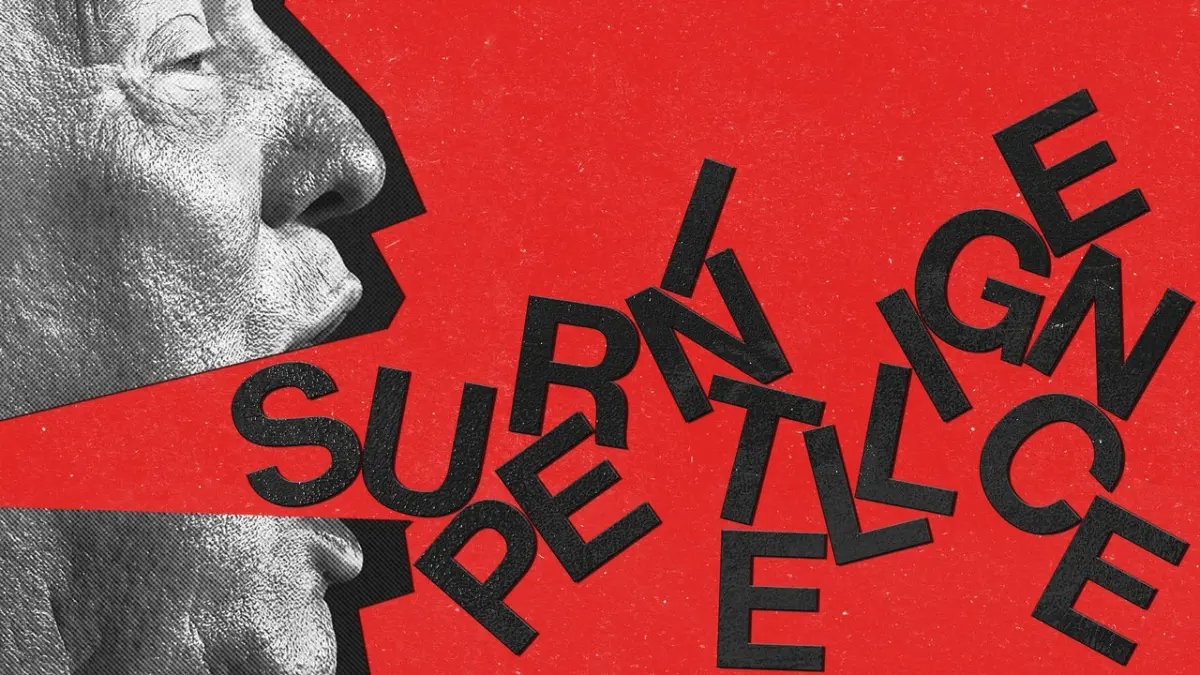
When President Donald Trump took to the podium at the United Nations in late September, he offered a critique not of foreign policy or global economics, but of vocabulary. To the president, the term "artificial intelligence" carried an unhelpful connotation, specifically arguing that the word "artificial" made the breakthrough technology sound fundamentally fake. Rather than continuing to lean on a phrase coined decades ago, he announced that his administration would formally transition to calling the technology "superintelligence," or simply "SI."
What began as a speech on the international stage quickly transformed into binding administrative policy. Not long after those remarks, the president signed an executive order instructing federal agencies to drop the old terminology in favor of his preferred phrase in all official communications. The enforcement mechanism has been swift across the federal apparatus. The Department of Justice has already instructed its staff to adopt the new nomenclature, and other government departments are widely expected to follow suit. The push for compliance is reinforced by the political reality of the administration; the president has publicly branded anyone who continues to use the term AI as "THE ENEMY," creating a high-stakes environment for federal employees and public-facing entities alike.
The linguistic shift has not remained confined within the beltway. The broader tech sector has rapidly reacted to the administration’s high-profile pronouncement. Tech billionaire Elon Musk announced on October 4 that he would follow the trend, stating that SpaceXAI would be rebranded as SpaceXSI.
Yet, this sweeping rebrand is not merely a cosmetic exercise or an instance of politics overriding common usage. The capabilities of these systems have evolved dramatically beyond their previous technical limits since the public rollout of ChatGPT in November 2022. The technology is rapidly advancing toward a threshold that technical circles already recognize as superintelligence—a theoretical and practical milestone defined as the point at which computational systems can systematically and comprehensively outperform human capabilities across a broad spectrum of cognitive tasks.
However, applying the "superintelligence" label to a technology whose various components do not consistently meet that lofty standard carries significant risks. Critics and industry observers point out that premature labeling could foster a false sense of security, inflate public expectations, and deepen existing confusion among everyday consumers who are already trying to navigate a rapidly shifting technological landscape.
OpenAI CEO Sam Altman weighed in on the shift, acknowledging that "superintelligence" is, in some respects, a more technically accurate descriptor than the legacy branding of artificial intelligence. At the same time, Altman noted that he does not believe the new terminology will make the technology feel any less intimidating or "less scary" to the general public.
An exclusive survey conducted for Fast Company by market research firm Early Studies validates Altman’s perspective, revealing a deep skepticism among the American public regarding the mandated rebrand. The poll of approximately 1,000 people in the United States—structured by the firm as a statistically representative sample of the national population based on its demographic methodology—found that only one in nine respondents believe the government’s transition to "superintelligence" will have a positive effect on the country. Furthermore, 53% of Americans surveyed believe that people they know personally would feel deeply uncomfortable or resistant to adopting the term "superintelligence" in everyday conversation.
Trump kinda has a point
Despite the friction caused by a government-mandated terminology shift, the president’s unilateral action does inadvertently highlight a valid, long-standing question about the vocabulary currently in use and whether it was ever truly suitable for the diverse array of technologies it encompasses. Critics and historians of technology have long noted that "artificial intelligence" has historically been a blunt and often inaccurate way to describe a sprawling, heterogeneous ecosystem of software systems, statistical models, and computational tools.
The origin of the phrase dates back to a foundational 1955 proposal written by mathematics professor John McCarthy and a small group of fellow academics in preparation for a landmark Dartmouth College summer workshop held the following year. During that historic event, disparate researchers who were working across various nascent disciplines to replicate human brain functions in silico—meaning inside or on a computer—agreed upon "artificial intelligence" as a convenient umbrella term to encompass the full scope of their collective efforts.
Nearly seven decades later, the phrase fits the modern reality of massive computational models better than it did during the rudimentary computing era of the 1950s, yet it remains a highly disputed and debated term among computer scientists, linguists, and policymakers alike. As the federal government and Silicon Valley grapple with this new era of high-stakes nomenclature, the debate over what to call the defining technology of the twenty-first century continues to expose a wide gap between political mandates, corporate adaptation, and public comfort.