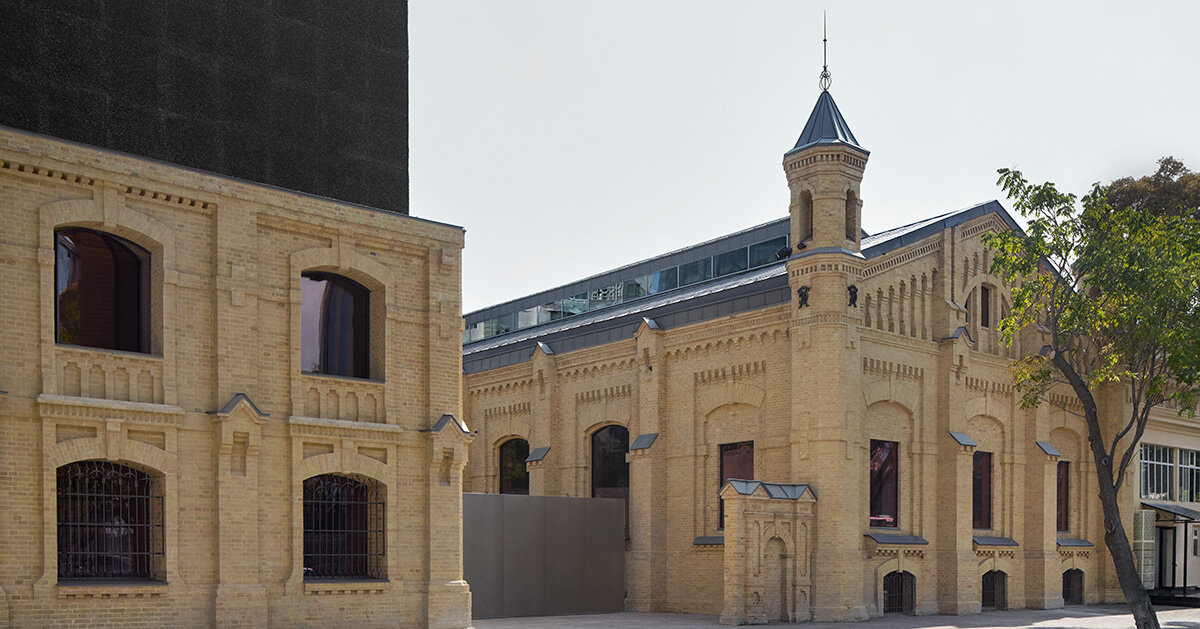
The intersection of historic industrial heritage and contemporary artistic expression has found a striking new home in Central Asia, following the meticulous architectural revitalization of a historic 1912 tram depot in Tashkent to house the Contemporary Art Centre (CCA). The newly transformed industrial landmark successfully balances the preservation of its raw, early 20th-century character with modern structural interventions, creating a dynamic multi-disciplinary venue designed to showcase both local Uzbek creatives and international artists.
At the core of the architectural transformation is a careful balancing act between past and present. Inside the expansive former depot, original exposed brick walls bear the textural history of decades past, standing in deliberate yet harmonious contrast with newly introduced architectural elements and contemporary infrastructural services. Suspended structures float through the cavernous volumes, housing modern lighting, acoustic systems, and environmental controls necessary for a world-class exhibition facility without compromising the open, industrial feel of the heritage envelope.
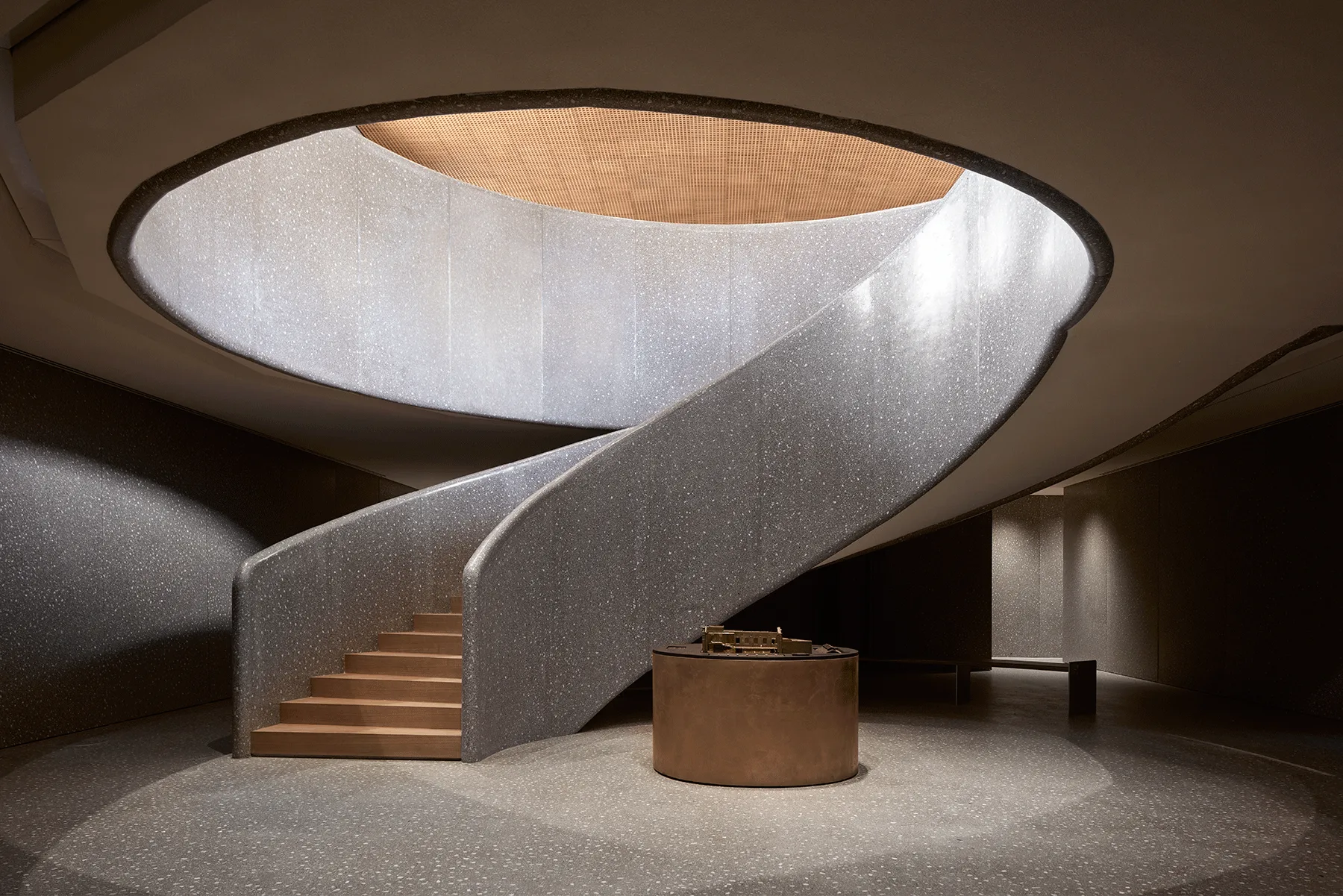
Navigating the multi-level interior is an experience in sculptural form and functional design. Among the standout architectural features of the revitalized depot is a dramatic curved staircase. Acting as a sculptural circulation element, the sweeping stairs draw visitors fluidly through the interior spaces, offering shifting perspectives of the galleries, the preserved industrial walls, and the large-scale artworks on display. The design ensures that movement through the building feels like an active engagement with the architecture itself.
Opening its doors to the public with an ambitious inaugural cultural program, the Contemporary Art Centre Tashkent brings together an eclectic curation of brand-new site-specific commissions alongside recent works. The opening exhibition features creations by a diverse group of ten Uzbek and international artists, establishing the venue as a vital bridge for cross-cultural dialogue and contemporary artistic discourse in the region. By placing local practitioners in direct conversation with global voices, the institution aims to cement Tashkent’s position on the international contemporary art map while nurturing the domestic creative ecosystem.
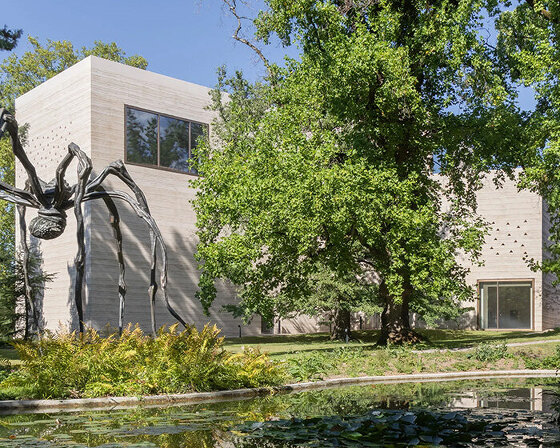
The revitalization of the 1912 tram depot into the CCA arrives amid a broader wave of high-profile architectural transformations and cultural expansions internationally, reflecting a growing global momentum in adaptive reuse and heritage preservation within the arts sector. In Switzerland, the architectural legacy of Peter Zumthor has expanded with the gradual opening of the new Wyss Museum, Ammann Pavilion, and Erlen Torhaus at the Fondation Beyeler in Basel. These additions gracefully extend the museum’s relationship with its surrounding natural landscape while successfully opening a former private park to the wider public, echoing the ethos of public accessibility seen in Tashkent’s industrial reclamation.
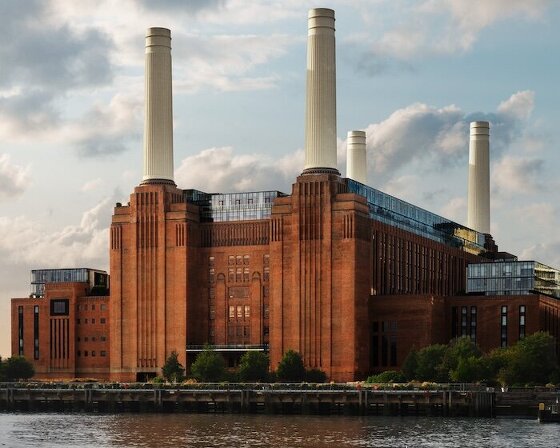
Meanwhile, major metropolitan cultural and public spaces continue to redefine how urban infrastructure can host creative programming. In London, Apple has introduced a specialized 600-capacity music venue nested directly inside the historic Battersea Power Station. The cutting-edge UK space is uniquely engineered to allow performing artists to stage a live concert, record the audio, mix the tracks, and distribute a global broadcast entirely from within the walls of the landmark industrial building—highlighting a parallel modern trend of repurposing heavy industrial infrastructure for creative production.
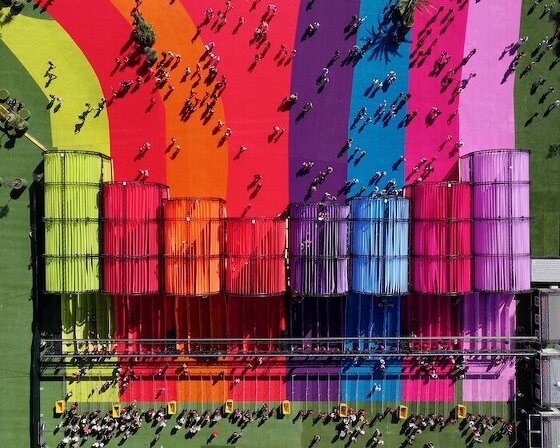
Similarly, temporary architecture and urban interventions are pushing the boundaries of sustainable event design. In Madrid, the Bjarke Ingels Group (BIG) engineered a temporary city utilizing reusable structures, recycled fabrics, and 500 trees to transform the Iberdrola music venue into the Shakira Stadium. The ephemeral masterclass in sustainable event architecture prioritized circular design principles, proving that large-scale temporary venues can significantly reduce their environmental footprint.
In South America, institutional expansion is similarly taking inventive spatial approaches to urban density. Frida Escobedo Studio recently unveiled its ambitious architectural expansion for the Museo de Arte Latinoamericano de Buenos Aires (MALBA). By taking the museum underground beneath Plaza Perú, the design effectively doubles the institution’s exhibition capacity while meticulously preserving the vibrant public square and green space operating directly above it.
Back in Tashkent, the successful completion and opening of the Contemporary Art Centre within its 1912 tram depot framework demonstrates how historical industrial fabric can be thoughtfully adapted to serve the evolving needs of contemporary culture. By honoring the structural integrity of the past while introducing bold architectural gestures like its sculptural curved staircase and suspended infrastructural services, the CCA provides a resilient, future-ready canvas for artists and visitors alike.