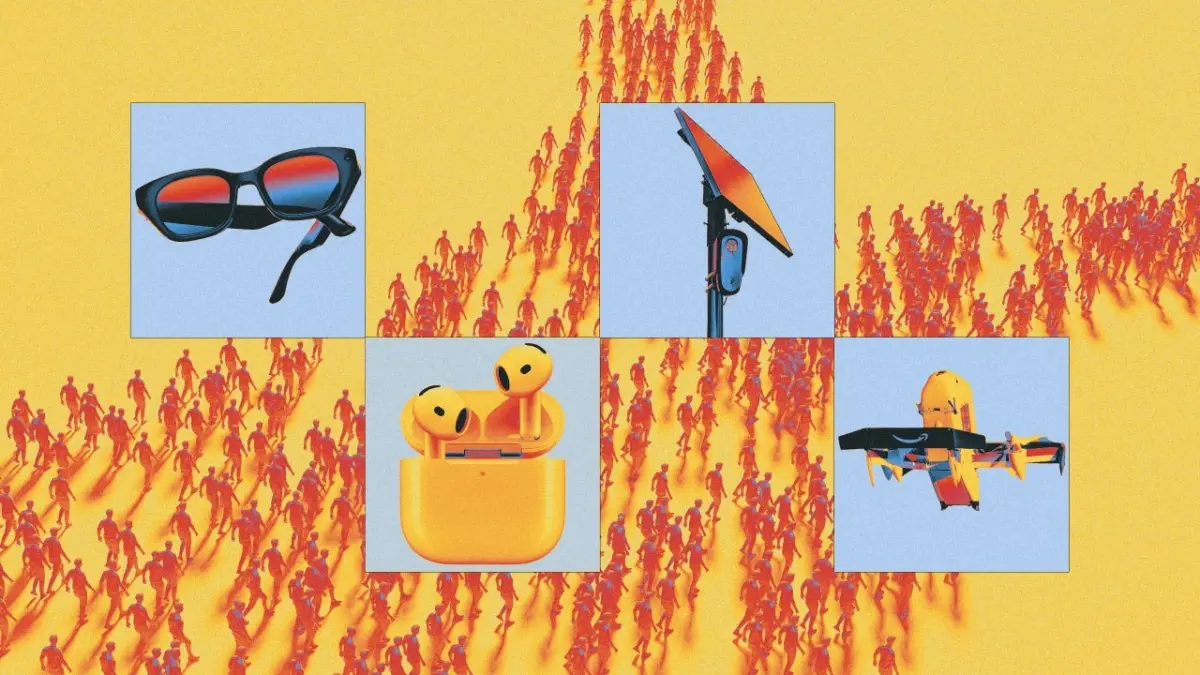
Well over a decade after first teasing the ambitious idea of transforming home logistics through aerial package delivery, Amazon is now actively testing the concept in a Dallas suburb and several other select locations. Yet, as these autonomous aircraft take flight, reports from the ground suggest that the public reaction is profoundly mixed. While some consumers express genuine delight at the speed and novelty of receiving packages dropped from the sky, a significant number of local residents voice deep frustration, complaining that the drones are loud, disruptive, and unsettlingly invasive.
The friction between corporate innovation and neighborhood comfort has become a central point of contention in these test markets. Capturing the sentiment of many community members, the president of a homeowners association in an affected Texas neighborhood recently told The New York Times that having all these drones flying around is actually a big, big problem.
This friction should come as no surprise to industry observers, as technological innovation has long been met with mixed responses from a cautious public. However, the nature of this pushback appears to be shifting. Lately, modern technology is sparking a great deal of flat-out divisiveness, moving past mere skepticism into active hostility. Aside from the ongoing trials of delivery drones, a variety of other consumer and municipal tech products have inspired heated opposition, sometimes taking the alarming form of physical destruction.
Among these flashpoints are Meta’s smartglasses—frequently dubbed "pervert glasses" by alarmed critics who fear unauthorized recording in public spaces—and automated Flock license-plate readers, which have sparked fierce privacy debates. In some extreme instances, this intense backlash has manifested as acts of public vandalism directed squarely at surveillance cameras and wearable devices, highlighting a growing public intolerance for tools perceived as infringements on personal autonomy and public space.
Of course, larger technological shifts have also dominated cultural and societal discourse for a couple of years now. Arguments over the profound pros and cons of artificial intelligence have touched nearly every aspect of modern life. From fierce community pushback against the massive energy and water demands of new data centers to widespread alarm over the technology’s disruptive effects on education, copyright, and human creativity, AI remains one of the most polarizing subjects of the contemporary era.
Every single major innovation throughout history has attracted its share of critics, skeptics, and outright opponents. In many ways, the entire internet era has functioned as one long, continuous debate regarding digital innovations, their rapid implementation, and their long-term repercussions on society, employment, and human interaction. Whenever a new utility or gadget emerges, it invariably forces a reassessment of social norms, privacy boundaries, and community expectations.
Looking back, public resistance to now-ubiquitous consumer technology often follows a predictable historical arc. Once upon a time, for instance, Apple AirPods were intensely controversial. Unveiled to the public in 2016, they forced an abrupt and largely unwanted shift away from traditional wired headphones that nobody had explicitly asked for, carried an absurdly high price tag of $160, and looked, to many early observers, completely ridiculous sticking out of people’s ears. Critics mocked the design and questioned the necessity of untethered audio. But evidently, most of consumers eventually got over those initial aesthetic and functional hesitations, to the point where small wireless Bluetooth headphones are now an entirely routine part of daily life.
Similarly, when the initial iPod was first introduced to the market, it was heavily mocked by some tech commentators and consumers as an overpriced, unnecessary indulgence from a once-great company that had ostensibly lost its way. Despite the early skepticism and ridicule, it quickly evolved into a massive cultural and commercial hit product. More importantly, that early music player paved the direct path for the revolutionary, world-changing iPhone, proving that early public derision is not always an accurate indicator of a technology’s ultimate value or permanence.
As Amazon continues its drone delivery trials and society grapples with the newest waves of artificial intelligence, surveillance equipment, and smart devices, the current wave of resistance echoes these historical precedents. Whether today’s controversial gadgets will eventually become as accepted as wireless earbuds or remain persistent sources of neighborhood friction depends largely on how developers address the very real human concerns raised on the ground.