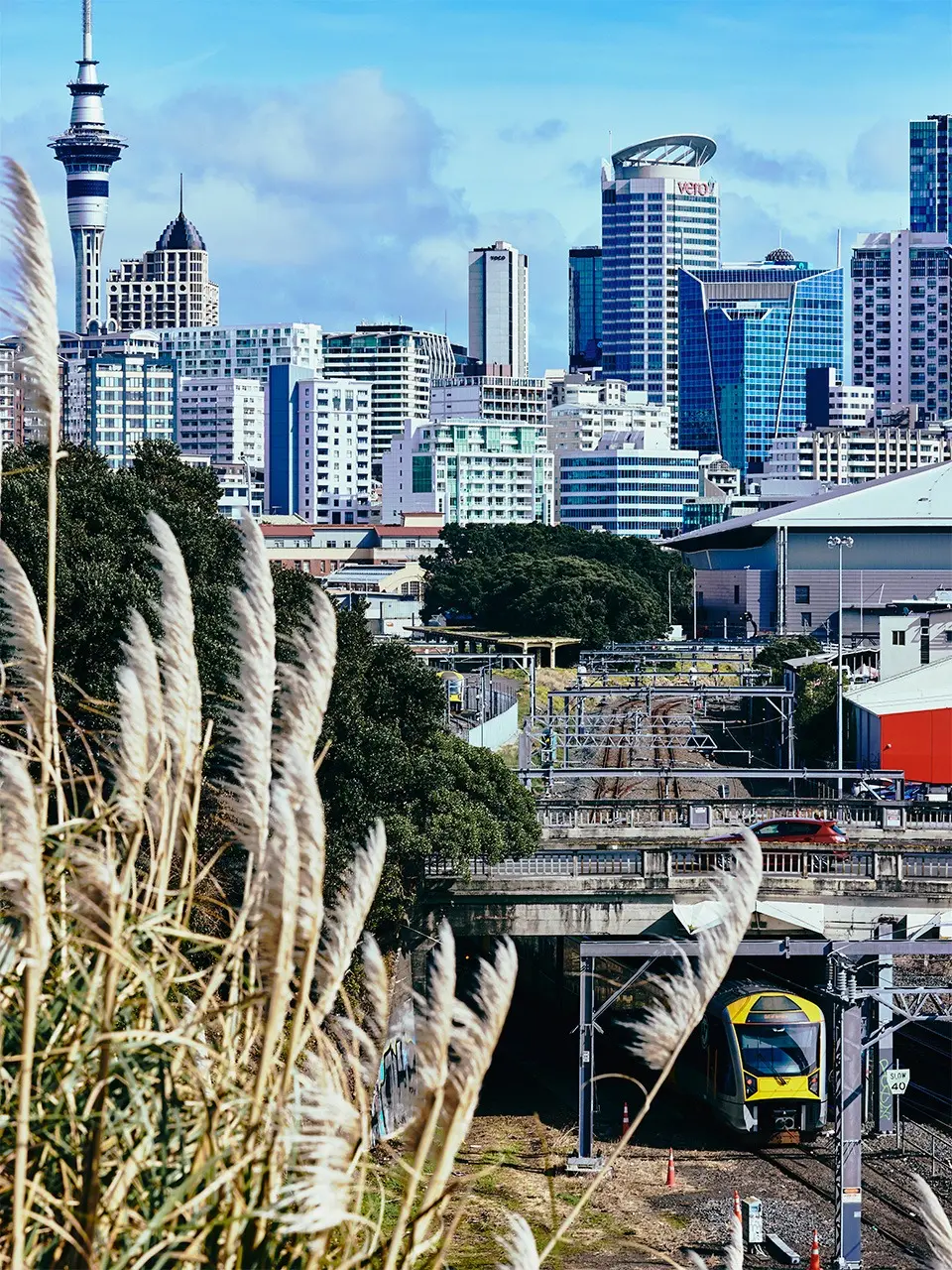
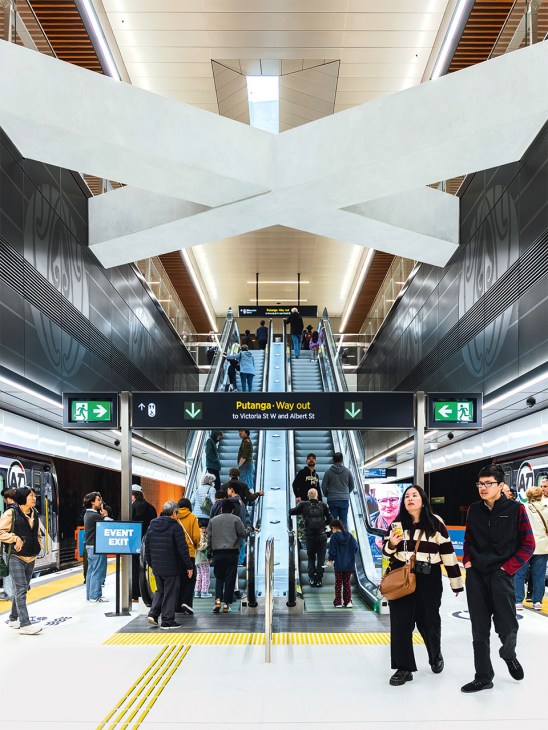
“This is the quietest that these places will ever be,” says Malgorzata Haley, a principal at architecture firm Grimshaw, as she guides a tour through Te Waihorotiu station in Auckland. She is leading a first look at the City Rail Link (CRL), New Zealand’s first underground metro system, ahead of its official opening on September 13. Valued at NZ$5.5 billion (€2.8 billion), the network stands as one of the largest infrastructure undertakings in New Zealand’s history. Once fully operational, its underground stations will seamlessly integrate with the broader rapid-transit network across the country’s largest city, an urban sprawl spanning an area greater than Tokyo prefecture. For Haley, the CRL represents the missing piece of a long-awaited puzzle, serving as a definitive signal that Auckland has shaken off its historic reputation as a sleepy backwater and stepped confidently onto the global stage.
Polish-born Haley serves as the local project’s design lead and can effortlessly rattle off technical statistics detailing how the new rail network will drastically improve connection times across the isthmus. However, she understands innately that the true value of a civic project of this magnitude cannot be measured purely in transit minutes or engineering metrics. Having relocated to New Zealand in 2014, she has witnessed firsthand the city’s rapid demographic and cultural evolution. The arrival of the metro acts as a powerful catalyst, adding critical momentum to a broader, ongoing campaign to infuse Auckland with a vibrant, cosmopolitan energy. Crucially, this cultural shift is yielding tangible results: young New Zealanders are increasingly choosing to build their lives at home, while expatriates slogging it out in major hubs overseas are finding compelling reasons to return.
Among those high-profile returnees is Paul Keating, a former senior United Nations official who now heads public policy engagement for a major US corporation. Keating is part of a growing cohort working to reverse New Zealand’s perennial brain drain. While national migration data shows that nationwide departures fell by 5 per cent last year, roughly 16 per cent of all Kiwi citizens still reside overseas. Yet, the tide is turning as international firms establish a deeper footprint in the country’s economic capital. “Auckland is home to many multinational companies that lap up international expertise,” Keating notes, pointing to a burgeoning professional landscape. “There’s a lot of interesting work here now.”
In 2025, Auckland recorded the largest net migration gain of any region in New Zealand, cementing its status as a beacon of economic and lifestyle opportunity throughout the wider South Pacific. With a population of approximately 275,000 Pacific Islanders, the city proudly holds the title of the largest Polynesian urban center in the world. People from across the islands are drawn to the metropolis in search of better-paid employment, higher education, and the dynamic excitement of a diverse, multicultural environment.
It was not always this way. Reflecting on the city’s past, travel writer Paul Theroux famously described touching down in Auckland in the early 1990s as feeling akin to “touching down on a distant star.” For decades, a cynical local adage maintained that of Auckland’s many roads, the best ones were simply those that led motorists out of town. Changing that deep-seated cultural narrative proved to be an uphill battle, according to Ludo Campbell-Reid, Auckland’s inaugural “design champion” who served in city hall from 2006 to 2019. Now offering urban consulting services to struggling cities worldwide, Campbell-Reid recalls that pervasive apathy and indifference greeted him when he first took the job. “People just didn’t think that the city could ever be cool,” he says. True to his preferred persona as a municipal “city doctor,” Campbell-Reid advocated for the urban equivalent of open-heart surgery to jolt the region awake.
The design team’s initial intervention focused on unclogging the city center’s vital transport arteries. They introduced pedestrian-friendly “shared spaces,” expanded the cycling infrastructure, and actively worked to reduce Aucklanders’ historic dependence on private automobiles. Local business owners and residents directly financed these transformative moves through the City Centre Targeted Rate—a specialized property charge dedicated entirely to urban renewal. Areas that once turned into ghost towns on weekends are now buzzing with life, while the number of people commuting by bicycle in Auckland has grown by an average of 5 per cent annually since 2023. Yet, as Campbell-Reid reflects, tackling the streets was merely a warm-up compared to his next major challenge: performing an even more radical surgical intervention in a part of the city suffering from severe industrial decay.
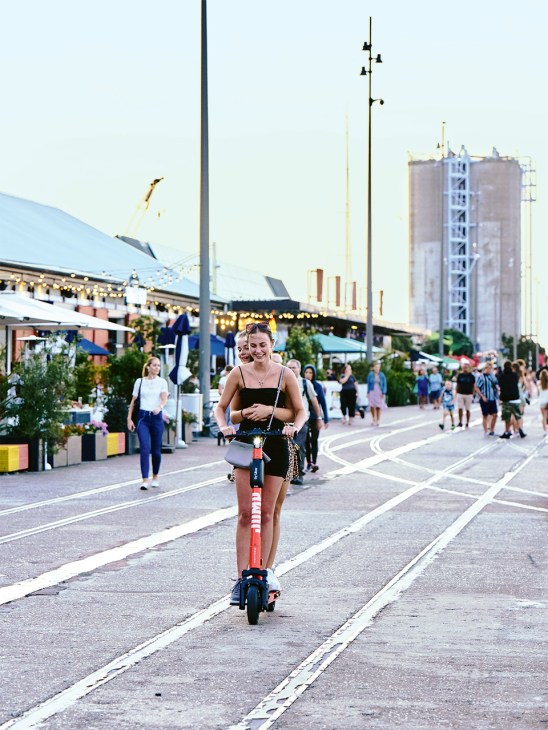
Before the 2010s, the Auckland Waterfront was a post-industrial wasteland dominated by concrete silos and a contaminated petrochemical facility locally known as the “Tank Farm.” Lingering on its windswept streets or swimming in its murky waters was an activity reserved for the reckless. Today, walking through the same neighborhood makes it difficult to fathom that such a blighted landscape ever existed. The Waterfront has blossomed into one of Auckland’s most coveted residential and leisure districts, commanding some of the highest real estate prices in a city already notorious for expensive housing. High-end developments like The Villard in the Wynyard Quarter command entry prices starting at NZ$5.4 million (€2.7 million), with sub-penthouse units scaling up to NZ$29 million (€14.7 million). Amidst the upscale residential towers and chic dining spots, a few weathered concrete silos remain standing, repurposed as structural landmarks framing basketball courts, pop-up bars, night markets, and summer open-air cinemas. Despite this cultural efflorescence, traditional maritime industry persists, including active shipbuilding services and Titan Marine Engineering, a thriving local repair business.
The revived Waterfront also honors the profound, enduring relationship that Auckland’s Māori communities hold with the land. Ever since the signing of the Treaty of Waitangi with the British Crown in 1840, Māori populations have maintained historic and customary rights across New Zealand. However, generations of urban planners sidelined indigenous voices for much of the city’s 180-year history. Campbell-Reid emphasizes that weaving Māori culture and history back into the urban fabric was a vital component of Auckland’s renaissance, providing the metropolis with an authentic cultural identity that few other Western cities can replicate. Today, consulting with local clans, known as the mana whenua, is standard operating procedure for both the Auckland Council and private developers. “We need to see our faces in the city’s stories too,” explains Lucy Tukua, a member of the council’s Urban Design Panel.
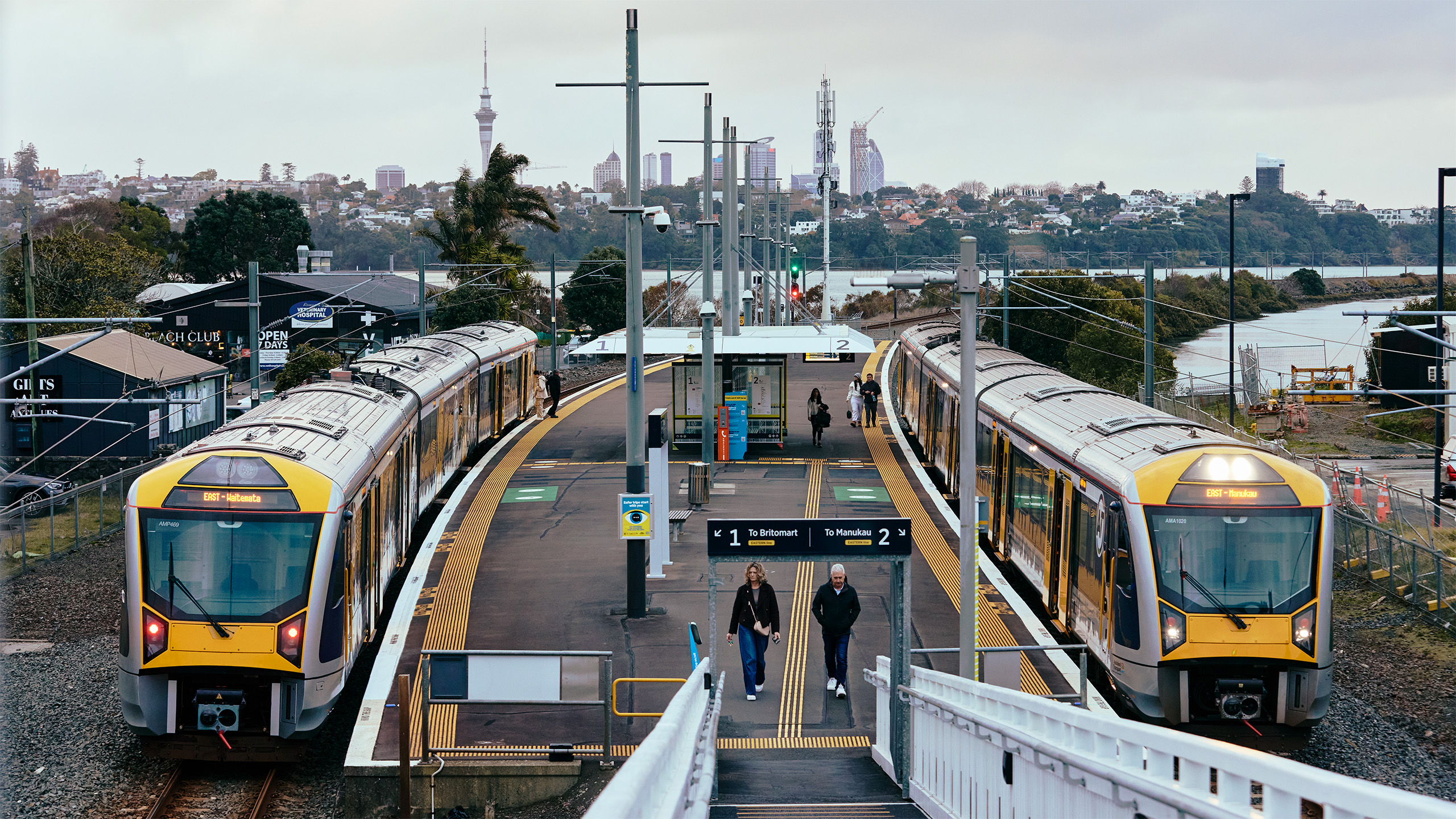
As this sprawling city continues to mend, once-isolated neighborhoods are finding themselves woven closely together by modern transport links. The Waitemata CRL station connects seamlessly with newer stops along the line, while apartment buildings grow increasingly sophisticated the closer they get to the downtown core. Residences sheltered in the shadow of central business district skyscrapers open up to sweeping views of marinas filled with luxury superyachts. Nearby, hardy locals brave the chilly Pacific waters at a historic swimming spot affectionately known as Browny’s Pool. Featuring regular “dive-bombing” competitions where thrill-seekers launch themselves from elevated platforms into the deep blue sea, the facility has transformed into an unlikely urban attraction. “You should give it a go,” encourages Gyles Bendall, the Auckland Council’s head of design.
Traveling two stops up the line from the Waterfront brings visitors to Karangahape Road, commonly known as K Road, which serves as Auckland’s bohemian and artistic heartland. Tucked away at the back of a Victorian arcade is Bestie, an independent café where 19-year-old fine art student Ngaio Dawson sips a matcha latte. Having recently moved to the city from Christchurch in the South Island, Dawson expresses genuine attachment to her new surroundings. “I can’t ever imagine being bored here,” she says. When asked if she plans to follow the well-trodden path of young New Zealanders moving overseas, she shakes her head. “Why would I? I have everything here.”
Nearby, Jonah Merchant operates Neck of the Woods, a renowned neighborhood music venue. Despite his inherent optimism, the 54-year-old promoter acknowledges that recent years have posed severe operational hurdles. His business was forced to shutter for two years as a result of New Zealand’s stringent coronavirus lockdowns, which ranked among the longest-lasting globally. Now fully reopened, Merchant notes an ironic modern challenge: patrons are spending less on alcoholic beverages, a shift he attributes partly to the long distances drivers must travel to get home, compounded by a biting cost-of-living crisis. The CRL, featuring a proposed weekly fare cap of NZ$50 (€25.30), promises to alleviate these pressures by easing regional transit.
Merchant has witnessed K Road evolve from a sleepy strip into arguably the most dynamic urban hub in the South Pacific. For him, Auckland possesses all the essential ingredients for sustainable future growth. “This city is a crazy melting pot of cultures, jammed onto this weird little isthmus between two seas,” he reflects. “We’re small enough that somehow we all seem to know each other but big enough, creative enough and diverse enough to consistently punch above our weight.”
Further up the line from K Road near the border of the CBD lies Uptown, a district eagerly anticipating its own major transformation centered around the newly built Maungawhau station. Brent Kennedy, head of the Uptown Business Association and a veteran advertising executive with years of experience in Japan, is bullish on the economic dividends the rail link will unlock. He points to the impressive turnout of 10,000 residents who attended a preview open day for the station in August. Kennedy notes that initial public grumbling regarding the project’s multi-billion-dollar price tag and its decade-long construction timeline is steadily giving way to excitement. “It will just get people around the city more quickly,” he states. During the era of chronic traffic gridlock, many residents felt discouraged from exploring neighboring districts or frequenting local nightspots. “Now, with the rail link, you could have a drink on the Waterfront and then hop on a train to see a gig on K Road,” he adds. Furthermore, direct rail lines running to South Auckland—home to roughly a quarter of the city’s population—will finally replace exhausting late-night bus commutes or expensive taxi fares.
While the prevailing mood among business owners and commuters is overwhelmingly enthusiastic, pockets of skepticism remain. Online commentators have occasionally quipped that the intense media focus on the CRL highlights how little else typically occurs in the city’s civic calendar. Meanwhile, infrastructure researchers have raised valid concerns regarding whether transport planning and wider urban development objectives have been synchronized effectively enough for the project to reach its maximum potential. In a recent advisory report, transport and infrastructure consultant Thomas Nash observed that the majority of new housing developments in Auckland are not currently located within rapid transit catchments, noting that only a single CRL station features a comprehensive transit-oriented development plan. Experts argue that to sustain the current wave of public enthusiasm, municipal authorities must prioritize building schools, hospitals, retail hubs, and dining venues immediately surrounding the transit stations.
Like many cities in the New World, Auckland occupies a unique dual identity as both a permanent settlement and an ongoing, ever-evolving urban experiment. For decades, the city seemed content with its global reputation as a geographically blessed outpost largely devoid of deep cultural sophistication. However, a steady influx of foreign residents—with 43 per cent of the current population born overseas—combined with ambitious municipal policymaking, has forged an entirely new identity.
“Auckland is one of the most instructive laboratories for contemporary city-making in the world,” Campbell-Reid concludes. Beyond its local impact, the city’s urban turnaround serves as a compelling counter-narrative to pessimism elsewhere, proving that neglected urban centers can successfully reinvent themselves. Having traveled a long road from the days when local journalists likened its atmosphere to East Berlin, Auckland is utilizing transformative infrastructure projects like the City Rail Link to propel its ongoing regeneration forward.
How to get a flavour of Auckland’s food scene
Even among starchy root vegetables, the taro stands out for its inherent blandness—except, that is, when chef Henry Onesemo works his culinary magic. At Tala, the Michelin-starred Samoan fine-dining establishment he runs alongside his wife, Debby, in Auckland’s historic Parnell neighborhood, the taro takes center stage. It features across the restaurant’s tasting menus, most notably in a whitebait-and-caviar palolo dish where the rich seafood fusion is served atop a freshly baked taro focaccia.
Playful, inventive twists on traditional staples from the Pacific Islands define Auckland’s distinct culinary landscape, setting it apart from other Oceanic epicurean destinations like Brisbane or Sydney. As the largest Polynesian city in the world, local chefs are actively dismantling outdated tiki stereotypes—such as spam fritters and pineapple fried rice—replacing them with garlicky, soy-dappled backyard barbecue dishes, aromatic coconut-infused curries, and creative variations of ceviche.
When asked where visitors should go to sample the city’s diverse culinary offerings, Onesemo directs food lovers toward Sandringham, a vibrant suburb known for neon-lit food trucks and cozy eateries serving a broad spectrum of South Asian cuisine. Among them is Satya Chai Lounge, a popular curry house celebrated both for its food and an extensive refrigerator housing 220 craft beers.
For world-class Chinese cuisine, food enthusiasts are frequently pointed toward Dominion Road. Meanwhile, mornings in the city can be spent sampling briny kina (sea urchins) at Kingi, located inside The Hotel Britomart, recognized as New Zealand’s first green five-star hotel.