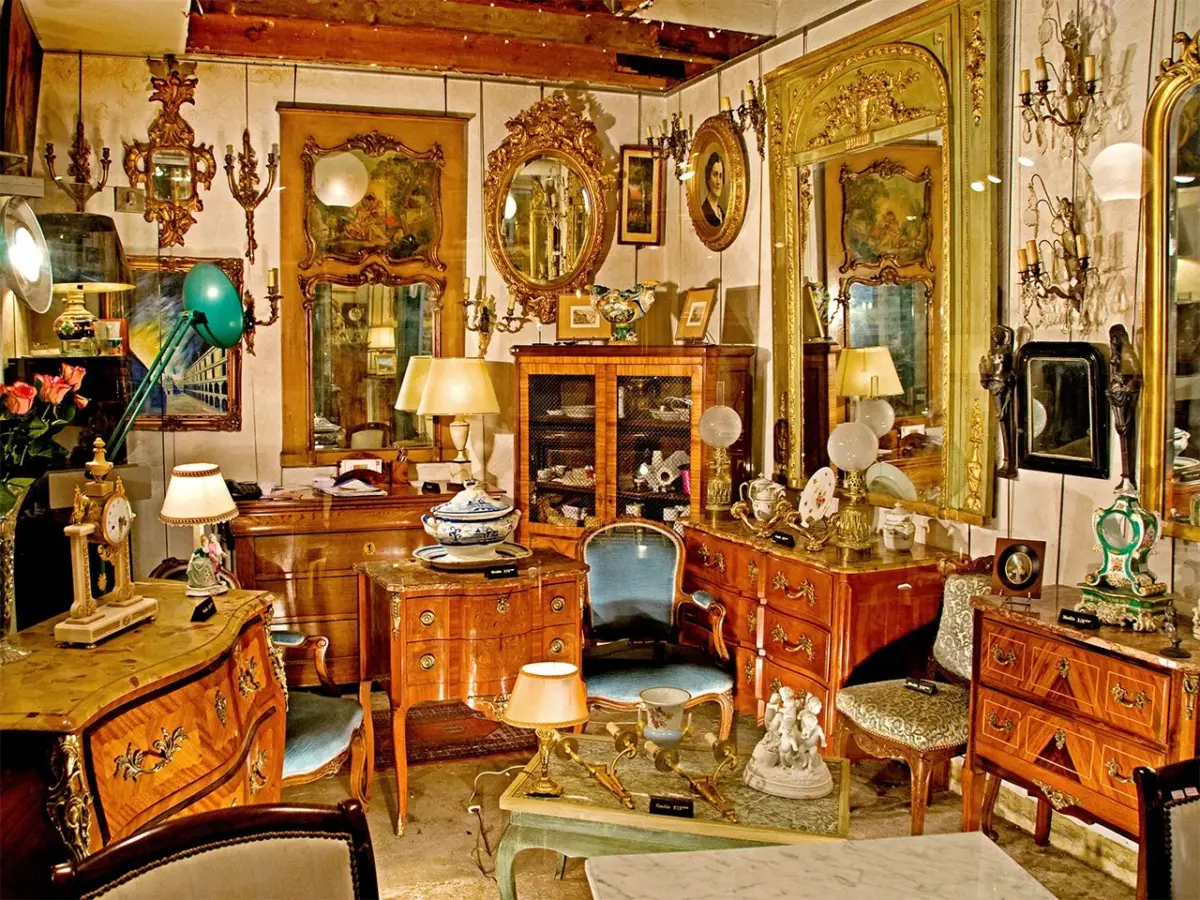
In the seven sprawling hectares of the inconvenient, irreverent Marché aux Puces in the historic French suburb of Saint-Ouen, visitors can still shop like it is 1957.
The grand Paris flea market is a defiantly grubby, un-air-conditioned counterpoint to the instant gratification of online purchases and chain-store homogeneity. Shopping here is an intentional gamble. Across 16 acres of clothing, furniture, art, and every imaginable kind of memorabilia, there is no artificial intelligence search function that can substitute for walking the dusty aisles, pawing through piles of old and ancient things, and conversing directly with the eclectic shopkeepers selling their wares. Shoppers often arrive hell-bent on finding a specific mid-century end table, only to leave with a 1940s skirt that makes them feel like a movie star. It is an experience of browsing, falling in love, and experiencing what the French call a coup de cœur.
The world’s largest flea market operates as a maze of human history that answers to no algorithm. Where else would a shopper seriously consider buying 16 tiny silver dachshunds meant to hold dinner guests’ knives so they do not stain the tablecloth, despite living in a compact 400-square-foot apartment? How else would one ever meet Laila, a vendor with a collection of embroidered French Revolution-era waistcoats so exquisite that visiting them requires navigating the perilous traffic of the Périphérique?
Visitors can also encounter merchants who dress like Steve McQueen—a perplexingly beloved figure in France—selling McQueen-style clothing displayed on unusual mannequins of varying stature. None of this transactional environment is rational, and therein lies its enduring delight. The experience stands as the absolute opposite of frictionless online shopping, where every barrier between a consumer and a desired product—or what an algorithm decides they should want—has been systematically erased.
The digital virus that has decimated bricks-and-mortar shops in cities across the United States and Europe has notably failed to kill the appeal of the world’s largest vintage and antiques market. Quite the contrary: five million people arrive at the Marché aux Puces de Saint-Ouen every year, making it the fifth most visited site in France, which remains the most visited country in the world.
Whatever is bought at the flea market often feels inherently more valuable because of the physical effort required to secure it, rather than despite it. This phenomenon mirrors the psychological concept known as the IKEA effect, which demonstrates that human beings place a higher value on things they have actively worked for—whether through assembly, hunting down, or vigorous bargaining—than on items that magically appear at their doorstep. In-app purchases have become so seamless that consumers regularly report ordering the same household items twice simply because the digital transaction experience was entirely slick and completely forgettable. These purchases function as the one-night stands of material fulfillment, offering the briefest and most hollow of dopamine hits in return for capital.
Businesses today have increasingly started to recognize that modern consumers are craving human connections and tangible experiences that look far more like the chaotic charm of a flea market and far less like instant online transactions. To combat this shift, a concept unfortunately dubbed "retailtainment" is being heavily promoted as the ultimate physical alternative to online shopping.
Many American shopping malls are transforming into full-blown theme parks to lure back foot traffic. For instance, the American Dream mall in New Jersey opened an indoor ski slope alongside specialized cold rooms where shoppers can test-drive winter coats. Other retail environments offer virtual fittings, which can seem to defy the core point of visiting a physical store, but developers refuse to quibble with results. Retailers have introduced restaurants nestled inside furniture ateliers and immersive art installations hidden within restaurants.
The strategy is demonstrably working: consumers spend significantly more time and money in physical shops when they are actively "retailtained." Yet, traditional retail models remain vulnerable. Saks Fifth Avenue, a luxury retail institution, filed for bankruptcy, highlighting the deep structural pressures facing standard department stores and prompting a desperate pivot toward personalized, white-glove experiences to engineer a comeback.
Despite these corporate attempts to manufacture excitement, the most elusive, luxurious, and entertaining retail experience of all remains the acquisition of something entirely unique accompanied by a genuine story.
A recent purchase by a family visiting the market illustrates the enduring power of this tangible history: a blue work dress from the 1930s. Constructed from sturdy cloth and mended in half a dozen places with careful, tight stitches in a darker thread, the garment bears visible, poignant evidence of mid-century thrift and survival. It carries traces of the working women who wore it almost a century ago. Today, its history has expanded to include a new chapter involving a mother and her two children, their discovery of the garment thanks to a rumpled vendor with a Slavic accent tucked behind a stack of 19th-century French culottes, and their journey hauling the treasure back to Paris via a grimy underpass. The very old French dress now resides in Brooklyn, serving as a physical piece of fabric connecting continents, decades, and a family.
In a world dominated by algorithmic recommendations, one-click purchases, and targeted social media advertising, the simple joy of retail therapy can still be rediscovered through the kind of shopping that deliberately slows human life down.